
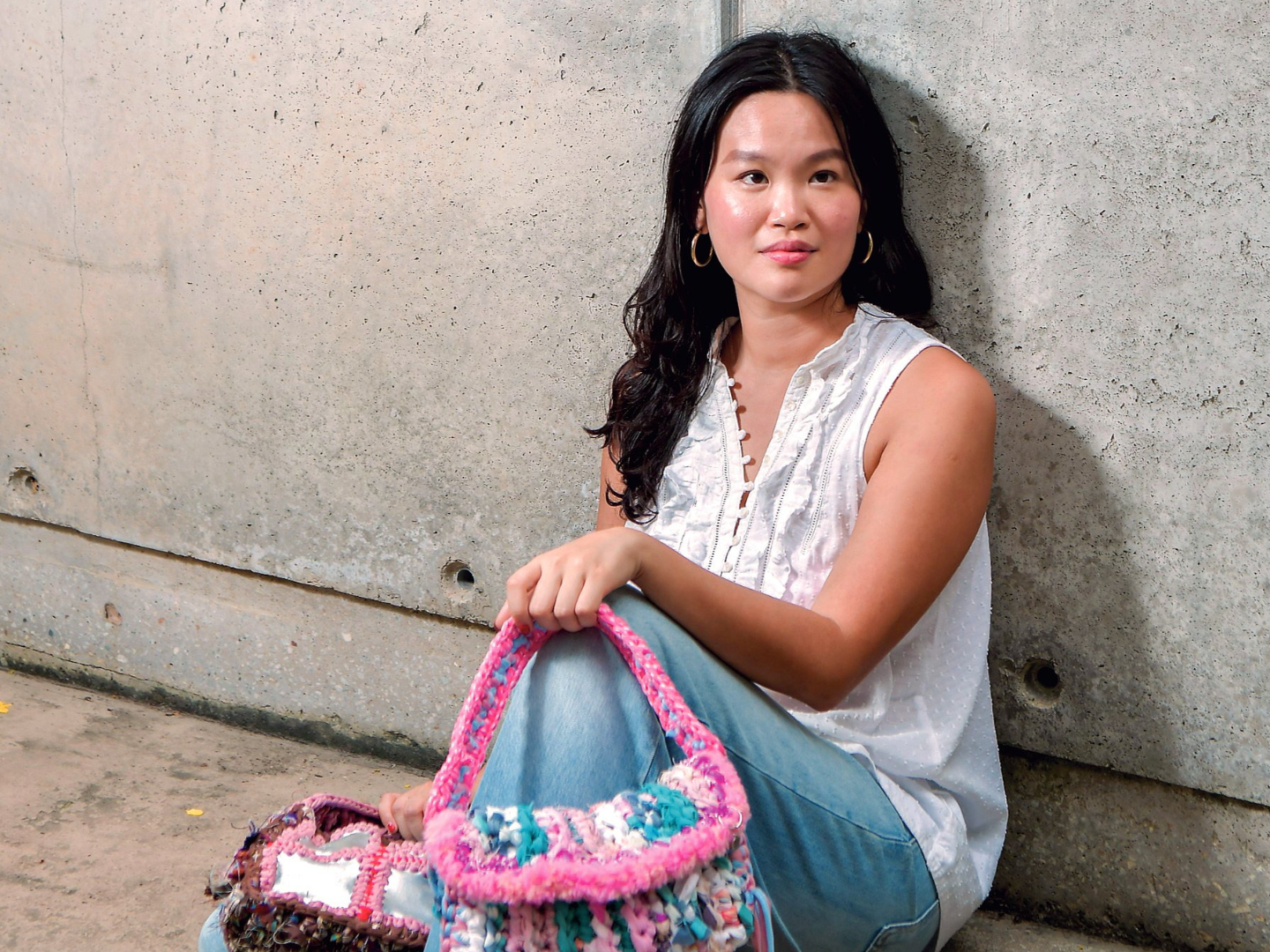
Kan grew her business from a side project, selling her wares at pop-ups in the UK before returning to Malaysia (All photos: Zahid Izzani / The Edge)
Sustainability, says Zoe Kan, is not something she consciously practices. Rather, she has always had the tendency to see possibility in what others discard. “I’ve always had this natural desire to work with things around me — objects that seem to have lost their life — so I can give them new meaning.”
As a child, she collected random items around the house for arts and crafts projects, a habit that endured throughout her university years. The architecture graduate recalls keeping reusable items such as cereal boxes to be turned into models for projects.
It was only later, when she started making bags, that this instinct took on a more defined form. She would scavenge for leftover fabric scraps around the house and from friends. The creative exercise eventually evolved into Kedai Zoe, her signature label of handmade crochet bags.
Born and raised in Johor Bahru, Kan spent several years abroad, studying in the UK before entering the workforce. In her early career, she navigated the worlds of interior design in Malaysia and architectural practice in London — environments that, while intellectually stimulating, left her yearning for something more tactile. “Everything I did was heavily computer-based. I couldn’t use my hands or expand my creativity, and those two things are part of who I am,” she reflects.
A lover of fashion, Kan had briefly worked in retail before pursuing architecture. During this time, Kedai Zoe took shape as a side project, with the pieces sold through social media and occasional markets across London.
She fondly remembers selling her wares at pop-ups, where she found joy in the vibrant surroundings, exchanging stories with strangers and watching how they dressed and interacted with one another. On top of that, receiving feedback for her creations gave her a sense of fulfilment. “I felt that I could push this further if I remained disciplined and kept the momentum going.”
Eventually, curiosity outweighed certainty and Kan decided to make the move back home to Kuala Lumpur.
1.png
In many ways, her architectural background continues to inform her craft. Observation — a fundamental principle in spatial design — remains central to her practice. Where architects “read” a site, she does the same with her surroundings: people, objects, hues and fleeting moments. “It could be someone carrying an accessory, or even the colours of a piece of kuih sitting on the table,” she explains.
These fragments of everyday life find their way into her bags, translated into shade combinations, silhouettes as well as intricate sewing techniques and crochet patterns. Instead of chasing perfection, Kan embraces the irregularities of existing materials — the use of rescued textiles from various sources gives each piece its own character.
The bulk of her materials comes from second-hand stores and factories, where an abundance of fabrics often goes to waste if not salvaged. Aside from that, used goods find their way to her when others reach out, wanting to dispose of things they no longer use, and vice versa.
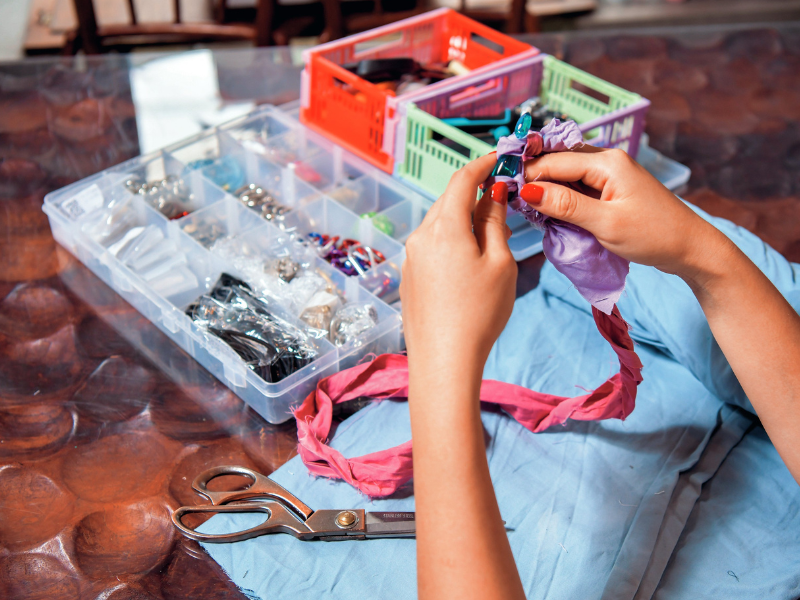
Bedding, tablecloths and T-shirts are woven together to form a bag’s structure, while old ribbons are converted into delicate trimmings. Occasionally, she experiments with sturdier fibres such as leather to give them a contrasting look and feel.
The meticulous process begins with cloth being washed, then dried, folded and cut into long strips. Depending on the size and style, each project takes six to eight hours of non-stop sewing. The result is a whimsical and functional accessory that can be styled casually or used to elevate an outfit. The purses are roomy enough to fit a number of essentials. For Kan, these include her handphone, lipstick and gloss, wallet, sunglasses, keys and a little notebook. “I spend a lot of time with the material from start to end. To me, it is more of an art piece, and I hope everyone can appreciate the care that goes into making each one of them.”
2.png
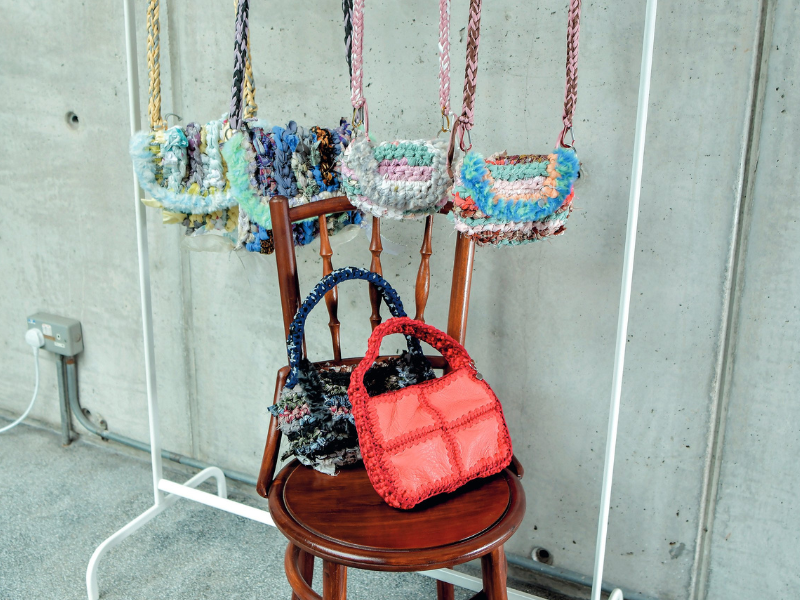
The business has been deliberately kept small, with limited quantities crafted and sold primarily online or at curated pop-ups. Every aspect of the label, from production and marketing to shipment and customer service, is done by her.
Kan’s ambitions, however, extend beyond the products themselves. She envisions Kedai Zoe becoming a platform for connection as she works towards having her own studio. The physical space would allow her to communicate further with her customer base while they browse. She also aims to hold workshops so the public can understand and engage with the process behind her craft.
Ultimately, Kedai Zoe represents not just a unique accessory, but a slower and more thoughtful way of creation and consumption. As ethical shopping practices such as thrifting become more common among the younger generation, Kan reminds us that people should be conscious of their purchases. “Although it is more eco-friendly, affordable and fun, we should still be careful and make sure that what we buy will really be used, rather than it going back into the whole ecosystem of waste.”
For the time being, some of those discarded fragments are given another chance in her hands, one knot at a time.
This article first appeared on April 13, 2026 in The Edge Malaysia.