
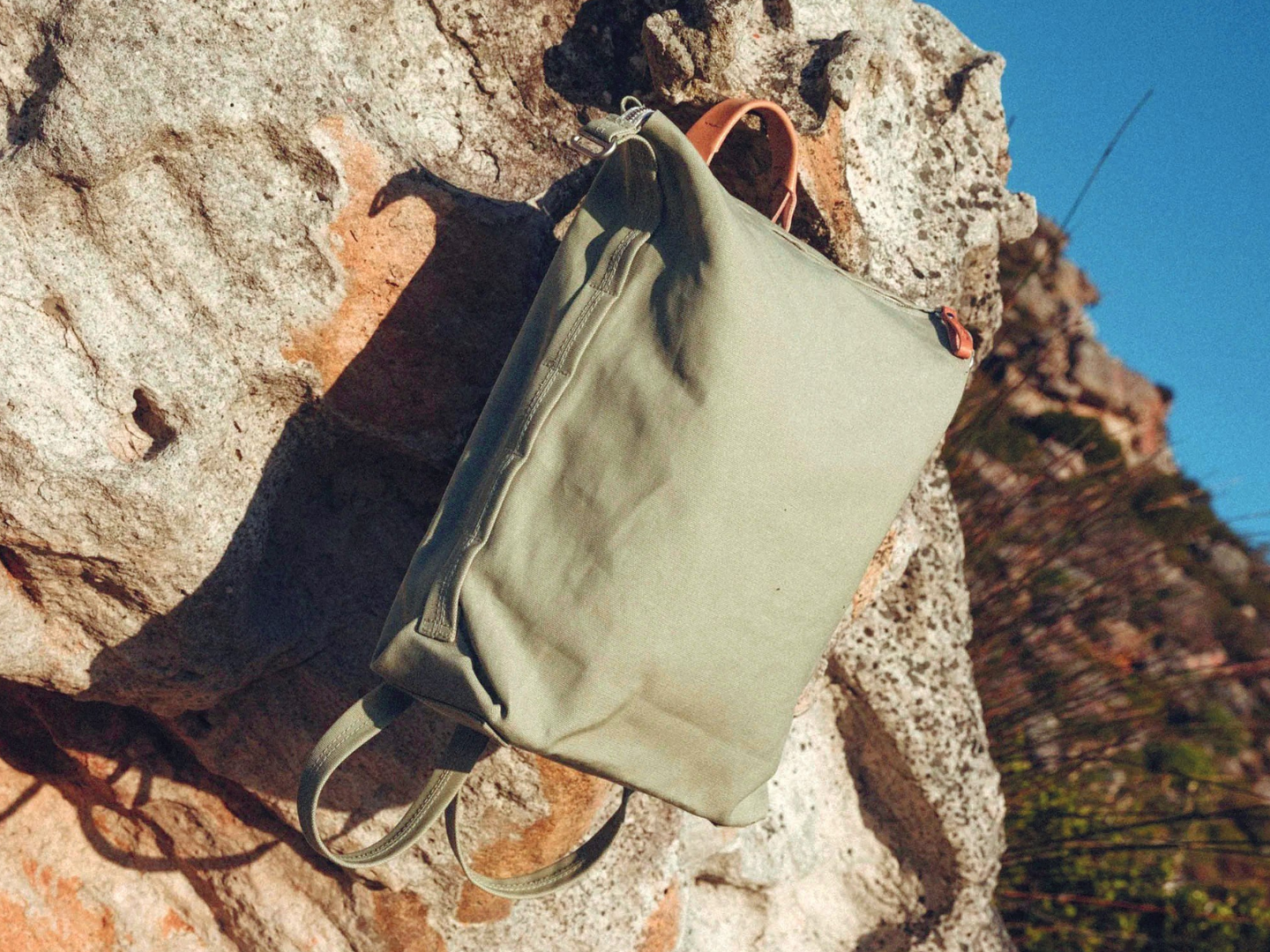
The Qwstion Roll Pack in sage is completely plastic-free (All photos: Qwstion)
Label reading is commonplace when shopping for groceries, but did you know it is equally important when it comes to buying clothes? A tag listing plant-based materials — such as cotton, linen or muslin — is always preferable. For the particularly sustainability-minded, it may be even a non-negotiable. Beloved for their comfortable feel, durability and skin-friendly nature, plant textiles are considered to be more ethical as they do not demand exploiting animals and insects, and require less water to produce than counterparts like wool and silk.
Over the past few decades, however, as access to raw materials and the number of trained fabric producers dwindle, natural fibres and the fabrics woven from them have become more expensive. Seeking cheaper alternatives, the fashion industry took to synthetic textiles, with polyester coming out on top.
Constructed from polyethylene terephthalate, the same thermoplastic used to make single-use water bottles, polyester needs excessive amounts of water and energy to produce — and that is before dyeing even starts. It tends to be harsher on the skin as it is treated with chemicals to make it wrinkle-free and less flammable. Recent discourse has raised concerns about these substances, drawn out by extended exposure to moisture and body warmth, gradually leaching into the dermis and bloodstream. The material’s heat-trapping properties, which box in sweat, do not help alleviate worries. Non-biodegradable, it takes between 20 and 200 years to break down, all the while releasing microplastics into the earth or water it too often ends up in.
body_photo_68.png
To top it all off, not many companies are willing to part ways with the affordability and versatility of polyester. Those who do have some interest in doing so usually lack the appropriate know-how and framework to turn intrigue into long-term action. The fashion industry produces an estimated 92 million tonnes of textile waste annually. It would not be wrong to say that the situation is dire.
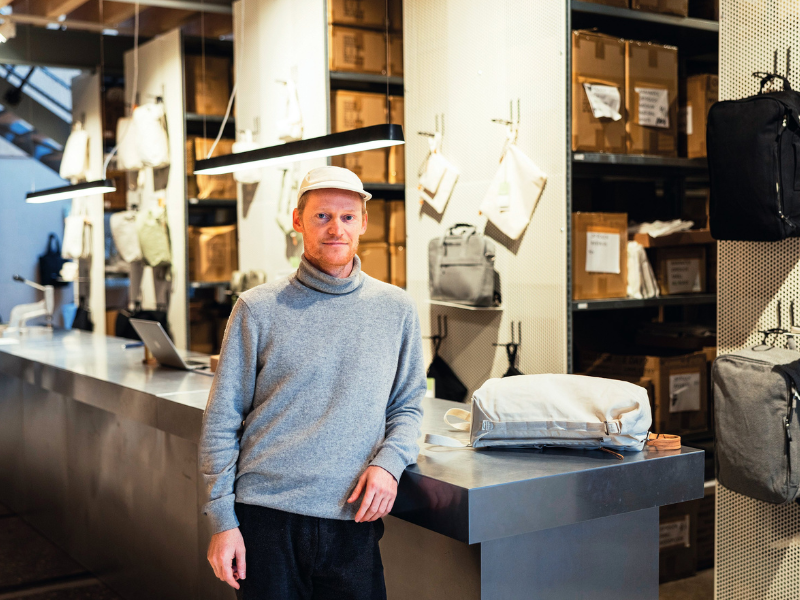
“Most of the products available today are made from plastics and don’t have an end-of-life solution,” says Christian Kägi, co-founder and creative director of sustainable Swiss bag brand Qwstion. Established in 2008, the Zurich-based label started with the goal of examining the way our wearables are designed, made and used. Working closely with small-scale farmers through years of material research and development, the company eventually came up with Bananatex, a cradle-to-cradle certified textile that is 100% biodegradable, compostable and made on a scalable, circular production model.
Crafted with abacá fibres (a species of banana plant also known as Manila hemp), Bananatex is naturally water-, odour- and UV- resistant, anti-bacterial and breathable. It does not pill and is fast-drying, thanks to its porous structure. It is durable and available in a variety of weights, be it lightweight jersey or heavy-duty canvas. Dyed according to Global Organic Textile Standards 6.0, it comes in a range of hues too.
body_photo_67.png
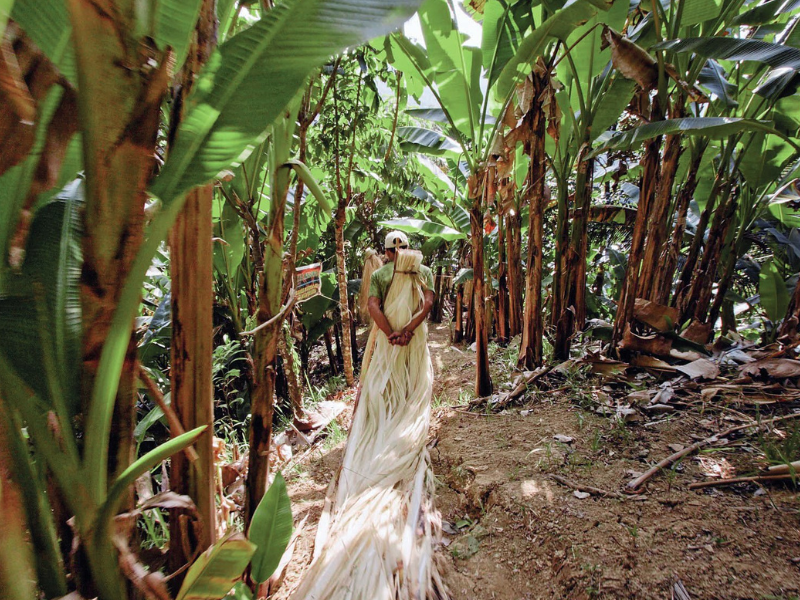
Kägi explains the brand’s selection process: “We continually researched possibilities and different types of materials, ultimately discovering the potential of banana fibres. Among the 30 to 40 species of banana plants that have been cultivated for centuries in the Philippines, [abacá] is a specific variety that is ideal for robust, long-lasting textiles. It has a high tensile strength and the tree produces long fibres.”
Equally, if not more important was how the trees were grown, as plant-based does not inherently mean eco-friendly. “The plants grow quickly and capture large quantities of carbon in a short period of time. We also wanted to work with the plants in a natural environment, which is where the ecosystem aspect comes in,” he says.
In accordance with its transparency policy, Qwstion has published several photos and short videos on its partner farmers and factories, as well as the manufacturing process. The lands shown are flourishing and verdant, almost forest-like — a stark contrast to the neat, dystopian rows of modern plantations.
“Traditional agricultural fibre production usually operates on a monoculture model, which focuses on one crop and needs a lot of water, fertiliser and pesticides to sustain. What we use is called a permaculture, which mirrors a natural ecosystem and contains a high level of biodiversity, helping the system regenerate on its own without additional input. That means our footprint is dramatically reduced, which matters a lot for the final fabric too.”
body_photo_66.png
All well-loved clothing eventually shows signs of wear, tear and time. While small nicks and rips are technically easily fixed, most people do not have sufficient mending skills, and tailors can be pricey. At the Zurich flagship, customers can bring in their Qwstion pieces for easy repairs. More serious cases are sent off to the workshop at Werkstadt Zurich for much-needed TLC from repair specialist Omar. Furthermore, students with valid school IDs are entitled to special discounts. These extra measures ensure the products remain practical for as long as possible, while also making them more accessible to those most likely to choose a cheaper but less sustainable option.
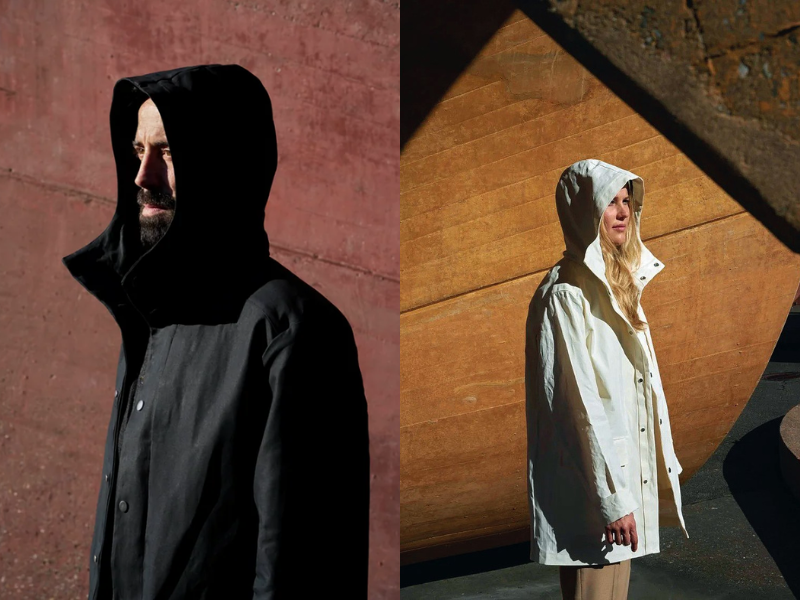
Beyond receptacles, the label also uses Bananatex to create small accessories, clothing and even a limited furniture range. What began as a query about how we can change one thing we use in our daily lives now extends to other fashion and lifestyle items. Others have seen the proof in the pudding and are taking notice — collaborations with fashion goliaths such as Dior, Balenciaga and Stella McCartney prove that one leap of faith and a small group’s determination can have significant reverberations.
“Anything humans do where they exploit nature and wildlife allows for profit. A question we all have to ask ourselves is: Is that something we want to continue going forward? It is clear what will happen if we do. Qwstion is our way of showing how things can be done differently. That’s our goal as a brand and platform — to inspire as many people as possible to rethink their choices,” Kägi affirms.
This article first appeared on Sept 21, 2026 in The Edge Malaysia.