
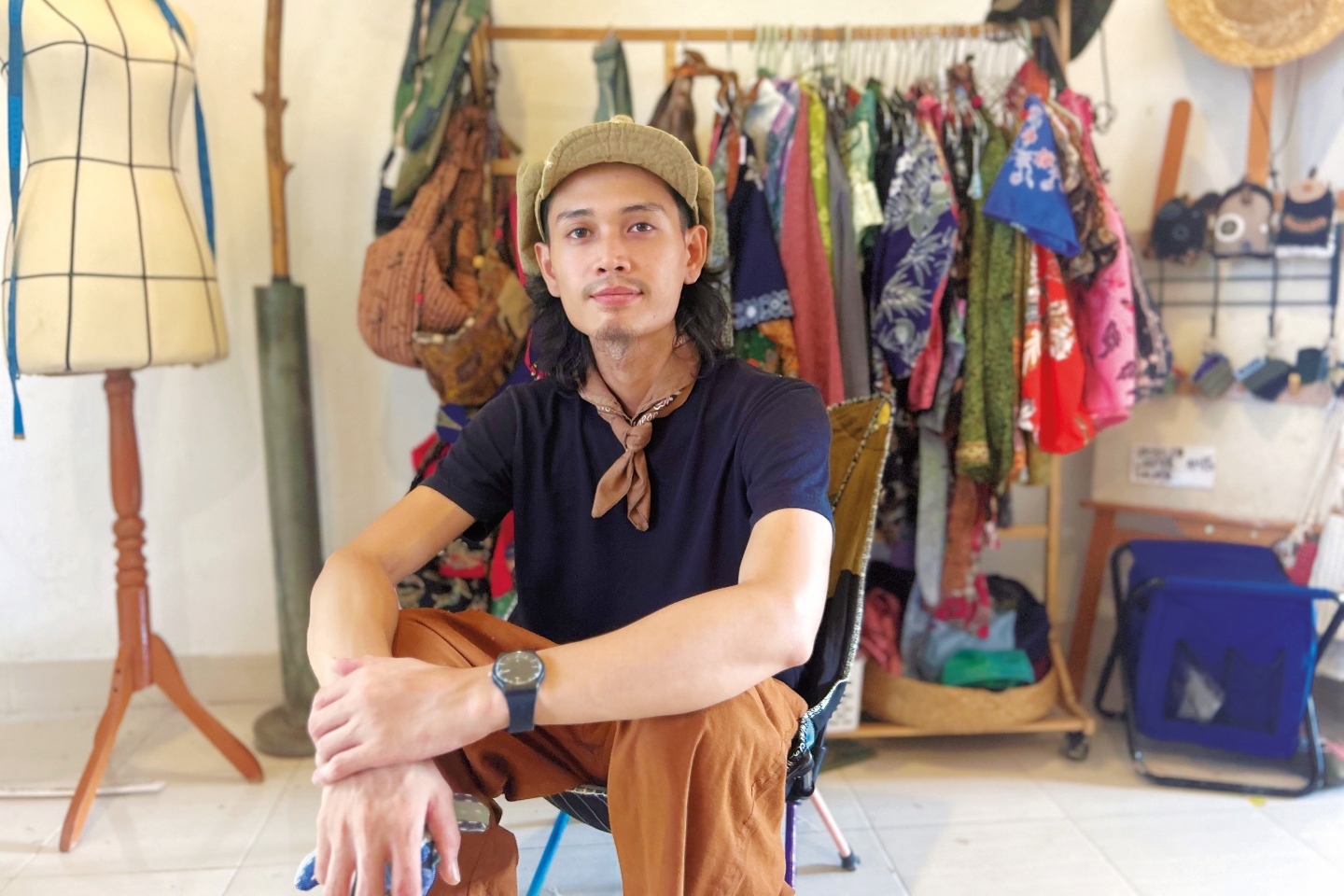
Imran founded Langkawi-based Koyak in 2022 (All photos: Koyak)
The upcycling brand Koyak — Malay for ripped — was not conceived out of grand ambitions to start a lucrative business, but simply because the founder and his partner wanted to keep excess textiles out of landfills. “My girlfriend has a batik apparel label for women. Over time, we had collected four to five plastic bags of scraps and we did not want to just throw them away. Some were still in good condition and they were beautiful prints. So we sewed the pieces together to make a fabric we could use to make other products,” says Imran Qusyairi.
Born in Negeri Sembilan, Imran is currently based in Langkawi, a place he has called home since his trip to the island during the pandemic. Here, he met a group of creatives who opened his mind to the world of upcycling.
“During Covid, I came to Langkawi to visit some friends but was stranded for more than a month. I took the opportunity to connect with the art community here. Before this, I had never thought about upcycling. I didn’t even have a professional background in fashion, just basic knowledge I had learnt from my partner. It was these people who inspired me to come up with a plan for the business.”
Koyak breathes new life into fabric offcuts, building on what is already available and reconstructing them into new, unique designs. Imran works with old or discarded materials gathered from customers’ own wardrobe or thrift shops that cannot clear their stock.
The 29-year-old took a year to train himself in sewing by acquiring the necessary skills from his partner, who has a degree in fashion, as well as doing his own research on the internet. From extensive trial and error, he decided to settle on the sashiko technique for most of his patchwork projects, as it is twice as strong as regular stitches, he says. “It is also durable enough to hold different parts together and will make them last longer.”
image3.jpg
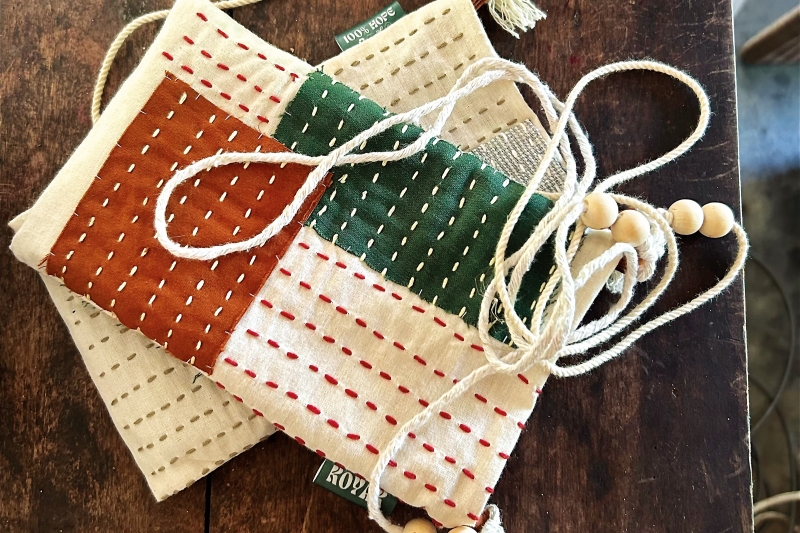
Originating from Japan about 400 years ago, the sashiko stitching was largely used by poor people in rural areas who had to survive on limited clothing during harsh winters. As commoners were restricted from wearing certain textiles and colours, they usually made apparel from indigo fabric and cream thread. Nowadays, sashiko has become an outlet for creative expression, and Imran has been playing with various shades of strings to complement the base material to present a final outcome that is visually arresting.
Before he gets to the stitching process, a lot of time is spent on disassembling the fabrics from their original state. “While doing this, we try to minimise as much waste as possible because that is the whole point of this brand. For example, for a pair of trousers, we don’t want to just cut at the seam so we can save about 4cm of the cloth.”
Imran points out that although Koyak’s ultimate goal is to champion zero waste, it is difficult to achieve as some patches are unsalvageable due to stains, fibre degradation or irreparable holes.
After the fragments are cleaned and ironed, they are arranged according to the pattern layout. “This is the most tedious process as the hours of assembling depend on the size of scraps that we have. Putting together the smaller remnants to create a 2m cloth can take us a few days,” he says. While jackets, tops or pants require two to three days to complete, small accessories like bags, wallets and pouches can be done in several hours.
The label started out by making card holders that come with long straps — the added practical feature allows the wearer to hang the item around the neck — before venturing into customisation whereby customers would dispatch their old garments to be repaired or transformed into something fresh.
koyak_langkawi.jpg
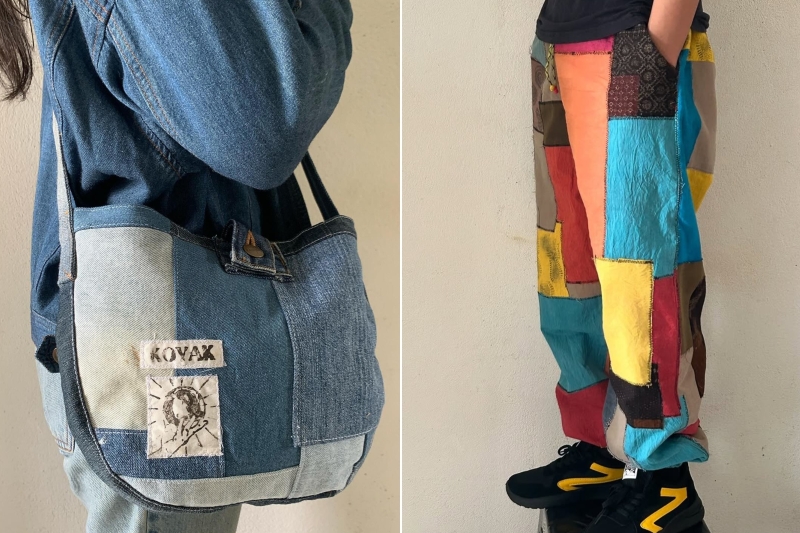
“We have been encouraging our clients to send us their unwanted clothes so we can work with them to not only design a new top or bottom altogether, but also deduct the price based on the amount of fabric we get to use from their collection,” says Imran.
The cost of a piece of clothing starts from RM80, and it varies based on the complexity of the silhouette and details. And recently, Imran began to offer the option of incorporating decorative elements such as embroidery and batik canting, allowing people to be more adventurous with their personal style.
The decision to focus on custom-made products stems from the issue of not being able to fulfil customers’ requirements when it comes to measurements. “When we used to make pants especially, we would encounter problems where a potential client had to give up a piece they liked because they could not fit into it,” he says.
Encountering different types of materials every day means he has to keep learning about their composition and properties to see which pair well together. In his endless cycle of experimentation with new designs and fabrics, he rolled out a batch of bags that had defects after they had been delivered to customers.
“One time, we tried using nylon to make bags. Both the body and strap were slippery, which led to complaints about the straps detaching. Thankfully, we managed to fix them and gained a better understanding about the materials.”
koyak_1.jpg
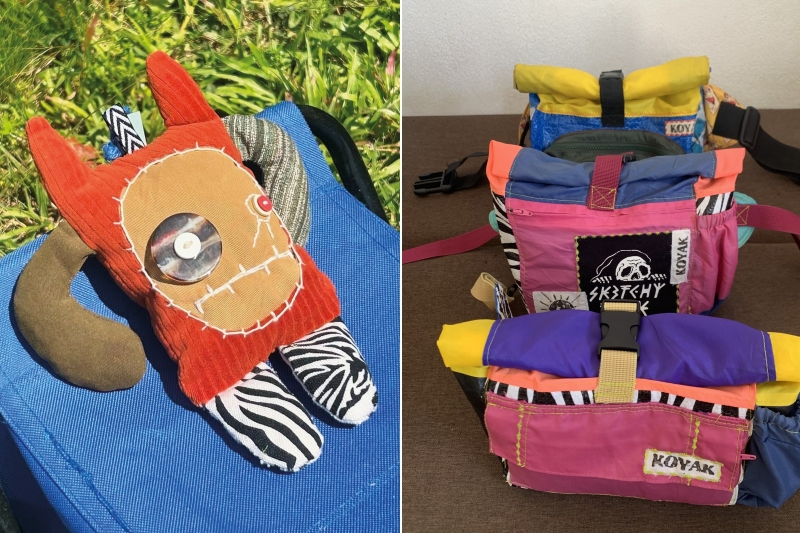
While the fashion industry has begun to adopt various aspects of sustainability, Imran observes that local consumers have yet to develop an appreciation for upcycled goods. “When we first started, we would participate at events or pop-up bazaars to introduce the brand. But there seemed to be a lack of understanding about the concept of upcycling among the crowd. They would ask: ‘What is this? Why is it koyak and does not look well made?’
“They have the expectation that upcycled products are as perfect as those made in factories. We don’t strive for this kind of perfection, but we do pay attention to using the right techniques to ensure each item can last a long time. In fact, we want our customers to know that our stitches will never be consistent because they are done by hand, and that is something we want to embrace.”
Between making products and managing commissions, he also conducts workshops. “In 2023, we got the opportunity from the Langkawi Development Authority to host a workshop for the elderly in Pulau Tuba. It is quite an isolated place so the women had no means of generating income. We taught about 10 people to do patchwork so they could produce their own handmade goods and sell to tourists who visit during island hopping trips,” he says.
Since then, Imran has been hosting sessions in Langkawi with the aim of increasing brand exposure as well as educating more people on the importance and beauty of upcycling.
This article first appeared on July 14, 2025 in The Edge Malaysia.