
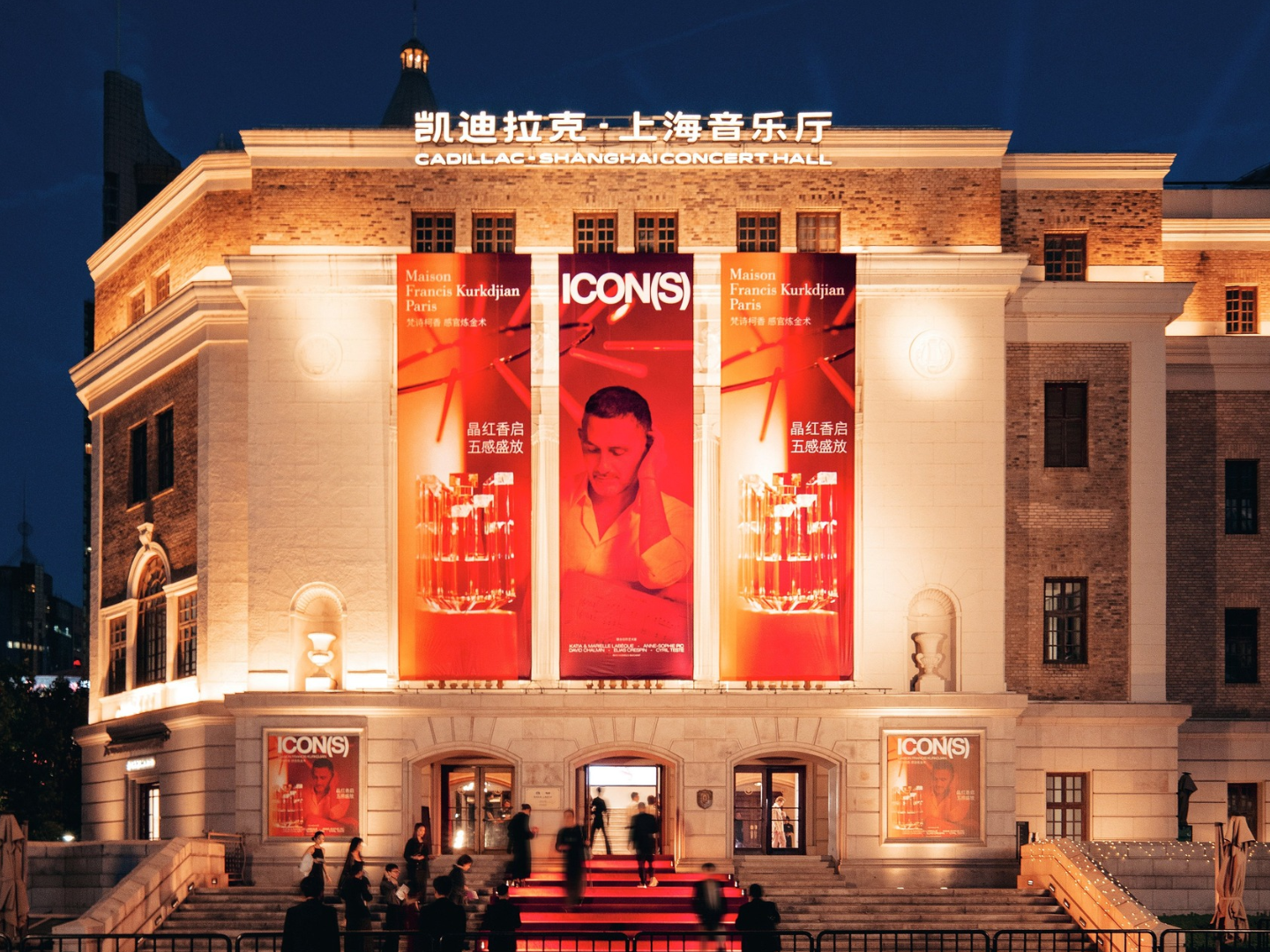
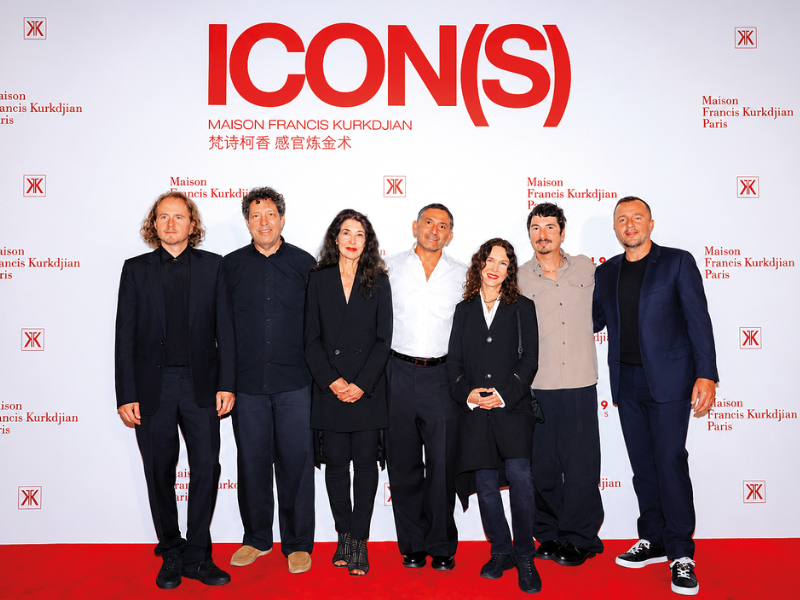
Icon(s): Maison Francis Kurkdjian (MFK) made its Chinese premiere at the Shanghai Concert Hall in September (All Photos: Maison Francis Kurkdjian)
For a mind driven by relentless self-interrogation and culinary rigour, even global acclaim does little to insulate Anne-Sophie Pic from a flutter of nerves in the company of creative equals. On a crisp evening in March 2025, the three Michelin-starred chef took her seat at a dinner hosted by master perfumer Francis Kurkdjian, who had gathered a close circle of friends, comprising pianists Katia and Marielle Labèque, composer David Chalmin, kinetic artist Elias Crespin as well as stage director Cyril Teste. The task at hand was no modest undertaking: Given carte blanche, the group was asked to transpose his iconic scent, Baccarat Rouge 540, into an immersive multisensory showcase, later named The Alchemy of Senses.
Kurkdjian might have struck the match but the ensemble promptly supplied the fireworks. Ideas were batted back and forth with casual brilliance, while critiques landed with unexpected heat. Somewhere between the clink of glasses and quickening exchange, he had happily surrendered the floor, listening to these formidable voices ricochet off one another. That unguarded chemistry was captured vividly in Icon(s): Maison Francis Kurkdjian (MFK) — a Terminal 9 Studios documentary chronicling the high-wire process behind the ambitious exhibition — which made its China premiere at the Shanghai Concert Hall last month.
“Oftentimes, the visual sets the mood and offers an immediate entry point into a work. Scent, however, introduces a less tangible, emotional layer that can make the experience feel fuller and more memorable. It also becomes a means of conveying what text, music or imagery cannot encapsulate. Every art form moves at its own rhythm; so, it was important that each of us had the space to think, find inspiration and create. I always believe what is made with time, time respects,” says the sensory expert, also the artistic director of his eponymous brand.
6.png
Before the film hit the international circuit, The Alchemy of Senses had already made its public debut as part of Perfume, Sculpture of the Invisible, a sweeping 2025 retrospective at Palais de Tokyo in Paris, celebrating Kurkdjian’s 30-year legacy of elevating an ephemeral medium into contemporary art. Within the cavernous, concrete confines of the Saut du Loup gallery, curator Jérôme Neutres fashioned a labyrinthine olfactory promenade where visitors wandered past fields of porcelain roses rendered by Sèvres artisans and virtual-reality gardens in which audio and aroma swell in concert. Equally striking were archival milestones, from The Smell of Money — a 2003 collaboration with French writer-photographer Sophie Calle that registered the metallic allure of used dollar bills — to The King is Dancing, a reprise of his 2008 Versailles project that, through 600 double-wick candles, evoked one of Louis XIV’s lavish balls suffused with powdery notes of violet.
Among the achievements on display, Baccarat Rouge 540 stood out as the undisputed crown jewel, though Kurkdjian remains wary of the pedestal it sits on. He bristles slightly at the word “icon”, arguing that the term has been dulled by overuse. “It requires transforming into a universal reference point that resonates effortlessly across eras and borders,” he says. “Above all, that kind of recognition is never engineered overnight; it is born of consistency, emotional honesty and an ability to withstand the drift of time.”
Unflinching integrity makes for an elegant trail, but sustaining it through three decades of volatile trends requires an unadulterated obsession that is far less romantic. Deconstructing that staying power, therefore, means looking past the heady spectacle and returning to its earliest ingredients.
2.png
Crystal clear
For the casual wearer, committing to a fragrance is not unlike choosing a piece of furniture. Mulled over at length, it is a considered purchase meant to occupy a designated corner of one’s life somewhat interminably. For Kurkdjian, however, scent has never been about settling into place; it demands that familiarity be continually dismantled and reconfigured.
He wastes little time in dispelling the myth of the innate prodigy, discarding the notion of a young genius who could preternaturally detect the faintest whisper of cedar through a closed door or pluck a single thread of jasmine from a passing breeze.
Born into an Armenian family in 1969, he developed his sensitivity instead through a heightened, disciplined relationship with his surroundings. What stayed with him were the raw, textured aromatics of a Parisian childhood: the waxy, subterranean air of an old staircase; his mother’s classic floral-aldehyde, Madame Rochas; and a grandmother’s cellar dense with the pungency of salted grape leaves, crushed spices and overripe bananas.
The restless teen was more accustomed to expressing himself through physical exactitude, his primary instrument being the body. But when his pursuit of classical dance collapsed following a failed entrance exam to the Paris Opéra Ballet, that ferocious focus had to find another outlet. The epiphany landed with clarity around age 14, when a magazine article lifted the veil on the trade of perfumery, exposing that fragrances were authored creations rather than anonymous commercial goods. Around the same time came Le Sauvage, the 1975 rom-com in which Yves Montand plays a perfumer marooned on a remote Venezuelan island. Together, the two encounters transformed an abstract fascination into a vocation he could suddenly picture for himself.
1.png
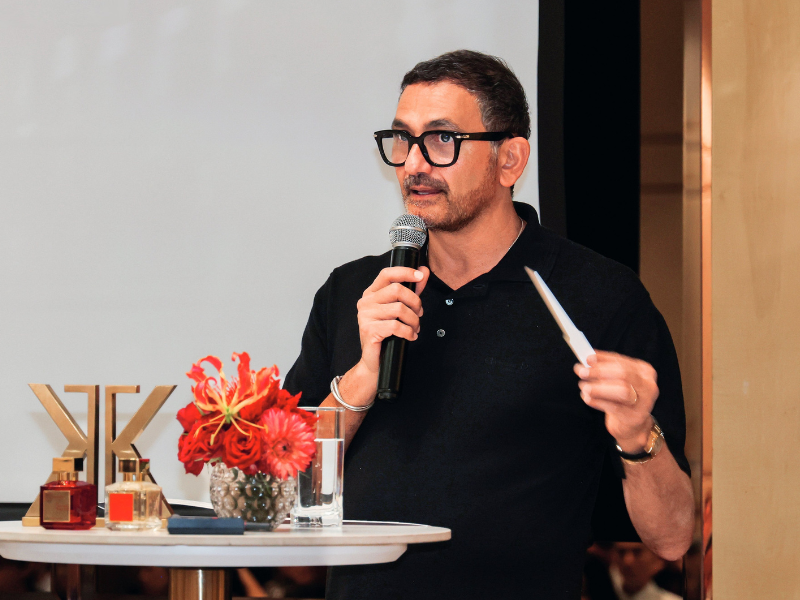
After graduating from the Institut Supérieur International du Parfum, de la Cosmétique et de l’Aromatique Alimentaire in Versailles, his ascent was, almost immediately, vertiginous. Barely into his mid-20s, he designed Le Male for Jean Paul Gaultier, the 1995 blockbuster that would become one of the defining men’s fragrances of its generation. The momentum could easily have tethered him to the lucrative, comfortable realm of a corporate nose, cranking out bestsellers behind the scenes for Dior, Guerlain, Saint Laurent and Burberry. He delivered those successes but resisted allowing them to dictate the limits of his practice. By 2001, he pushed the craft into more personal territory, opening a bespoke atelier conceived in the spirit of haute couture. Eight years later, that independent streak crystallised into MFK, co-founded with long-time friend and business strategist Marc Chaya, finally placing Kurkdjian’s own name — rather than that of another fashion house — above the door.
Artistic liberty was, of course, merely the warm-up — a prelude to an inflection point forged in a literal, blistering furnace. In 2014, legendary crystal house Baccarat enlisted Kurkdjian to distill its 250-year heritage into an olfactory interpretation. He anchored the formula in the thermodynamic miracle behind Baccarat’s iconic red crystal: the exact threshold of 540°C at which 24-carat gold powder mixed with clear crystal takes on its distinctive crimson hue. Initially poured into just 250 numbered bottles, the composition joined MFK’s permanent catalogue in 2016. Combining saffron and airy hedione with dry cedarwood and ambroxan, Baccarat Rouge 540 ignited a wildfire of popularity that would soon prove impossible to contain.
The blend developed a lingering signature that was difficult to confuse with anything else, spawning a concentrated extrait; an expanding family of ancillary creations; and, inevitably, legions of imitators. Its strange paradox became more pronounced with ubiquity: A concept rooted in the almost immaterial properties of crystal had acquired an unusually emphatic presence in the world. Yet, Kurkdjian never treated that extraordinary reach as reason to freeze it in amber. A decade after that first commission with Baccarat, he returned to the material source, asking how far the conceit could be pushed if neither scale nor technique was allowed to dictate the outcome.
That question found its most extravagant answer in Baccarat Rouge 540 Édition Millésime. Created to commemorate the 10th anniversary of the 2014 original, the release — which MFK defines as pursuing the “quintessence of quintessence” — converted an invisible icon into a tangible monolith of French savoir-faire. Rather than rewriting its identity, the evolution pushed the existing DNA towards what the maison calls its ultimate expression, amplifying the mineral, fiery and airy aspects that have defined its predecessor. Ambergris, the waxy substance formed in the digestive system of sperm whales and later expelled into the sea, nevertheless remains central to the concoction. This marine treasure — an organic gift Kurkdjian poetically likens to the lunar atmosphere (“If the moon had a scent, it would smell of ambergris”) — imparts a musky, oceanic depth and enveloping warmth. So vital is this ocean bounty that he personally joins conservation missions with non-profit Longitude 181, supporting research devoted to protecting these mammals.
5.png
The Édition Millésime’s red flacon, on the other hand, rises from L’Empreinte, an architectural clear-crystal base composed of eight columns, while a cabochon plated in 24-carat gold crowns the whole. Envisioned by designer Fred Rawyler — a collaborator of the house since 2009 — its refillable geometry features bevelled, K-shaped facets that magnify the material’s luminosity. Bringing it to life demanded 500 hours of labour and the expertise of 19 artisans, including four Meilleurs Ouvriers de France and two Chevaliers des Arts et des Lettres, spanning glass-blowing, carving, sculpting, gilding and engraving. Even the integrated vaporiser required two years of development to reconcile watertightness, function and aesthetics. Limited to 54 pieces annually, each individually numbered, it carries a reported US$28,000 price tag.
Curiously, even as Baccarat Rouge 540 accrued stature, Kurkdjian seemed less inclined to claim the fanfare it commanded as entirely his own.
“I know so many people who wear it,” he admits. “Not only celebrities, who are the most visible examples, but those within the industry or far beyond it. Some time ago, I was in Hong Kong and, later in the week, Tokyo and Paris. You can smell Baccarat [Rouge 540] in the streets, worn by completely different personalities. When something becomes such a phenomenon, it transcends what it is and becomes universal.”
That broad appeal was hardly accidental. From the outset, he aimed to dream up an everyday companion, an equivalent of a wardrobe staple, that felt instinctively comfortable rather than overwhelming. “I wanted an aura, one that’s airy without being sticky, dark or sweet. Imagine putting on shoes and they hurt your feet — Baccarat is the opposite because it has this easy-to-wear simplicity that’s not in your face.
“To be honest, I don’t look back to analyse what I feel about ‘the genesis of it all’. In some ways, what I’ve created isn’t quite mine anymore. When some of your best works reach a certain level of fame — whether you’re a designer or a musician — you have to let them go and forget about them; otherwise, you become completely consumed and basically can’t function as an artist. You get trapped and start fixating on ‘How am I going to make another version that’s better, or just as famous?’ And I know everybody is waiting for it.”
Rather than dwell at the summit of one remarkable breakthrough, he prefers to venture into uncharted territories. “I’m happy I did it. It belongs to my biography, it belongs to me, but this is, in a way, history. We have to nurture it, as a brand nurtures treasures. But I also have to look forward and move ahead. Creatively, it’s not part of my life anymore. My mind is already looking for something and somewhere else.”
4.png
Note worthy
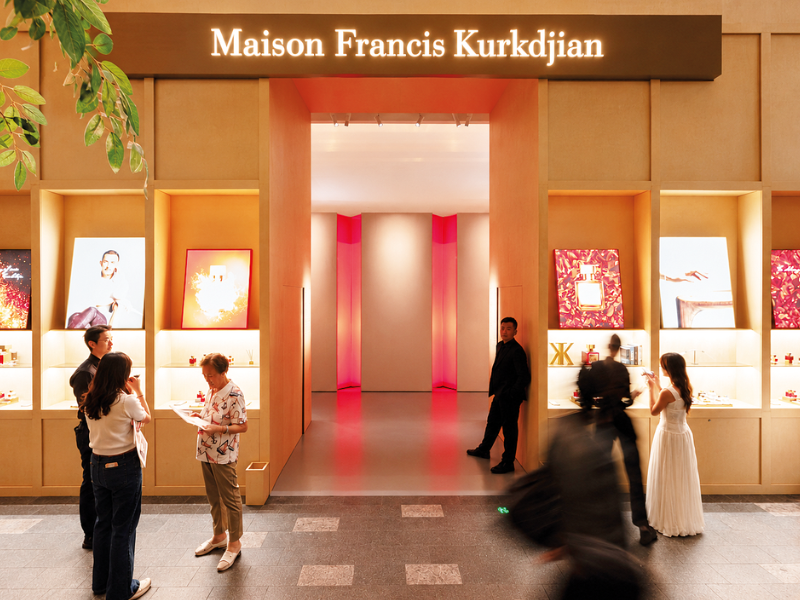
Kurkdjian’s willingness to loosen his hold on past masterpieces has opened the field for experiential storytelling, manifested most notably in The Alchemy of Senses, now on an international tour. Offering visitors the opportunity to enter the visceral universe first captured in the documentary, the fruits of this six-part artistic dialogue are now showcased in the atrium of Xintiandi Style 1, one of Shanghai’s premier luxury retail epicentres.
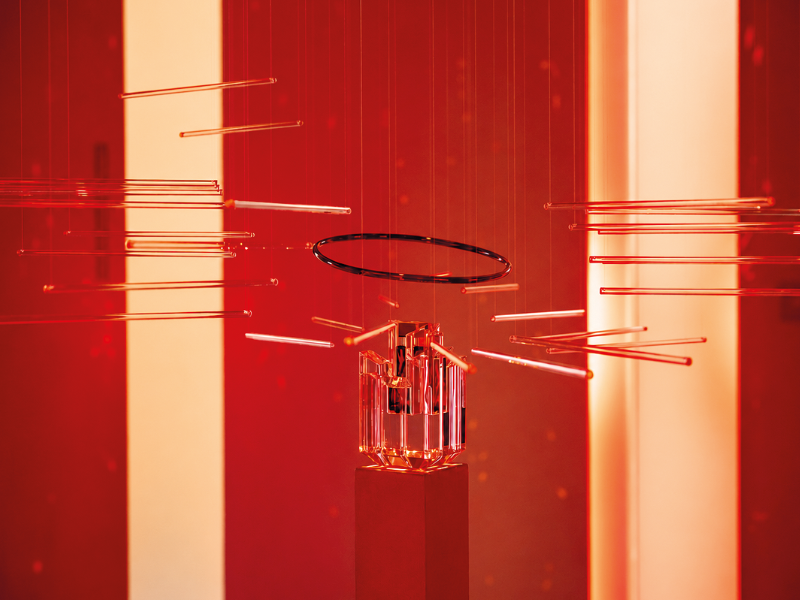
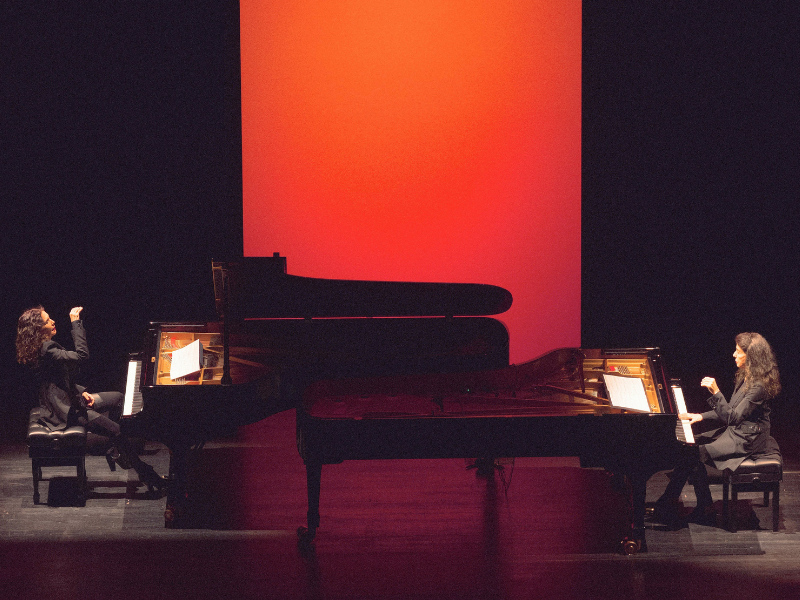
To embody taste, Pic devised Rouge Chocolat, a streamlined, blotter-shaped confection infused with passion fruit, tagetes and warm spices. Sound is orchestrated by Chalmin alongside the Labèque sisters; their haunting score layers recordings from the crystal workshops and underwater clicks of sperm whales beneath a fusion of dual-piano electronica. Sight falls to Crespin, whose Vision Transparente suspends a motorised constellation of glass elements in ceaseless, weightless motion overhead. Bathed in light that drifts from gold to deep crimson, the pavilion envelops its viewers in vibrations travelling from floor to ceiling. At its heart, under Crespin’s hovering canopy, stands Édition Millésime itself — an altar around which the senses seamlessly collide.
“It took a full year for this exhibition to happen,” adds Kurkdjian. “If you look for these creators on social media, don’t expect them to have millions or billions of followers. They don’t seek that brand of prominence, yet their work possesses the capacity to touch our souls — Elias, for instance, has a permanent installation at the Louvre.
“My ultimate hope for those taking this in is that they recognise how all our human faculties are interconnected and fundamentally rely on one another. The visionaries I’ve assembled didn’t know one another at the beginning but they bonded and became integral to the final result. From Paris to New York, the Mediterranean to the banks of the Seine, the quest has always been to translate the unseen into the tangible. Art is emotional — it is truly alive.”
This article first appeared on Oct 12, 2026 in The Edge Malaysia.