

Chai’s experience with a personal tragedy led to the creation of Feithe (All photos: Sam Fong/The Edge)
When she is not threading crystals together in the workspace at the back of her house, Sharon Chai spends most of her time listening. Clients who enter her abode, which also doubles as a studio for her jewellery brand Feithe, come to share stories and unload struggles to an open ear, after which the founder curates which minerals may be the best support on a person’s path towards healing.
From romantic quartzes to guiding amethysts, each piece is assigned specific emotional properties based on Chai’s extensive studies in Eastern and Western crystal healing, gemmology as well as colour psychology. The local label is best known for its charms — elegant stone beads on a lightweight, tarnish-resistant clasp — which can be easily swapped with chains, bracelets and earring hooks for a versatile yet effortless look.
Rocks that change how you feel? The scientifically minded among us are probably already rolling their eyes. But Chai does not pretend to dabble in the mystical. In fact, Feithe’s philosophy of reflection and gentleness stems from her earliest encounter with personal tragedy.
“I lost my mum when I was 17. That was the first healing point for me, because I wasn’t sure what I was going through. It was the first time that a really strong presence who had been involved in every part of my life disappeared,” she says.
It was easy to label what she was going through as grief but, for a teenager, the weight of trauma felt insurmountable.
To compensate for her family’s sudden loss of income, Chai began channelling her creative talents into side gigs any way she could. Dreamcatchers were a hot item at the time; so, during her university days, the graphic design major worked late into the night, weaving webbed talismans to be sold at bazaars and leaving little to no time for sleep.
“I was deep in depression but didn’t know it — I thought it was just sadness,” she shares.
Noticing her condition, Chai’s uncle brought her to a feng shui master and purchased a large prehnite pendant for her. “I didn’t believe in anything spiritual or supernatural, but I started to kind of like the crystal. It made me wonder, why have these things played such an important role in every culture and society around the world for thousands of years?”
Coincidentally, she later discovered prehnite was traditionally used in dreamcatchers to filter and bestow good energy upon the sleeping person.
“I gained motivation to research it — what it does, the beliefs surrounding it. From barely being able to will myself out of bed, that made me want to wake up every day and gave me something to look forward to. Eventually, I came out of my depression. I thought, if this was how a stone could help me, maybe it could do the same for other people.”
For the final project of her school course, Chai drafted a full rebranding of her dreamcatcher enterprise, transforming it into the earliest form of present-day Feithe. The name, a softened pronunciation of “faith”, serves as a reminder of its origins from a place of care and trust.
3.png
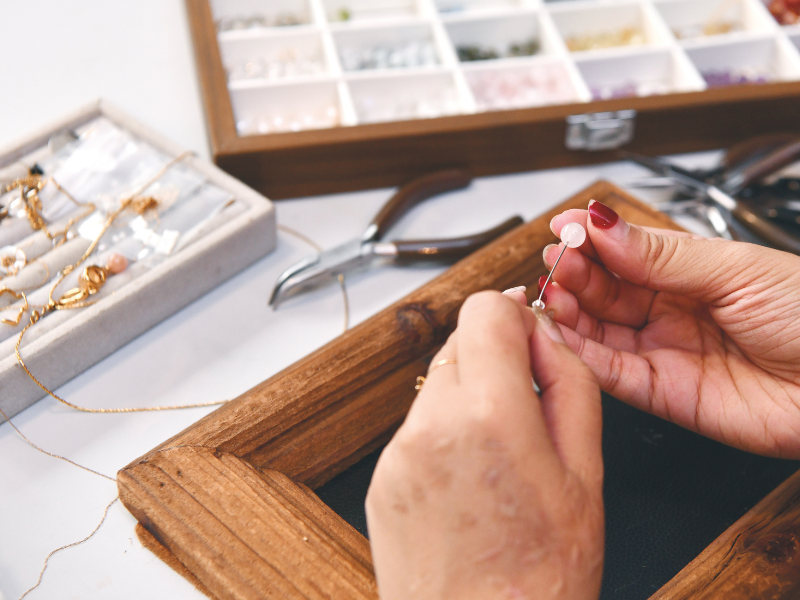
“It was what I really wanted to do: crystal jewellery as a companion throughout someone’s healing journey, both mentally and physically. It had to be stylish and minimalistic, wearable every day and not something that always had to be taken off.”
Affordability was also a crucial consideration. “Unfortunate incidents don’t pick a time. They don’t wait for you to be old or rich enough to happen, which is why I tried to price my charms accordingly,” she explains.
Product development was admittedly tedious. Chai, a self-proclaimed perfectionist, wore each sample for six months to ensure the gold-coated titanium steel hardware was durable, water-friendly and would not irritate sensitive skin. The clasps have a spring-based hook that does not snag or fall off easily — a labour of love that ensures her three kitties, Uji, Buda and Boba, can safely wear them too.
In 2019, Feithe released its first three collections. The Classique series of simple chains can be paired with colourful stones from the Charme capsule. Meanwhile, Mabel is the brand’s best-selling line of adjustable bracelets and necklaces adorned with a trio of gems curated for specific intentions such as confidence, balance or focus.
The raw materials are sourced primarily from Thailand or Australia, but include unique finds from anywhere the founder might happen to visit. Its latest designs, Crescent and ______’s Mneme, are inspired by her past experiences with anxiety and loss respectively.
“To be honest, I still don’t believe stones literally give you something,” she shrugs candidly. “The way I phrase it is that by telling you a stone is associated with a certain attribute, I hope it reminds you of that purpose subconsciously. Whenever you look at your charm, you will think to, say, clear your mind or get some rest.”
For Chai, to buy a crystal synonymous with clarity or peace is a small token that you wish such healing upon yourself, becoming an emblem of self-care that can prompt mindful steps towards your emotional goals.
A particularly memorable episode with a Brazilian customer who had been suffering from insomnia stands out. “She bought some bracelets from me and I told her, ‘I hope they can remind you to sleep better.’ A week later, she came back and hugged me, saying she got the best rest of her life and is no longer medicated,” Chai says. “At that moment, one sentence popped up in my head: ‘I can do this forever.’ This sense of fulfilment is not monetary, but it feels so good.”
Colour psychology has also been a key part of Feithe’s service. Chai’s research on localised mental association and anthropology helps provide an easy entry point through scientific backing to make crystals approachable even to sceptics.
2.png
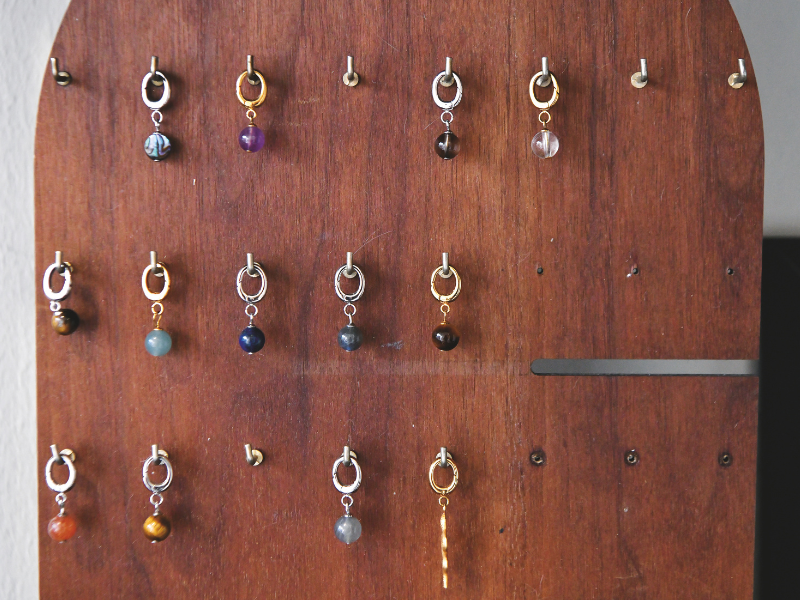
The colour emotion programme invites individuals to freely explore which hues speak to them in the moment and, through Chai’s assessment, find the pieces that might best meld with their mental state. The activity also serves to help visitors be more deliberate about their feelings and actions. “The main ethos of [the brand] is mindful living, and part of that is self-awareness. Noticing the colours you like, your favourite things, where and why you buy what you do. All of this helps you keep grounded, instead of being caught up in the future or past. The greatest value comes from our present moment.”
Though she knows her Instagrammable aesthetic is important to modern marketability, Chai strongly encourages clients pay a visit to the studio for a truly bespoke, meaningful experience.
“There’s more to it than just being pretty! Word of mouth has been really powerful over the years, and lots of customers know how much I put into Feithe,” she says.
Chai currently has her hands full with expanding Feithe’s Australia branch, where she will be based for the next year, but her long-term dream has always been to grow into a full wellness brand, complete with a spa one day. For now, she puts her faith where it has always been — in the process.
This article first appeared on Feb 16, 2026 in The Edge Malaysia.