
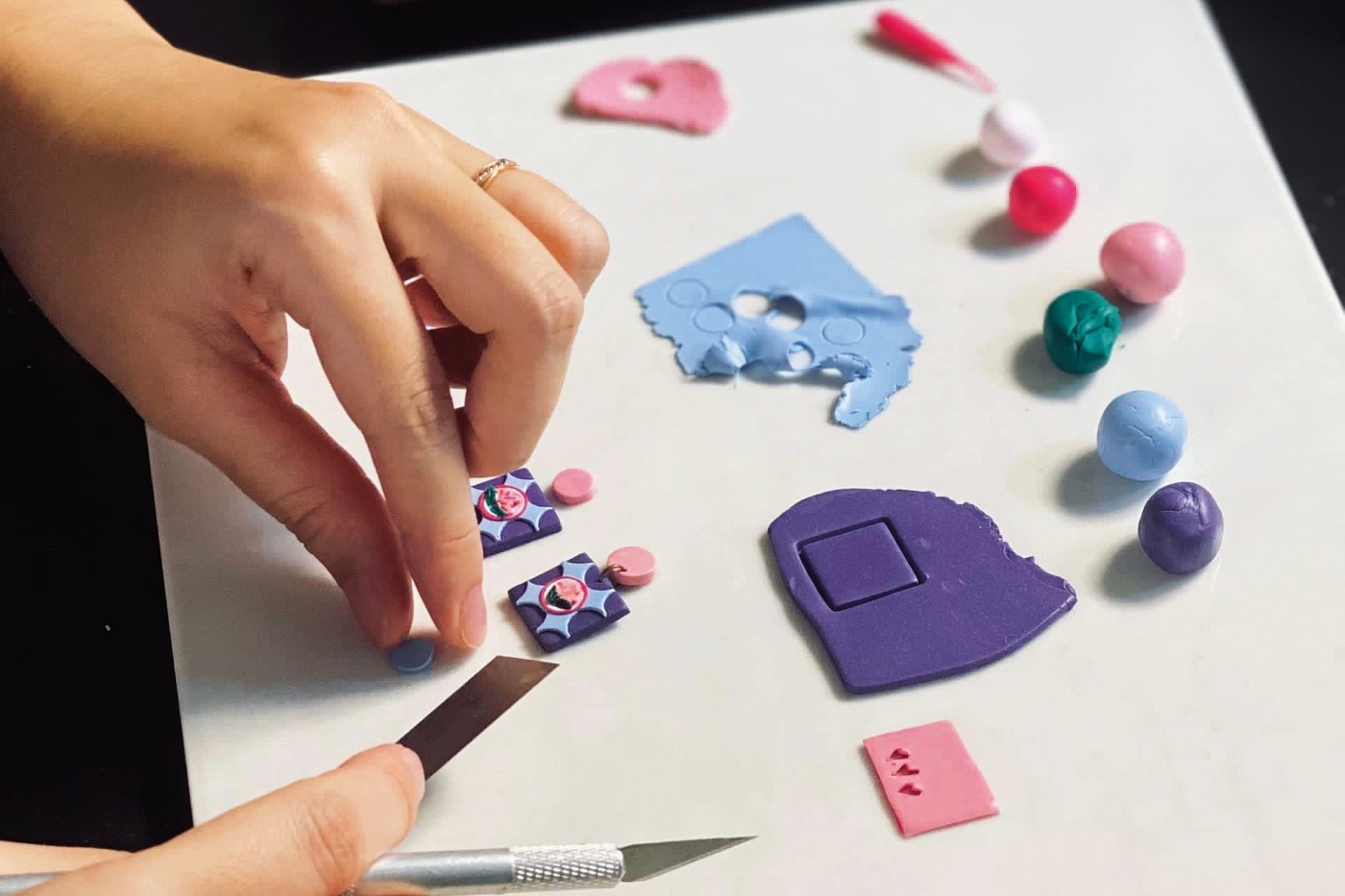
Shaping the dough into tiny objects is Pang’s favourite process (All photos: By Sze)
Hardship can be a potent catalyst for creativity. For Penangite Pang Yoong Sze, 34, an appendix surgery in 2019 unexpectedly opened the door to a new hobby — and a fresh sense of purpose.
“I was bedbound for three weeks and could not move much because it hurt when I did. So, I went online to search for things to do at home, and polymer clay came up as one of the suggestions,” Pang says.
She began experimenting with the medium for fun, picking up tips and tricks online and crafting simple designs by closely following internet tutorials. Her first piece of jewellery, conceived during the pandemic, was a pair of earrings in the shape of a face mask — the defining accessory of 2020. “I posted it on Instagram and my friends immediately asked whether I was selling it.”
Pang started making some items for friends and family, but mainly for personal enjoyment and to disconnect from work. Her role as an R&D project manager at a US-based electronics company was affecting her mental well-being. “It was very tiring because of the time difference. I had to attend a lot of night calls, so I was not really enjoying what I was doing.”
img_3011.jpg
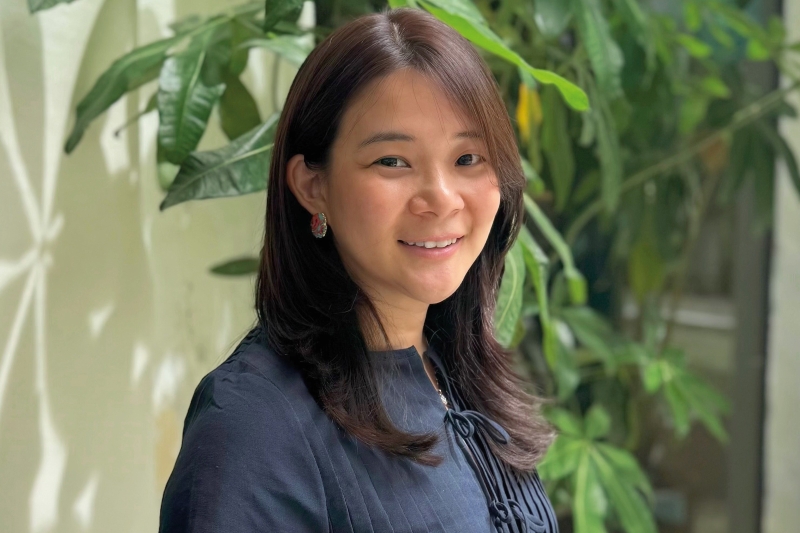
Whenever the pressure got to her, she turned to art to mitigate the stress. In the quiet of her small studio, she slowly conditioned and kneaded the dough, shaping tiny objects. “It is a hands-on activity and requires a certain level of focus. When doing so, the world shut down and that helped me concentrate on what was in front of me,” she says.
With polymer clay, there are no rules — only possibilities. “It is very versatile. It is just like the Play-Doh we used to muck around with back in the day. You can make anything out of it. It is completely based on your imagination. It’s really fascinating because you’re not bound by anything and it is not restrictive — unlike engineering, where you have a set of codes or principles you need to follow.”
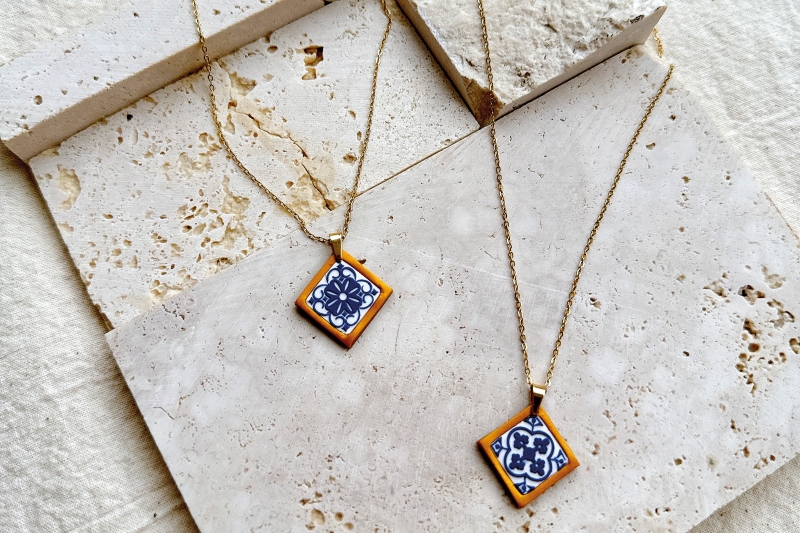
Encouraged and inspired, she made the big decision in March this year to quit her job to focus on the business full-time. Her brand, By Sze, is characterised by its vibrant wearable ornaments — earrings, bracelets, necklaces, hairpins, brooches and rings — inspired by batik and Peranakan tile patterns. She chose to focus on these themes in 2021 after noticing they attracted significant attention.
“I’ve always loved batik, but I started making these designs because I could not find accessories that matched my clothes,” she explains. “The first one I crafted was a batik cheongsam to go with my outfit for Chinese New Year. I made many more after that.”
img_2135.jpg
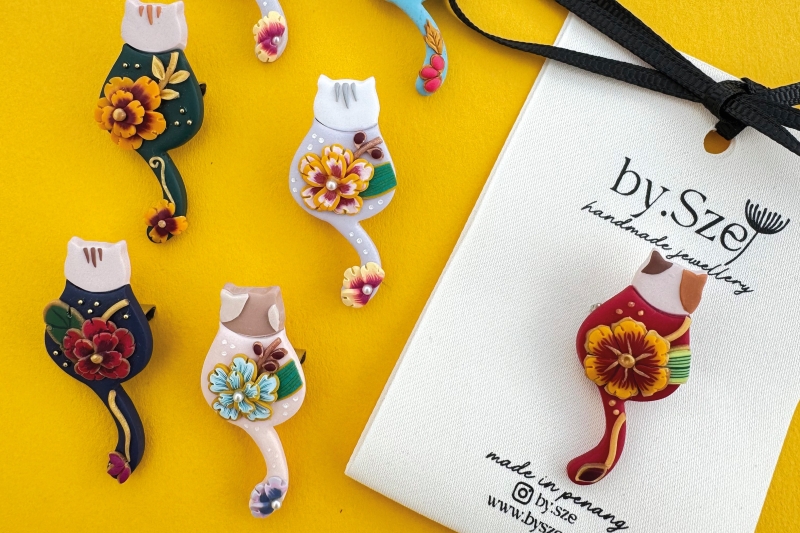
By Sze’s delicate trinkets are chic and stylish — perfect for adding a pop of flair to both office and casual outfits. It is also the easiest way to showcase Malaysian culture and heritage. “I can just put on a plain top and complete my outfit with a batik-inspired accessory,” she says.
While her main goal is to give customers a dopamine boost through small shots of detail and colour, she also feels a sense of responsibility to use her platform to educate the younger generation about the country’s unique fabrics. “I hope they find the designs appealing, so they can appreciate the intricacy of the patterns and their lively features.
“Some of my friends think batik is only for older people. I don’t want young people to see these traditional textiles as something just for grandmas, or think the designs aren’t attractive or only fit for formal occasions. Back in the day, batik was mostly worn by officials and rarely seen on the streets but today it’s being embraced by everyone,” she observes.
Pang’s typical production process begins with colour mixing to achieve her desired combination for each project. “Then, I usually work on the floral patterns using the candy cane method. I try to replicate the wax border in batik motifs, and this can be achieved smoothly via the technique.”
img_0635.jpg
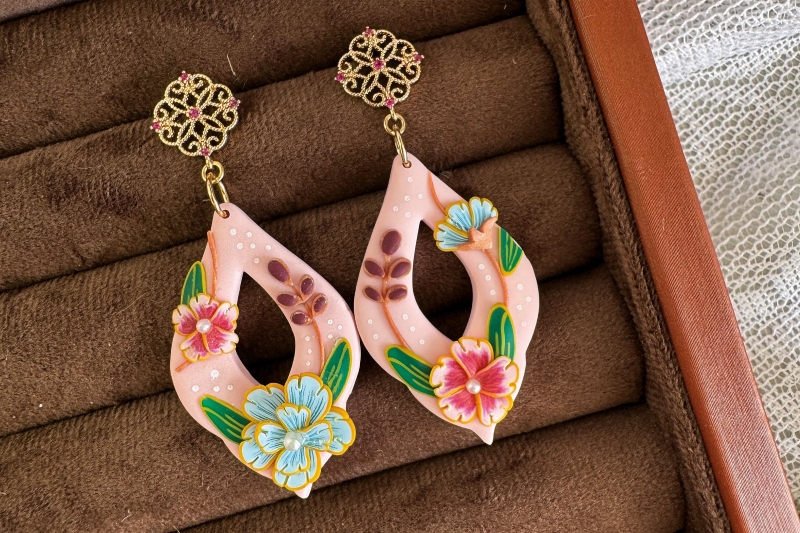
A lot of trial and error is involved because matching the palette can be challenging — the bold, striking primary reds and blues typical of traditional batik designs do not always translate easily. “Young people tend to prefer soft shades and pastels, which go with many looks. Vibrant accessories can be hard to carry if you want to wear them every day,” she explains.
Peranakan tiles are evidently harder to manage than batik. “Tiles are rigid and geometrical. I have to sketch out and play around with the shape. They are usually based on original models and I have to think about how to interpret the patterns in a miniaturised form. Batik gives me more creative freedom. I can do anything because it is not defined by a structured boundary. The colours, type of flowers and positioning of the motif are all up to my own vision.
“The therapeutic part for me is when I get to play with the clay because that’s when time slows down. I’m alone, in the zone, and everything around me is quiet. After that, it’s just baking and sanding.”
The transition from being an employee to running her own operation has been an eye-opening experience for Pang. “Initially, I thought doing this full-time meant I would get to play with clay more, but that’s not really the case,” she says. “I have to oversee and master every aspect of the brand, including the business and admin tasks.
img_4312.jpg
“As a business owner, you also have to take branding seriously. Back then, I only made stuff when I had time but now it is about building a name for myself. I need to have a vision about how I want to present my label to the public, from the packaging to the consignment stores that carry my products.”
Pang says the ability to showcase her colourful pieces in person is more rewarding than receiving notifications for online orders at home.
“I prefer going on-ground because you get to communicate with customers and have a meaningful conversation with them. It’s not so much about selling but, rather, connecting with people. You listen to their stories and find out for whom or why they are choosing the item. It’s truly heart-warming to know they wear my jewellery on special days.”
She fondly recalls participating in the recent KLove Market at Kuala Lumpur’s KLoé Hotel. “People who visit artisanal markets are different. They show an interest in what you do — they want to know your background and the inspiration behind each piece. You also receive feedback from them instantly, something you don’t get when you sell online because not everyone will tell you what they think of your product.”
Because Pang’s artistic work demands intense focus and minimal distractions, loneliness and isolation can creep in. But stepping out of her cocoon to attend events and connect with fellow creatives and supportive clients gives her the energy and confidence to keep pushing forward in her entrepreneurial journey.
This article first appeared on Oct 6, 2025 in The Edge Malaysia.