

Winners pose with their hand-shaped trophies at the awards ceremony (Photo: GPHG)
The Grand Prix d’Horlogerie de Genève (GPHG) is more than an awards ceremony; it is the annual register of contemporary watchmaking excellence. Often described as the industry’s Oscars, the event serves as one of the last hurrahs on the horological calendar, encapsulating a year of remarkable innovation and execution.
The significance of the GPHG trophy itself speaks to the very soul of the craft. Designed by the late Genevois graphic artist Roger Pfund (who was also responsible for the Swiss passport and a series of bank notes), its depiction of an extended hand — a gesture that drew inspiration from Michelangelo’s iconic fresco on the Sistine Chapel ceiling — is a potent symbol. It signifies not only the skill and mastery inherent in every watchmaking trade but also the memory and transmission of knowledge, the passing of an ancient torch.
While the awards has its fair share of scrutiny — competitors have to self-nominate but high entry fees create a “pay-to-play” barrier, and issues with major brand exclusion and juror transparency challenge its credibility — it is still a notable showcase that highlights the achievements of the sector’s esteemed watchmakers. Its value also lies in significantly increasing visibility for the industry overall and providing a vital platform for certain brands, especially those that lack the resources or opportunity, to exhibit their creations globally.
The 25th edition of GPHG wrapped up on Nov 13 at the Bâtiment des Forces Motrices (a former hydro power plant) on the banks of the River Rhône.
1.png
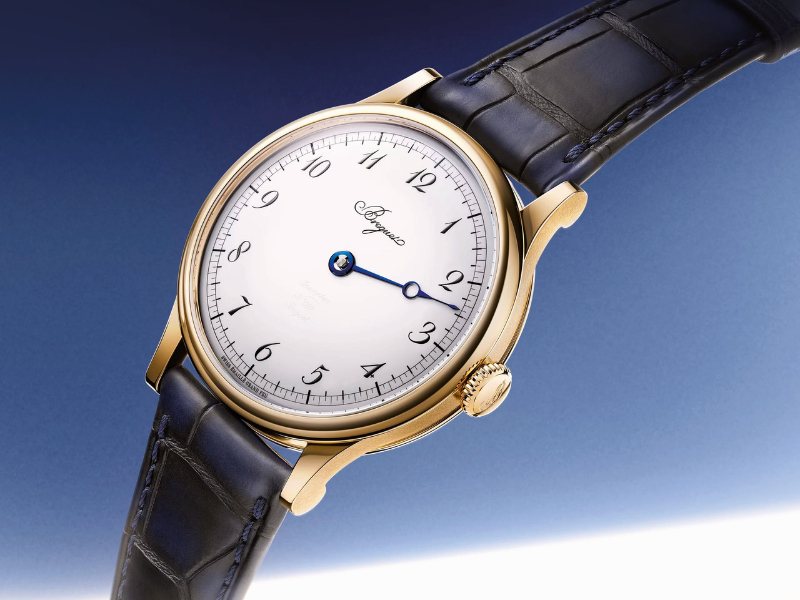
In a triumphant year marking its 250th anniversary, Breguet was honoured with the “Aiguille d’Or” Grand Prix for the Classique Souscription 2025. This exceptional time-only model, submitted in the Iconic category, was selected as the overall winner in recognition of its reverent tribute to Abraham-Louis Breguet’s most accessible historical masterpiece.
Created in 1795 to revitalise his business post-Revolution, the Souscription pocket watch was advertised via pamphlets as a robust timekeeper with a white enamelled dial and reliable movement. To confirm an order, a customer had to first pay a quarter of the price. This acted as a deposit for the workshop to acquire the supplies it needed to manufacture the watches, thus marking the start of series production.
Today, the anniversary model reprises many of the pocket watch’s hallmarks, including flawless grand feu enamel, the single flame-blued Breguet hand and engraved inscriptions on the enamel using a diamond-point pantograph. The maison also introduced Breguet gold in the Classique Souscription 2025 through its 40mm case and within, the new VS00 calibre dances subliminally at a frequency of 3Hz.
The Iconic Watch Prize went to Audemars Piguet instead for its Royal Oak Selfwinding Perpetual Calendar, triumphing over the likes of Anderson Genève, Bvlgari, Parmigiani Fleurier and Piaget. Powered by the new Calibre 7138, the timepiece in gorgeous 18-carat sand gold boasts an all-in-one crown system where all adjustments can be made easily without additional tools or risk of damage.
The newly revived Urban Jürgensen, now led by father-and-son duo Andrew and Alex Rosenfield — the former is the president of global investment and advisory financial services firm Guggenheim Partners — alongside master watchmaker Kari Voutilainen, took home Best Men’s Watch with the UJ-2. At its core is a double wheel natural escapement, a mechanism touted for its added efficiency. Featuring a power reserve indication at 12 o’clock and an offset subsidiary seconds dial at 5 o’clock, the timepiece marks a new contemporary design language for the Danish brand and this award is indication that it is on the right track.
2.png

Voutilainen also picked up the Artistic Crafts trophy for the 28GML SOUYOU, a masterpiece that unites the Finnish watchmaker’s expert skill with that of Japanese lacquer artist Tatsuo Kitamura. Harmoniously blending Eastern and Western influences, the mesmerising dial was created using the urushi lacquering technique and required over 1,000 hours of meticulous work.
Despite competing against a number of quantième perpétuels, Bovet’s Récital 30’s clever world time system on rollers dominated the Men’s Complication category. It allows frequent travellers to accurately display the 24 global time zones during four time periods of the year, negating the need to adjust for daylight savings. The roller at 2 o’clock indicates if it is Coordinated Universal Time (UTC), American Summertime (AST), Europe and America Summertime (EAS) or European Wintertime (EWT).
On the other hand, a more poetic approach was embraced by Chopard with the Imperiale Four Seasons, which won best Ladies Complication. At the heart of this creation is a rotating disc crafted in painted textured mother-of-pearl marquetry that completes a full rotation over 365 days. It also comes with four interchangeable alligator leather straps, each reflecting the palette of a different season.
Chopard’s 250-piece limited edition Alpine Eagle 41 SL Cadence 8HF also bagged the Sports Watch prize. It is the lightest watch ever presented in the Alpine Eagle collection, thanks to a mainplate and bridges made in ceramicised titanium. It houses a high-frequency 8Hz automatic movement, which leverages the properties of monocrystalline silicon for optimisation.
The flaming Gentissima Oursin Fire Opal by Gérald Genta was dubbed best Ladies’ Watch. Named after the spiky sea urchin, it is crowned with 137 individually set fire opals. Their brilliant hues are echoed in the orange cornelian dial framed by a faceted crystal. The honour was accepted by La Fabrique du Temps Louis Vuitton principals Michel Navas and Enrico Barbasini, both of whom worked with Genta himself and are responsible for the revival of his namesake brand.
Navas and Barbasini returned to the stage later on to receive a trophy for the Daniel Roth Extra Plat Rose Gold in the Time Only category. The iconic double-ellipse silhouette has a refined 7.7mm profile and introduces a warm, contemporary character using 5N rose gold. The open caseback reveals the Calibre DR002 — designed by the duo — and boasts a free-sprung balance with variable inertia weights for optimal chronometric performance.
body_pics.png
Bvlgari’s Octo Finissimo Ultra Tourbillon and Angulus’ Chronographe Télémètre Yellow Gold triumphed in their respective Tourbillon and Chronograph groups, while Zenith’s G.F.J. Calibre 135, which marks the brand’s 160th anniversary, won the Chronometry prize. Best Jewellery Watch went to Dior’s La D de Dior Buisson Couture, where an elaborate bouquet of diamonds, pink sapphires and tsavorites showcased the meticulous art of gem-setting.
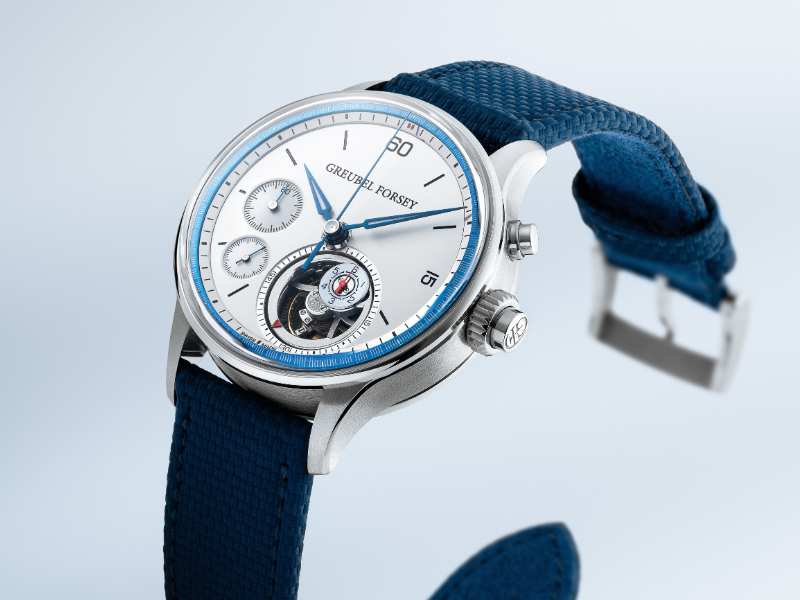
Greubel Forsey took home the Mechanical Exception prize for the Nano Foudroyante, a breakthrough timepiece that condenses several major complications into a wearable 37.9mm case. Apart from a monopusher chronograph and flying tourbillon, it also features a foudroyante dial that only uses 16 nanojoules per jump, compared to 30 microjoules in traditional designs — an incredible feat in nanomechanics.
Chinese indie brand Fam Al Hut’s Mark 1 Möbius was dubbed most audacious with its bi-axis tourbillon housed in a capsule-shaped case while the St Petersburg Easter Egg Tourbillon Clock by Russian watchmaker Anton Suhanov was crowned a Horological Revelation.
L’Epée 1839 received the trophy for Mechanical Clock with the Albatross L’Epée 1839 X MB&F, inspired by the airship in Jules Verne’s novel Robur the Conqueror. Meanwhile, MB&F’s love letter to the electrifying spirit of 1990s club culture, MAD 2 Green, won the “Petite Aiguille”, which is reserved for timepieces priced between CHF3,000 (RM15,700) and CHF10,000. As for the Challenge category, a contest for watches priced under CHF3,000, Dennison’s Natural Stone Tiger Eye In Gold reigned, beating the likes of Atelier Wen, Christopher Ward London and Kurono Tokyo.
This article first appeared on Nov 24, 2025 in The Edge Malaysia.