
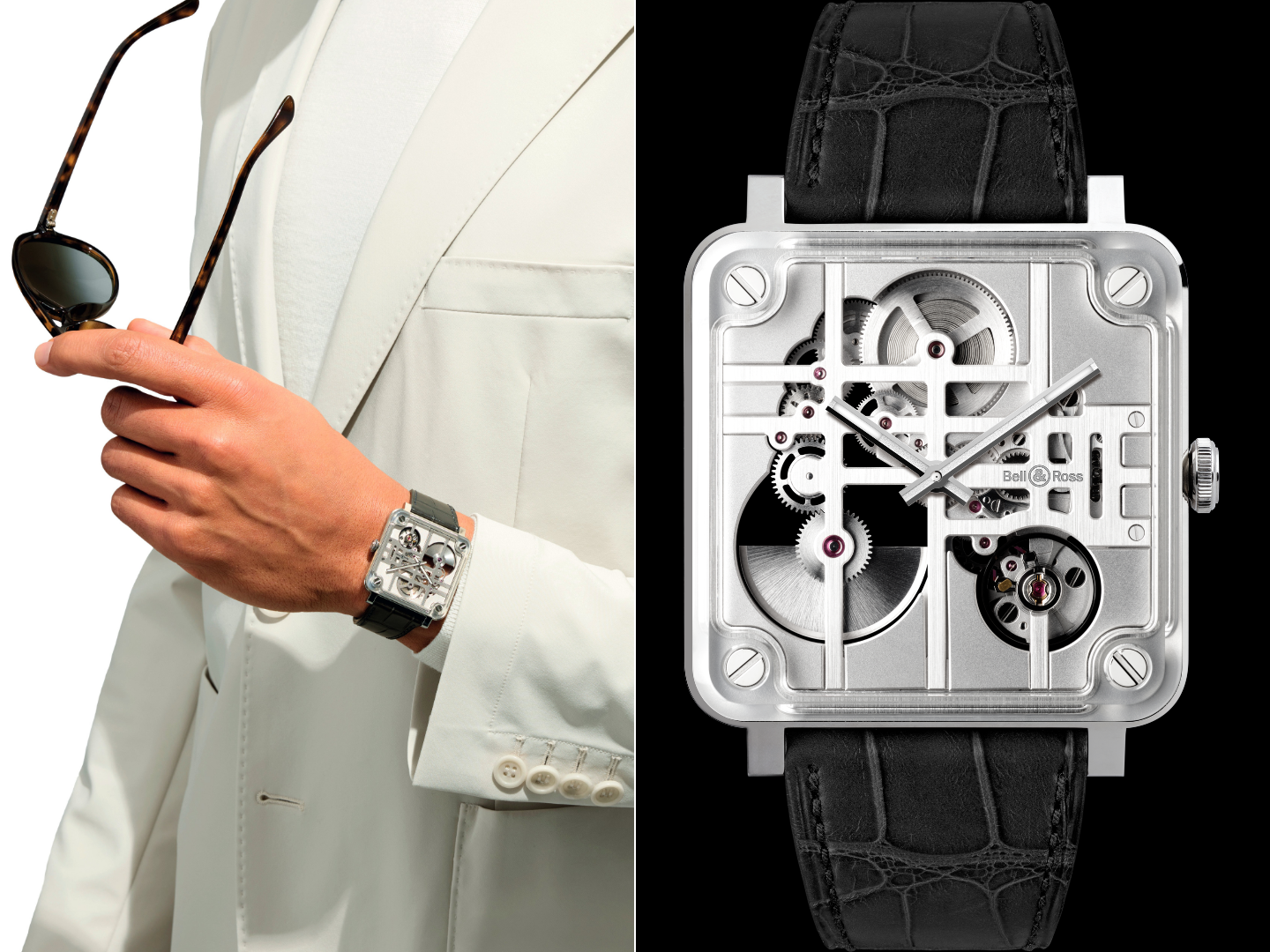
The BR-X3 Micro-Rotor combines innovative craftsmanship with technical rigour (All photos: Bell & Ross)
There is a particular breed of collector for whom a timepiece must do more than merely whisper of heritage and history. For the horological aficionado who also finds himself in the heart of the obsessive world of aviation, Bell & Ross has carved out an identity as the ultimate synthesis of both passions. Born out of a love for the skies and the supersonic jets that pierce through them, the Franco-Swiss maison, despite being only 32 years young, has developed an icon with its “circle within a square” aesthetic by directly translating the instruments in the cockpit onto the wrist.
Since 2005, the signature design of the BR-01, held by four screws, has been the North Star for Bell & Ross. It paved the way for the professional BR-03 and urban-centric BR-05 pillars. Today, these collections are pushing boundaries through the BR-X5 manufacture line and avant-garde BR-X3 — the “X” designation has long represented the brand’s skunk works — both of which serve as a high-performance canvas for stylistic experimentation.
Launched last September, the BR-X3 line stands as the final cornerstone of a streamlined portfolio. Envisioned as a souped-up evolution of the BR-03, it retains the 41mm silhouette but is reimagined as a complex, multi-part assembly with an X-shaped motif sandwiched between. Driving the timepiece is the COSC-certified BR-CAL.323, developed exclusively for the brand by Kenissi.
It was soon followed by the Night Vision, a luminescent camo edition inspired by the high-tech head-up displays found in fighter jet cockpits. Just as enthusiasts expected Bell & Ross to close the year and let the new design language settle, it did a 180° by dropping the BR-X3 Tourbillon Micro-Rotor, featuring a total stylistic departure that caught everyone off guard.
Over the years, the company has steadily reinforced its foundations, laying the groundwork to secure a foothold in the volatile industry. While others churned out references by the dozen to cater to fickle trends and fads, it kept its head down and stayed the course, refining its icon, solidifying its presence and sharpening its message.
Following the post-Covid boom, the sector has transitioned from a volume-driven model to one centred on intentionality and premiumisation. Watchmakers are moving up-market to reposition themselves away from cooling entry-level tiers. Scarcity has become the most potent tool for value retention as the industry becomes more polarised with ultra-luxury and independent watchmakers seeing sustained growth within the resilient enthusiast-collector segment.
1.png

The Tourbillon Micro-Rotor signals a strategic shift more than an aesthetic one. “The idea was to enter the world of haute horlogerie and demonstrate that Bell & Ross is capable of having its own approach,” shares de Nonancourt on a recent visit to Kuala Lumpur.
For the longest time, the brand relied heavily on ETA and Sellita movements, which kept its products within a certain price bracket. Now, through collaborations with specialists like Concepto, it is moving towards proprietary, architectural calibres.
“Bruno [Belamich, co-founder and creative director] wanted to do it in a way that was very graphic, where the movement is the hero,” he recalls.
True enough, the watch pivots from the company’s hallmark focus on legibility and utility, leaning instead towards pure mechanical spectacle. Held together by four iconic screws, thecase and movement form a single entity housed between a sapphire top and caseback. Combining a flying tourbillon and micro-rotor, the BR-CAL.389 calibre is spread thinly across a steel grid, exposing every bridge, wheel and ruby.
The highly skeletonised design draws from two distinct realms: the Cubist geometric abstraction of Piet Mondrian and the refined functionality of Charlotte Perriand. “Bruno himself is inspired by the Bauhaus movement. He wanted to do something very artistic. The challenge was to place all the components on straight lines — with as few as possible — so it’s like a piece of art,” de Nonancourt explains. The outcome is both striking and refreshing.
This year, the journey continues with the BR-X3 Micro-Rotor in a more accessible semi-skeletonised execution. Instead of finding ways to hollow out the movement, this reference compelled a discussion on how to populate its framework.
Certain windows are filled in to emphasise its main components while contrasting micro-blasted and satin finishes allow the grid architecture to retain its prominence. “You know a watch is perfect when it looks very harmonious but you can’t pinpoint why. It’s a good feeling,” de Nonancourt says.
2.png
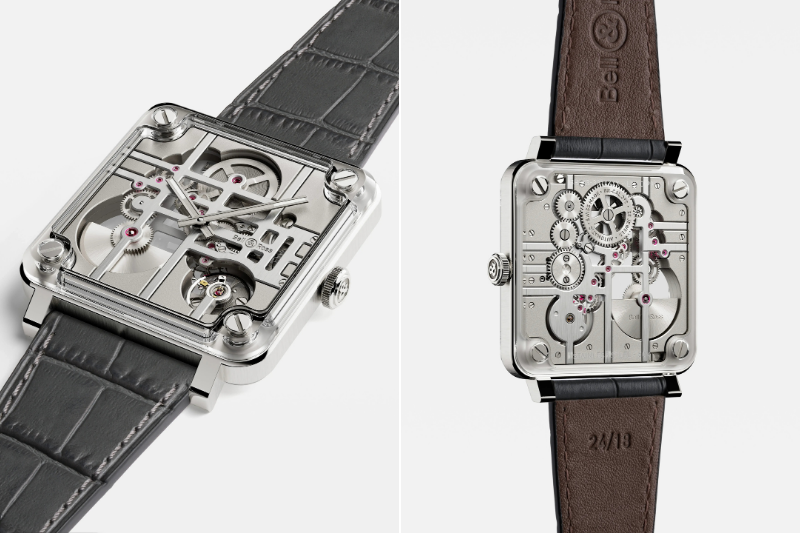
Two photoluminescent hour and minute hands blend into the dial. While last year’s tourbillon featured an off-centred time display, the Micro-Rotor opts for central hands and a traditional balance. Powered by the BR-CAL.390, the 40mm automatic timepiece measures just 9mm thick and boasts a 48-hour power reserve as well as a five-year warranty.
The watch is limited to a strictly controlled run of 99 pieces. While de Nonancourt attributes this to the production constraints of a smaller firm, it is a double-edged strategy designed to ensure demand outstrips supply.
He offers a glimpse into the maison’s upcoming priorities: “Now that we’ve established our two pillars and different levels of sophistication, we can animate those products, come up with new executions, limited-editions and partnerships. That’s the direction from now on. We want to attract more collectors by elevating the brand with haute horlogerie.”
Belt-tightening and recalibration measures are evident with its withdrawal from Watches and Wonders Geneva. “It was not an easy decision. It takes a lot of resources and time to prepare for the fair, and we felt they would be best invested in organising local events to target end-customers,” he shares matter-of-factly.
“It doesn’t mean we will stop participating in events. Events like Dubai Watch Week and Geneva Watch Days, which focus on end-customers, are perfect. The idea is to concentrate on those.”
In a world of horological titans, Bell & Ross survives by being niche and nimble. With less room for error, the stakes are inherently higher when navigating a shifting landscape. “As an independent, smaller brand, you need to be doing things differently and bring innovation to beat the market. We keep trying all the time,” he says.
This article first appeared on April 6, 2026 in The Edge Malaysia.