
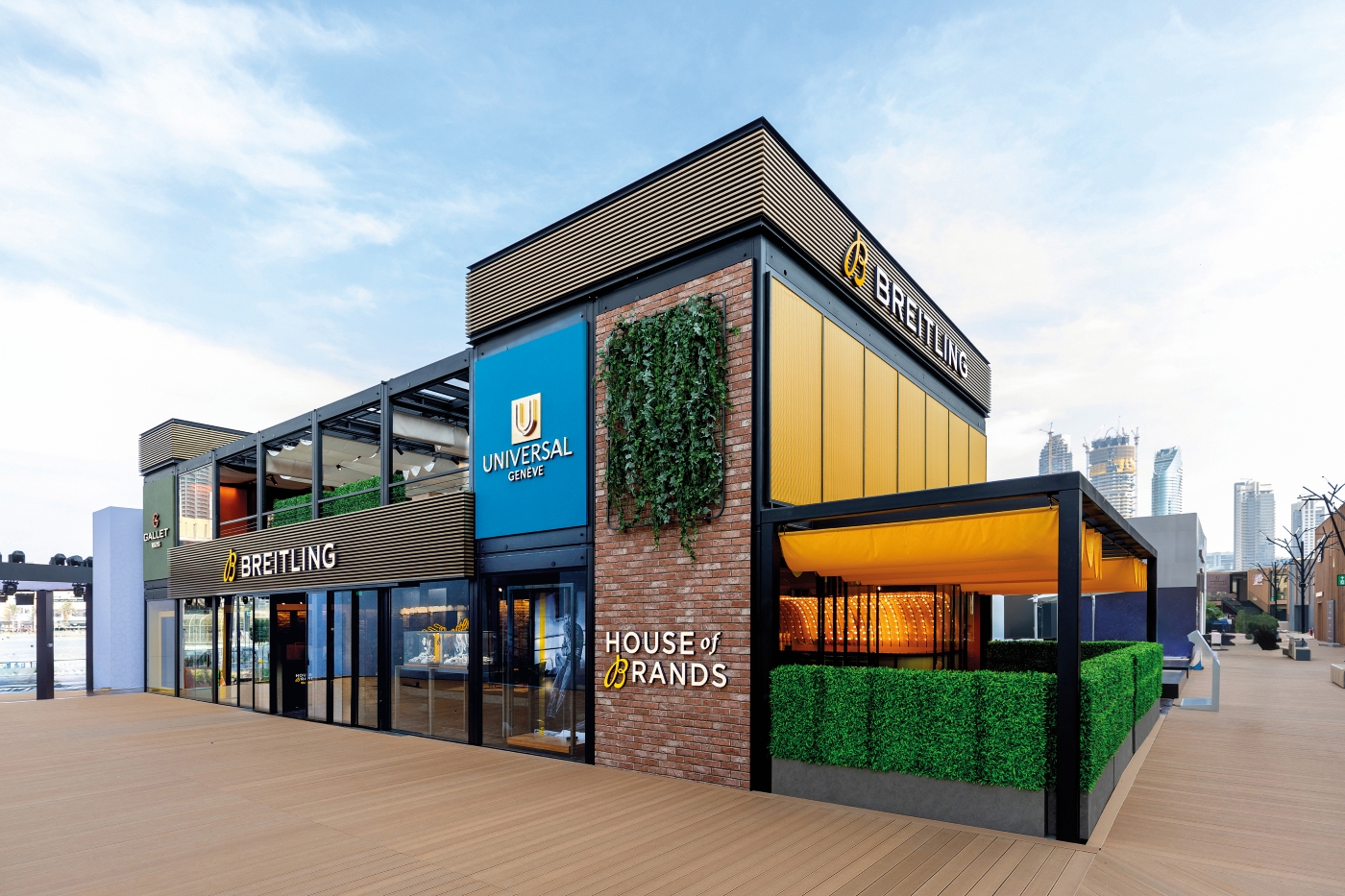
Brietling opened a dedicated two-story pavilion at Dubai Watch Week (Photo: Brietling)
The horological calendar’s gravitational centre has unequivocally shifted east. Marking a significant dual milestone, Dubai Watch Week (DWW) returned for its seventh edition from Nov 19 to 23. The now biennial event not only commemorated a decade since its inception, but also anchored the year-long 75th anniversary celebrations of its founder and the UAE’s premier purveyor of luxury timepieces, Ahmed Seddiqi & Sons.
Set against the backdrop of the perpetually shimmering Burj Park, transformed into a high-gloss cathedral of haute horlogerie covering 200,000 sq ft — which was erected in just six weeks, according to DWW CEO Hind Seddiqi — the outdoor event gathered over 90 brands and attracted more than 49,000 visitors, a 113% increase from the previous edition in 2023.
DWW has always distinguished itself from traditional trade shows by prioritising education and intellectual dialogue over commercial sales. The event is entirely free and open to the public. It democratises access to what is often an exclusive endeavour, allowing enthusiasts of all levels to mingle with horology’s greatest minds — from the CEOs of Geneva’s most revered maisons to the audacious independent artisans who are redefining the very limits of mechanics — in a relaxed setting.
This year’s DWW inaugurated plenty of firsts, notably a keynote address delivered by the typically elusive Rolex CEO Jean-Frédéric Dufour. As he shared the stage with Abdul Hamied Seddiqi, chairman of Seddiqi Holding, Dufour emphasised the importance of education, revealing that Rolex currently has 500 apprentices across 26 areas of expertise. “We need young people. An industry without newcomers is a little bit of a dying industry,” he said.
forum.png
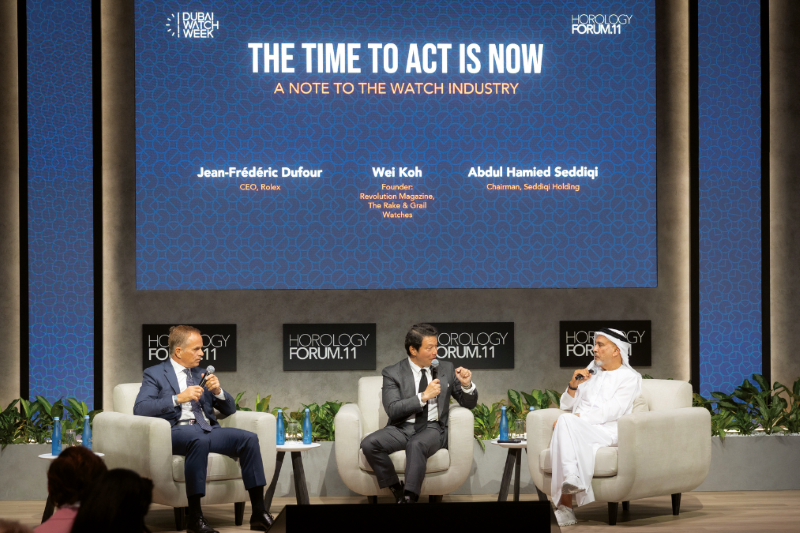
Dufour also stressed the necessity of sustaining the sector’s overall appeal. “It’s important to keep it attractive for new talents. We have 85 doctors at the highest level of education in Switzerland in our R&D department. We employ more than 2,000 engineers. We have 1,900 watchmakers in the world for after-sales service. They don’t want to work in a boring industry. They want to work in an industry that makes them dream of opportunities and their future.”
An annual capital expenditure of about CHF100 million (RM515 million) is dedicated to the upkeep and upgrade of its high-tech machinery, he noted. This continuous investment underpins the company’s ability to manufacture a million timepieces every year. While AI is extensively deployed for machine programming and quality control testing, Dufour stipulated that it remains incapable of replacing the essential human element required for true craftsmanship and facilitating meaningful customer engagement.
At DWW, attendees were also privy to engaging workshops, activities and an intimate roundtable discussion with Audemars Piguet CEO Ilaria Resta, Breitling CEO Georges Kern, Chopard co-president Karl-Friedrich Scheufele and Hublot CEO Julien Tornare.
Resta delineated the acute economic pressures confronting suppliers and component makers amid soaring gold prices and diminishing consumer demand, exacerbated by the introduction of US tariffs, despite it being reduced from 39% to 15%.
1_chopard_luc_grand_strike.jpg
“What we have seen has been massively amplified for them. We will navigate out of this crisis, we are quite confident. But if we do not go back to responsible growth and align our ecosystem and supply chain truly end to end with our suppliers, then I think we will see this coming back again,” she said.
Audemars Piguet’s recent acquisition of a majority stake in Inhotec SA demonstrates its proactiveness in providing strategic support to the components manufacturing company. At DWW, its House of Wonders — the most visited exhibition at the fair — welcomed visitors to explore the heritage, craftsmanship and collaborative spirit that have shaped the brand since 1875. It included details from the early days of the établissage system — a network of highly specialised workshops collaborating in the Vallée de Joux — to the present, highlighting the community of passionate individuals who are helping elevate watchmaking around the world.
At the discussion, Kern disclosed more information on two watch maisons that will be launched next year. Universal Genève and Gallet will join Breitling under what will be known as the House of Brands, a portfolio of exceptional and differentiated names that offer greater diversity across price points and lifestyles. They will be managed under one visionary strategy and will enable the company to serve distinct segments of the market while revitalising legacies and drive the industry forward.
2_urwerk_and_ulysse_nardin_s_ur-freak_is_one_of_the_most_synergistic_collaborations_of_the_year.jpg

While these dialogues have solidified DWW’s stature as a critical venue for constructive discourse, the week was equally defined by a remarkable line-up of impressive product launches.
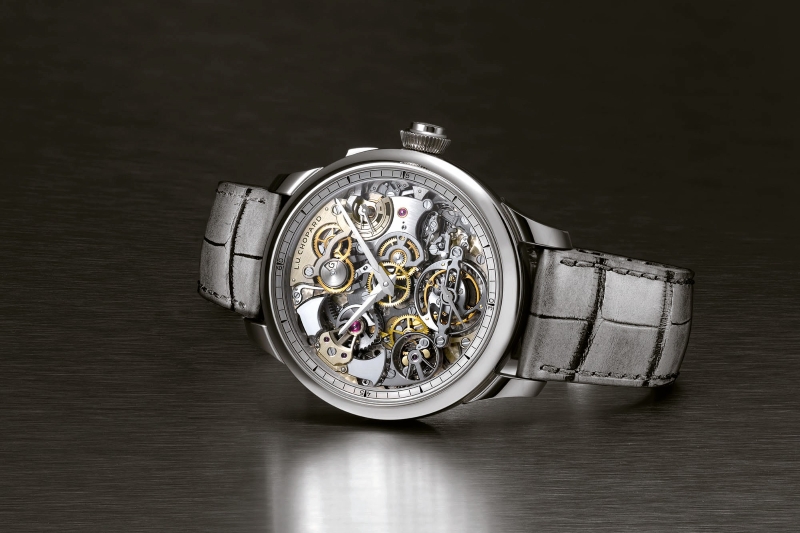
The star of the show hands down was the Chopard LUC Grand Strike, an opus of mechanical mastery featuring a grande sonnerie, petite sonnerie and minute repeater with proprietary sapphire crystal gongs. Over 11,000 hours of research and development went into constructing the most complex watch ever created by the manufacture, which celebrates its 30th anniversary this year. The 686-component timepiece draws on 10 technical patents — five of which were newly developed for it — to produce the most crystal clear chime that sends tingles down the spine.
In the spirit of partnership, Urwerk and Ulysse Nardin joined hands to release the Ur-Freak, which merges the former’s satellite display system with the latter’s avant-garde rotating concept into a single, fully integrated new in-house calibre. Limited to 100 pieces, it embodies their shared values of independence, innovation and creative audacity, making it one of the best and most synergistic collaborations of the year.
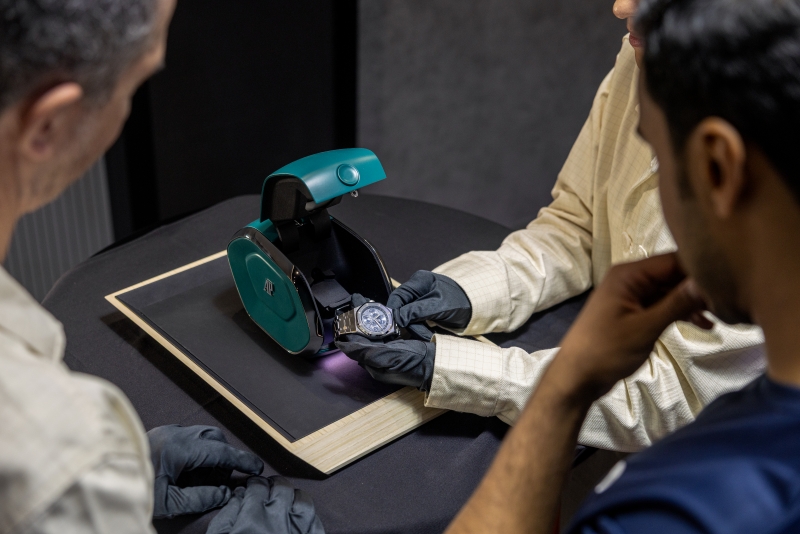
co-developed_by_dubai_future_labs_audemars_piguet_s_intelligent_watch_box_can_automatically_set_and_wind_the_brand_s_latest_41mm_royal_oak_perpetual_calendar.jpg
The single most compelling trend at DWW, however, was the emphatic return of the exotic material dial. Biver expanded its Automatique line through the Atelier Series, which presented seven new references utilising unique hard stones, from mahogany obsidian to lavender jade. Similarly, Louis Vuitton added vibrant malachite and turquoise dials to its Escale collection, transforming the watch face into a wearable canvas of natural colour and texture, while Gérald Genta endowed its spiky Gentissima Oursin with a celestial touch with blue and green meteorite.
A number of maisons also took the opportunity to pay homage to the host country. Bvlgari tapped the talent of Emirati artist Matter Bin Lahej for a titanium Octo Finissimo adorned with laser-engraved Arabic calligraphy across its case, bracelet and dial. The text draws inspiration from the words of His Highness Sheikh Mohammed bin Rashid Al Maktoum, vice president and prime minister of the UAE: “The future will be for those who can imagine, design and implement it. The future does not wait, but it can be designed and built today.”
Not forgetting the retailer that made it all happen, Bovet’s Récital 30 Worldtimer, which recently won the Men’s Complication Prize at the Grand Prix d’Horlogerie de Genève, received a more localised treatment for Ahmed Seddiqi & Sons’ 75th anniversary. The Seddiqi edition features Dubai, highlighted in red and printed in Arabic, on one of its rollers in its unique world time display. On the reverse, the caseback is laser-engraved with the retailer’s anniversary emblem and the limited edition number (only seven pieces) in Eastern Arabic numerals.
In essence, the atmosphere at this year’s edition of DWW was less of a trade show and more of a vibrant community gathering. It served as a potent reminder that face-to-face interaction — the shared laughter, quiet conversations over a new prototype and handshake between a master watchmaker and lifelong collector — can reignite personal connections often lost in a digitised world. After all, beyond the intricate gears and esoteric complications, people and emotion are what truly makes the industry successful.
This article first appeared on Dec 8, 2025 in The Edge Malaysia.