

Master Kam Sin Kiew has been performing since she was a child (Photo: Kam Sin Kiew Art Crew)
The lights are dim, and an ominous tone reverberates through the theatre at the Damansara Performing Arts Centre, Petaling Jaya. Smoke drifts across a bare stage, set only with a backdrop of a gloomy forest.
The audience fidgets as tension builds and breaks in brilliant fashion. From the wings, an elaborately dressed actor glides onto the stage, her headpiece and outfit dazzling under the lights as she takes step after graceful step to the centre.
What follows are tales embroiled in adventure, lust and love. The brave protagonist, the Exorcist, saves a witless young man from the grasp of a ghost he harassed; she later defeats a seductive White Snake demon and, during her travels, falls in love with a mysterious man.
Through well-practised movements, powerful songs and cheeky dialogue, Kam Sin Kiew (KSK) Art Crew pulls off The Dark Journal 2 — an original, never-before-seen routine — with ease and elegance, subverting the expectations of Cantonese opera as an art performed solely for religious events or in temples.
At the helm of the group is Master Kam Sin Kiew herself. Accompanied by her daughter and fellow producer See Wan, Kam tells Options how she has been performing for as long as she can remember, with her first role being at age 10, alongside her older sister. Born into a family of Cantonese opera performers, she eventually left her home country of Hong Kong for Malaysia in 1988, where she continued practising the traditional art form.
“When I first arrived, there were lots of shows in temples and during religious festivals, though not as fancy as the ones you see now,” she says. Once a staple in the world of entertainment, opera has since lost its standing. “Things have changed. People nowadays turn to TV shows and movies, while rituals and events are no longer as active as they once were.”
1.png
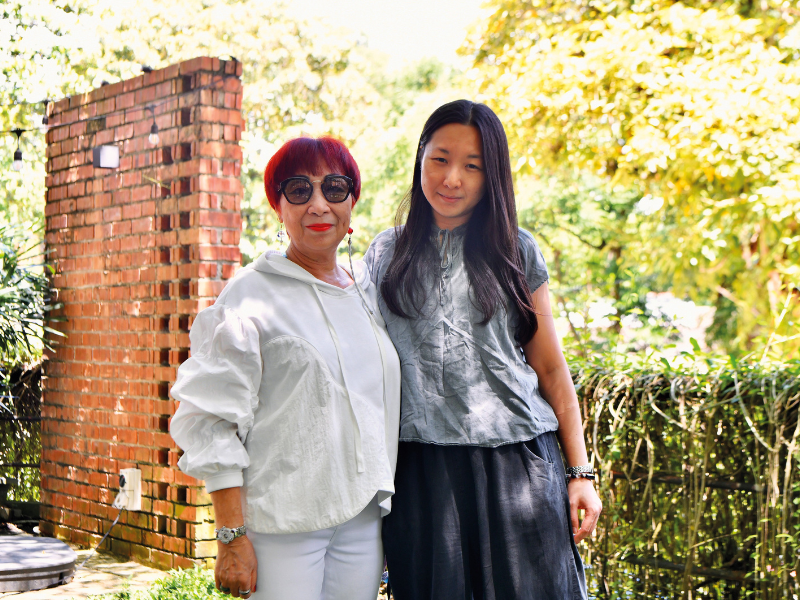
This has not stopped Kam from pursuing what she loves and does best. Alongside her troupe, founded in 2012, she writes, teaches and stages annual shows — not only to keep the art form alive, but also promote it nationwide.
Her first hit in Malaysia was her role as Wang Zhaojun, one of China’s legendary Four Beauties — women who made great changes in the country through their influence over its rulers. Following her standout performance, and with attention firmly on her, she shifted focus from performing classics to writing original works instead.
Cantonese opera shows are lengthy, stretching up to four hours to accommodate singing sequences, martial arts routines and, on some occasions, live music. Kam’s years of experience culminated in a self-written performance on Empress Wu, China’s sole female sovereign. It was the first time the crew had stepped into a proper theatre, See shares.
“I’ve played so many types of characters over the years,” Kam muses, when asked what her favourite role was. “There’ve been happy and sad characters, even warriors, prostitutes and beggars. Every one of them has its own challenge, guiding me and inspiring me to perfect these roles.”
With a wealth of alternative media options — such as binge-watching the latest season of Wednesday on Netflix — the crew faces challenges in engaging younger viewers. The perception that Cantonese opera can be fully appreciated only by those who understand the dialect may also limit its appeal among other ethnic groups.
To address this challenge, they have made small tweaks to the traditional performance to make it more accessible in multicultural Malaysia. Spoken synopses in both Chinese and English are provided before the show, giving viewers a clearer understanding of key story elements.
The singing is done mostly in an older form of the language that may be hard for even native speakers to understand. See explains: “To help our viewers comprehend the stories better, we include dialogue that uses everyday Cantonese. Most of what is being said is already expressed in our songs, but we emphasise it again through spoken word.”
Even the setups have been refreshed. Traditional shows used painted fabric backdrops, but the crew now employs modern technology — including animated backgrounds and varied lighting — to support the actors and fully immerse the audience in a scene. A cherry blossom grove offers lovers a quiet, peaceful spot to share a tender moment, and a derelict house sets the stage for a haunting.
The productions use recordings from the 1940s instead of live music to preserve the artistry of musicians who have long since passed or retired.
“We want to use recordings to ensure the best experience for our audience,” See elaborates. “With a balance of singing, dialogue, sound effects and authentic music, we can give them a new experience. They might say, ‘Wow, I never knew Cantonese opera could be performed this way!’”
body_pics_4.png
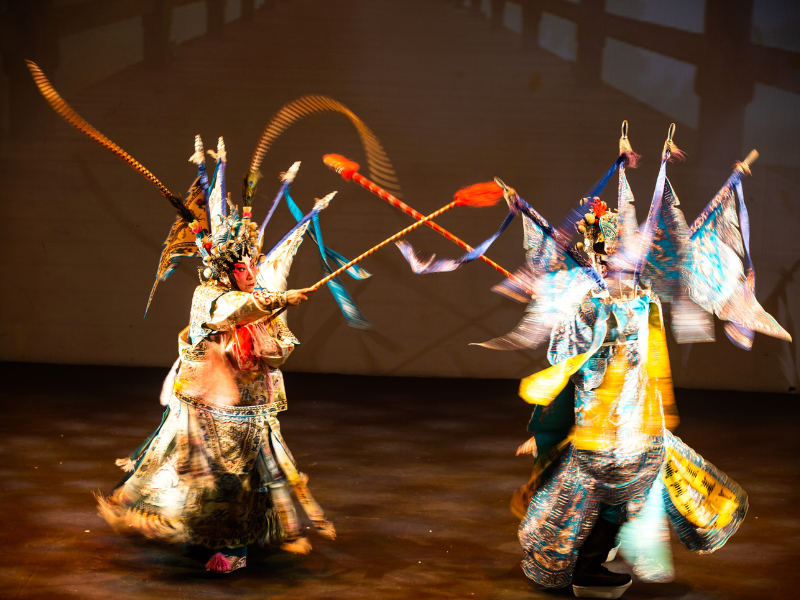
KSK Art Crew continues to fine-tune its search for balance between old and new in its latest works. The Dark Journal 2 served as a sequel to last year’s riveting tale of a famed Exorcist and the many monsters she faced.
Written by Kam, the story is described as a compilation of the hallowed creatures of the night, each one catalogued in fantastical detail by the main character. “Horror and fantasy themes are popular in traditional Cantonese opera, but they’re very much about scaring people. We don’t want to do just that. We want our audience to cry and laugh, too.”
Lustful snake demons and vengeful ghosts aside, she has tied in another classic of opera routines: love stories. The Exorcist is charmed by her fellow traveller, but their story takes a dark turn when he is revealed to be a vampire — one of the many evils she hunts. “Instead of the traditional jiangshi [Chinese hopping vampire], we’ve gone for a cool, elegant and charismatic version!” says See with a grin.
The two characters are left fighting to the death atop a stormy mountaintop before meeting their end at each other’s hands. “We wanted a very tragic, heart-rending tale, where the two could truly never be together in any way, with no solution to their problem. Such an ending leaves a stronger impression on the hearts of audiences.”
Though the Exorcist’s tale has ended for now, it has left viewers wanting more original tales from Kam’s creative mind. When can they expect something exciting and new?
She says the troupe aims to stage one performance a year, usually short stories or remakes of originals.
“Sometimes, we get invited to different places, like [live music space] BoboKL and artistic spots like Kwai Chai Hong in KL. We try to show that what we’re doing is very much an art,” says See.
Learning to navigate a cosy lounge differs greatly from having the luxury of performing on spacious stages with spotlights. As such, the team has to find new ways to maintain the elegance and majesty of their shows despite constraints.
2.png
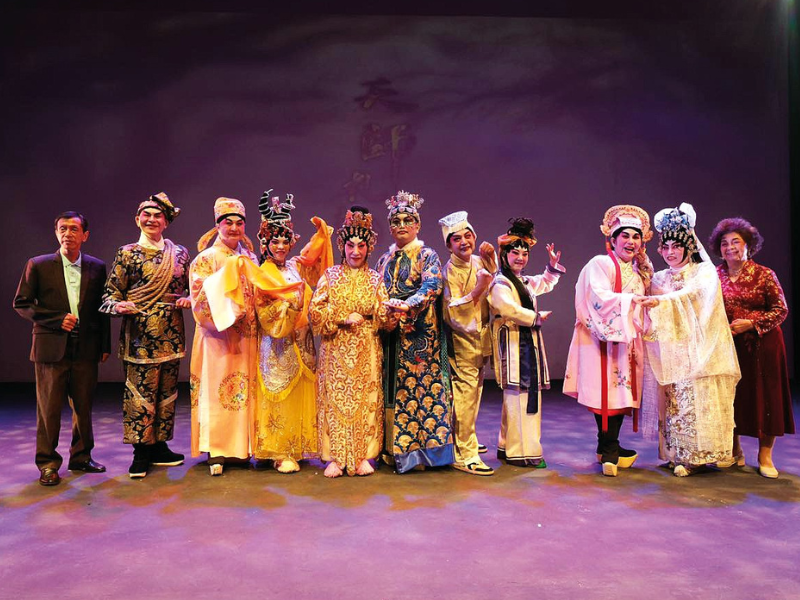
Kam mentors about 20 students through various routines to perfect their form. Most are in their 20s to 40s and come with a passion for Cantonese opera, from theatre backgrounds or love the performing arts.
Even senior citizens take up the art, as they have more time on their hands and want to stay active. Aspiring artists should have some understanding of the language; if not, Kam provides lessons — sometimes one-on-one — to help them improve. Students also learn voice projection and how to hit the right notes in songs.
“You need patience and passion,” she says. “The art has to be learnt continuously and is a big commitment. My older actors have been with me for 10 to 20 years now.”
Younger artists get to try their hand with backstage equipment, from making and preparing props to managing rehearsals and fellow actors. Kam states: “It’s important for them to learn a bit of everything and how things function. That way, we can all help each other out.”
Cantonese opera has long been elevated beyond its origins and purpose as a ritualistic performance. Though See notes that the art is struggling, both she and Kam are convinced it is not going to fade out anytime soon. “It may be slow, but there are so many genres of Chinese opera, not just the one we perform. In Malaysia, Hokkien and Teochew shows are still around,” Kam says.
See believes what KSK Art Crew does is no different from Western shows. “There are no barriers when it comes to art. Even though you don’t understand the language, you feel emotions from the expressions or actions in the shows.”
The duo is determined not to compromise or dilute the essence of Cantonese opera just to keep up with the times. While ordering custom-made costumes and booking spacious venue rentals can be costly, they believe these elements are essential to leave a strong impression on curious watchers.“Our audiences also include other races in Malaysia, who really love the emotion and energy in our shows … People are so appreciative of each other’s culture,” See says, smiling.
Kam remains optimistic, too, that more people will want to learn or watch the art. “Young or old, as long as you like it, you can come and join us in any way. Hopefully, we can do more productions soon!”
This article first appeared on Sept 22, 2025 in The Edge Malaysia.