
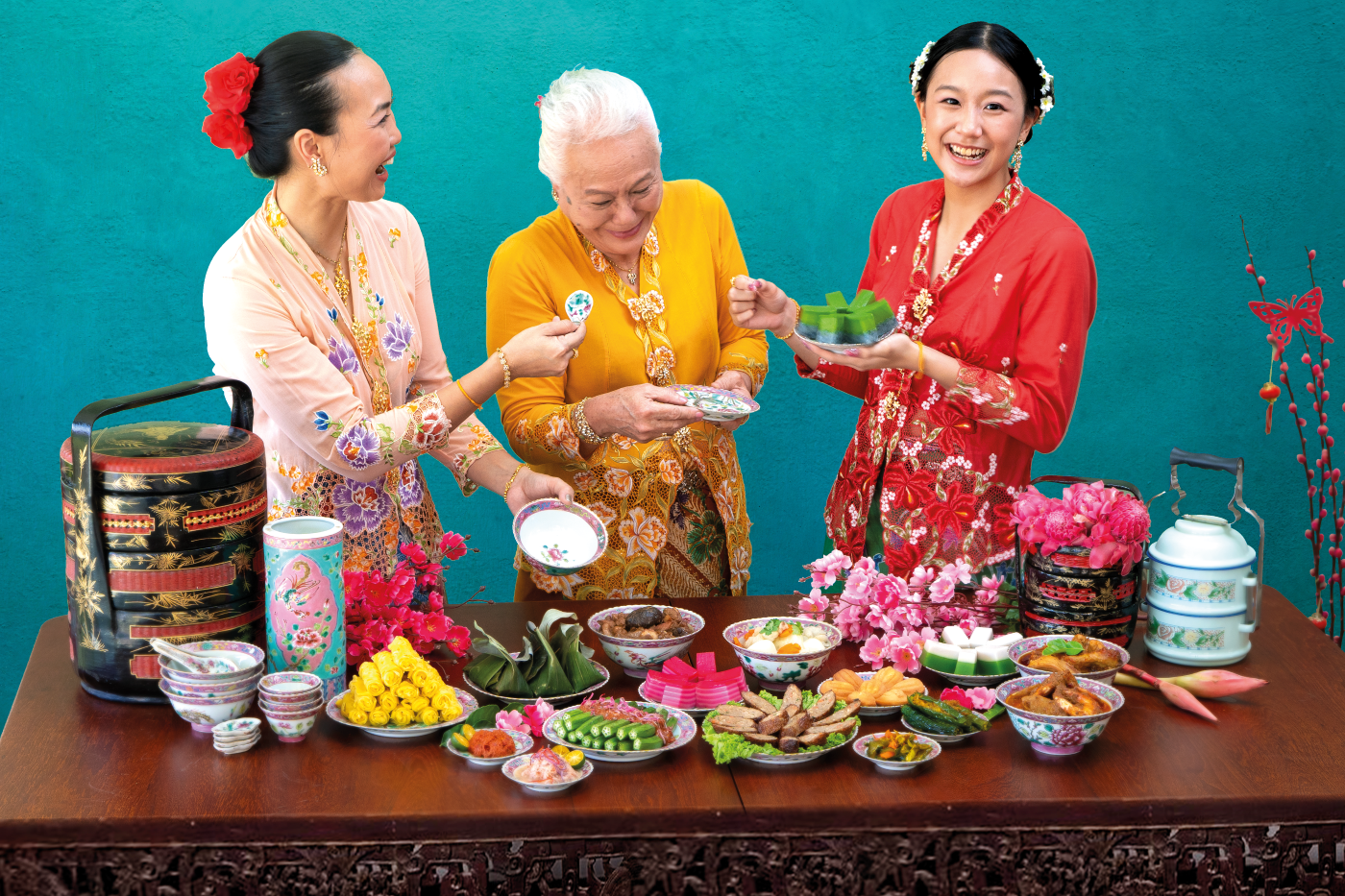
The convention campaign images depict three generations of Nyonya women (Photo: Persatuan Peranakan Baba Nyonya Kuala Lumpur & Selangor)
In late October, Baba Nyonya communities across Malaysia rejoiced when it was announced that Peranakan Chinese hailing from Melaka could officially register their ethnicity on their birth certificates. For many, this long-awaited movement is a first step towards not just cementing Peranakan culture in the nation’s history, but ensuring the traditions and heritage are given a more prominent place in modern society.
This initiative, to be extended nationwide by January 2026, did not materialise through pure luck, but the endless work of associations around the country. In recent years, the efforts of these communities have spread awareness of the group’s cuisine, crafts and practices, pushing this vibrant culture further into the public eye. In 2024, the Unesco inscription of the kebaya, the traditional blouse and sarong ensemble donned and popularised by Nyonya women, marked an era of wider recognition and appreciation for Peranakan culture — and it seems this upwards trajectory has only just begun.
From Nov 21 to 23, Kuala Lumpur will host the 36th International Baba Nyonya Convention (the last time the honour fell to Malaysia was in 2013). Hosted by Persatuan Peranakan Baba Nyonya Kuala Lumpur & Selangor (PPBNKLS) with Dorsett Grand Subang Hotel as the venue, the event will bring together over 500 delegates from 15 associations from across Southeast Asia and Australia. This year’s theme — Bridging Generations, Preserving Legacy — aims to connect generations of Baba Nyonya to secure the transfer of traditions from elders to youths.
20251111_peo_press_conference_peranakan_baba_nyonya_kl_selangor_zhd-10.jpg

While the convention is limited to delegates only, PPBNKLS will also hold a special Cultural Bazaar showcasing local and international vendors offering traditional and contemporary textiles, accessories, culinary essentials and handicrafts. The general public will also be able to indulge in the hotel’s Peranakan-themed Weekend Hi-Tea until Dec 31.
Organising chairman Baba Cedric Tan says events like these are critical for immersing the public in culture. “We’re not just talking about Peranakan culture in conference rooms — we’re cooking, wearing, performing and making it. When you walk through our bazaar and watch a master craftsperson bead kasut manek, that’s living heritage. When you taste authentic Nyonya kueh or witness live joget, you’re experiencing what makes us Peranakan, not just reading about it,” he says.
These experiences are key to attracting younger audiences who, in an increasingly digitised world dominated by Western influences, may feel detached from their roots. “Young people connect with culture through experience, not bureaucracy,” Tan says. “The convention creates spaces where people experience culture firsthand.”
20251111_peo_press_conference_peranakan_baba_nyonya_kl_selangor_zhd-36.jpg

PPBNKLS president Nyonya Vivienne Lee agrees. She notes that nurturing youths’ curiosity and genuine interest starts with providing a space for them to learn without fear or pressure. Here, they can strike up conversations with elders, meet artisans and engage with the culture in ways that are meaningful and attainable for them. “They don’t have to do everything perfectly. Ours is a heritage shaped by change and modernity. Peranakan culture has already evolved so much from its peak in the late 1890s and will continue to do so.”
Lee hopes these events will also provide independent entrepreneurs with a stage to amplify their unique voices. Across different groups, from the Melakan Chettis to the Peranakan Jawi, the same products take on different variations with their own distinctive twist. “Many Peranakan crafts are highly intricate. We want to give artisans a platform to demonstrate their mastery and impart stories.”
This article first appeared on Nov 17, 2025 in The Edge Malaysia.