
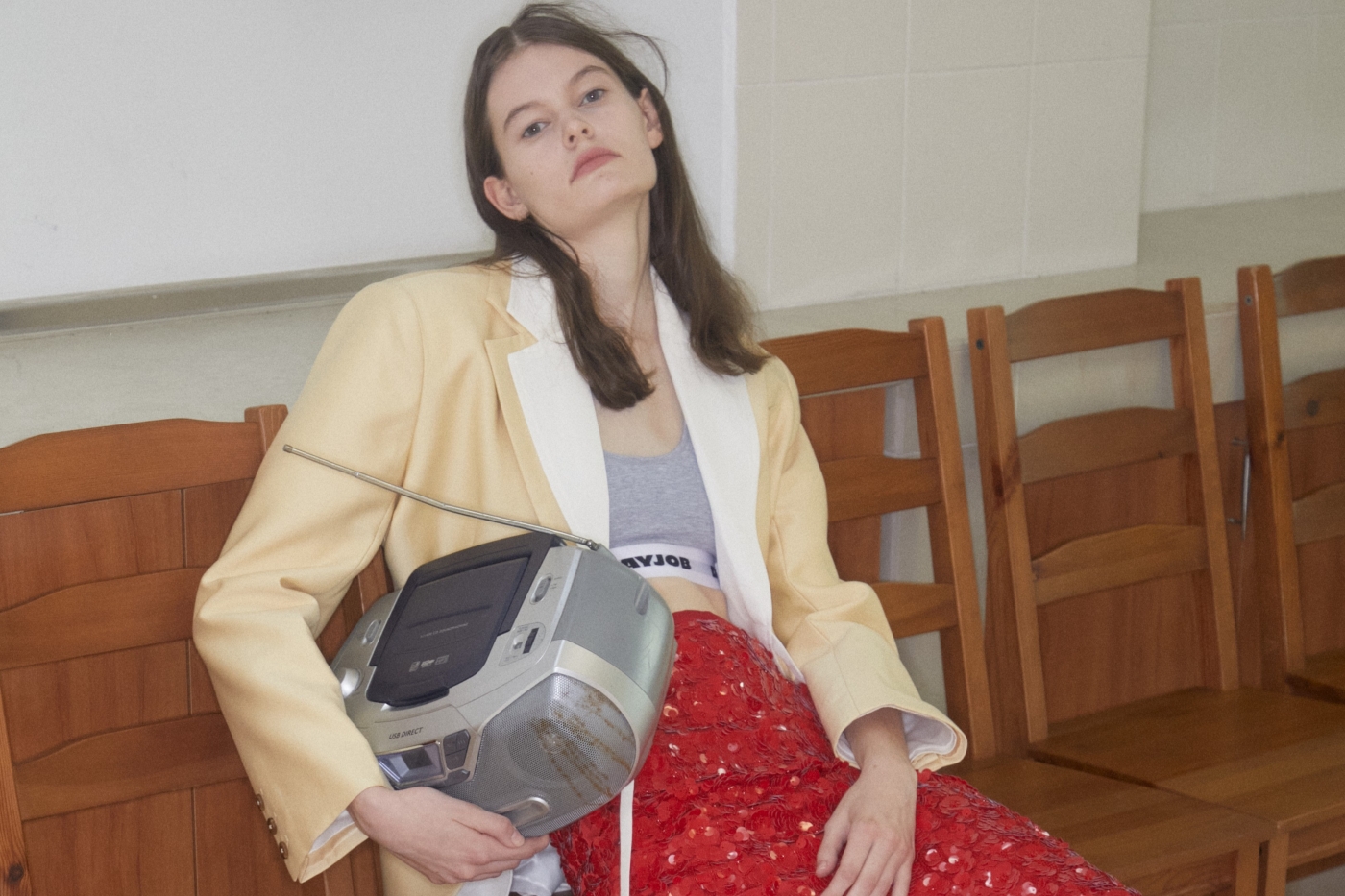
'Employee of the Year' was showcased during Spring/Summer 2026 Fashion Week in Shanghai (All photos: Dayjob)
Easing into the New Year brings about gushes of quiet promises — a fresh start in hopes that things might feel lighter once the calendar turns. The optimism is almost ritualistic, especially in the context of career. New goals and renewed motivation are chances to begin again.
Yet, for some, the year does not start anew so much as it continues from where it left off. Exhaustion lingers while the boundaries between ambition and fatigue blur, heightened by economic uncertainty, shifting definitions of success and the relentless pace of modern work culture.
In certain cases, burnout is an ongoing condition that defines one’s relationship with labour, shaping how they move throughout their days and, particularly, dress at their job. It is within this space that Dayjob positions itself — not as an escape from work, but instead as a reflection of it. Rather than romanticising productivity, the brand finds meaning in its aftermath by translating the emotional weight of modern labour into clothing.
What began as a group chat of venting sessions turned into a creative outlet for five friends. Co-founder Jonathan Liang shares how the ex-colleagues bonded over trauma through their fair share of corporate experiences — “Over one online meeting, we thought wouldn’t this be funny as a brand? We suppose it wasn’t so funny after all when this materialised.”
cloth.jpg
A familiar figure in the creative scene, Liang runs the label together with Lily Hamid, Brendan Tee and two other co-founders who remain anonymous at request. Each individual brings a different skillset to the table, coming from the realms of fashion, marketing, retail and design. Looking after Dayjob as a “side hustle” to their respective contractual commitments plays further into the paradox of the concept.
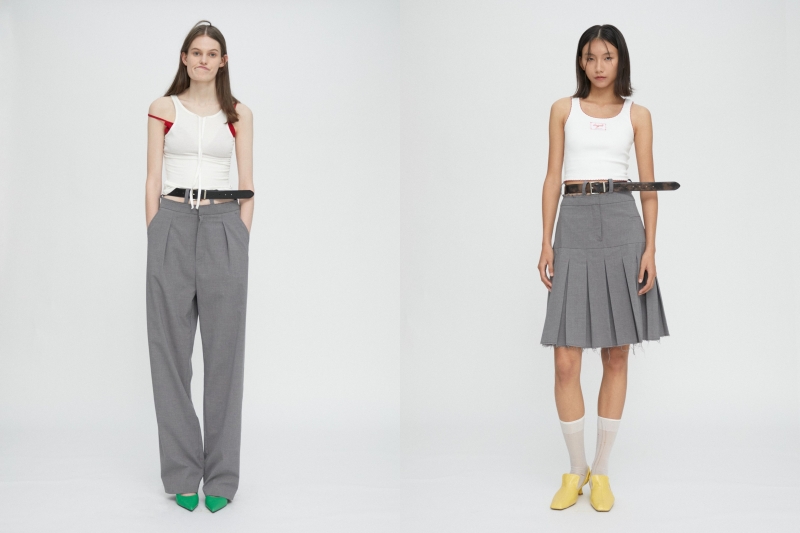
Recently, the first complete collection titled Employee of the Year was unveiled at the Shanghai Spring/Summer 2026 fashion week in China, which exhibited a “tightly edited” ensemble of work essentials.
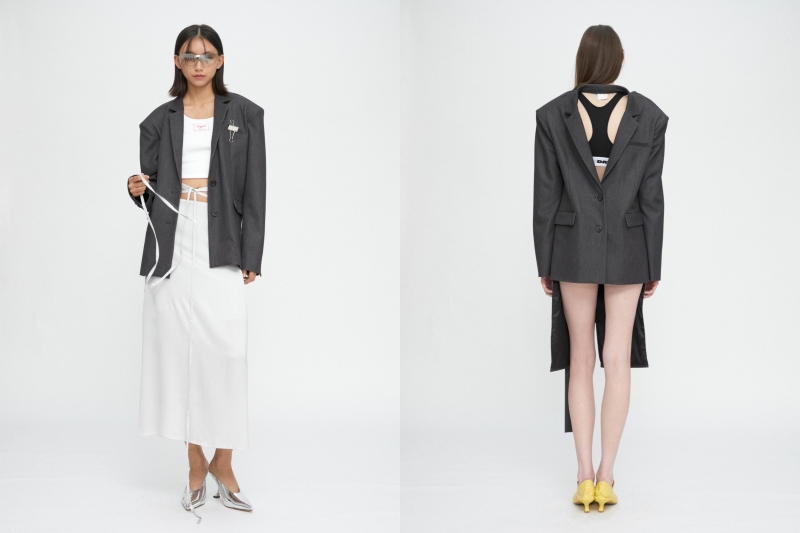
The results were drop-shoulder blazers with low backs paired alongside casual tops and loose bottoms in reimagined textures. Blends of sheer and opaque fabric presented in muted colours exuded classic looks in a more relaxed form.
Highlights of this debut include multipanel bobbinet trousers with chantilly lace trimming accessorised with vintage leather belts; a jacket with a detachable lining; apron skirts worn over intricate embroidery as a nod to subversive details.
A self-described “product of trauma”, Dayjob crafts its identity through satire and sarcasm. It draws a line of relatability with honest narration, utilising lingo commonly used among Gen Zs and Millennials. One would assume that there needs be an obligation to balance this with a sense of sincerity, to which Liang brazenly shares, “There is just pure irony. We believe fashion should never be taken too seriously.”
cloth2.jpg
Using style and storytelling, Dayjob immortalises “tired but thriving” members of the workforce — the overachievers, people-pleasers and quiet quitters. Acknowledging the capacity for organisational cultures to be overwhelming and toxic, it attempts to uplift the working class with wearable wit.
“It is a caricature of people we meet in the office, so the styling mimics an exaggerated version of these characters,” Liang explains. The pieces lend a sense of exposure that plays on corporate jargon — backless poplin cotton shirts represent the idea of “circling back” while loose virgin wool jackets with hanging ribbons frankly illustrate “hanging by a thread”.
Despite the zeitgeist-y take on the 9-to-5, some elements of office dressing have been kept intentionally (with a pinch of disruption). A-line skirts, constructed with silk viscose rather than the usual simpler, stretchable textile, make reference to professional women.
Staples are given a contemporary and whimsical touch — the standard polo tee is elevated, made with soft bamboo fibres. From a technical standpoint, Dayjob advocates for natural materials and high-grade textiles to ensure the garments feel as good as they look, ensuring sustainability and longevity in the wardrobe.
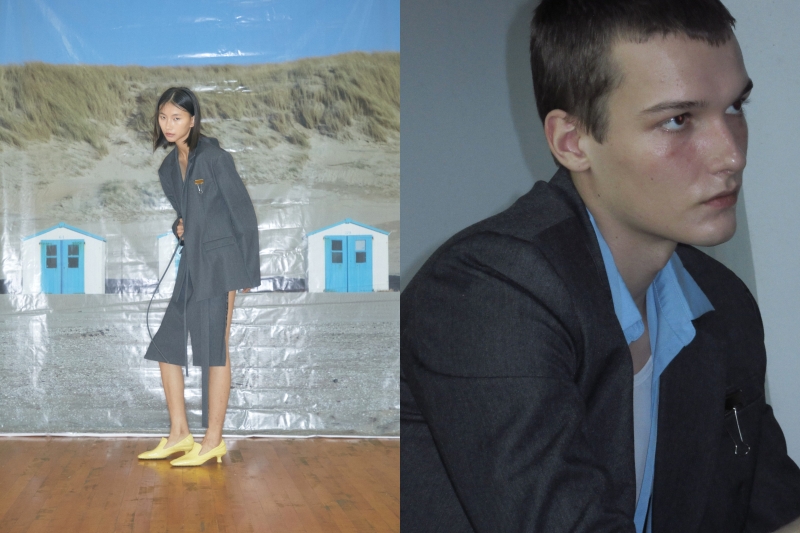
To complement the collection, the campaign for Employee of the Year was embellished with collaborative compositions. Artists of varied mediums were told to interpret the emotional landscape behind “working from home”.
cloth3.jpg
Lohana Saby from France adds depth to the release by capturing the fragility of rushed creative work and the cracks in the process. Illustrations of stark portraits are drawn across two ceramic plates, with one being deliberately shattered.Local creatives Sheena Liam of Times New Romance and Chong Yan Chuah share their perspectives through thread and CGI. Liam’s three-part series of in-progress embroidery showcases melancholic poses in moments unfinished with sketch — a quiet declaration of resistance that holds just as much weight as it would in completion. On the other hand, Chong’s short film titled Semiotics of Broken Moons visualises two suspended bodies in a dreamscape that drift between sleep and awakening. Together, they capture the blurred line between creation and exhaustion.
The brand felt it was important to involve artists beyond fashion — “Art has always been something close to our hearts. Artists as fellow creators have inspired many aspects of our daily lives, the incorporation of working with them was natural. They are also some of the most highly traumatised individuals, so the plot writes itself.”
As it approaches growth, Dayjob resists the urge to take itself too seriously, even as it sharpens its design language. In the act of reframing burnout — not as a failure to cope, but as a shared experience that can still hold intention and a form of beauty — the label hopes to eventually be a vessel of reflection for the young wage earners who struggle to navigate toxic work culture. “At least some sense of ease comes with knowing they are not alone. The idea is that even though you are feeling defeated, you will still look good,” Liang exclaims.
Embarking on a journey understated with rebellion and elegance, Dayjob hopes to never lose that part of them that is able to make fun and have a commentary on how society functions today while producing highly tailored, refined and experimental pieces. Perhaps the best way to start the yearly work agenda could be by rocking a bold office outfit.
This article first appeared on Jan 5, 2026 in The Edge Malaysia.