
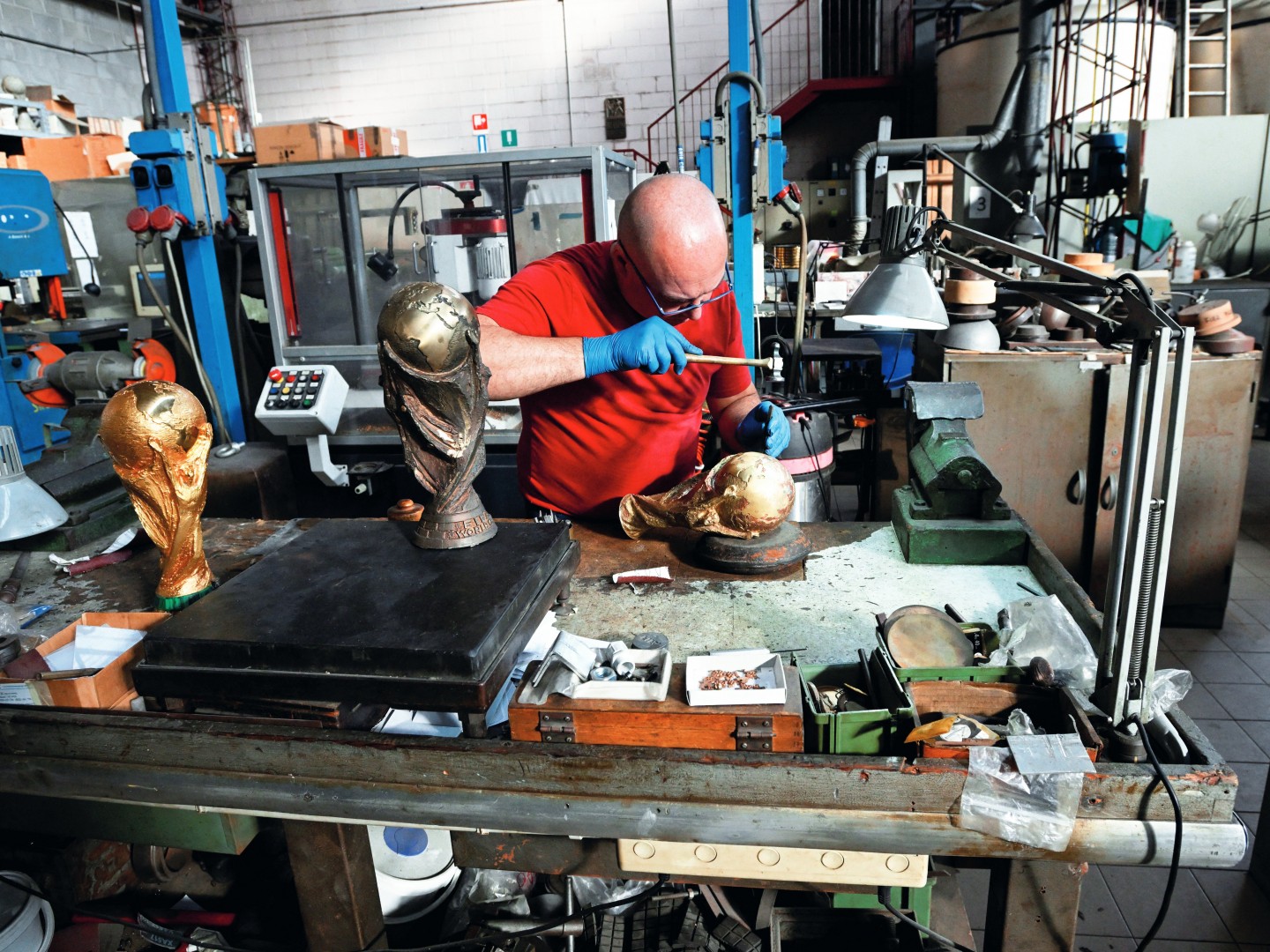
The World Cup trophy has been manufactured by the small factory since 1974 (All photos: Reuters)
The soccer World Cup jamboree has begun. Are you supporting your national team in the quest for the game’s most coveted trophy? Well, lucky you! Unfortunately for me, it will be the third tournament in a row spent sitting at home watching matches on TV in the hope that a new team lifts the prestigious prize.
But it will be in that exact moment that I will be as proud of my country as if it had won the tournament. Perché? Because even though the Italian national soccer team failed to qualify for this year’s World Cup in the US, Canada and Mexico, a masterpiece by some of Italy’s finest craftsmen is a fixture at each tournament — the trophy itself.
The World Cup has in fact been manufactured by GDE Bertoni, a small factory located in Paderno Dugnano, a tiny town a few kilometers outside Milan, since the 1974 event was held in what was then West Germany.
GDE Bertoni is run by Valentina Losa, the current CEO of the company and great granddaughter of the founder. She works in an office literally filled floor to ceiling with trophies, ranging from soccer and volleyball cups to Olympic medals. The equivalent of a candy store for sports fans!
1.jpg
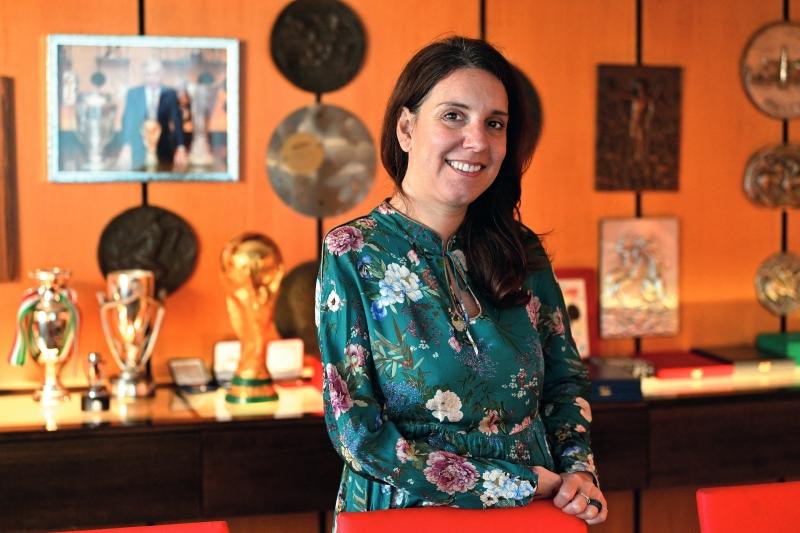
The firm was founded at the beginning of the 1900s as a small artisanal maker of medals and artistic objects that were in great demand at the time. Eventually, her grandfather turned the workshop into a proper factory which, at its peak, employed about 100 people. Fast forward to modern day, and the company is now a much smaller operation that focuses on high-quality products.
Since the 1960 Rome Olympic Games, GDE has also been producing medals for the subsequent editions. But let us focus on the World Cup. After Brazil won it for a third time in 1970, Mexico, and retained the right to permanently keep the original Jules Rimet Cup (as it was known at the time, after the Fifa president who organised the first World Cup in Uruguay in 1930), the association needed a new trophy and called for an international competition to find its replacement.
In 1971, the football governing body asked for the submission of bids and more than 50 parties responded. Losa’s father and grandfather worked with Silvio Gazzaniga, a well-known sculptor and the then artistic director of GDE. According to popular lore, her grandfather liked the draft designs, but, as he considered himself a kind of artist, asked that some changes be made before the final design was sent in. A few days of heated discussions between the two ensued until they agreed on the final version.
Gazzaniga’s original design represented a soccer ball supported by two goalies. Later, it was changed to the one we all know today — two athletes holding up the world.
Once the draft was finalised, GDE realised a three-dimensional model and presented it in Zurich, Switzerland. Nowadays, mock models are the norm, but at the time, it was quite unusual and that may have been a factor that tilted the scale in GDE’s favour.
2.jpg
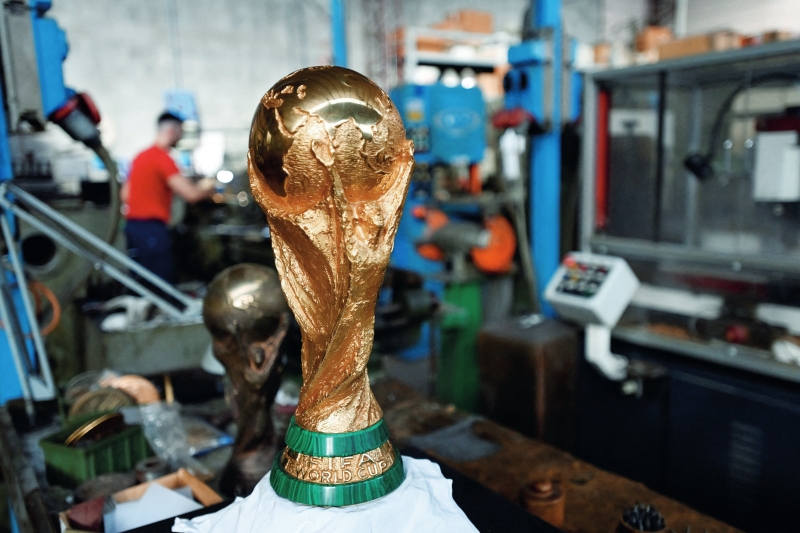
Currently, there are two versions of the trophy. One is the original cup cast in gold; the other is a replica cast in brass and plated with gold and given to each winning federation. The making of the trophy is still a manual labour of love, using a method that dates back several thousand years and allows for the creation of complex and detailed patterns.
The technique, called lost-wax casting, is a process by which molten metal, in the cup’s case gold or brass, is poured into a mould that has been created from a wax model. Once the mould is made, the wax model is melted and drained away. A hollow core can be created by introducing a heat-proof core that prevents the molten metal from totally filling the mould.
Once the cup is realised, it goes through a series of processes whereby several artisans put the finishing touches. It is first buffed to get rid of minor imperfections, cleaned using a chemical method to remove residual impurities, and then polished until it shines brighter than the sun. Replicas also undergo an electrochemical treatment to apply a gold coating.
The outcome is that priceless artifact we all wish to hold in our hands at least once in our lifetime. But is it priceless? The original trophy held at the Fifa headquarters in Switzerland is made of 18-carat gold, 36cm high, has a base of 17cm in diameter and weighs slightly over 6kg. At the current gold price, the trophy would be worth about US$600,000, but its intrinsic value as the most coveted sports memorabilia is likely to be in the tens of millions of dollars. A recent estimate by experts puts it well over US$20 million.
3.jpg
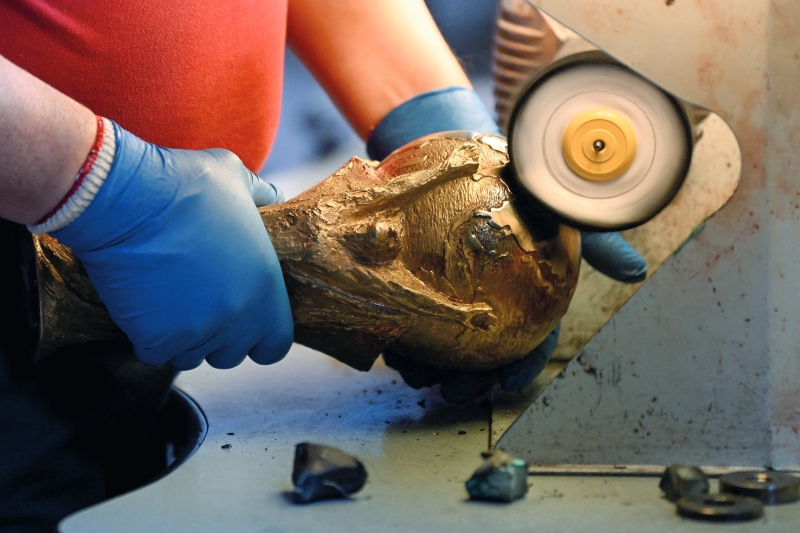
The history of the World Cup trophy is full of anecdotes and interesting facts. A few years ago, Fifa asked all the federations that had won the trophy to send their replicas to GDE for maintenance. Apparently, a European federation (not Italy) sent a fake replica. When notified, the “guilty” federation blamed a mix-up and soon the real one was sent in for cleaning. Also, according to some employees, when the original Cup is returned for maintenance, Losa sleeps at the office next to the safe where it is guarded and does not lose sight of it until it is sent back to Switzerland.
It is less than two months to the World Cup final on July 19. Here in Italy, we will watch the tournament knowing that even if our national team is not there in person, at least a symbol of our ingenuity will. And a piece of our hearts, too.
This article first appeared on June 8, 2026 in The Edge Malaysia.