
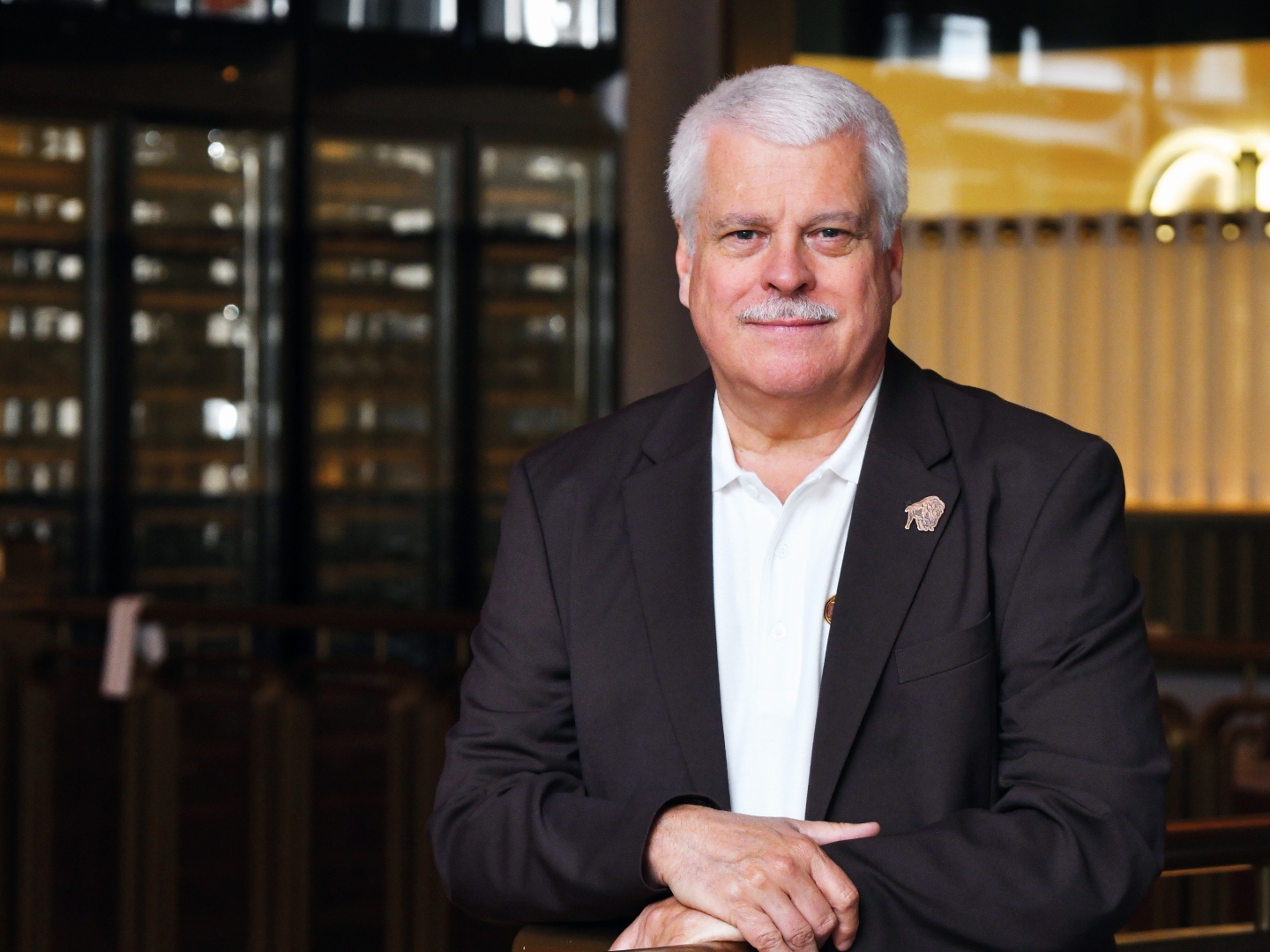
Master blender and director of quality Drew Mayville during his visit to Kuala Lumpur last month (Photo: Sam Fong/The Edge)
The gift of heightened perception is something that is, at least for those of us who love a good superhero origin story, equally romanticised and envied. After all, Renaissance master Leonardo da Vinci described the five senses as “the ministers of the soul”, and it is true that a good command of these faculties — which are so often taken for granted until the age of tragedy robs us of them — can be the keys to a life well lived.
Born with acute olfaction, Sazerac master blender Drew Mayville recounts his early years not as super cool and exciting, but as sensorial overwhelm. “My mother always told me I was a fussy eater as a child and didn’t like a lot of foods. She always had this exceptional ability to smell, even well into old age, and I suppose I got her genes. It’s not too abnormal for kids to be picky or dislike certain dishes, but simple flavours were overpowering to me then,” he says.
Over time, Mayville began to realise this capability could be harnessed to his advantage. As a young adult, he scored a position with Canadian conglomerate Seagram’s where, over a 23-year tenure, he worked several different jobs across multiple departments. “I began in the lab before moving to quality, and was promoted to the corporate office, eventually becoming master blender,” he recalls. His olfactory talent set him apart from most and, under the guidance of world-class mentors, what had once been a nuisance became his greatest asset.
1.jpg
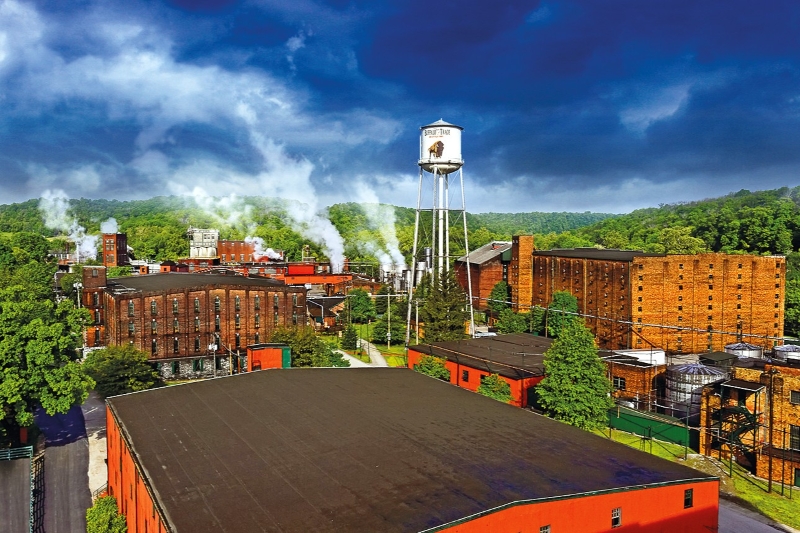
His exposure to iconic labels such as Chivas Regal, Martell and Crown Royal gave him the portfolio, experience and industry knowledge most spend the majority of their careers accumulating. When Seagram’s shut down in 2000 and sold its beverage assets to Diageo and Pernod Ricard, the world was Mayville’s oyster. It was American alcohol corporation Sazerac that became his new playground, where he stepped into the role of master blender and director of quality at Buffalo Trace Distillery in Kentucky — the most award-winning institution of its kind in the world and America’s oldest continually operating bourbon producer.
It was not just natural skill that led Mayville to where he is today. “One of the most important things a leader has to be is persistent,” he notes. “At Sazerac, it’s all about innovation and we spend a lot of time making new products and experimenting. It can take years and even decades to find out the end result, and more often than not, your experiments will fail.”
The rare occasion in which a gamble proves prosperous, though, makes all the frustration and defeat worthwhile. “We believe we can keep making better products, and we want to make the best,” says Mayville. One example of a successful trial was the distillery’s attempt to reduce tannin levels throughout the ageing process. Longer maturation times allow blenders to further develop existing expressions and take them to the next level, and while tannins are key to the taste and mouthfeel of a drink, too much makes the spirits overly woody or bitter. Unlike its Scottish counterpart, bourbon seldom benefits from more time in the barrel, and majority of bottles on the market sit between six and 12 years old.
2.jpg
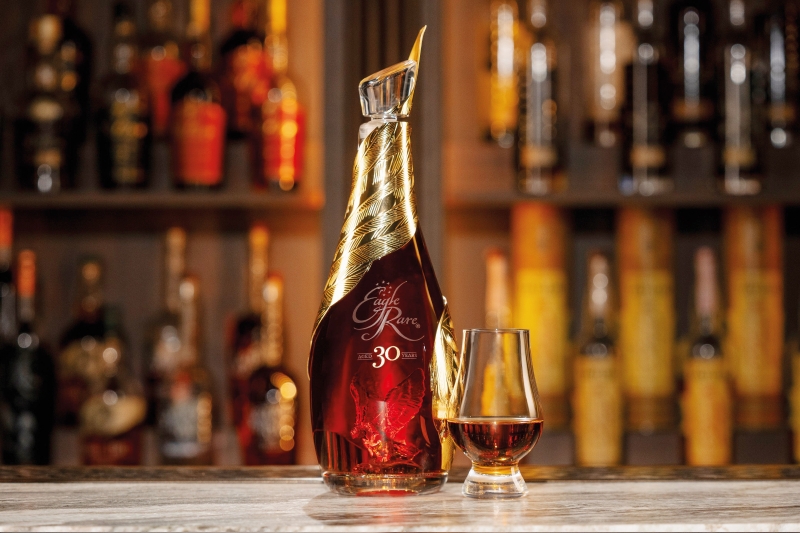
The distillery’s tannin-control process birthed Eagle Rare 30 Year Old — the newest addition to the Eagle Rare line and the distillery’s oldest age-stated bourbon ever. More than double the age of most other options, it comes in a luxe teardrop bottle accented by gold-plated wing and a sculpted glass bird of prey within. The mahogany liquid (“It’s even more delicious than the 10 Year,” Mayville says) greets the nose with the juicy tartness of baked cherries, honey, tobacco and smoky oak before coating the palate in a velvety blend of stone fruit and caramel.
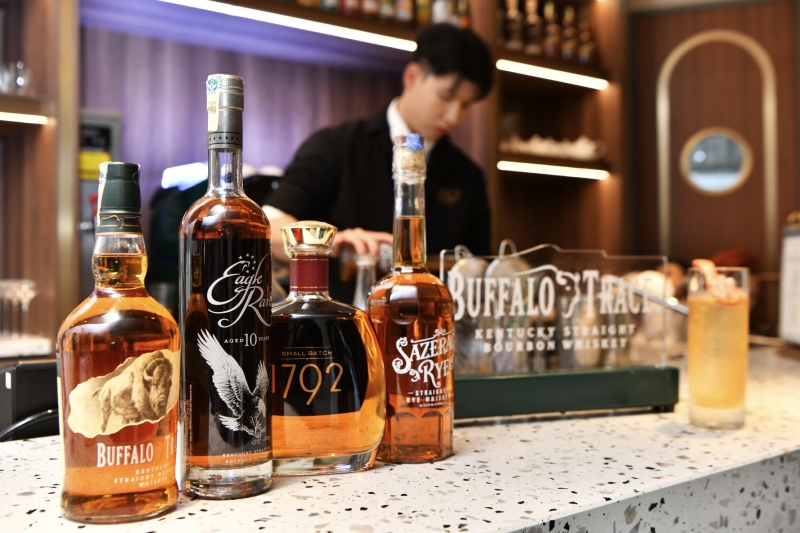
Mayville’s dedication also ensures the continued prominence of the company’s staple offerings, such as Buffalo Trace Bourbon, Sazerac Rye Whiskey and 1972 Small Batch Bourbon. Whether he is working on a new experimental product or establishing consistency, the same pride and ownership he experiences with each release is one thing that has kept him coming back for more through the decades.
“You develop something from the bottom up, and it makes you feel good to know you were instrumental to the success of a product and the company. When I see the goods I helped make in flight catalogues and on shelves, or when someone approaches me in public to sign their bottle, I feel amazing inside. Our philosophy is to always exceed customer expectations and surprise them. From witnessing the emotional connection they have to these drinks, I think I can say we’ve done that.”
3.jpg
With more than 40 years of experience under his belt and still going strong, Mayville has sampled and savoured countless spirits, travelling across North America and the globe to train Sazerac’s new blood (which, he remarks, are pouring in steadily despite increasing rates of sobriety among the youth) and connect with enthusiasts and clientele. Days at the distillery are usually characterised by hours of nosing and tasting. At the end of the day, when he returns to his family and kicks off his shoes, he and wife Ellen like to spend quality time over a humble glass of wine.
He elaborates: “We tend to go red, sometimes white, and we drink a lot of Californian varieties because we’ve visited so many of the West Coast wineries and are used to their styles. We like bourbon and whiskey, as well as rum and cognac. I love all of them and they all have their unique characteristics. But when your work involves tasting one thing all the time, you want to experience something different when you’re home. That’s what keeps life interesting.”
Much like how time is the most important component of a well-aged whiskey, it was the solution for turning a fussy child into a discerning expert with the refined palate his younger self had dreamt of.
This article first appeared on June 22, 2026 in The Edge Malaysia.