
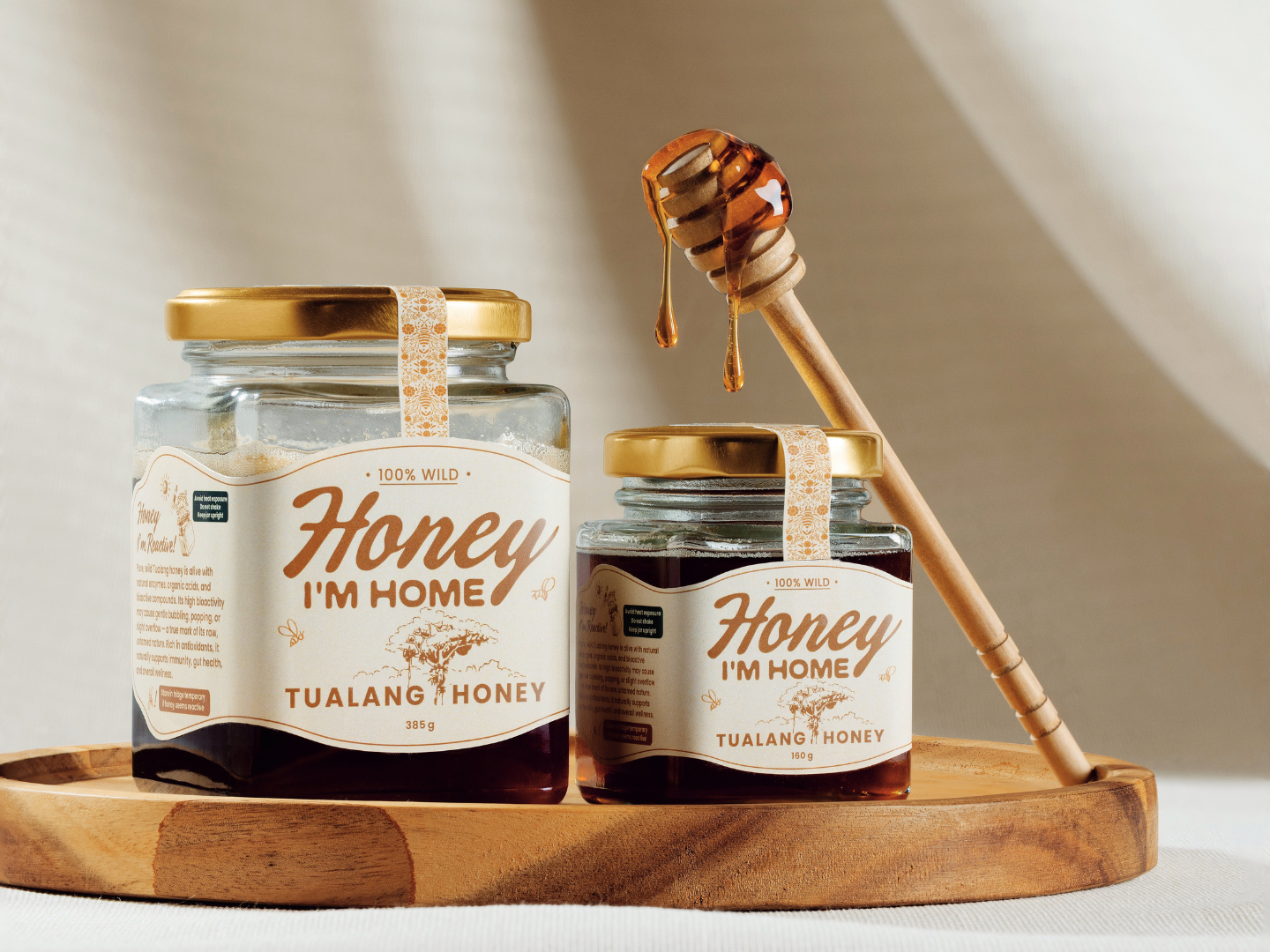
Honey I'm Home's locally-sourced honey come in a range of flavours, from deep, floral sweetness to sour and bitter like sea coconut (All photos: Honey I'm Home)
Those familiar with Kuala Lumpur’s famous Batu Caves would undoubtedly know of the tall, golden figure of Lord Murugan that looms next to its iconic multi-coloured staircase. Standing at 42.7m, it is the second tallest statue of a Hindu deity in the world.
Surpassing that height, however, are the Tualang trees of Taman Negara’s rainforest. Growing to 88m and living up to 800 years, the tropical hardwood tree is native to Southeast Asia, with some dating back to the time of King Henry VIII and the French military general-turned-emperor, Napoleon Bonaparte.
Besides their towering stature, these trees are home to another national treasure — wild honey bees that provide the brilliant elixir that is pure jungle honey. And now, thanks to the efforts of the enterprising Tengku Ariputra, city folk can enjoy it in the comfort of their homes.
Born and raised in KL, Ariputra’s life seemed to have been clearly mapped out. After completing his GCSEs and A-Levels, he was expected to attend university overseas. However, circumstances led him down the path of gainful employment instead. At 18, he ventured into philanthropy, fundraising for local and international charities. His first-ever cause focused on Orang Asli communities struggling with education. Unbeknownst to him then, things would eventually come full circle.
For four years, Ariputra built up his expertise in practical skills such as face-to-face interaction, talking and educating.
“Through this work, I trained to convert people from first impressions to actual users or subscribers of a product,” he recalls.
Advancing into sales training and management, things deviated when the pandemic hit in 2020.
“It made me realise our country lacked food security,” Ariputra reflects. “Coming from the younger generation, I felt that I needed to learn more about what comes onto my plate and where it is sourced from.”
2.png
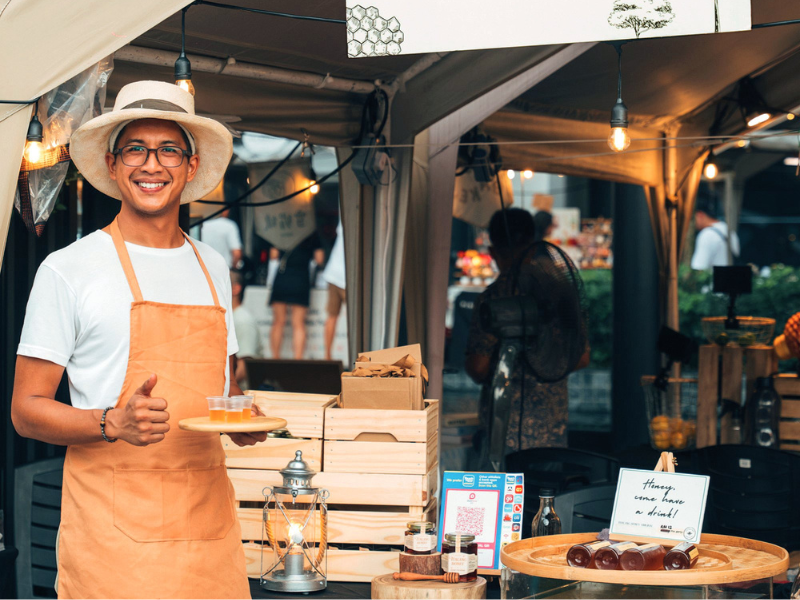
Trading the bustling metropolis for the quiet serenity of Kedah, he learnt to farm all sorts of crops such as rice and pumpkin, and reared chickens.
“I was lucky,” says Ariputra. “My family owned a bit of land up north. My dad and uncle were already working on a few projects, so I just jumped, exploring the avenues that piqued my interest and made friends with the locals.”
He also had the chance to dabble in agritourism. This growing market segment in Asia is gaining popularity as travellers from different corners of the globe come to soul-search and immerse themselves in local life. Imparting knowledge from a cultural and historical perspective provided a nice pivot, igniting a new passion in him.
Ariputra’s introduction to honey began with a chance encounter. A usual day on the farm took an interesting turn after being approached by an Orang Asli man carrying four cartons of honey. The latter had planned to sell it all to a single buyer who, unfortunately, had suddenly cut off all means of communication. The man then asked to momentarily leave the honey with Ariputra, as each box weighed about 20kg. Three months went by before he called to ask if Ariputra would just buy up the stock. “It was definitely an advanced sales tactic,” he laughs.
Knowing nothing about honey, Ariputra decided to sample some of the wares with close friends and family.
What really cemented things was the testimony of his uncle, who was battling cancer at the time. The debilitating illness as well as its ensuing treatments often suppress appetite along with the desire to function in general. Chemotherapy also requires the patient to jaga makan (watch one’s diet), as processed food and sugars can accelerate cancer cell growth and interfere with healing.
“When my uncle tried the honey, it lit up his palate and made him look forward to eating and tasting food again,” Ariputra recalls.
As another responsibility soon landed on Ariputra’s shoulders, which included caring for his mother, the filial lad was soon recalled to the capital, where he secured a job in a data company. Still, he needed better wages to supplement the family’s income.
So, in his free time, Ariputra was busy as a bee, selling honey at morning and night markets in prime locations such as Taman Tun Dr Ismail, KL. To his surprise, the income was decent and he decided to pursue the endeavour full-time.
Bright-eyed and optimistic, he took to the streets of Bangsar with a hat and a basket, hopeful of sharing the golden nectar’s benefits with a bigger demographic. The city’s melting pot provided easy exposure for his business without him needing to fork out extra money for rent. From 8am to 6pm every day, Ariputra would traverse multiple routes. “The only thing I needed to do was endure the heat and rejection.”
Looking back, Ariputra finds that hitting the streets from the outset was a good move. “Malaysia is a really good place for enterprise because people want that connection and story. They like hustle and are encouraging of people who genuinely want to make it.”
Struggling to find a name that resonated, “Honey, I’m Home” came up during a family conversation and in between mouthfuls of roti canai. It was Ariputra’s sister who mentioned it offhandedly across the dinner table. Everyone thought it catchy and endearingly memorable, without sounding tacky. To the young entrepreneur, it was the perfect moniker, representing all the hard work that goes into each little jar.
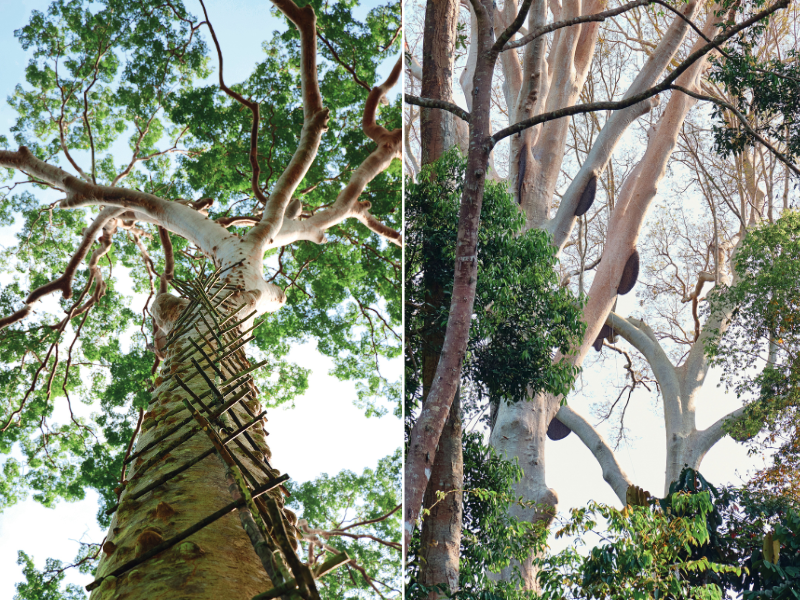
And hard work it is. In the depths of Taman Negara, members of the Batek tribe would have to climb the Tualang trees at night in order to harvest the liquid gold. While the aggressive bees are fast asleep (indeed, these tireless creatures do snooze), the tribesmen then use incense to sedate them further.
Armed with protective gear, the indigenous people also possess certain spiritual knowledge known as ilmu hutan or batin that ensures the operations are conducted safely. Only a portion of the hive is harvested, facilitating faster regeneration without harming the queen. The honey is then filtered and sent to KL for lab testing and packaging.
1.png
Unlike farmed honey, the Tualang variety is rare and seasonal. It is also multifloral, as the Apis dorsata species forage in the entire jungle rather than taking nectar from just one type of flower. This, along with environmental changes, affect the taste profile of the honey. Compared to the usual dry and wet conditions that Malaysians are used to, the rainforest experiences five seasons that determine the blooming of flowers and whether the bees take a sabbatical or not.
“The weather has been up and down these last few years — it’s interesting to see how global climates impact the honey’s taste and frequency of harvesting,” Ariputra shares.
According to him, eating locally-sourced honey is especially important as our food is sourced from the same ecosystem. Considered a superfood, it complements and boosts the immune system. So, the saying “you are what you eat” has never rung truer. Due to the combination of compounds from various blossoms, the honey consists of live probiotics and enzymes that leave positive and lasting effects on one’s health. It provides an antibacterial coating for the body and reduces inflammation, accelerates T-cell growth and helps to fight pathogens. External application can even heal wounds.
Taste-wise, it differs from the concentrated sweetness found in store-bought versions. The Tualang variations range from a deep sweetness with floral notes that leans towards the flavour of longan, to slightly more sour and bitter, similar to sea coconut. Though it could take some getting used to, there are many ways to incorporate this ingredient into a meal.
A favourite way for Ariputra is to simply have it with a bowl of Greek yoghurt — this is good for gut health or if you have a sore throat. Alleviate regular period cramps or insomnia by mixing it into blue pea flower tea, or soothe a migraine as well as body heat by blending it with coconut water and turmeric powder. Another fun way of consuming is to drizzle it on a salad — think kale, pumpkin, pomegranate arils, nuts and feta cheese.
3.png
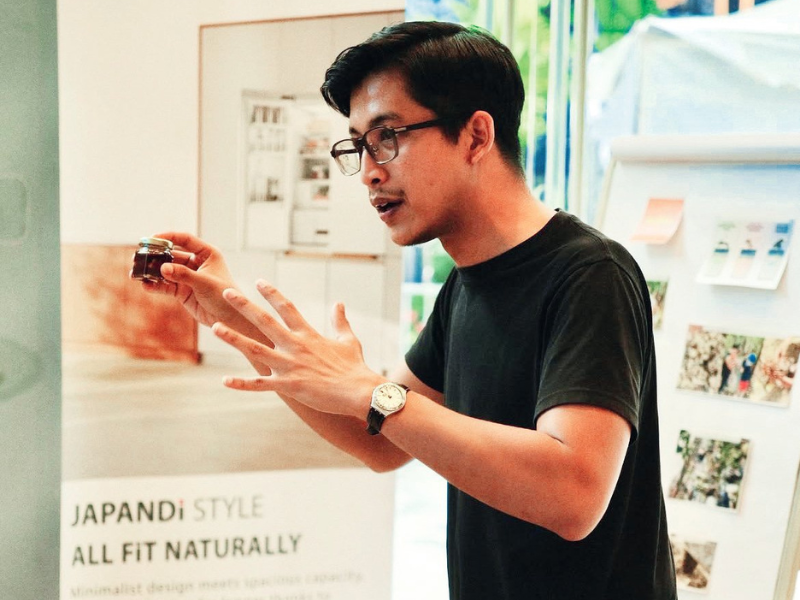
Though the industry is not saturated, buyers have to be wary of fake goods. In its purest form, Honey I’m Home’s product is sourced from an ecosystem that has evolved through 130 million years. Ariputra emphasises that the honey is not contaminated by pesticides or soil run-off from chemical plants. “It is really reflected in how you feel after. Your body can tell the difference between what is genuine or adulterated.”
Ariputra’s confidence and drive is mirrored by the strength of his team of five. Based in Subang Jaya, Selangor, they bring together different skill sets that power day-to-day operations, while focusing on community and sustainability. Plans include holding workshops and experiential tastings where people can enjoy the honey first-hand.
This platform will also allow him to band together with a variety of home-grown brands to promote other local produce. He also aims to partner with more harvesters. From an educational standpoint, Honey I’m Home strives to leverage on research and improve traceability of the honey so customers have access to data-driven facts. This will, in turn, uplift the storytelling aspect and image of the product.
“Just like how people are reminded of durian and Petronas Twin Towers when they think about Malaysia, I want them to think that about honey, ” states Ariputra.
He begins his mission of empowerment by debunking a myth — yes, you can use metal spoons in your honey. Historically, cutlery used reactive materials such as copper, iron or aluminium that would eventually pollute the sweetener’s properties. Today, most utensils are made from food-grade stainless steel. However, as a precautionary measure, Ariputra recommends using a wooden or porcelain spoon to scoop up your honey, which can be bought online, if not from the occasional booths that the team set up around the Klang Valley.
This article first appeared on June 8, 2026 in The Edge Malaysia.