

Chef Corin Schmid’s upbringing in the Swiss countryside nurtured an inclination for using fresh and local ingredients (All photos: Drei Stuben)
Growing up on a family farm in the quiet town of Egnach in the Swiss canton of Thurgau, Corin Schmid did not foresee her younger years spent foraging and rearing animals leading to a culinary career. What this upbringing did immediately unveil though, was her affinity for making the most of simple things.
The household prioritised honest food, crafting their own sausage and cooking with produce from the native land. It was in this humble setting that she first became aware of the impact of ingredient quality on taste and understood the importance of knowing where your food comes from.
“I’ve always had a kind of connection to food. We had many animals at home — pigs, chickens and geese too. I grew up feeding and tending to them, and helped to butcher the livestock with care. Thinking back on this, it makes so much sense that I became a chef,” she laughs.
1.jpg
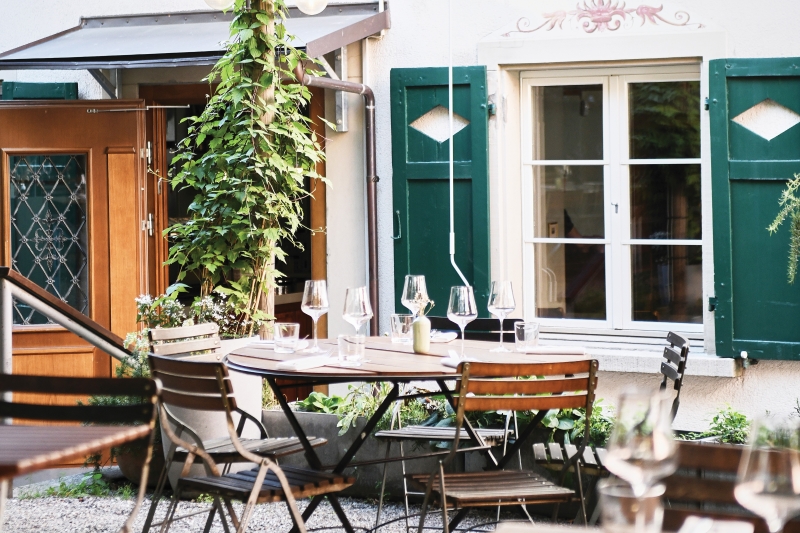
Like many youths, Schmid went through adolescence experimenting with different niches, hoping for one to stick.
“I was thinking of doing something with art or graphic design, but nothing really suited me,” she says.
Her creative disposition was obvious but the best occupation for it was a mystery. It was only when she began lending a hand at a local eatery that the path forward revealed itself. “In the countryside where I grew up, there was an old woman who ran a restaurant by herself. I went to help her out. The day I stepped into that kitchen was the day I knew I wanted to become a chef.”
Witnessing the owner’s keen attention to and pride in her work, Schmid recognised operating a professional kitchen not only required strict structure and discipline but also imagination and self-expression. “I realised wanting to use my creativity did not have to mean doing something in design — I could be artistic with food. Cooking is also very hands-on, which I enjoy a lot. From that moment on, it was clear that I was going to be in hospitality and the kitchen.”
Another defining moment was her stint with Swiss culinary legend Anton Mosimann, who famously earned London’s Dorchester Hotel two Michelin stars during his 13-year tenure as Maître Chef des Cuisines. The restaurateur has also held the Royal Warrant of Appointment to HRH The Prince of Wales for Catering Services since 2000.
“I always had a lot of respect for [Mosimann] but never had enough courage to apply for a position with him. I thought there was no way they would accept this girl from the countryside to come cook in England,” she says.
1.png
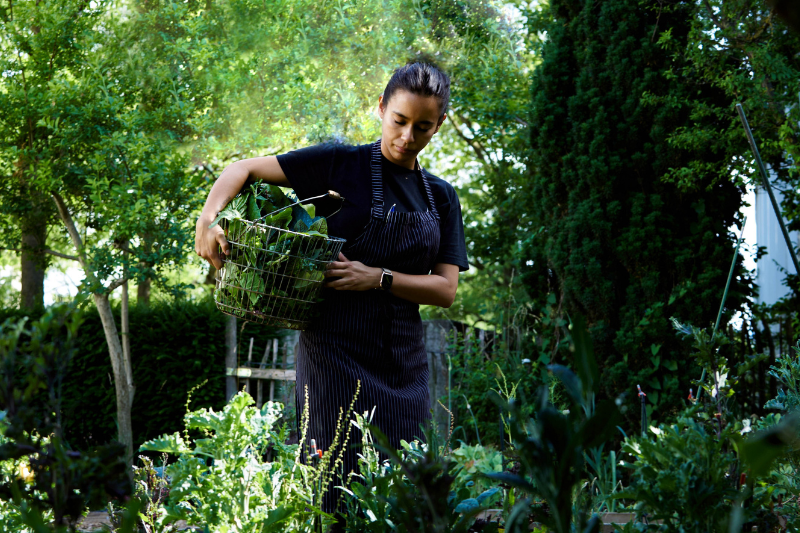
When the call from an unknown English number rang, something told Schmid to pick up the phone. Her confusion quickly turned into surprise upon realising she was speaking to Mosimann himself, inviting her to a trial shift in London. She dialled her family right after, still in shock. It turned out that her father, always his daughter’s biggest supporter and not wanting her to have any regrets, had submitted her CV without her knowledge.
Schmid said yes to the once-in-a-lifetime experience. What started out as an intention to spend a year working alongside and learning from the Swiss master became four. Besides helping him run his private dining club in Belgravia, Schmid often followed him on jobs at Buckingham Palace, serving the royals and their guests on multiple occasions. Under his guidance, she mastered cuisine naturelle — her mentor’s naturalistic approach wherein flavours of ingredients are highlighted without the aid of butter, cream or alcohol.
After returning to Switzerland, she settled in Zurich and joined the team at The Artisan, gradually working her way up to head chef. The restaurant’s owner Mark Thommen later took over Drei Stuben, a cosy space with a more traditional and elevated menu, and got Schmid to helm the kitchen there too.
Years spent ingraining the importance of working with the land and respecting ingredients in their original form led to Schmid adopting several sustainability measures at both restaurants. Her mentor Mosimann was known for saying he believed food waste was totally unnecessary and it is no surprise his student has the same outlook.
3.jpg
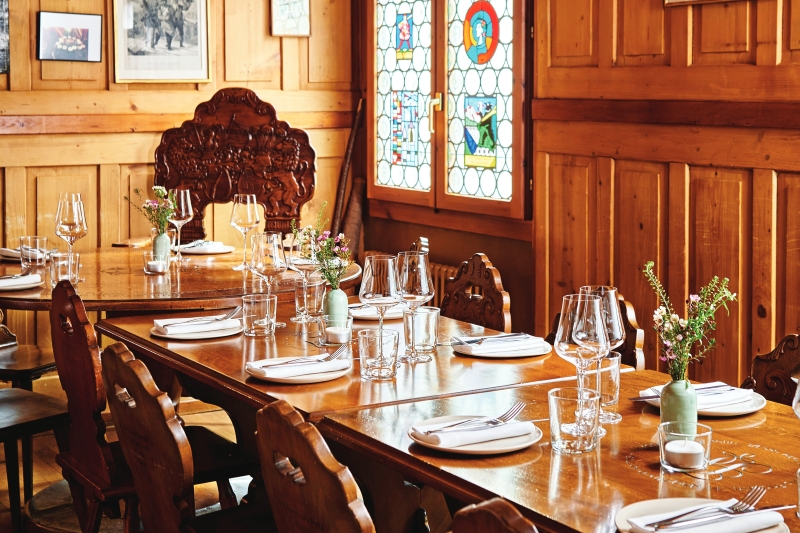
“I agree with him,” she mentions. “There are many things you can do with food scraps, such as making stocks with vegetable bits. Even something like the peel of a carrot or celery can be used to make a sauce.”
Staff at the restaurants also regularly eat family meals together, using up produce that fell just short of being suitable for serving customers. With the addition of a compost machine that produces a nutrient-dense supplement for the soil at The Artisan’s veggie garden, both establishments end up producing significantly less kitchen waste than most others.
When it comes to sourcing, they work with independent vendors. Meat comes from small butchers as well as hunters during game season. For greens, Drei Stuben relies on Helga, an elderly forager who harvests from Zurich’s forests. Fish are caught fresh each day from Lake Zurich and bread is acquired from local bakeries.
At Drei Stuben, you will find Swiss classics like cordon bleu, steak à la Café de Paris and German sausage, as well as French influences in the form of poularde ballotine and Grenobloise-style alpine pike perch. The best meals start with the salmon crudo with yuzu and basil or a butter lettuce heart salad. If you visit in the springtime, plump wild asparagus makes for a lovely bed upon which a Scotch egg encased in peas and sesame nestles in the company of fava beans and a green chilli crunch.
Across all dishes shines a commitment to the planet — to appreciate its natural bounty, work with the seasons and honour each ingredient by respecting authentic flavours and minimising waste.
4.png
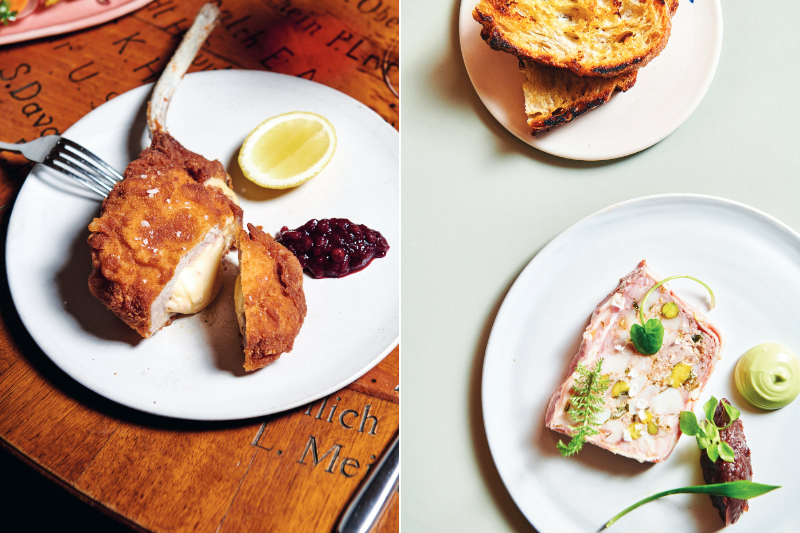
Schmid’s mastery of the fundamentals enables her to transform ordinary produce into something ultra-comforting or imaginative. The best part? So much of what is implemented at her workplaces can be adopted for the home kitchen, proving you do not need fancy equipment or industrial facilities to work a little culinary magic.
“Something as simple as vegetable peels can be used to amplify the flavour of your bouillons, which you use for soups and risottos. Sure, you can buy instant versions from the supermarket but using what you already have on hand is cost-effective and healthier. It’s a win-win situation,” she asserts.
Schmid still finds time to visit loved ones in Egnach, always bringing along extra treats from her big city job to nourish those who have been in her corner from day one. While the family no longer rears animals, their vibrant fruit and vegetable garden continues to bring the outdoors in and onto the plate.
This article first appeared on May 25, 2026 in The Edge Malaysia.