
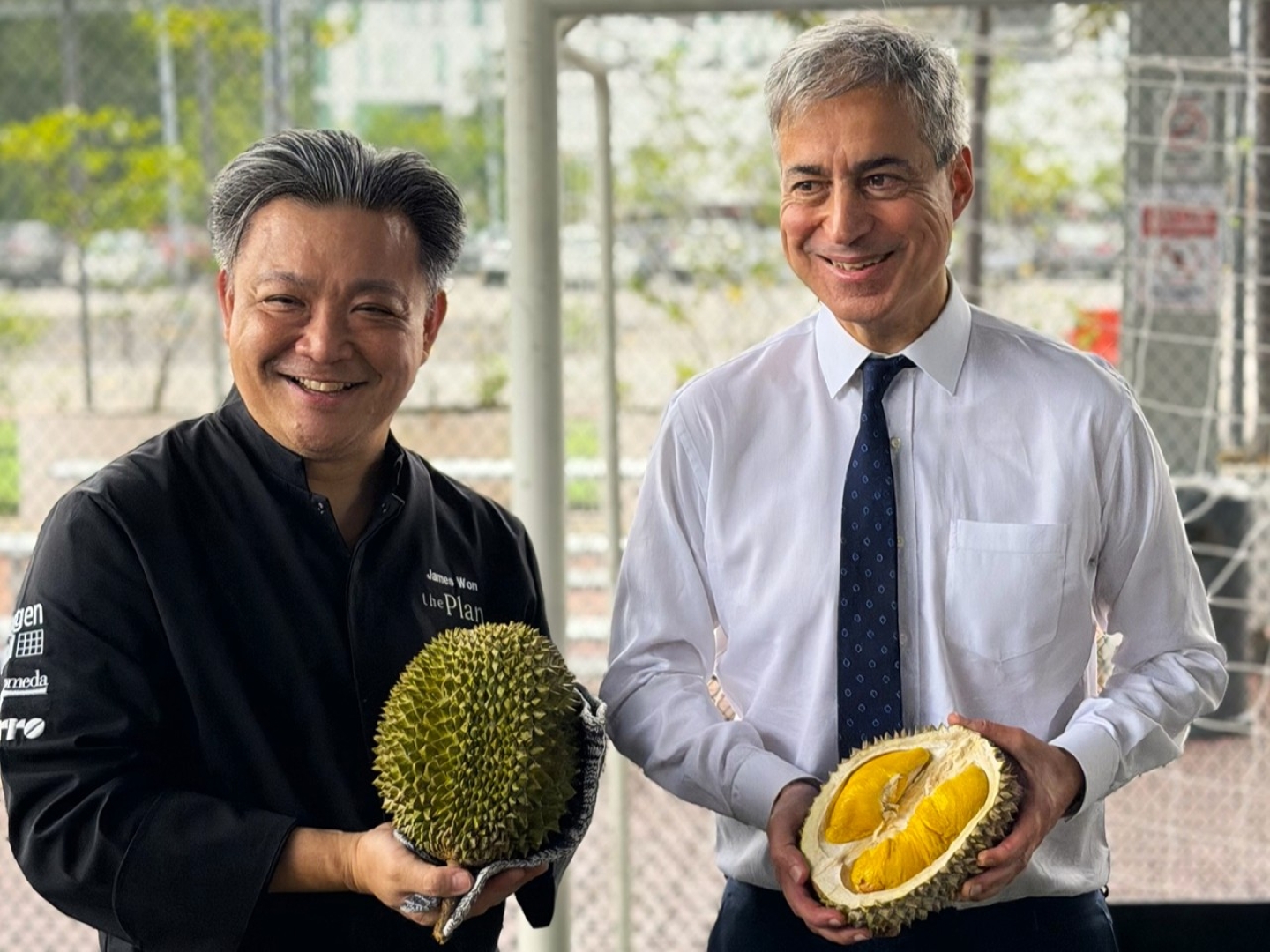
Chef James Won and HE Marc Abensour, Ambassador of France to Malaysia, at the cross-cultural durian conference (Photo: Embassy of France in Malaysia)
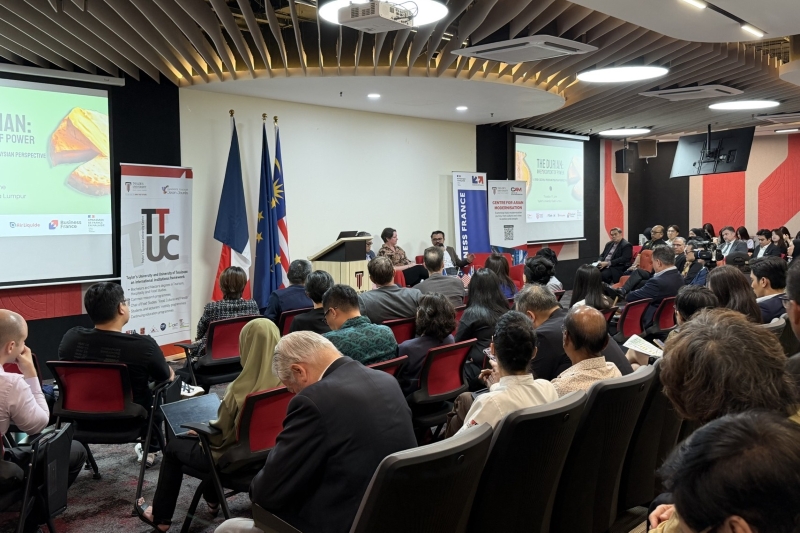
When one receives an invitation to dine at the Ambassador of France to Malaysia’s table for an “exceptional dinner to celebrate the durian and French gastronomy”, one must say j’assisterai. For those curious about the genesis of the event, the French Embassy had recently orchestrated a special day dedicated to the King of Fruits, organised in partnership with Air Liquide, Malaysia External Trade Development Corporation (Matrade), Taylor’s University, Universiti Putra Malaysia and Business France. Naturally, a durian tasting was involved as well as a roundtable discussion regarding the fruit’s place in the world of gastronomy and how the role of technology in its cultivation and innovation could help transform an agricultural product into a premium export.
That same evening, over dinner held at his official residence, HE Marc Abensour said, “You may ask why engage in such a crazy initiative but, actually, it is very personal to me. As ambassador to Singapore years ago, it was where I first discovered durian. [It took a few attempts] but the third was a revelation, like reaching the summit of a mountain! It was then that my body and mind came into alignment. My being stopped resisting, while my mind completed the invisible process of acceptance that had [already] begun when I arrived in the region. Together, they accepted this tropical fruit for what it is: the King of Fruits.”
“I am still learning [about it] but that was when I really started to appreciate the fruit,” continued Abensour. “So when I was posted to Malaysia, the thought of being able to find and enjoy durian again came to mind — and it was marvellous. Because, as you can imagine, it is impossible to find any in Paris! In the four hours of this morning’s conference, we had every stakeholder from Malaysia’s durian ecosystem. And it became clear that the opportunity for us to [use durian to] engage in gastronomy — from the perspective of traditional culinary traditions as well as agronomy and economics — in Paris was possible. I realised that the bridges and commonalities between France and Malaysia are even more apparent than what I had thought before.”
1.png
The diplomat then went on to explain certain shared characteristics between the durian and a favourite French food, namely cheese. “Both share not only a strong smell but, more importantly, embody diversity, regional identity and culinary heritage. Durian’s many varieties and terroirs — from Penang to Johor and the Raub region via Pahang — also inspire preference and provoke debates, making it far more than a mere fruit. It belongs to the shared imagination, to a nation’s culture and is also part of the makeup of its identity. In many respects, this imposing tropical fruit is a metaphor for Malaysia itself. The time has come to introduce durian to French consumers who value appellations of origin, the notion of terrior, the pursuit of high-quality produce and the preservation of gastronomic and culinary heritage. This shared outlook makes fertile ground for closer relations between our two countries.
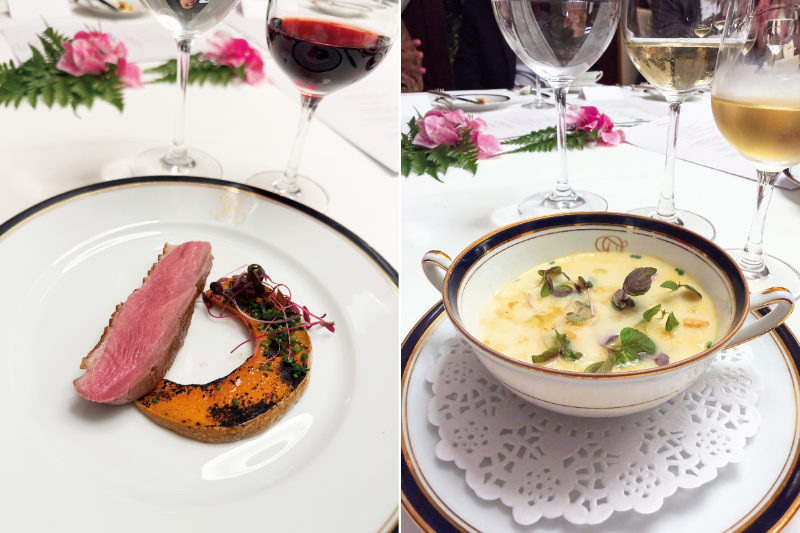
Presented in five movements, not unlike a symphony, the durian was prepared in a myriad of forms: fermented, fresh, grilled, as a sauce and then, finally, pure as well as frozen. Chef James Won, adjunct professor at Taylor’s University, and his students at Taylor’s Culinary Institute planned and prepared the entire repast, which was attended by a small group of guests, including but not limited to Datuk Seri Dr Farah Khan, president of the Melium Group; Naza Corporation’s SM Faliq SM Nasimuddin and his wife, Chryseis Tan, executive director of the Berjaya Group; Lady Linda Wong Davies, founder and chairman of the K T Wong Foundation; and YTL Corporation’s Rebekah Yeoh who came with her husband, Lucas Hess.
2.jpg
And unlike Abensour’s experience, which required three attempts before the fruit won him over, it was a positive coup de foudre for guests experiencing the dîner exceptionnel. Paired with a selection of wines personally chosen by Olivier Sigaud, the deputy head of mission of the Embassy of France, it also disproved the Asian old wives’ tale that one should not drink alcohol while eating durian. As a final surprise, Edison Ang, Malaysia’s de facto ambassador and influencer for the durian industry as a whole, demonstrated how to open a Black Thorn fruit, specially delivered from Penang. While the prospect of a fine dining durian dinner in one of the great restaurants or grand residences of France is still a work in progress, the evening in Kuala Lumpur clearly demonstrated that the twain can meet.
The night also brought to recollection how France is, in fact, the original proponent of cultural diplomacy. The history books will tell you it was the renowned 19th-century diplomat and strategist Charles-Maurice de Talleyrand-Périgord who told Napoleon to “give me good chefs and I shall give you good treaties”. The wily statesman instinctively understood that being a good and generous host while breaking bread over sumptuous meals wins rivals over more easily than military might. And in Talleyrand’s arsenal was none other than the legendary Antonin Carême whose spectacular way with food deftly captivated one European leader after another and remains the gold standard for French haute cuisine.
Gourmet enthusiasts will also tell you that Carême was always hailed as the “King of Chefs” in his day. How fortuitous and fitting then that the durian, the “King of Fruits”, shares a similarly glorious title.
This article first appeared on July 6, 2026 in The Edge Malaysia.