
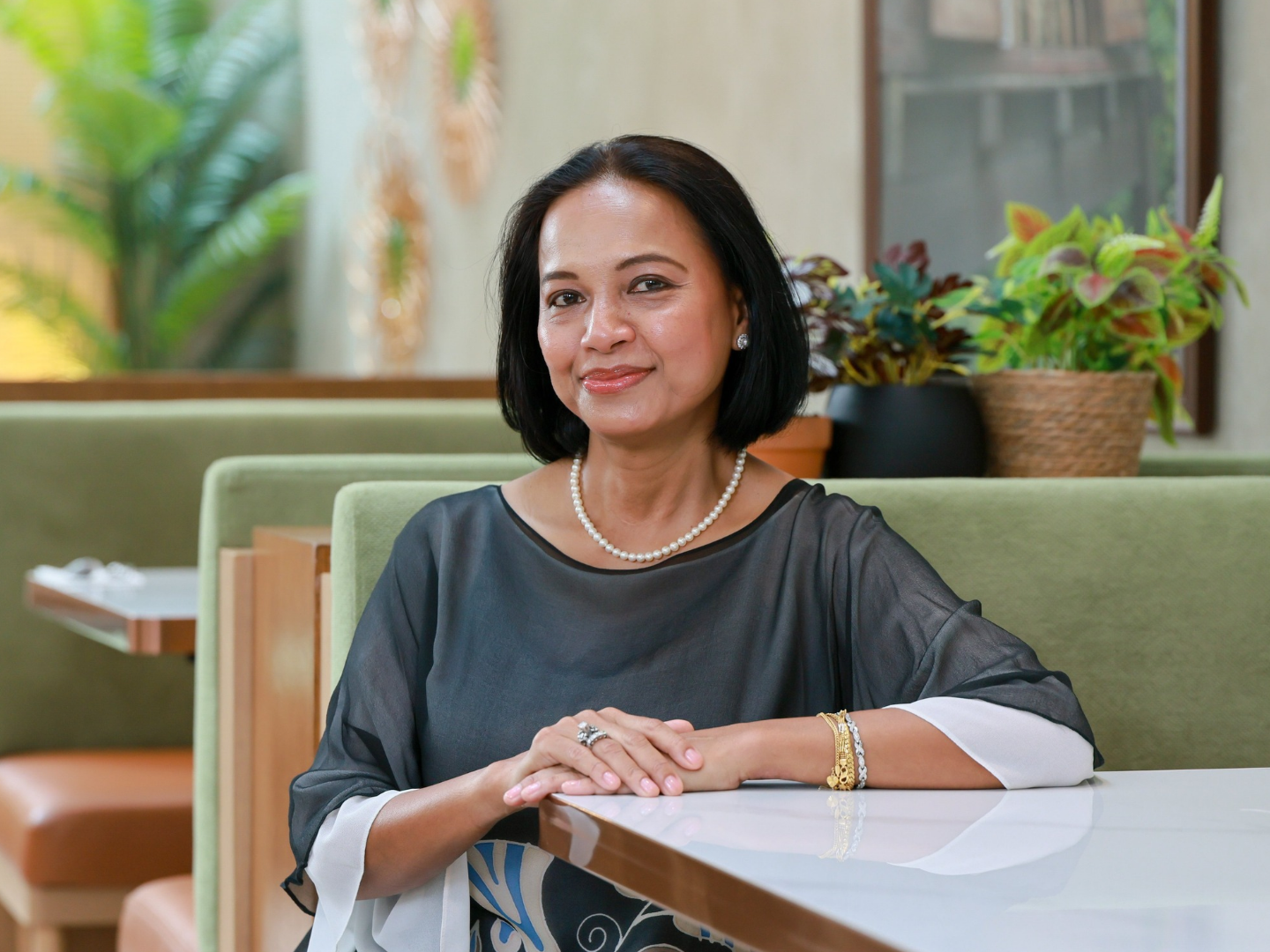
Founder of Rumoh Mekda, Norhelinda Daud, also known as Aunty Mekda (Photo: Low Yen Yeing/The Edge)
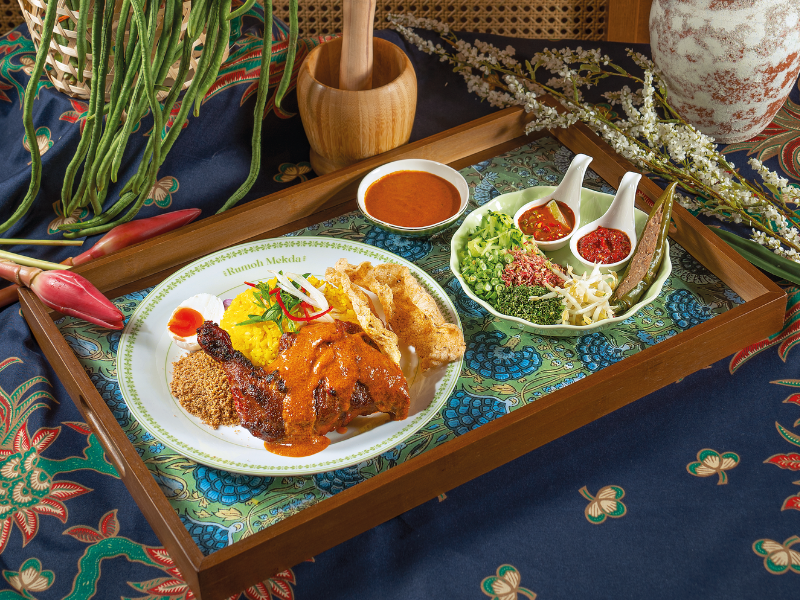
Nasi kerabu, a dish made up of blue-coloured rice (or yellow in some instances) and abundant local vegetables and herbs, is a household staple in East Coast states such as Kelantan and Terengganu. The process to make this vibrant platter is tedious. The grains are soaked in butterfly pea flower (or turmeric) water before they are cooked with lemongrass, pandan and kaffir lime leaves. The aromatic, fluffy rice is then served with a mix of fresh finely shredded long beans, cabbage and bunga kantan, bean sprouts, cucumber, budu (fermented anchovy sauce) and sambal.
Though recipes may differ from one kitchen to another, with some being more elaborate than others, the essence of the dish remains: every bite is defined by complex flavours derived from fresh vegetables, fragrant rice and savoury condiments. This unique culinary creation is now one of the crowd favourites at Rumoh Mekda, a newly opened restaurant in Bangsar Village, Kuala Lumpur.
Established by KL-born Norhelinda Daud, affectionately known as Aunty Mekda, the restaurant highlights a menu that pays homage to the founder’s Kelantanese parents, both of whom came from Pasir Mas. They were the biggest source of inspiration for the young Mekda, whose childhood revolved largely around watching her mother put together delectable dishes for her father and siblings. Mum’s meticulous techniques and masterful skills drew her in, but her interest in cooking was cultivated for far more heartwarming reasons.
“Every now and then, I would help with the preparation and slowly learn from her. My mother also loved feeding others. She would cook not only for the family but also our friends and neighbours, simply because seeing them enjoy her food brought her so much joy. I think that is where my love for cooking and feeding people really came from. It wasn’t something formally taught to me; it was something I grew up with,” she says.
6.png
While Mekda was familiar with most dishes from the East Coast, she never really felt the need to learn the recipes. That was until she decided to venture into the food and beverage business during the pandemic. “I was supplying nasi lemak to petrol stations. Then I expanded my offerings to include nasi kerabu, which I only loved to eat but never knew how to make. My cousin had kindly taught me how to prepare it. I realised what a complex dish it is but I guess that’s what makes it special.”
As her customer base grew bigger, Mekda decided to launch a catering service, Dapur Mcda. “Since I was already cooking for my family, why not sell lauk as well? So I introduced masak lemak daging salai, asam pedas, ayam masak merah and daging goreng kicap, among others. Then of course, people began asking when I was going to open a restaurant.”
Aware of the bigger responsibilities that come with running a full-fledged eatery, Mekda felt she was not yet ready to take up the challenge. “It’s different from doing catering. You only need to make sure the food quality is good and you don’t have to face people,” she says.
But when she became unwell in December 2024, the now 54-year-old was pushed to reconsider her culinary legacy. "I wanted to take what I had built through Dapur Mcda and turn it into something bigger — a place where more people could experience my cooking, and where I could also meet and interact with them. By early 2025, we started planning Rumoh Mekda.”
The restaurant serves as an opportunity for the family to showcase East Coast cuisine in a different light. “We wanted to preserve the authenticity and soul of the food while giving it a setting, presentation and service experience that feels relevant to the way people dine today.”
1.png
Preserving heritage
Rumoh Mekda’s menu centres around dishes inspired by the tastes of Kelantan, Terengganu and Pahang. The signature nasi kerabu comes with protein options such as ayam percik, daging bakar and lemak bakar. For first-timers, the establishment provides an instruction card detailing the step-by-step process for assembling and enjoying the meal.
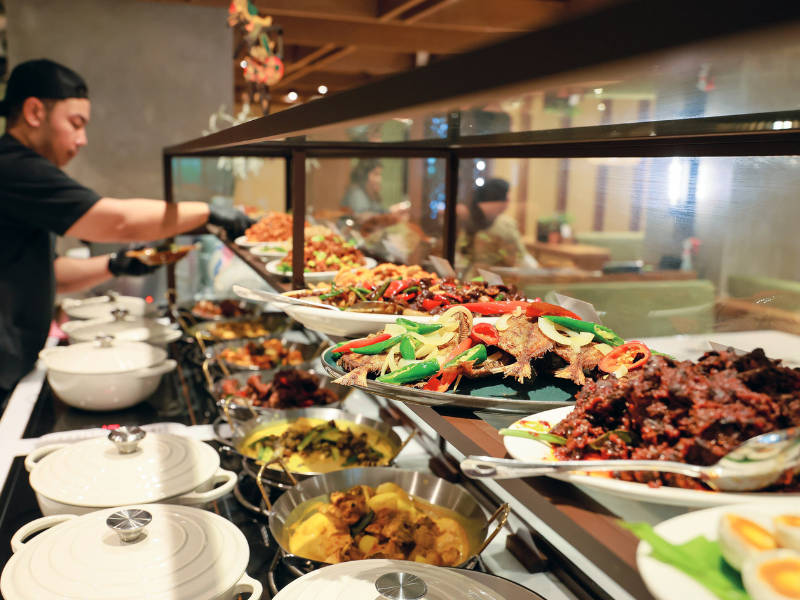
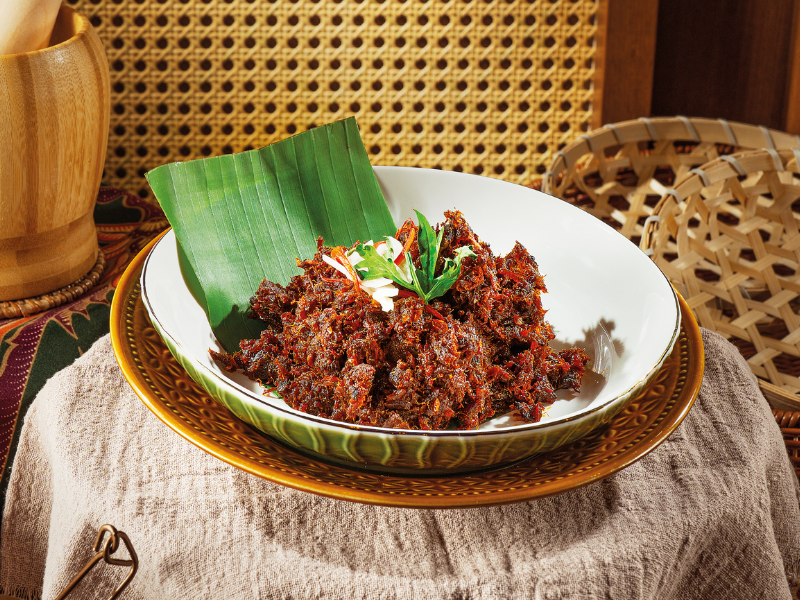
In addition, diners can look forward to traditional lauk such as ikan patin goreng sambal tempoyak, ikan singgang tenggiri, daging tumbok, sayur labu masak lemak putih and kacang botol belacan.
“These are the kinds of food that remind us of what it is like to eat at home — rich gravies and sambal, packed with herbs, and meant to be shared. We want people to experience different parts of the East Coast in one place.”
Many of these offerings are made from recipes that have been in Mekda’s family for generations. “They weren’t created specifically for a commercial kitchen; they had been cooked, shared and loved around the family table for many years. Before Rumoh Mekda existed, they were already favourites among our very big family and those who had tasted Mekda’s cooking through Dapur Mcda. That gave us the confidence to share them with a much wider audience.
“What we are bringing to the restaurant is something very personal — the same flavours, generosity and feeling of being fed at someone’s home, but within the experience of Rumoh Mekda.”
5.png
Mekda talks about the importance, in this modern age, of preserving recipes that have been passed down. When everything is so easily accessible online, the youth naturally find it convenient to turn to the internet whenever they want to learn something. “But family recipes are different. A lot of them are never properly measured. They are cooked by instinct, agak-agak, taste, experience and, most importantly, with heart. That is why I started writing down and documenting recipes. I want the next generation to be able to continue what our mothers and grandmothers taught us.
“Food carries memories. When you taste something that has been cooked the same way for generations, it can immediately remind you of your childhood and loved ones who may no longer be with you. For me, preserving these recipes is also a way to safeguard our family history.”
The cooks at Rumoh Mekda’s kitchen are personally trained by the exacting head chef who makes her standards and expectations clear. “Traditional Malay cooking is not simply about following a recipe,” Mekda says.
“You need to understand the ingredients, texture, timing and techniques behind each dish. The quality of supplies is important, but so are the subtle methods that aren’t necessarily written in guidebooks. Skill is what allows you to bring the best out of good ingredients.
“When you have experience, sometimes you can look at a dish and already understand what needs to be done. You know how to adjust the flavour and texture, and improvise when necessary until you get the result you want. That instinct comes from years of cooking and understanding food. And, of course, there must always be love and passion behind the whole process.”
3.png
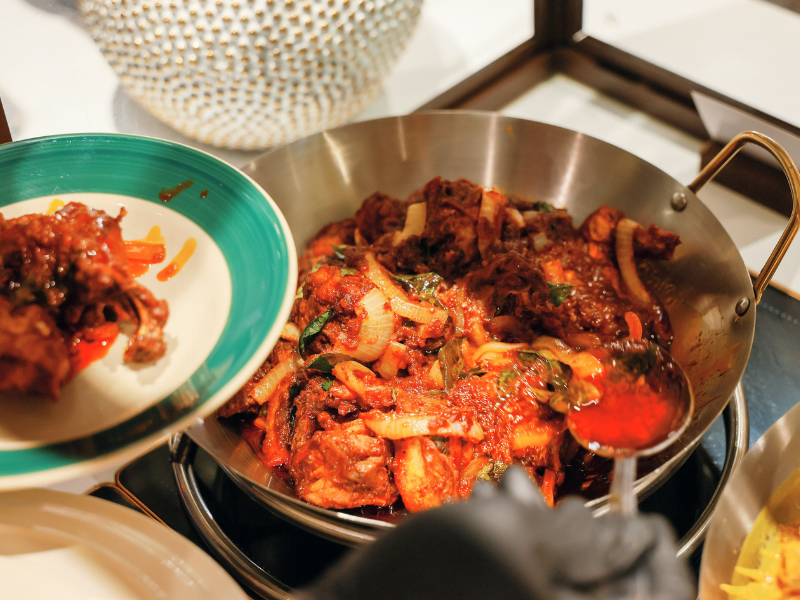
Asked about the challenges in serving traditional dishes in a commercial kitchen, Mekda points out the obvious. “Traditional Malay cooking can be very labour-intensive. There are so many ingredients that need to be cut, blended, tumis and cooked properly before you even reach the final stage of a dish.
“In a restaurant, customers expect their food within a reasonable time, but we don’t want speed to come at the expense of authenticity. That is why preparation is extremely important. We prepare our bahan tumis and other components in advance so that once an order is placed, the kitchen can move efficiently.”
Mekda is very particular about what comes out of her kitchen. Although she has learnt to trust her well-oiled team, she still visits the premises often to inspect the food and supplies to ensure what is being served meets the standard and delivers the flavours she wants Rumoh Mekda to be known for.
“I check the taste and presentation of the food, speak to the team and, most importantly, spend time with customers. I love interacting with them and hearing what they think. Whether the feedback is good or bad, we take it seriously because Rumoh Mekda has only been operating for about three months. We are constantly learning and improving, and maintaining that consistency will always be one of our biggest priorities.”
7.png
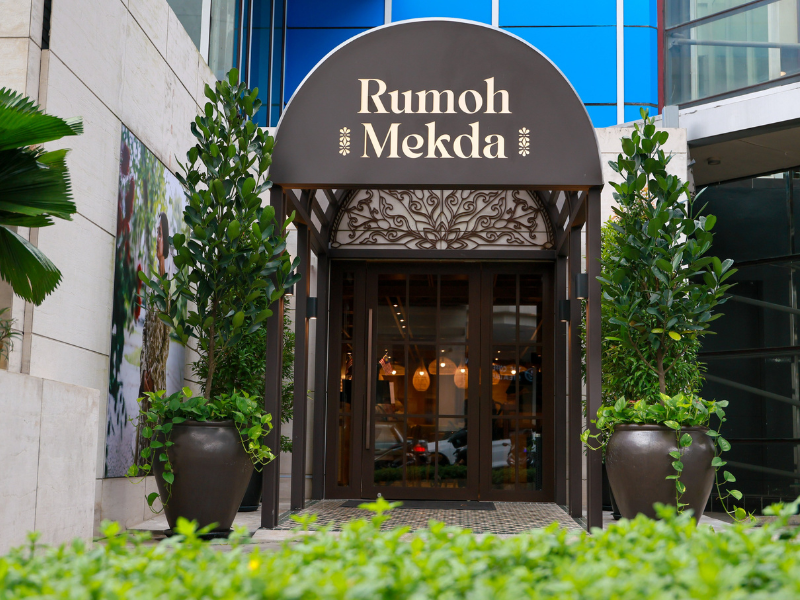
In the right spot
Located at Bangsar Village 1, Rumoh Mekda can be easily spotted by the roadside thanks to its distinctive exterior marked by an arched entryway with a large storefront sign. Inside, the dining room features a modern set-up with traditional accents. The combination of green upholstery with wooden structures and concrete walls exudes a timeless elegance, making a lasting impression in a restaurant that champions ancestral feasts.
“We wanted the aesthetics to tell the same story as the food. There are references to our East Coast identity and Malaysian heritage, but they have been interpreted in a way that feels warm, polished and contemporary.”
Mekda strongly believes that the beauty and comfort of a space contribute to a wholesome gastronomic experience. “Dining is never just about the food. From the moment someone walks through the door, they are already taking in the atmosphere, interiors, music, table setting and, most importantly, how they are welcomed and served. When the food, space and service complement one another, the experience becomes much more memorable. You don’t just remember what you ate; you remember how the place made you feel.”
Choosing this affluent neighbourhood as the location for the brand’s first outlet was a carefully considered decision as the team aims to place the establishment among the crème de la crème. “Bangsar Village felt like the right home for Rumoh Mekda because of the community here. The crowd is diverse and well-travelled, but at the same time, there is a strong appreciation for really good Malaysian food.
“We want to show that our local cuisine and traditional recipes deserve to sit confidently within a premium dining environment. Malaysian food can be nostalgic and comforting while still being beautifully presented, thoughtfully served and experienced in a sophisticated setting.
“Ultimately, we want Rumoh Mekda to be somewhere you can enjoy with your parents and grandparents because the flavours feel familiar, but also a place where you can bring friends, business associates or visitors from overseas to and feel proud to introduce them to this part of Malaysian culture.”
2.png
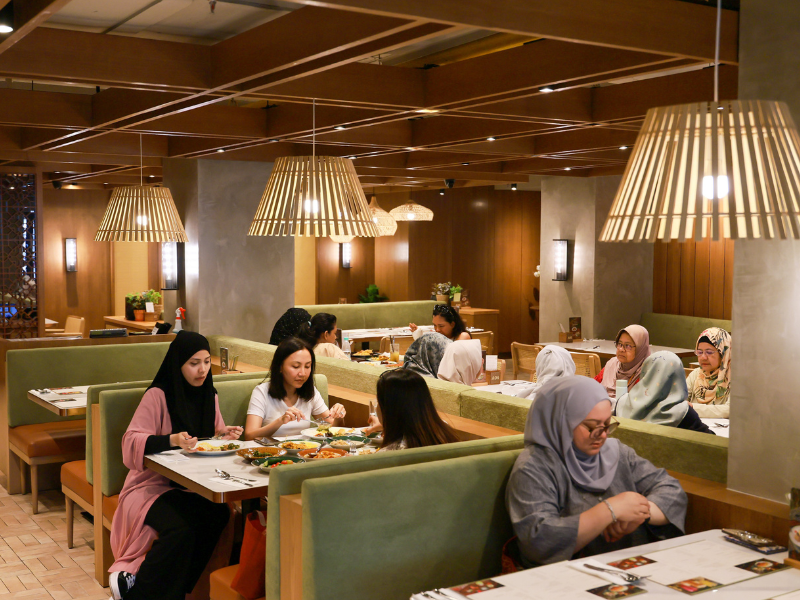
Mekda says she has achieved her dream of feeding as many people as she can. “That has always been the reason I love cooking. There is a particular kind of happiness you get from watching someone genuinely enjoy something you have made.
“Now I get to experience that every day with those I might never have met before. When customers come back, bring their families or tell me that a dish reminds them of something their mother or grandmother used to cook, that is incredibly rewarding.”
As the business continues to grow and welcome local and international diners — many of its clientele are celebrities and members of Malaysian royal families — Mekda affirms that her goal is to protect what the team has built. “We want to make sure we take care of our food quality, improve our weaknesses and uphold a high standard of service. Expansion means very little if we lose the core elements and heart that made people love Rumoh Mekda in the first place.
“Eventually, we would love to bring Rumoh Mekda to other locations around the country so more people can experience food from my family’s heritage. But wherever we go, we want it to carry the value of good food, genuine hospitality and the warmth of being fed by family.”
This article first appeared on Oct 5, 2026 in The Edge Malaysia.