
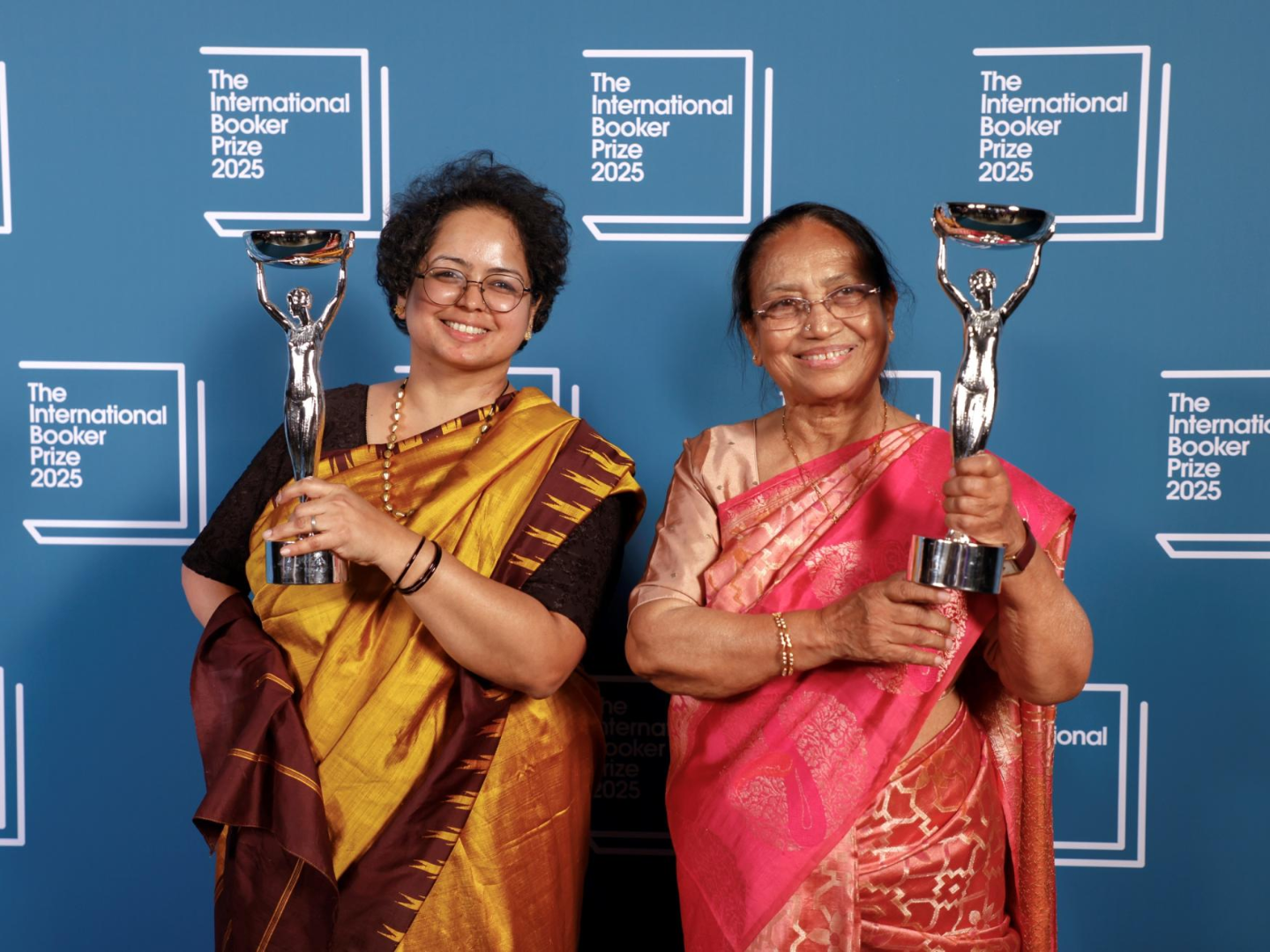
Banu (right) and translator Deepa Bhasthi holding their trophies at the 2025 International Booker Prize awards ceremony (Photo: David Parry/ The Booker Prize Foundation)
At the International Booker Prize 2025 ceremony, Banu Mushtaq shared that her book, Heart Lamp, was born from the belief “no story is ever small. In the tapestry of human experience, every thread holds the weight of the whole”.
Recognition for her collection of 12 short stories, translated from Kannada by Deepa Bhasthi, is not the endpoint for the Indian author, lawyer and activist. It is a torch she hopes will light the way for “more stories from unheard corners, more translations that defy borders and more voices that remind us the universe fits inside every heart”.
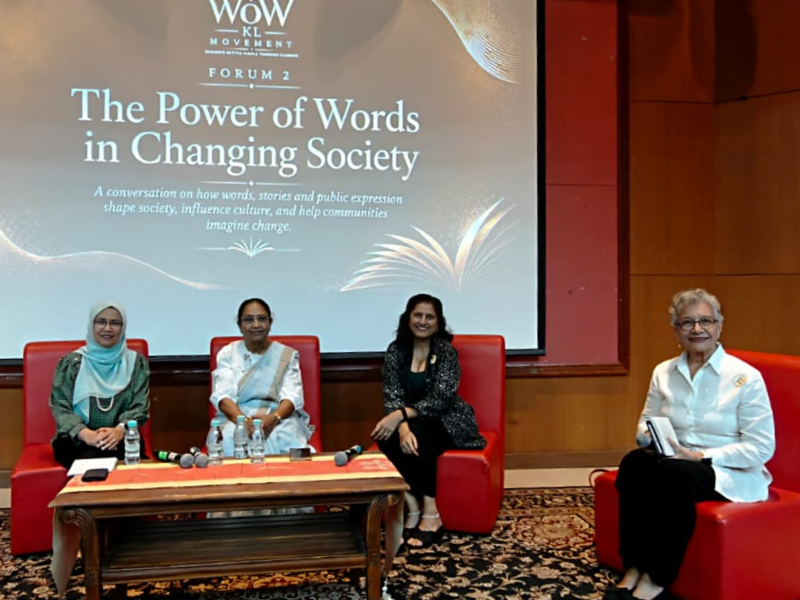
Banu was recently in Kuala Lumpur for World of Words 2026, the second edition of a festival that celebrates the power of books, ideas and reading. She holds firm that every story matters and every voice should be heard, but recognises words have become weapons which can incite, wound and even kill. There is also the proliferation of fake news, as anyone with a phone and camera can now profess to present the “truth”.
At WoW KL’s forum on the power of words in changing society, Banu voiced the need for laws to regulate freedom of speech — without curbing dissent and the right to question. “We want people to talk, but how to separate the grain from the chaff?” she asks. As readers sieve for answers, this 78-year-old talks candidly about her work.
Options: You started writing stories from seventh grade. What sparked your interest and what did you write?
Banu Mushtaq: I have been an avid reader for as long as I can remember and began writing almost as soon as I learnt to read. At first, it was perhaps just the innocent scribbling of a child. My writing would appear on the walls and even the floors of our house. I always felt an inexplicable urge to write, as though writing was simply another way of making sense of the world around me.
By the time I reached the seventh grade, that impulse had taken a more definite form. I began writing a novel called Mahadi Mane (The Upstairs House) in my school exercise book. I may not have fully understood then what it meant to be a writer or why I felt compelled to write, but I remember that deep desire very clearly. Writing was never something I consciously chose as a career in those early years; it was something which came naturally to me. Looking back, I feel the child who wrote on walls and floors was already discovering her own voice.
2.png
WoW’s theme this year is Read to Lead, Read to Heal, Read to Build. Have books helped you heal?
Reading does not necessarily erase pain, but it gives pain a language. Sometimes, we find ourselves in a character, recognise an emotion we could not articulate, or discover someone, somewhere, has felt what we are feeling. In that recognition, there is a certain kind of healing.
I have personally found that healing in books. During difficult periods, I have often turned to literature not necessarily for answers, but companionship. A book does not ask you to explain yourself. It simply stays with you. Reading also makes us grow. It challenges our assumptions, expands our empathy, and allows us to inhabit lives beyond our own. Some books comfort us; others disturb us — and I believe we need both.
For me, reading and writing have always been intertwined. I read to understand, I write to process, and somewhere between the two, I often find a way forward. Perhaps that is the greatest gift of books: they do not rescue us from life, but help us face it with greater courage, curiosity and compassion.
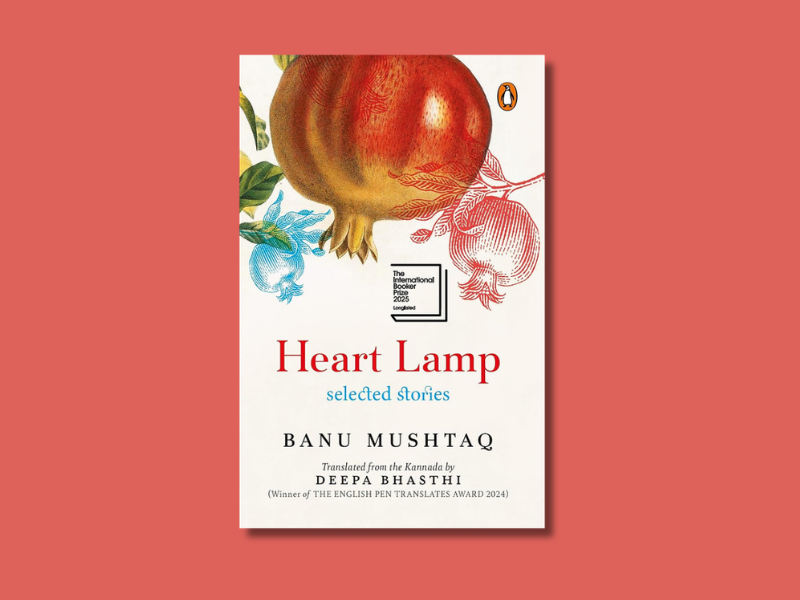
Do the stories in Heart Lamp, written between 1990 and 2023, reflect the breadth and depth of your work?
My stories have emerged from different periods of my life and reflect the social and personal pressures, experiences and responses of those times. I have often written as a witness, as someone who has seen, experienced and been deeply moved by what was happening around me. At the same time, I have felt that I could not remain a silent observer. I had to take a stand, particularly when I encountered injustice, oppression or the denial of another person’s voice. My writing has often come from that conviction: a voice raised against injustice must travel beyond its immediate circumstances and reach a wider world, so justice may become possible.
The 12 stories here, which Deepa and I selected together, represent certain dimensions of my work. Some bring particular aspects of my concerns into sharp focus, while others emerged directly from specific events and moments in society. There are many more which speak to other experiences, periods and questions that have shaped me as a writer. Heart Lamp is a selection of my work, not a complete map of it. For me, each story is rooted in a particular time and circumstance, but together they reflect my continuing attempt to understand human lives, respond to injustice and give expression to voices that are often unheard.
body_pics_3.png
Themes you have focused on over the decades — the struggles of women, injustice, corruption, poverty, tensions within the family — are eternal. Has highlighting them changed anything?
Violence, pain, discrimination and oppression have not disappeared with time; they have retained their basic forms while taking on new and sometimes more subtle forms. When I began writing about these realities, speaking about what happened within the home was often treated as a betrayal of the family itself. A woman was expected to endure even severe violence silently and preserve the so-called honour of the household. Her silence was valued more than her dignity and questioning that silence was considered unacceptable. For me, writing became a way of breaking that silence and bringing what was considered private into the realm of public discussion.
I believe doing that can create social awareness and help individuals recognise and question injustice in their own lives. Over the years, these conversations have entered public policy, and governments have been compelled to acknowledge the need to protect women and strengthen their rights through legislation. I would not claim literature alone can transform society, but I believe it can begin a conversation, challenge accepted notions and make silence more difficult to sustain. In that sense, the changes we have seen are also the result of the persistent efforts of writers like me and many others who have continued to speak, write and question.
Change is the law of the world; history has repeatedly shown us no society can remain frozen in one moment forever. Old structures, beliefs and ways of thinking eventually encounter new questions and new realities. Change is inevitable, but the manner in which it unfolds and the direction it takes can be influenced by human consciousness and collective action.
Revolution, resistance, rational thinking, questioning and the many forms of art, including literature, play an important role in shaping this consciousness. They encourage people to think beyond what they have been taught to accept, to question injustice and imagine possibilities beyond the existing order. The courage to question and the power of creative expression can determine whether that change leads towards greater freedom, equality and human dignity.
3.png
You have faced social boycotts, threatening calls and an attempted knife attack, and had a fatwa issued against you. Ever thought of not writing or stepping back from what you were fighting for?
Not for a single moment have I thought of putting my pen down. These events came at some of the most vulnerable phases of my life, and yet the need to write always surpassed the fear, the threats and the uncertainty surrounding me. What sustained me through those difficult years, perhaps more than anything else, was the realisation that I was not alone. I began to recognise the strength of the support system around me — my family, the true friends, believers and quiet allies who stood beside me like strong, unwavering pillars. In many ways, these experiences became defining challenges in my life, shaping not only the person I became but also the course my literature would eventually take.
At the same time, I cannot say these experiences left me untouched. They made me question many things, including my own freedom to write. There was a period when I became conscious of self-censorship… a quiet, almost invisible presence that began to creep into my writing. It changed the way I wrote. Perhaps it made my writing more satirical, more restrained, infusing it with a certain dry humour, allowing me to articulate difficult truths without always confronting them head-on.
The impact was not merely literary. I suffered physically and psychologically as well. I began experiencing severe allergies and other health problems, and it was only much later that I understood them as the body and soul's response to prolonged trauma. Sometimes the wounds of fear do not announce themselves; they find their way into the body when the mind has run out of places to contain them.
But through all of this, I came to understand one thing with absolute clarity: writing is as essential to me as breathing. It is not simply something I do; it is something I cannot imagine living without. Whatever I have faced so far, and whatever I may have to face in the future, I know this much with certainty — I will not put my pen down.
Are you working on new stories or, perhaps, a second novel?
I am currently working on several projects, each at a different stage of completion. My short story collection is being translated into English and is expected to be published in the coming year. I am also deeply immersed in a novel I began three years ago, while a new collection of short stories in Kannada and my autobiography are taking shape as well.
In many ways, my writing mirrors the diversity of my life. I enjoy moving between these different forms and projects, alongside my work as a lawyer and activist. Rather than feeling overwhelmed by these parallel journeys, I find them stimulating. They keep me curious, engaged and, most importantly, creatively alive.
Perhaps this is what I enjoy most about my senior years — the freedom to pursue all these facets of my life with greater focus, without feeling the need to choose just one. There is a certain joy in having so much left to say and so many stories still waiting to be written.