
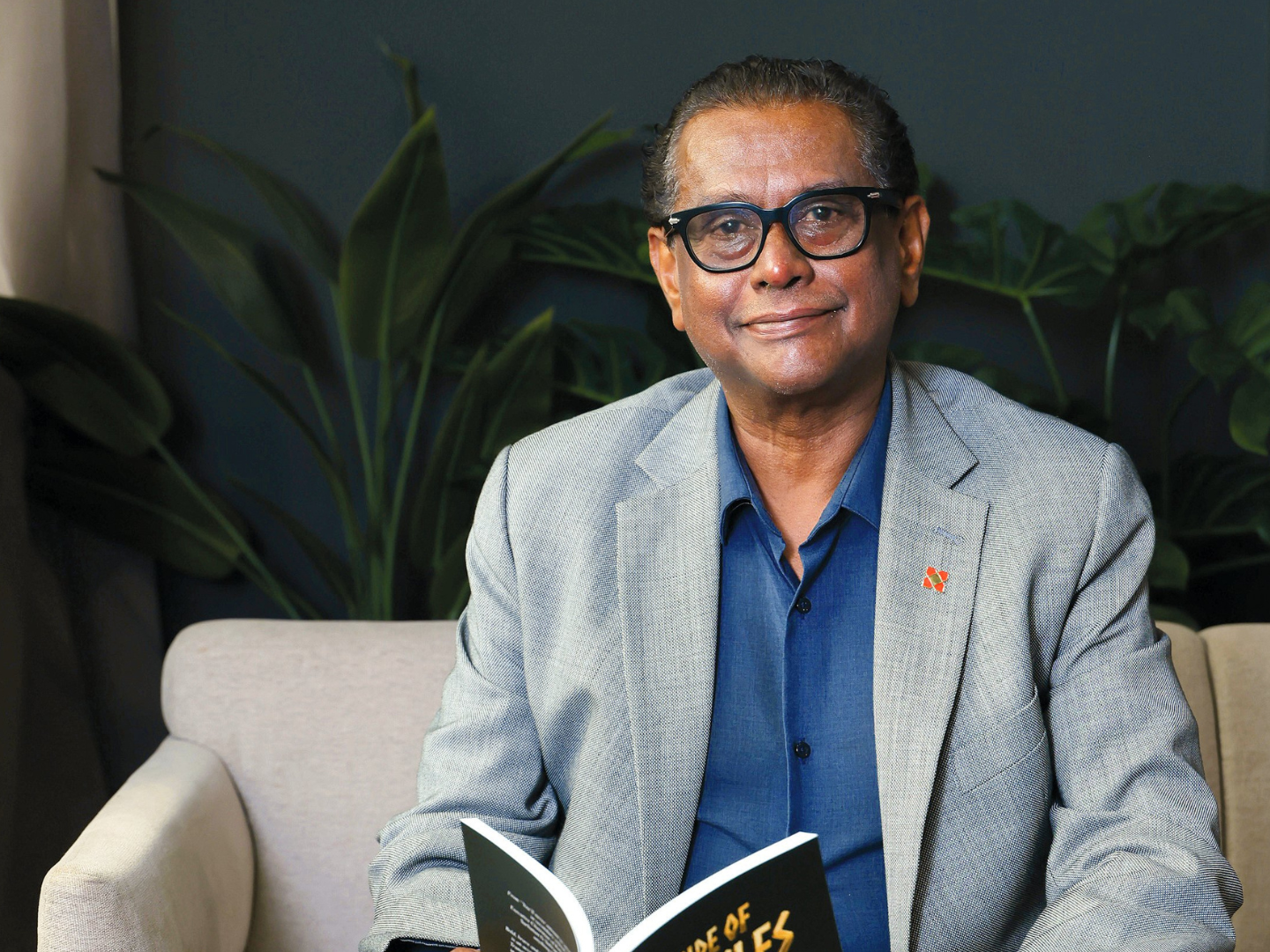
Sarkunan 'Sarky' Subramaniam, group executive chairman of Knight Frank Malaysia (Photo: Sam Fong/The Edge)
Every weekend for 10 months, Sarkunan Subramaniam followed a strict regimen: tea, curry puffs and a two-hour chat with his literary consultant Ivan Tan. The group executive chairman of Knight Frank Malaysia (KFM), better known as Sarky, would go over anecdotes and photographs from his life, explaining and refining his stories spanning childhood to the present. “We were very disciplined,” states Sarky firmly, before breaking into a grin. “Only after that would we have a few drinks.”
The sum of their hard work was recently published as The Other Side of Obstacles, a 198-page account of Sarky’s journey from the struggling boy who would “not amount to anything in life” to a highly respected leader in the real estate industry. Divided into four sections, the book charts the chairman’s formative years being raised in Kuantan by a strict school-teacher mother, his cash-strapped university days in Australia, entering Knight Frank Baillieu (KFB later became KFM) before departing and, eventually, returning to lead the firm as its managing director.
“I was thinking a lot about young people and what I could do at this stage of my life that could be of use to someone else,” explains Sarky, on the project’s origins. “I was pondering this while sitting in a pub and talking to a friend, and he knows quite a bit of my story — how I came from a background that was very hard in the beginning and made it to where I am now — so he suggested that I write a book.” The same friend introduced him to Tan, and Sarky agreed the opportunity was right to craft something he could leave behind to help those facing seemingly insurmountable troubles of their own.
body_photo_1.png

The decision to write an autobiography comes with the conceit that one’s experiences are original and interesting enough to warrant print. But as the preface to The Other Side of Obstacles points out, the opposite can be just as true — sharing your story requires a level of humility and willingness to put yourself out there, no matter how your choices might end up being perceived. As Sarky writes: “If my story helps a young person who nearly messed up his college results or one who is starting his own company or maybe one who is facing retirement, this book would’ve achieved its objective.”
Far from the glitzy memoirs that tip into holier-than-thou territory, this is a read that embraces grit, melancholy and utter straightforwardness. “Initially when I finished it, I figured I wouldn’t elaborate too much on certain sections, because I wanted this to be a positive book. But when I went through and read it again and again, I decided that’s not enough,” he says. From crying alone in a padang after learning of his parents’ divorce to cycling miserably for over 80km to complete a school assignment with not so much as a penny for food, the chairman asserts he wanted every moment expressed truthfully, no matter how unglamorous.
Inner monologue is offered with little fanfare or floweriness — the sting of confronting an absent father or rebelling against a teacher whose words hurt more than he would admit are conveyed like a genuine conversation with an old pal, complete with the occasional quip, cuss and crazy misadventure. In fact, between Sarky’s willingness to view his hardships with a forgiving perspective and amusing curation of sillier incidents, the text ends up summoning quite a few chuckles where they are least expected. “It came from the heart,” he affirms. “Honesty is one of the core values I want to embody in the book.”
If honesty is Sarky’s first principle, justice is its close companion. “That was inculcated into me very early by my mother,” he laughs. Recollections of him lying to pocket some extra cents or eating his sister’s share of food as a kid were promptly accompanied with swift justice delivered by Amma. Tough lessons, painful as they were, stuck.
body_photo_2.png
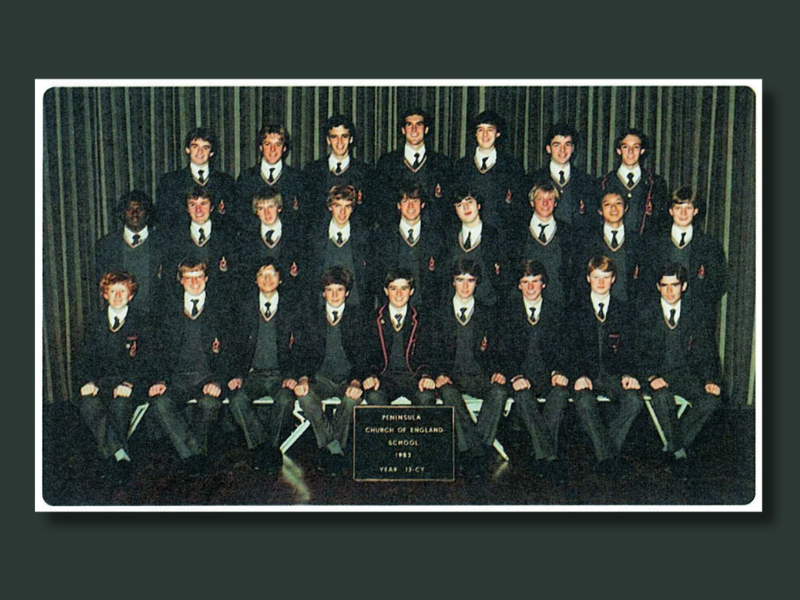
When he was later shipped off to Australia to study at Peninsula Grammar and the Royal Melbourne Institute of Technology, pain reprised itself in a different way. A thoroughly broke but iron-willed young man performed odd jobs and drove a haunted (allegedly) cab to keep afloat. It was hard not to compare the harsh card he had been dealt to peers for whom funds were a non-issue.
Nonetheless, he held steady, the virtue of hard work his north star. That integrity followed him all the way to Knight Frank. “I learnt a lot from Eric [Ooi, group founder and advisor for KFM]. He’s a very principled person. When you see others act that way, it makes you want to do the same, and ensure you set that example for those under your wing.” His mentor and lifelong brother-in-arms was a role model for professionalism and decisiveness, and over time Sarky was spurred to institute greater change on an industry-wide scale. A true leader, he realised, cares about improving every employee, trusting the team and treating colleagues with emotional sensitivity.
“In the early days of being managing director, one thing I noticed in a lot of department heads was a lack of empathy. They pushed and pushed for people to get their work done,” he explains. The experience was not foreign — Sarky had his own breakdown and epiphany over his tyrannical rule after returning to KFM as its new director, before vowing to change for the better. “I taught them to understand the other person and what they were going through instead of just demanding things. I even called in trainers to guide my managers to emphasise EQ instead of just IQ.”
Most crucially, his autobiography had to be enjoyable and instil hope, forward-facing instead of insistently retrospective. Every chapter ends with the chairman’s reflective commentary, laying out the key morals and takeaways from each episode.
“I love my people, I really do. I think we have built a beautiful firm, and that’s what the last part of my book is about — how to develop a successful company,” he says. “I talk a lot about specialisation and putting together a good team. Maybe my advice could inspire someone starting their own real estate business.”
body_photo_3.png
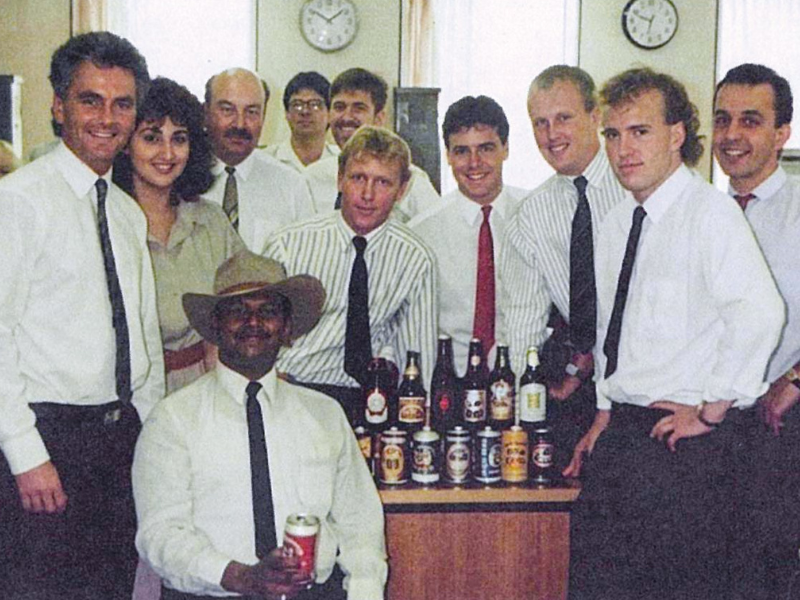
His has been a life of resourcefulness and survival, but he also acknowledges that the barriers currently facing young professionals are markedly different, not least due to the introduction of new technology. “Nowadays, I wouldn’t send my child off one-way like I was!” he says. “You could scrape by back then. But even if the obstacles have changed, the stories and lessons are still relatable.
“The new hires we have, if they read this book, will at least understand our history. Once they learn about Knight Frank and its founders and leaders, I hope they will see the right way to do things, with perseverance and integrity.”
Asked for his parting advice, he simply smiles, “Don’t dwell. Whatever hardship you’re experiencing, you can get through it.”
To purchase a copy of 'The Other Side of Obstacles' (RM50), visit sarkunan.com.
This article first appeared on Aug 17, 2026 in The Edge Malaysia.