

Datin Kalsom Taib: If this memoir succeeds in preserving memories, inspiring reflection and reminding readers of the importance of family, faith and heritage, then I will consider my purpose fulfilled (Photo: Zahid Izzani/The Edge)
The phrase “sharing is caring” has become so familiar that its meaning can become diluted through casual use. For Datin Kalsom Taib, however, sharing has never been an empty platitude. It is a principle woven into family life, inherited particularly from her mother.
“It was not just about food or material things,” she explains. “It was also sharing what we had, helping others and thinking of those who might have less.”
That philosophy is among the topics explored in Kalsom’s latest book, A Life Reimagined. When asked what she hopes readers will take away from the memoir, her answer is immediate.
“Values,” she says firmly. “I wanted to show many of the things that shape us are not necessarily taught through words. They are often learnt by watching our parents and the way they live their lives.”
The book, her 13th, is a particularly personal endeavour for Kalsom, who describes herself as an “accidental writer”. It is not another collection of recipes or an account of somebody else’s life, but an attempt to make sense of her own. “Writing entered my life later than I expected, yet it became a source of great fulfilment. Through writing, I found a way to preserve memories, honour traditions and share experiences with others.”
Even the book cover offers a glimpse into the sentiment behind the project. On it, a young Kalsom is pictured holding stationery and a book. She remembers how her mother used to point out that she would always reach for those items before a photograph was taken. Looking back, that quirk seems almost prophetic.
6.png

Best known for her award-winning cookbooks, Kalsom began her writing journey by recording other people’s stories. Her first biography, Taib Andak: In a Class of His Own (2008), paid homage to her late father, a former chairman of the Federal Land Development Authority (Felda) and Maybank. Her mother’s biography, Zainab Ahmad: A Truly Remarkable Woman (2009) was next, followed by that of her husband — former Anti-Corruption Agency (now the Malaysian Anti-Corruption Commission) chief Datuk Shafee Yahaya — chronicled in The Shafee Yahaya Story: Estate Boy to ACA Chief (2010). Kalsom has also penned the fortnightly Culinary Inspirations column for The Star since 2023.
After years of putting others’ stories to paper, she found herself facing what she describes as “the most challenging task of all”.
“In many ways, writing this has been like opening old albums in my mind,” she explains.
Some memories brought laughter and gratitude while others brought tears. Revisiting them offered her the opportunity to recognise how each experience contributed to making her the person she has become.
The memoir itself was encouraged by Shafee, whose gentle persistence and persuasion convinced Kalsom that her anecdotes were worth preserving. He saw the practice of recording as not merely a family exercise, but a way of passing down lessons about living with purpose and principles to future generations.
That began with her birth on Aug 18, 1942, in Japan-occupied Malaya. Although she has no personal recollection of the events of that period, accounts passed down by family members helped her piece together a better understanding. Her own formative memories, meanwhile, reveal a hidden picture of wartime life. Despite uncertainty and hardship, ordinary routines continued and people adapted.
2.png

The early chapters trace a childhood defined by movement. Her father’s career as a civil servant meant frequent relocations, taking the family from one state to another. A significant amount of time was spent in Muar, Johor, before he left to pursue advanced legal studies in London. Her mother was active in Kaum Ibu, the women’s wing of the United Malays National Organisation (Umno).
When her mother eventually left to accompany her father in England, Kalsom found herself taking on more responsibilities as the oldest daughter.
Her parents’ return to Malaya in 1949 marked the beginning of another series of relocations. As her father assumed positions including first assistant district officer, first-class magistrate and acting president of the Sessions Court, Kalsom attended convent schools in Johor Bahru and Melaka.
As a student and boarder in the structured environment of those academies, she developed discipline and independence. Living independently also gave her space to form her own opinions and strengthen her sense of identity. Holidays spent at the family home in Kuala Lipis, Pahang, offered a contrasting rhythm in the company of loved ones.
This nomadic pattern continued with her father’s posting to Kota Tinggi and then back to JB. Kalsom had to sometimes make the difficult choice of moving with her family or staying behind to continue with her education. Eventually, she moved to Kuala Lumpur, where she completed her secondary schooling at Convent Bukit Nanas and St John’s Institution. She achieved a Grade One for her School Certificate and later earned a government scholarship to pursue a Bachelor of Arts degree at the University of Malaya after Form Six.
It was there that she crossed paths with Shafee. Both were involved in the History Society — she as secretary and he, her assistant. It was not love at first sight, but working together gradually brought them closer. They graduated in 1965, receiving their degrees from Prime Minister Tunku Abdul Rahman Putra al-Haj during a convocation ceremony held at Parliament House.
Although she considered following in her father’s footsteps by reading law, Kalsom instead chose teaching at a time when the country needed more educators. After completing her Diploma in Education, she taught at several schools including Muar High School, High School Setapak, Sekolah Menengah Teluk Datuk, Sekolah Aminuddin Baki and Sekolah Menengah Alam Shah. Shafee, meanwhile, was appointed as secretary to Prime Minister Tun Abdul Razak.
In the midst of it all, the couple tied the knot in 1966. The humble ceremony took place at the Taib household on Jalan Ampang, KL. Among those present were the “who’s who” of Malaysia such as Abdul Razak, Sultan Ismail of Johor and Tun Dr Ismail Abdul Rahman.
body_photo_54.png

Kalsom’s teaching career ended abruptly. As she approached the end of her five-year service bond, an incident involving the public humiliation of female teachers by the headmaster of her school prompted her to reconsider her future.
Her entrance into the corporate world began in 1970 with Shell Malaysia. Nearly three decades later, while serving as human resources (HR) director at Nestlé Malaysia, she unexpectedly encountered that same headmaster — by then retired and leading another organisation — when he met her. He remarked that she had made the right decision to leave teaching, while she thanked him for prompting her to change her profession.
Kalsom also recounts the obstacles she faced, the experience of having her teaching background initially overlooked and the changes in governance she witnessed that made employee benefits more inclusive, in an era when women had far fewer opportunities to hold executive positions.
Her leadership and accumulated experience eventually led to her being headhunted by Malaysia Mining Corp (MMC) to become group personnel manager, reporting directly to the group chief executive, Abdul Rahim Aki. The Maminco crisis of the early 1980s, which shook the country’s tin mining industry, proved to be one of the toughest periods of her professional life, resulting in the retrenchment of thousands of workers and the closure of mines.
A move to London after a decade with MMC ultimately led to her role with Nestlé, a position she held until retiring at 55.
If the memoir chronicles a life shaped by change, its underlying theme is undoubtedly Kalsom’s ability to transform each transition into an opportunity to learn, contribute and reinvent herself.
4.png

Her roles extended beyond the boardroom. Through Puspanita, the Association of Wives and Women Civil Servants of Malaysia, she discovered another avenue to engage in community initiatives that aligned with her principles. When Shafee was appointed secretary of the National Security Council and later the Anti-Corruption Agency, she was automatically elected chairman of the society.
In 1987, she became a founding member of Women for Women Association Malaysia (WOW), an organisation dedicated to supporting female managers, and served as its first president. These experiences gave her an appreciation of the many ways women contributed to the country — sometimes through highly visible leadership, and others, through work done discreetly behind the scenes.
Retirement, however, did not bring the peaceful conclusion one might expect. The Reformasi movement, sparked by the dismissal of Anwar Ibrahim as deputy prime minister, thrusted Shafee and Kalsom into a turbulent period of the nation’s history. For Kalsom, witnessing Malaysians from different walks of life gathering peacefully to demand justice, accountability and fairness was another defining chapter.
When the storm eventually blew over, she turned her attention towards the things that brought her greater contentment — family, food, writing and heritage.
Kalsom readily calls herself an “armchair” in the kitchen. She knows recipes and understands taste, but does not necessarily prepare the dishes herself. Her motivation is instead rooted in preservation. Many of her mother’s recipes were written in Jawi, prompting her to have them translated so they would not disappear with time.
The first culinary book, Johor Palate, Tanjung Puteri Recipes, which she co-authored with Hamidah Abdul Hamid, took three years to complete and documented 240 family recipes. This was followed by Malaysia’s Culinary Heritage: The Best of Authentic Traditional Recipes, which features 230 gazetted heritage foods.
The third publication, Recipes are for Sharing, was written with her nieces, Ungku Balkis and Ungku Marhamah Shereen. Over the years, her contribution to culinary literature has earned her eight Gourmand Awards, regarded among the most prestigious accolades in the international culinary publishing calendar.
3.png
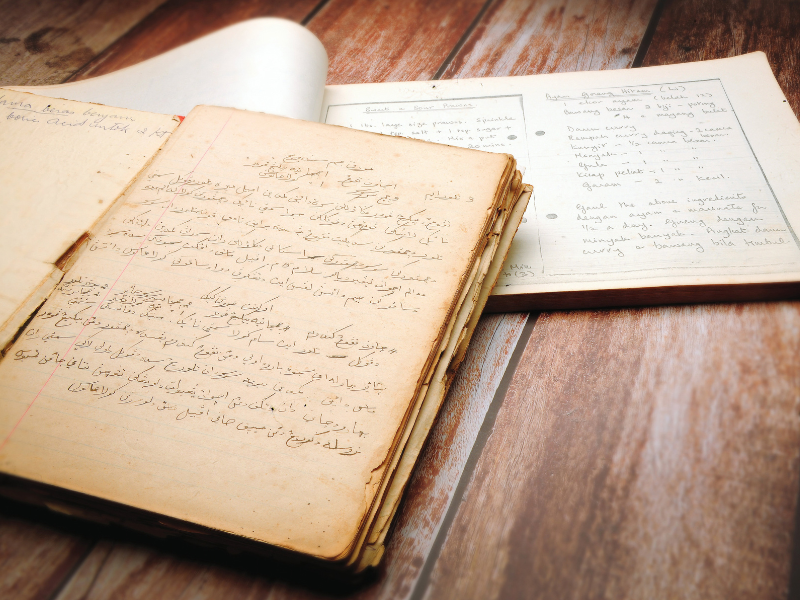
Even in recipe books, Kalsom has never been interested in simply listing ingredients and instructions. She prefers to understand where a dish comes from — its history, the people who prepared it and the circumstances that led to it becoming embedded in our culture.
This same instinct shapes A Life Reimagined. Rather than presenting a straightforward chronology of events, she fills her recollections with the details that make an era tangible, be it the weather, food, surroundings and social customs of the places she inhabited, or the neighbours, friends, teachers and other figures who left an impression on her. The outcome is a portrait of Malaysia seen through both major historical milestones and the everyday lives unfolding around them.
Perhaps nowhere is this more vivid than in her account of Merdeka. At 15, while studying at Sultan Ibrahim Girls’ School in JB, she travelled to the capital city to spend the holidays with her family. A history buff even then, she persuaded her father, who was district officer of KL, to take her along and witness the independence celebrations on Aug 30 and Aug 31, 1957. Her account offers something that official histories cannot replicate — the perspective of a teenager watching a nation come into its own.
The ability to locate the personal within the historical makes this memoir particularly resonant. One principle remains constant throughout. “You have to tell the truth,” Kalsom’s father once told her. It is advice she took when writing the book, including in chapters that delve into unexpected detours, travels, difficult experiences and revelations that challenged her along the way.
There are lighter moments too, alongside deeply personal ones. She writes about discovering that her father had secretly kept a second wife for 15 years, as well as her own battle with colorectal cancer. These episodes reveal a life that has been neither perfectly linear nor neatly composed, making it feel like an honest conversation.
5.png

At the book’s launch at Masjid At-Taqwa on Aug 15, the sense of kinship was palpable. Planned by her family and officiated by Shafee, the gathering brought together 250 loved ones to celebrate a woman whose life has been intertwined with theirs for decades and who has lived through several versions of Malaysia. Now a grandmother of 14, Kalsom commanded the room with the same wit that has animated her writing, drawing laughter from the audience as she reflected on her journey.
Having turned 84 this year, she describes A Life Reimagined almost as a swan song. With it, she hopes to set out what she has always meant to do — share with others. “If this memoir succeeds in preserving memories, inspiring reflection and reminding readers of the importance of family, faith and heritage, then I will consider my purpose fulfilled.”
'A Life Reimagined' is available at Kinokuniya and all MPH outlets.
This article first appeared on Sept 7, 2026 in The Edge Malaysia.