
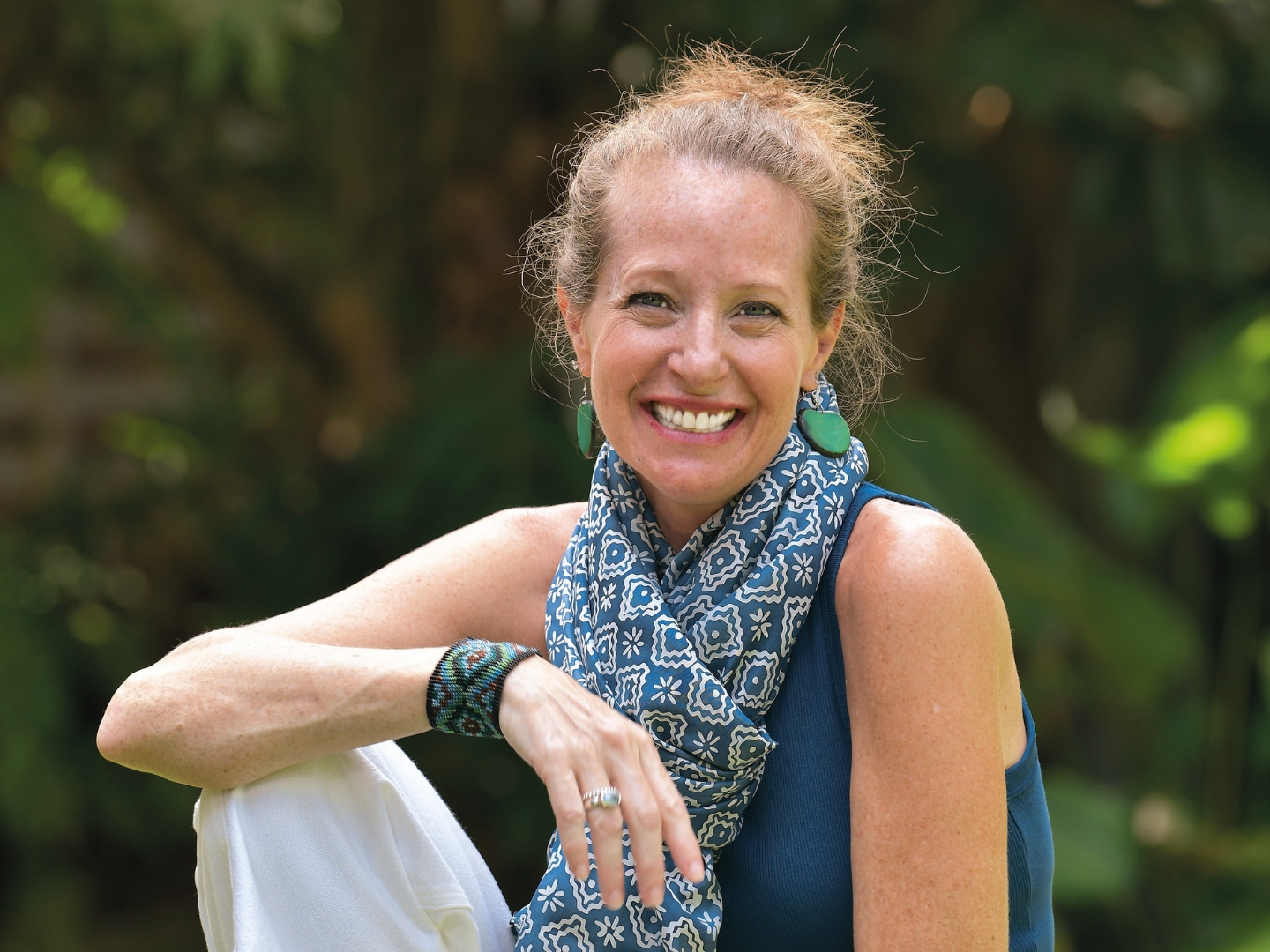
Crafts and textiles have always been Gruia’s happy place (All photos: Zahid Izzani/The Edge)
In a world where more and more companies prize quick cash over quality and connection, Kim Gruia of Ginger Batiks has no interest in breakneck business.
For the Canadian national who moved to Malaysia 11 years ago with her husband and two sons, and fell in love with batik shortly after, pursuing her small enterprise has always been about taking it slow, putting people first and respecting the creative process.
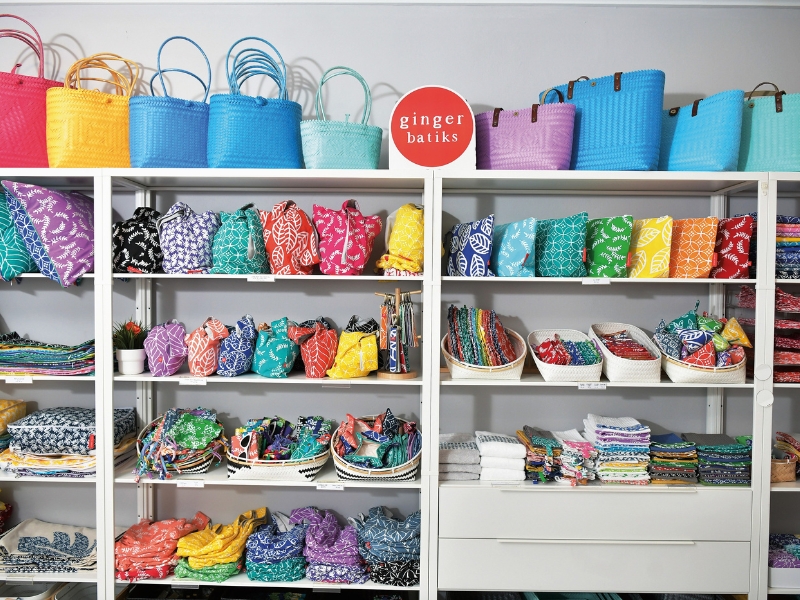
Her brand operates out of a vibrant, whimsical room in her own home, brimming with colourful block-printed gifts and goodies. Every item uses 100% cotton (with the exception of silk wares) and is sewn locally by communities of marginalised women.
Though having discovered the traditional art form only when she arrived in the country, Gruia’s connection to textiles is enmeshed within the tapestry of her family history. “I became a teacher and eschewed everything my parents, grandparents and great-grandparents had done, which was childrenswear,” she explains. Forsaking that mantle, Gruia left her job in Montreal, sold all her belongings and drove across America to move to Mexico, where she met her husband and had children years later. “We love Malaysia. It’s here that I reconnected with my own roots — as crazy as that sounds!
“I was raised by European immigrant grandparents who came to Canada with nothing and did upholstery to earn money. The way they showed their love was through cooking and teaching us to sew, knit, crochet, embroider and bake.” She describes vivid memories of a childhood “marinated” in this inherited appreciation for fabric, running between rows of workers sewing in the factory and jumping on fabric rolls. “The smell of bulk zippers still sends me back,” she sighs fondly.
Artsy activities had to take a back seat during her time as an educator, though she would still work on little projects when she could. Once she settled here, Gruia jumped at the opportunity to learn everything about the cultural craft from a friend who had been dabbling in it. From there, she experimented with towels and blankets, before expanding into the bountiful spread of rainbow-hued products that pack the cheerful shelves of her private boutique. (Ginger Batiks is named after her and her former business partner’s red hair, not the spice.)
ginger_batiks_2.jpg
Though sewing was handled by both of them in the early days, growing demand presented Gruia with a chance to drive social change and enrich the lives of others. She reached out to a group of Pakistani refugee women with the Lady Ayaz Sewing Centre, which provides machines and training for the seamstresses, to assist with sewing Ginger Batiks’ pieces. When it comes to empowering underprivileged communities, Gruia stresses the importance of ensuring refugee workers are fairly compensated and appreciated. “I’m proud to say that to this day, I still know everybody’s name and the conditions in which they work. It’s very much a reciprocal relationship.”
An upbringing steeped in the world of textiles has endowed her with the wisdom and keen eye to refine her products, evident from the way she pinpoints stitching quality and zipper types across her brand’s offerings. Being well acquainted with the craft means Gruia is perfectly aware of how much time and effort goes into each piece sewn by her artisans — a value she does not take lightly.
For new projects, Gruia begins by making a mockup before sharing it with the seamstresses and receiving a sample, after which the women provide her with a price range, effectively enabling them to set their own wages. “It’s probably not the best business practice, but this is more than business. Each of them is basically my grandmother, who moved to Canada after the war to find a better life for herself and her children,” she says.
The owner insists on paying those who sew for her their maximum quotation, sometimes exceeding that amount if she feels a design is particularly complex. The collective allows the women to work in a comfortable, safe and happy situation, which Gruia credits with allowing Ginger Batiks to grow into what it is today. She also works with the Sew X Dignity foundation, and frequently collaborates with local and international artists and craftsmen whom she meets at bazaars to produce unique items. Meanwhile, the hand-printed batik fabrics are sourced from homegrown ateliers, most of which are printed with her own designs inspired by Malaysian art and architecture.
With ethics and sustainability becoming increasingly relevant to modern conversations, Gruia urges people to question what they buy and make informed choices. “I’m able to stand here and know I’m not taking advantage of anybody, and that is key. We as consumers have a responsibility, and we cannot bury our heads in the sand. When someone says their products are sewn by refugees, always ask to hear more. How are they paid? What are their working conditions like?”
ginger_batiks_1.jpg
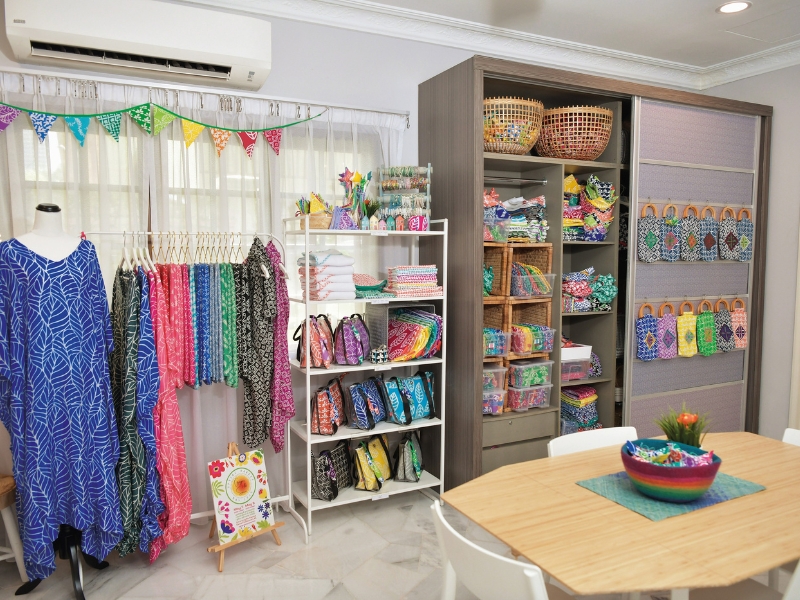
Gruia’s family moved to their new house in Ampang, Kuala Lumpur, after the pandemic, wherein she swiftly staked her claim to the room she now calls her sanctuary. Clients can book a visit via Instagram (@gingerbatiks) to peruse the wares at a calm, comfortable pace — Gruia brings out tea, treats and even toys for those visiting with children. This arrangement helps keep costs low and ensure her prices stay accessible without sacrificing quality or underpaying those who work with her.
Durability and practicality form a crucial part of Ginger Batiks’ products, all of which are machine washable for easy maintenance. From cushions and pouches to more specialised items such as microwaveable tortilla warmers, Gruia believes in selling goods that will stand the test of time and wear, and actively working against “throwaway culture”. Her wide selection of geometric and organic motifs, along with the myriad of bright colours, allows buyers to mix and match their preferred patterns and shades, enhancing the customisability of each purchase.
Besides her shop, Gruia hosts a bi-annual bazaar for emerging vendors, also out of her home. The Ginger & Spice Markets, which began five years ago and are held around spring and Christmas, always spotlight female artisans and lesser-known talent. But the markets are about more than buying and selling, she says. They encourage meaningful bonds between customers and creators, and allow those who may not be able to afford rental costs at bigger events to gain some attention. The intimate set-up fosters a supportive environment for all vendors involved: For the women founders who may not be able to stay the duration of the event due to family obligations, Gruia and the other participants are happy to take over managing their booths.
As the brand enters its 10th year this month, she has ramped up offering her products via other retail outlets on consignment basis, but scaling up and “churning stuff out” is not on her immediate checklist. Batik is, after all, a time-consuming and labour-intensive craft — the production time for the fabric alone can be anywhere between three and six months, bar bouts of rainy weather that might cause dye to bleed (a big no-no for Ginger Batiks’ crisp white outlines).
Despite the looming digital age, Gruia chooses to remain bricks-and-mortar — partially because translating the sheer volume, variety and variations of her stock is just unfeasible at this time. But more to the point, she clarifies, “I don’t need it. This is enough. I’m able to help the community; the bigger I get, the harder it will be for me to assure quality. I know I’m a very privileged person, and I want to use my position to connect with others and share their stories and truths.”
Reflecting on her brand’s journey this past decade, she smiles, “I have never been happier in my life. Every time I thread a sewing machine or select buttons, it’s like I’m channelling my grandmother. It is my heritage and my comfort. Fabric, textiles, anything ‘made’ is where my happy place is.”
The Ginger & Spice Spring Market will take place on May 14 (10am to 5.30pm) and 15 (10am to 3.30pm) at 8 Lorong Ru Kedua, Desa Pahlawan, KL.
This article first appeared on Apr 21, 2025 in The Edge Malaysia.