
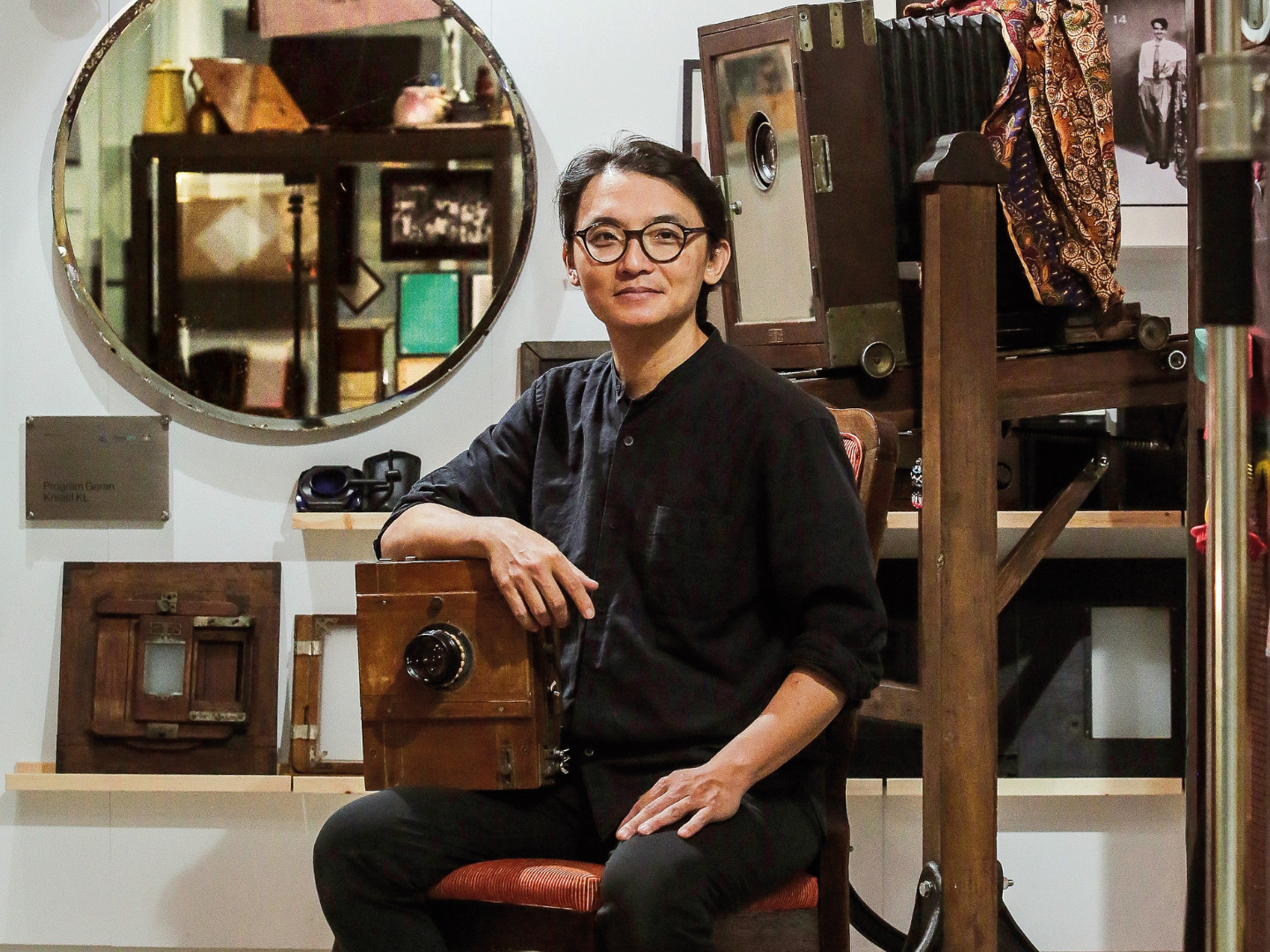
Using his research and knowledge from his travels around Asia, Lim seeks to revive the culture of silverprint photography (All photos: Zahid Izzani/The Edge)
Going through old family scrapbooks and photo albums is a tradition many of us grew up with, one gradually fading with time as smartphones take the place of cameras and print shops. While our metal rectangles equipped with a couple of hundred gigabytes of storage make it a breeze to store years’ worth of images, nothing quite compares to the experience of flipping through old photographs, catching glimpses of family gathered around dinner tables, friends connected at the hip and parents beaming ear to ear as children sporting graduation gowns cradle scrolls and plaques.
Among all the moments captured on film, the family portrait may be the most special. Rather than commemorating a big occasion or achievement, these photos are visual records of bloodlines. They are a way for elders to reminisce about their youth and to help younger generations put faces to names and remember loved ones who have passed. If you were to fish out the oldest image in any household’s collection, it is likely a black-and-white one — the ultimate token of a bygone era when even a single colourless image could be a prized possession.
For photographer Jeffrey Lim, it was these vintage mementos that set his life’s work into motion. Like many Malaysians raised on the country’s colourful history and culture, his persistent curiosity about how his forebears first put down roots here led to a deep dive into the family archives. “As I explored further back in time, my ancestors only existed in these black-and-white photos. I wanted to find out more about their history and origins, and to further their legacy,” he says.
He began by taking photos of his parents to add to the albums at home, and quickly realised that the box cameras of yesteryear were essential to creating that vintage style he had fallen in love with. In 2012, he started the Kanta Box Kamra art research project for which he built four models with a range of reused materials such as biscuit tins, oil containers and wooden cases. Each image was printed on sheets of silver gelatin paper — a durable material that produces a distinct, high contrast look that basic digital editing cannot quite replicate.
3.png
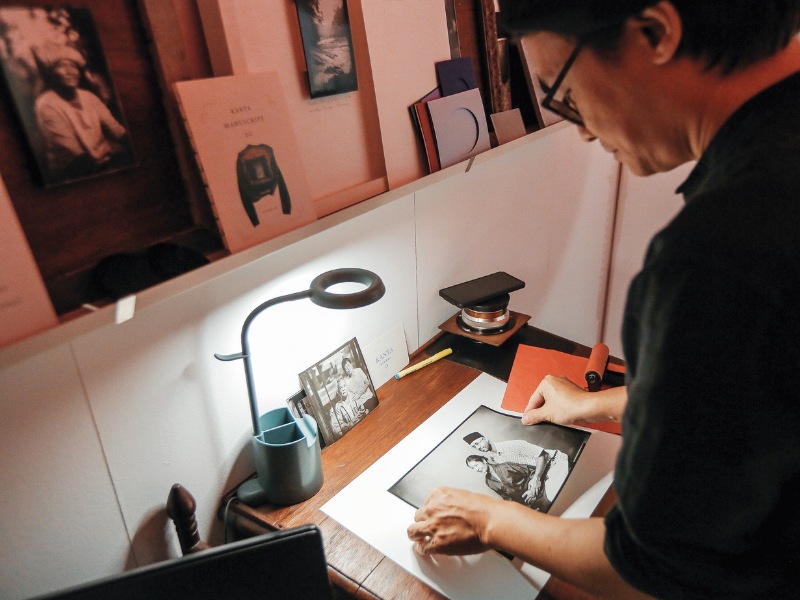
For the creative mind, seeing the world can make all the difference. To deepen his research and broaden horizons, Lim hit the road, travelling around Malaysia, then Taiwan and Japan. To pass on his knowledge of this dying art, he took on a few apprentices and guided photography groups on building and using the vintage cameras he favoured. “I also taught some indigenous people I met in rural Malaysia, though it’s a lot tougher for them because they have more challenges in adopting the skills. But one of them took it up, and now has a box camera of his own,” he notes proudly.
When not travelling for his project, Lim offers instant portrait services at pop-up events, quickly garnering the attention of fascinated customers who had never seen clunky, retro field cameras, much less posed before one. “People would ask me if I had a studio because they wanted to bring their family and friends to get their portraits taken together,” he mentions.
The idea was appealing — one of his great interests had always been to revive the culture of studio photography. But the space had to be more than just a place for people to get their photo taken. It had to be a platform where the historic craft of silverprint could thrive again, enabling those who come by to gain a greater appreciation for the fading art form.
With the support of the Kreatif KL grant by Think City, Lim set up shop at GMBB in Bukit Bintang in September 2025, transforming a quiet corner unit into a cosy studio. Shelves are decorated with vintage knick-knacks, walls are covered in monochromatic photos and a soundtrack characterised by Malay oldies whisk visitors away to a forgotten era.
1.png
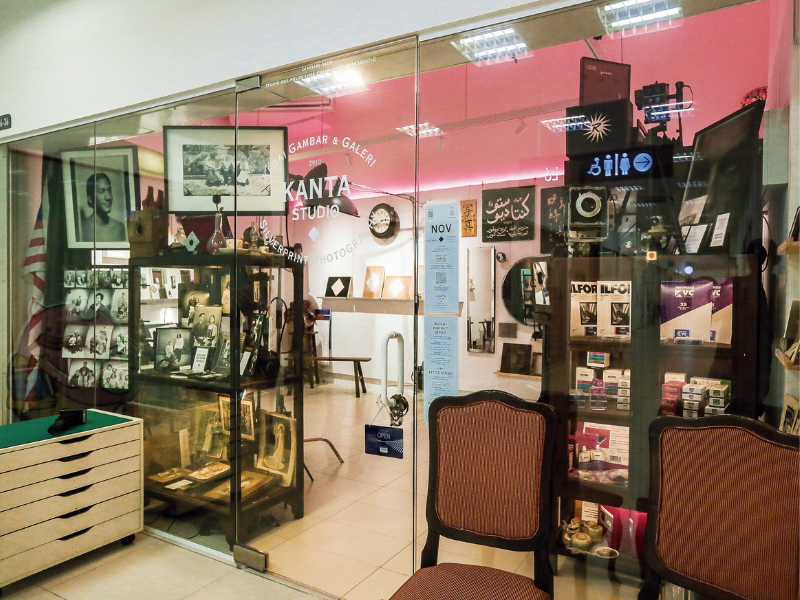
The star of the show, however, is definitely the 1900s Shanghai-built studio camera that Lim acquired from an antique dealer and lovingly restored over the course of a year with parts sourced from three other cameras. When clients come for a session, it is typically this unit that is used to capture their likeness. “I found it at a store in Bangi and traced its origin to a studio in Beruas, Perak,” he says. “It came with a few IC photos as well as 17 boxes filled with hundreds of negatives and prints from the 1980s, which I plan to eventually incorporate in an exhibition.”
Though the work is labour-intensive and the studio small, Lim prefers to keep it a one-man show, believing that a bigger but more hectic workspace would take him away from parts of the process and dilute the significance behind silverprint’s slow craftsmanship. “If I were to set up in a larger space in a more crowded place, like Central Market for example, I don’t think I could take on the volume of work alone. This is a craft done by hand. You have to take your time to get the right shot, and printing is an art of its own. It’s not something you can do by just pressing a button. It’s not an instant photobooth,” he explains.
2.png
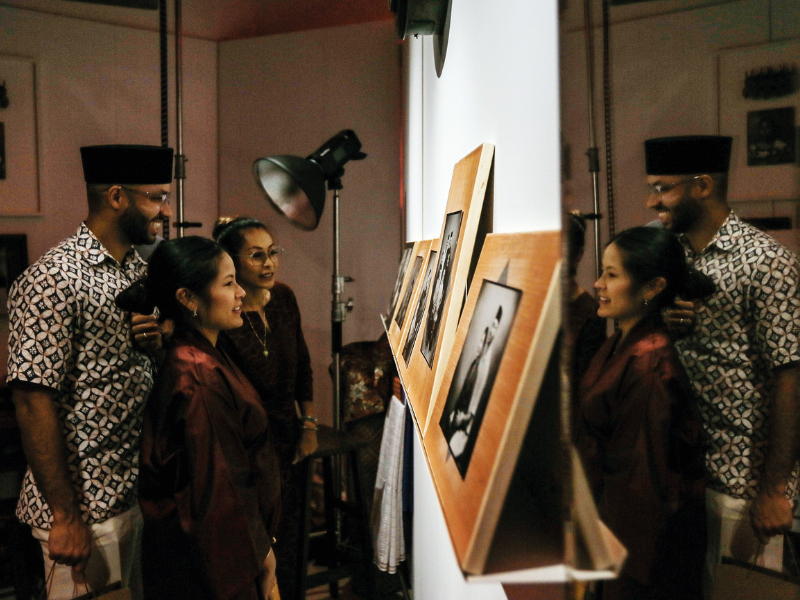
This way, pricing is also more controlled. “In larger photo studios, where there are multiple staff involved beyond the photographer, the cost also goes up. Part of my initiative was to make salon photography more affordable for the average client.”
Most importantly, the intimate setting and nature of the work make it a bonding experience for the loved ones who gather in front of the lens. It is these moments of coming together — rarer than ever as fewer people get professional family portraits done — that Lim wants to capture and enshrine. Stored with care in an album or framed on a wall, these photographs can last beyond a single lifetime and give the next generation something to hold on to.
“I encourage people to go get their and their family portraits done, not just at Kanta but at studios anywhere else. This is how we bring the culture of photographs back. Right now, everyone automates to the phone and the electronic screen. Without a physical print to hang up and admire, these pictures and memories might get lost to time.”
This article first appeared on Jan 26, 2026 in The Edge Malaysia.