
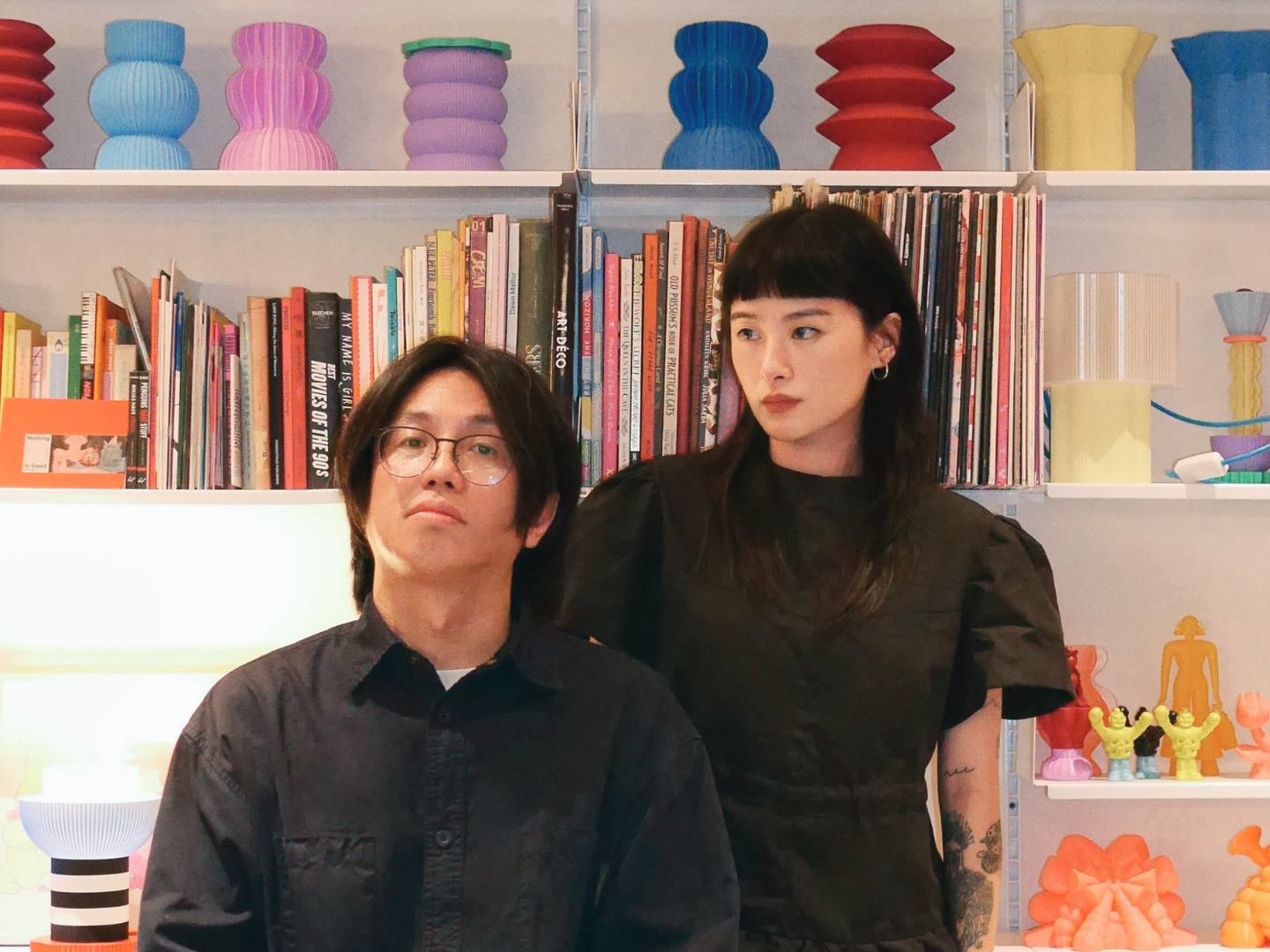
Loo and Wee founded Sad Studio in 2024 (All photos: Sad Studio)
In recent years, the rise of minimalism in interior design has been met with both enthusiasm (for its potential to reduce clutter and stress) as well as criticism (for its sterile style and lack of personal touches). But those who live by the “more is more” motto have continued to rebel against the trend, proudly curating their living space with bold colours, eclectic patterns, layered textures and an assemblage of objects for a vibrant and expressive environment.
Instead of choosing one over the other, Sad Studio founders Sugee Wee and Driv Loo discovered the perfect balance between the two distinct design philosophies and decided to incorporate both elements into their new house, which they moved into in 2024. “We were heavily involved in the renovation process. Every corner felt intentional, so we wanted the décor to reflect that same sense of care and personality. Our home blends minimalism and maximalism through colours, and we were inspired to create pieces that expressed that balance,” says Wee.
The husband-wife team come from creative backgrounds — the former is a full-time graphic designer running his own studio called Lie Design, while the latter used to be a tattoo artist and illustrator. “I loved drawing comics since I was a kid and that’s how I developed interest in character design and eventually got into 3D printing as a hobby,” says Loo.
On the other hand, Wee, who studied fashion design, recalls spending most of her childhood with her notebooks and colourful pens, tracing lines and drawing figures of girls wearing beautiful clothes. “When my fascination for fashion grew deeper, those early sketches evolved into illustrations. Over time, my creative curiosity expanded into more hands-on mediums — embroidery, crochet, macramé, weaving and eventually 3D printing — all ways of translating imagination into form.”
Naturally, when the duo were given complete control and freedom to do up their abode, they jumped at the opportunity to craft character-filled objects that would fit the building’s aesthetics and satisfy each other’s preferences. Using 3D printing, they developed their first item: a contemporary interpretation of a belly vase that utilised polylactic acid (PLA), a biodegradable plastic derived from renewable resources such as corn starch and sugarcane.
7.png
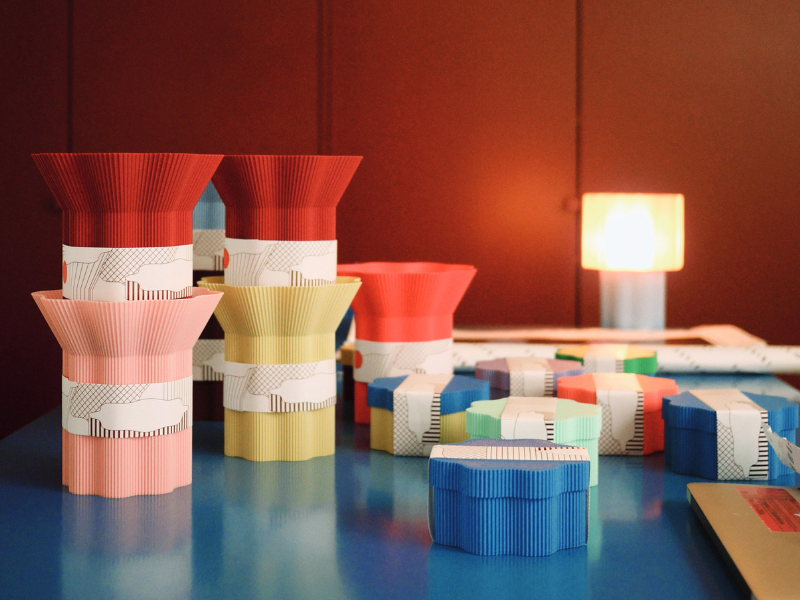
Since then, Sad Studio — the name referencing the partners’ initials — has been rolling out household knick-knacks such as flower pots, trinket boxes, candle holders and fridge magnets. “What began as a desire to create accessories we would personally use in our daily life grew into a passion to make pieces we genuinely love — and want to share with other people,” says Wee.
In contrast to the brand name, its range of products in varying shapes are bright and striking, the kind that prompt conversations as soon as one lays eyes on them. “Our creative direction is rooted in the idea of having fun — something I’ve always carried as a personal motto. We want the objects to feel playful because décor shouldn’t be just functional, it should also spark joy and reflect the character of the people living with it,” she says.
As head of product design, Wee draws inspiration from everyday life and ordinary moments. Unique shapes and striking shades pique her curiosity and trigger her artistic endeavour. “Our process has always been intuitive. I usually start by imagining a ‘vibe’ for the products or series, whether it is going to be soft and tender or quirky and bold. Then I work out the forms and hues that fit into such feelings. From there, I do 3D mockups and test different colour combos, before discussing with Driv to decide which pattern makes the cut.”
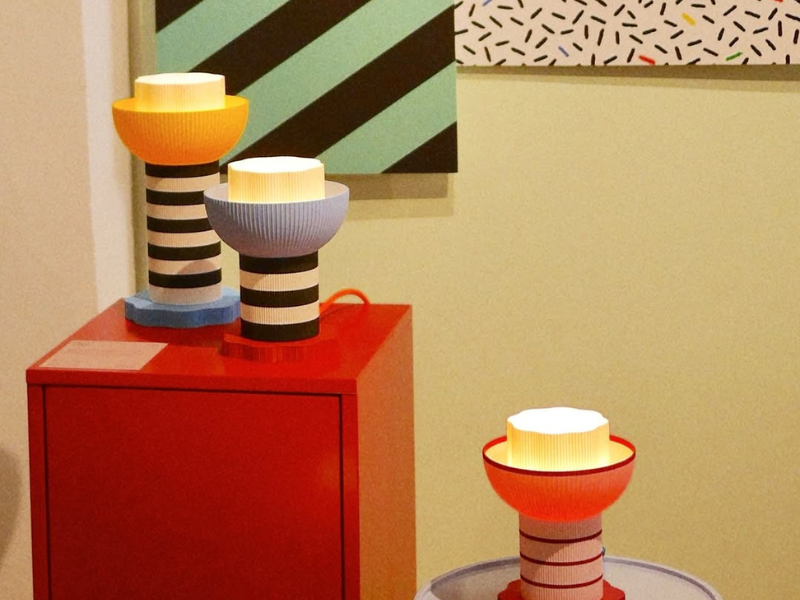
One of Sad’s remarkable series is called Mem, a tribute to the 1980s Memphis design movement led by a radical Milan-based collective, whose head Ettore Sottsass, together with a group of like-minded creatives, challenged the rules of minimalism in favour of unconventional, fervent expressions that emphasised emotion, individuality and creativity.
“I’ve always been fascinated by the 1980s. It’s my absolute favourite era — a decade where design, music and TV felt bold, expressive and unapologetically playful. There was a sense of optimism in how colours, shapes and patterns collided, exuding energy that still feels electric today every time I look back at pictures of that time. Through Mem, I wanted to reinterpret that spirit in our own way, using stripes and cylindrical and circular silhouettes, as well as sculptural forms,” says Wee.
Each creation is made to order, a sustainable approach the couple settled on from the beginning as it would allow them to minimise waste, produce only the stock required and improve quality control, something they would find difficult to achieve with mass production. “We get the chance to be more intentional with each piece, making sure the end product is as perfect as it can be,” explains Loo.
8.png
In many ways, running a business that relies chiefly on a 3D printing machine encourages the enterprise to yield positive environmental impacts. “The objects are built layer by layer directly from a digital model. This eliminates the need for moulds or other mass-production tooling, thus significantly reducing material waste,” he says.
“We are also able to generate prototypes immediately, giving us freedom to experiment with forms and small-batch collections. Additionally, working with bioplastics allows us to produce flexible pieces while maintaining a more sustainable approach to manufacturing.”
Though the studio has captivated the local market with its curated offerings that are both visually appealing and highly functional, the founders readily admit that having zero professional training in technical or 3D design challenges their ability to explore certain concepts.
“We had to learn everything through trial and error and experimentation, from understanding the software to troubleshooting the machines. Although it was difficult at first, that learning curve shaped our approach: to stay adaptable, enjoy the process and continue learning as we grow,” says Wee.
The couple lean on one another to manage the business successfully. “We have different strengths — Sugee is more focused on the creative direction, while I am in charge of production — so we balance each other,” says Loo.
“Our personal connection gives us trust and understanding, which helps us navigate challenges more openly and playfully. At the same time, it makes the work feel more meaningful because it’s something we’re building together.”
At its core, Sad strives to spread happiness and enhance one’s life and living space with its dopamine-boosting, decorative-yet-practical items.
“The most rewarding part has been seeing people genuinely enjoy our products — whether it’s using them in their homes or sharing how much they enjoy them. Knowing something we create brings joy nto a person’s everyday life is really special for us,” he says.
This article first appeared on Feb 9, 2026 in The Edge Malaysia.