
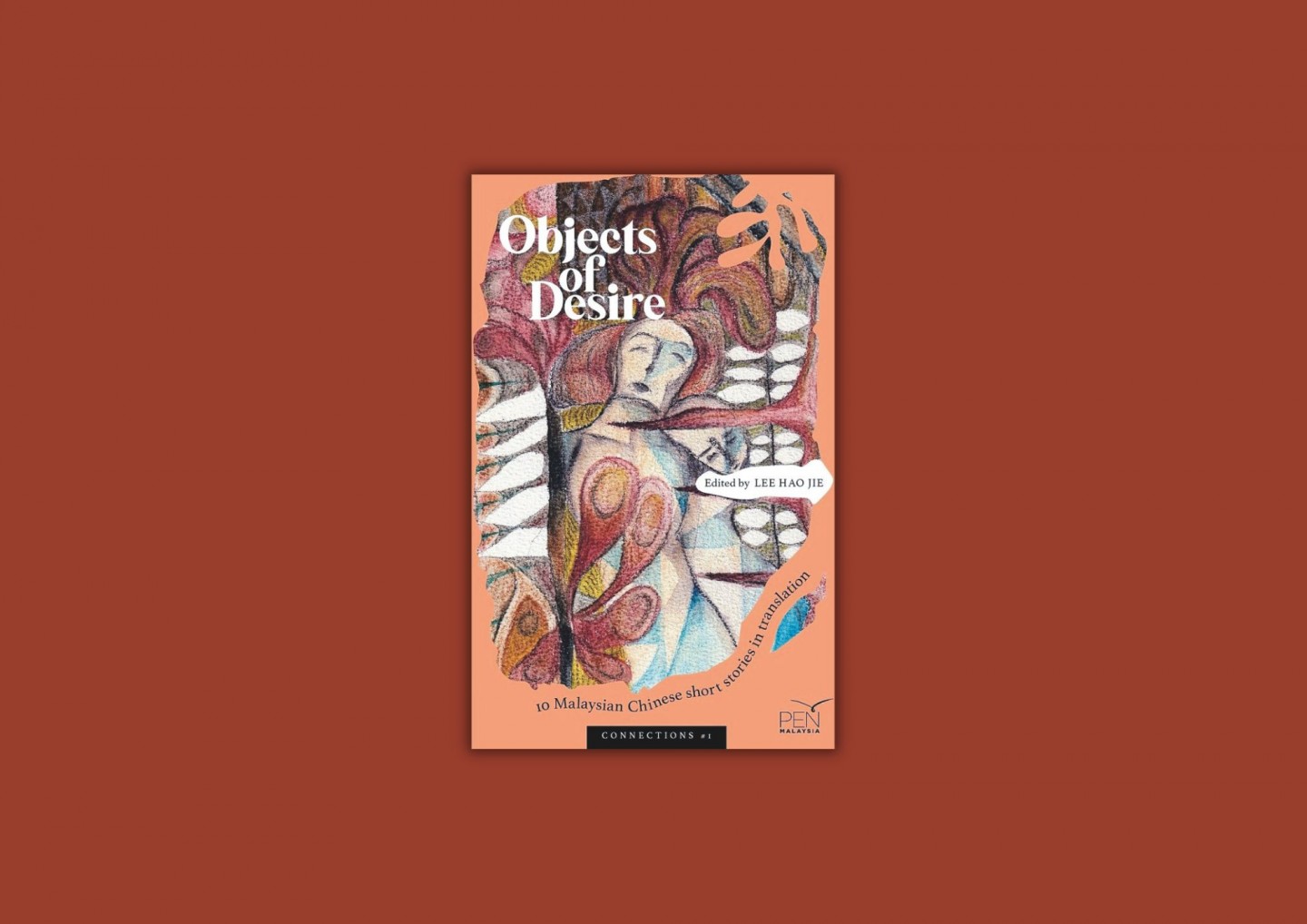
Each story in the anthology was translated by different people, giving more diversity to the translations (Photo: PEN Malaysia)
Speak of the economy of translation, not just here in Malaysia but anywhere in the world, and the conversation naturally enters a world of seemingly plodding purposelessness and an economically barren vocation.
But settle on what draws someone to this elusive and, in Lee Hao Jie’s words, “curious” art (and act), and the strange history of translation inspires vast episodes of “translation history”, ranging from Boris Pasternak’s translation of Shakespeare into Russian to, closer to home, the huddling of separate translators under the aegis of an irrepressible organisation called the Han Cultural Centre, initially without any money, to translate the mammoth Chinese classic Romance of the Three Kingdoms into a Malay version, Hikayat Tiga Negara.
For all that is the daily interminable groan of “Chinese-Malay tensions” in common and mundane politics, greater still are the historical realities of deep Chinese-Malay immersions and intimacies, from cuisine, textiles and language to the arcane and intrepid verses of the Dondang Sayang.
This legacy moved Malaysia’s national laureate and poet Usman Awang so much that, from the earliest days of this nation’s birth, he put his belief in achieving a greater understanding and appreciation of the two communities through their literature.
Mahua literature is defined by Lee in his intelligent and enlightening introduction to Objects of Desire: 10 Malaysian Short Stories in Translation as “short for Malaysian Chinese literature”. He goes on to say, “Mahua literature refers to work by Malaysian Chinese writers who write in their mother tongue. It may also include work by non-Chinese Malaysians who can write in Chinese, if any.”
Objects of Desire is the first in a projected series of publications titled Connections, an inspired effort that aspires to extend the boundaries of literary experience and translation in polyglot Malaysia. A more recent effort has been an anthology entitled Dunia di Kaki Lima, a translation of Malaysian Tamil short stories into Malay.
The novelty and vitality that are found in Objects of Desire may lie in the initial openness of its approach. Not circumscribed by the common touchstones of correctness, the quest was to find voices that reflected ingenuity and something “fresh”.
“I did not think very much about who should be represented. I had a very open approach, and my main consideration was to get fresh stories for the anthology,” says Lee.
gallery_outside1.jpg

The original theme for the collection was the capital city of Malaysia. “Stories that would be set in and give a version of what it was like to live in Kuala Lumpur,” he continues.
As there were few stories that embraced this theme directly, the anthology began to take shape as it evolved. Increasingly, interesting convergences took place and upon further reading of manuscripts, the arching theme of the stories settled on the idea (and nature) of desire. Generational departures and convergences, a result of disparate literary influences, also began to define the editorial process.
“It became obvious that the more senior writers had a very different approach. They were more economical, they would fall back a lot on influences that came from mainland China and the mainland China tradition. Younger writers were more influenced by trends in Taiwan and more American perspectives to the short story — longer and more expansive,” says Lee.
Mahua literature could be described as beginning as “literature of exile” — dislocation, crisis in belonging, perceived marginalisation. In the early years of its burgeoning, Mahua literature grappled with many of the big historical themes — war, alienation, dispossession.
The prospect of greater opportunities led several significant Malaysian Mahua writers to emigrate to Taiwan, where they gained considerable prominence and acclaim. Among them were Sarawak-born novelist Zhang Guixin and Johor-born literary scholar and novelist Ng Kim Chew, who continued to set their novels in Malaysia while living in Taiwan. Other prominent writers continue to remain in Malaysia even as Mahua literature gains ground internationally, both in terms of its creations and as a field of study and inquiry, led by an inexhaustible figure at Universiti Malaya, Florence Kuek.
The mark of contemporary Mahua literature is its departure from the “old themes” of history, politics and identity into worlds of eccentric literary invention. Some years ago, a brilliant, near surreal work Lake Like a Mirror, by Kedah-born Ho Sok Fong, was published by the eminent and radical publisher Granta in an evocative translation by Natascha Bruce.
The coming of more established and emerging writers was a principal objective of Objects of Desire.
“The bringing together of the generations was something I certainly had in mind,” says Lee. “Established Mahua writers such as Lee Tian Poh, Chan Yeong Siew, King Ban Hui and NiuYou XiaoSheng meet more emerging writers like Veda, Lee Sieng Leong and leemuzmuz.”
body_pics.jpg

One of the more attractive aspects of Objects of Desire is the awareness and detail of the art of translation itself. Each story in the anthology is translated by a different translator. That approach was purposeful. “The approach had its set of challenges,” Lee concedes. “But it did open up the translation process with each translator bringing their sense of nuance and sensitivity. What is gained then also is diversity in the translations. More practically, it helped on the ‘time’ front, enabling us to put together the anthology more efficiently and quickly.”
Objects of Desire captures all that is best about inventiveness, the observational and the quirky. The collation of experiences, voices, with a firm and commanding hand, and the emerging voices, so skilled in fantasy and the quixotic. One of the more reassuring aspects of the stories here is how the “grand themes” — history, politics, the search for belonging — never really go away, even among the emerging writers. Instead, a process of shapeshifting takes place and the tensions innate in the grand themes can settle on a snail, in The Snail, the first story in Objects of Desire, by Yeow Jun Heng, and quite masterfully translated by Dano Chow.
Aspects of fantasy, even allusions to manga, the visual drama of graphic novels, are present in the anthology. Quirky, if melancholic, stories like Dolphin Girl and Panda Boy by NiuYou XiaoSheng, in a clever translation by Brandon Choo, demonstrate the versatility and imaginative command extant in contemporary Mahua trends.
A fine balance, taut and exciting, Objects of Desire is intelligent and adventurous in its effort to provide a variegated experience. Desire, that most elusive and infectious attribute, is everywhere in the anthology, but its shape and expression is diverse, and always affective. The anthology concludes beautifully with a brilliant and moving story by the “senior” Lee Tian Poh. The Telephone Romance At No 9 Ring Alley, equally beautifully translated by Allie Xiang Haiyin, with its invocations of popular love songs, is an outstanding example of a story set in pace and craft.
Ah Boy could drift off to sleep, listening to the gentle bubbling of the pot, until he was shaken awake. A familiar scent of makeup powder and smoke drew near. A body wrapped in silky tight fabric, adorned with sequins glistening like a mermaid’s tail or blinking tears. “… you’re a big boy. You need to take care of yourself. I can’t look after you anymore. Everyone has their own life ….”
And with that, the final story in this sensitive, moving and smart anthology concludes, leaving behind the sensation that all desires bring — “But what happens after …?”
'Objects of Desire: 10 Malaysian Chinese Short Stories in Translation', edited by Lee Hao Jie, published by PEN Malaysia and distributed by Fixi, is available at all leading bookstores.
This article first appeared on July 7, 2025 in The Edge Malaysia.