
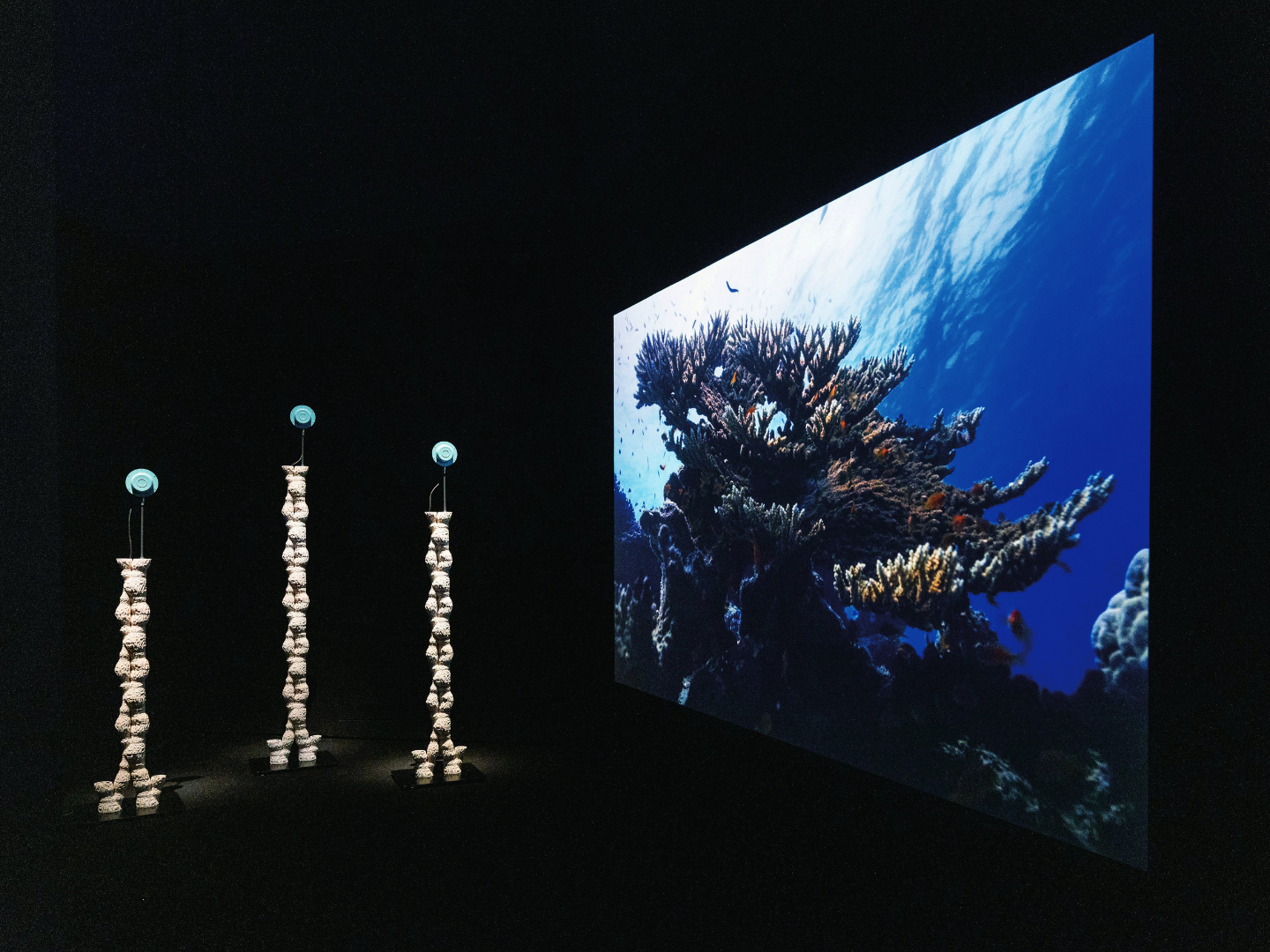
Coral Sonic Resilience by Marco Barotti (Photos: Marina Bay Sands)
There are some surface-level statistics about the ocean that the average person would have heard in their lifetime. A solid one would be that about 70% of the Earth is water. Others are more fluid: the percentage of explored area, stated in various sources, hovers between 5% and 20%. Along that threshold, the number of species that have been officially documented sits at over 200,000, though estimated totals veer closer to two million.
Numbers, crucial as they are, do little to convey the big drink in all its energy and enigma. Land may be the visible, segmented territory we call home, but that blue negative space unites us in a different way, enticing intellectuals and courting creatives desperate to understand her in equal measure.
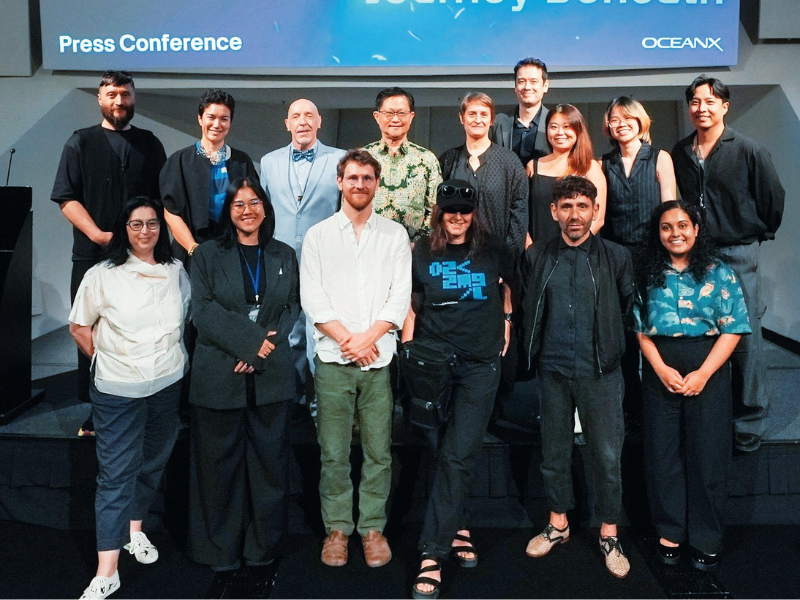
Boiling down the seemingly infinite impact of our greatest liquid asset — in all its historical, cultural and ecological contexts — to something that could be experienced in a single afternoon was therefore a task as fascinating as it was daunting for the curatorial team at Singapore’s ArtScience Museum. Yet, after two years of collaboration with leading ocean research organisation OceanX, the labour of their passions was successfully unveiled to the public on June 6.
Into the Ocean: Journey Beneath is a multisensory, interactive voyage deep into the heart of the water, combining data and resources collected by cutting-edge technology with creative exhibits by international artists to reveal mankind’s relationship to the ocean and what we know — or do not know — about it.
“[This exhibition] is one of the clearest manifestations of the art-science agenda, which is one of the museum’s tenets — the interface between disciplines,” emphasises Adrian George, director of programmes, exhibitions and museum services at ArtScience Museum. “OceanX has a semi-permanent team here in Singapore with a state-of-the-art research vessel moored in Sentosa. We met with founder Mark Dalio about three years ago and realised there was a lot of connectivity between us and what he was delivering. It made sense to work with them on a project which would educate and inform audiences about ocean health and sustainability.”
Throughout the development phase, the institution collaborated with scientists, experts and explorers to create a compelling story based on materials provided by OceanX, much of which has never been seen by the public or even shot before. Beyond footage, senior manager Magdalena Magiera says, “We have shown how different artists engage with certain parts of the ocean, and we have honed in on pieces that represent specific zones. We have also tried to mix works that incorporate something research-based while still finding unique visual or sensory aspects to the topic beyond simply statistics — which is what people usually envision when they think of science.”
Low down
5.png
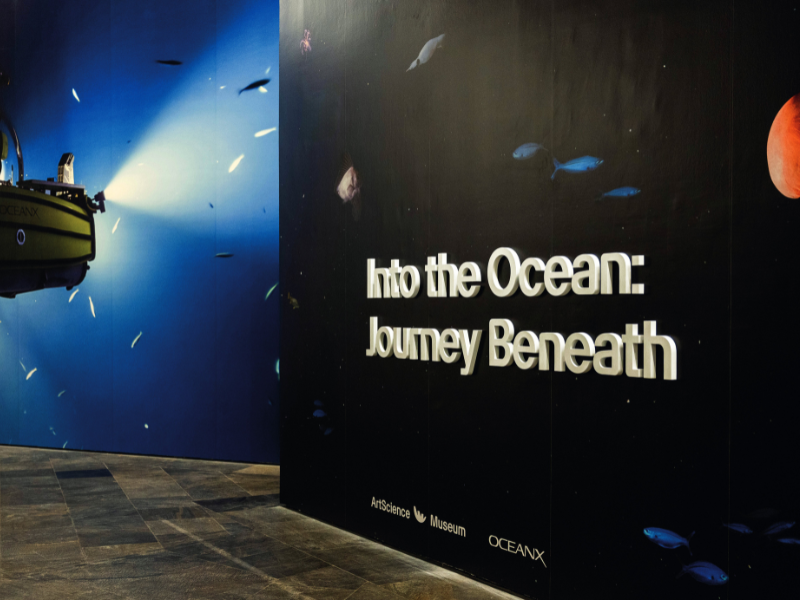
“It begins when you step in, making use of our layout to form a corridor where you essentially ‘enter’ the OceanXplorer vessel,” explains exhibitions producer Joel Chin. An immersive soundscape mimics radio communications commonly heard ahead of a dive, leading visitors into the first Descent zone that conveys the experience of entering a submersible and going beneath the water.
“The whole exhibition unfolds through increasing depths. There is the Photic Zone, which is from the surface to 200m; Twilight Zone, 200m to 1,000m; Aphotic Zone, which goes beyond that, and finally you resurface.” Spanning five sections in total, the show intersperses exclusive footage and specimens with smaller interactive areas, moving between pure edification and involvement — much like the real world, visitors are not simply spectators, but active participants in what happens.
The Photic Zone, for example, is populated with detailed displays on corals, urchins and microorganisms, situated within a large and open space to emulate the sunlit strata. Many of these components were deliberately tailored to hone in on aqueous bodies surrounding Singapore and its neighbours. “Our islands are some of the most susceptible to sea level rise and warming, so it’s critical to understand what is going on, as it could suggest a way for us to secure our future,” says George.
Specimens on loan from the Lee Kong Chian Natural History Museum comprise reef core samples drilled 4m into the ocean floor that represent over 8,000 years of coral reef health. The dive-and-discover video game is modelled around the native creatures of Pahang’s Pulau Tioman. Even the global portfolio of pieces displayed in Into the Ocean testifies to the inherent interconnectivity of submarine studies: Italian artist Marco Barotti’s Coral Sonic Resilience studies how acoustic ecology could restore reefs, a method currently being tested for deployability in Singapore’s coastal waters.
4.png
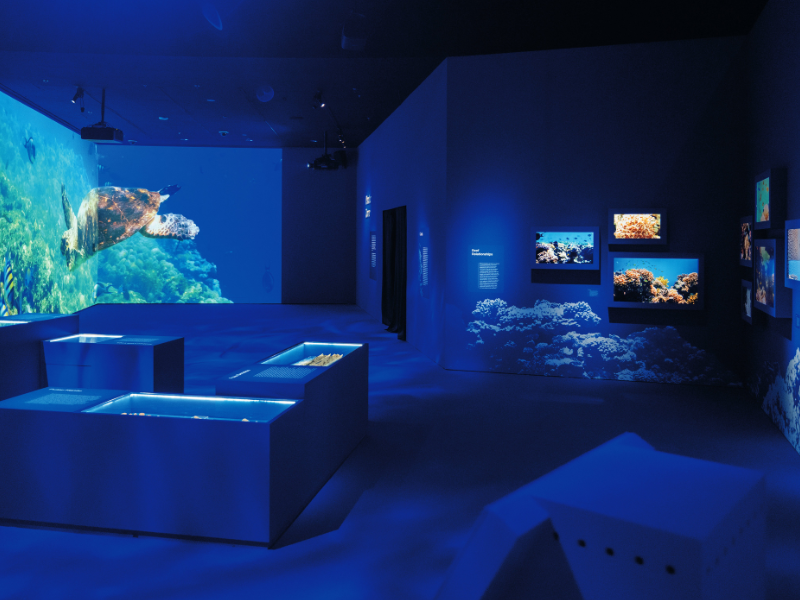
“It was very difficult to choose what to take and what not to,” remarks Magiera, on how they combed through hundreds of hours of footage for the programme. “For the coral reefs, we wanted to focus on who actually lives there, what they do and why they’re important. There is also a split in timeline, showing how things change over the years and how it affects us. This is really just a small fraction of what OceanX does.”
Interdisciplinary exercise is embedded in the museum’s name, but Into the Ocean takes this a step further by presenting works that embrace various senses — an especially fascinating approach to contemplating a domain where human and even animal perception often fall short.
In the Twilight Zone, where eyes acquiesce to the limits of usability, British collective Marshmallow Laser Feast presents an installation titled Seeing Echoes in the Mind of the Whale. A whale’s perception of its surroundings through frequencies and vibrations is transformed into a blurred, ethereal sweeping of colours and textures through hydrophone recordings, underwater videography and real-time computing.
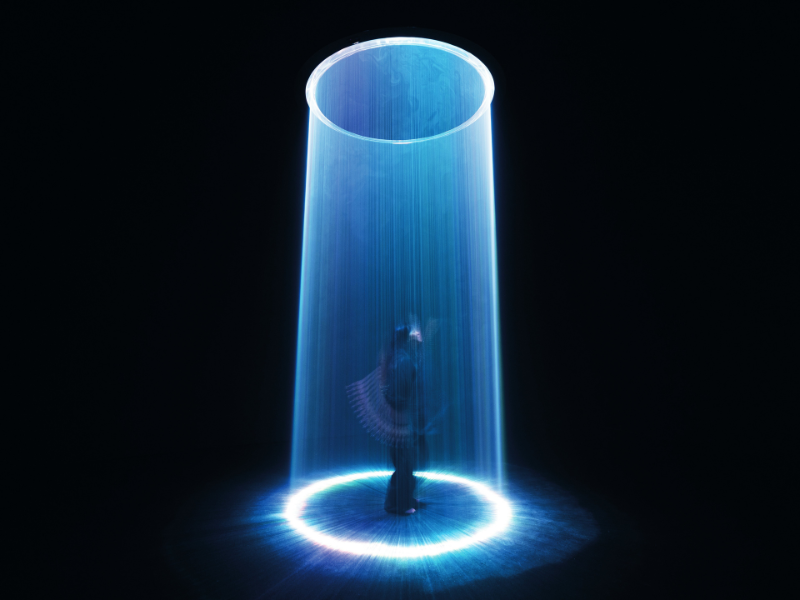
Lachlan Turczan’s Lucida, meanwhile, considers how underwater movement can be visualised through light and sound that responds to tactile stimulus. Part of the creator’s Veil Series, the luminous sculpture obscures the boundaries between the tangible and intangible, reacting to physical presences with fluid dynamism. “On a personal level, I loved Lucida. It demonstrates how light refracts in the twilight zone, and when you see it, you feel like a fish gravitating towards a glowing beam. It’s just beautiful,” says Chin.
2.png
The Aphotic Zone is where the most extraordinary organisms like isopods, shrimp, sea lilies and batfish have evolved to survive in complete darkness and extreme pressure. There is little to see but plenty to hear: Jana Winderen’s Towards Abyssal Plains, a 30-minute 14-channel Ambisonics sound installation which mixes over 100 recordings of the deep sea into a single magical composition, plays in a pitch-black room.
Across these middle areas are several flasks by smell artist Sissel Tolaas, constituting her work Invisible Ocean. Each container houses a smattering of granules that copies the olfactory data of submarine depths. Similar to environmental DNA, the grains encapsulate the exact chemical constitution found in a certain layer of water. Approach with caution, though, as the potent scents seem to allure some and provoke others.
At last, the Resurface section pulls us back up to the shallows, orienting the exhibition’s final focus on the role of seagrass meadows as a vital habitat and natural ally against climate change, as well as our collective role in protecting the ocean.
“We have a great partnership with the team at ArtScience Museum, and we love it when they include a call to action,” says Meridith Beaujean, executive director of sustainability at Marina Bay Sands. A table with seagrass-shaped papers invites visitors to write a meaningful action they will take and “plant” the piece. “We are working with our long-time partner, the World Wide Fund for Nature (WWF), to support the development of a seagrass nursery prototype led by the National University of Singapore’s Tropical Marine Science Institute. In the long term, it will help protect and manage up to 100,000ha of habitats in Malaysia, Indonesia, Thailand and the Philippines, benefitting communities and ecosystems.”
“Not often when you leave an exhibition will what you experience have a life beyond the museum itself. Our collaboration with WWF across various exhibitions including Into the Ocean: Journey Beneath has allowed us to create real-world outcomes, from planting 10,000 trees in Sumatra to propagating seagrass and mangroves. We have had a literal effect on our coastline,” says George.
Running concurrently until Aug 31 is the Sustainable Futures Film Festival 2026, set to screen a series of award-winning documentaries centred around marine discovery, climate resilience and the interconnection of humans and ecology.
Purpose in practice
3.png
While the ArtScience Museum’s showcases may not always explicitly tie the subject matter to environmental or planetary health, George affirms that the team incorporates certain protocols into their exhibition-making. “First, we reuse as much of our build as we possibly can. Second, artworks arrive in Singapore either by sea or air, and the latter is obviously the most impactful, so wherever possible, we try to ship things by sea and that dramatically reduces emissions.”
Likewise, Chin says the production team encourages remote installation. “If we work with a US-based artist, for example, the old way was that we would have to fly them in and install their pieces manually, but we have become accustomed to working over video call and having the artist guide us through the process. It might take longer but it is much more environmentally friendly,” he notes.
“We have an important role in educating and creating awareness among the public as well as our 12,000 staff. This is a great platform for us to really communicate complicated environmental concepts to the public through experiential exhibitions, as well as our VR Gallery and ArtScience Cinema,” says Beaujean.
Beyond the creative institute, sustainability initiatives have been an integral part of Marina Bay Sands’ operational philosophy. Its parent group, Las Vegas Sands, utilises a global strategy called Sands ECO360, focused on reducing emissions, biodiversity and, of course, water stewardship. The Drop By Drop Project conserves potable water and reallocates savings to a fund to support local champions. Within the Singaporean resort, 54% of seafood served across the property is responsibly sourced as of last year, surpassing its initial target of 50%.
Since 2016, the condensate water recovery project has collected and recycled water from 3,000 air-conditioning units across three towers to be reused across property features and landscape irrigation. The programme saves an average of 77,000L per day.
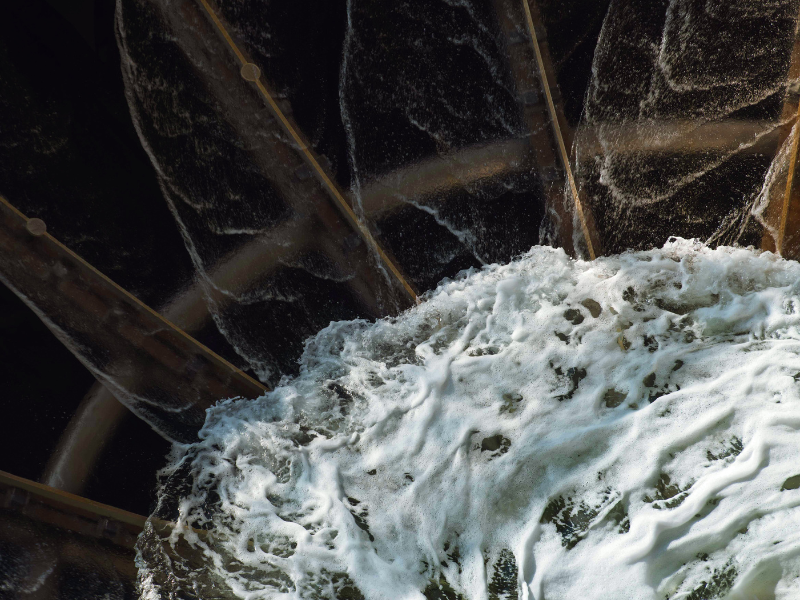
Most recognisable among its over 400 types of water-efficient features are the two Rain Oculus installations, located within The Shoppes and outside the ArtScience Museum. A concave skylight that accumulates rainwater and outputs a dramatic vortex at certain times of the day; the liquid is then used for flushing toilets across the property. (By the way, the cosmopolitan coinage commonly cast into The Shoppes’ canal gets collected and contributed to charitable causes — a sum of approximately S$500,000 has been reportedly donated to date.) Another project by artist Ned Kahn and architect Moshe Safdie is the Tipping Wall, a functional attraction that mixes cascading water with air for the cooling tower — just some of the many purposeful features that double as spectacles across the resort.
1.png
While the optics and ethics of environmental stewardship are a priority for many hospitality groups, the trade-off can come not purely in cost to a company, but how these changes can impact customer expectations. How do you introduce eco-conscious measures that make a meaningful difference without detracting from the parts of the experience that patrons desire from a place of such palatial pedigree?
“This is really our daily mission. Luxury is not always about excess. What matters is really quality. We aim for the best technologies available, that are efficient and sustainable in ways that actually elevate the stay,” Beaujean stresses.
Rather than chalking it up to preference and calling it a day, Marina Bay Sands finds the balance between eco-consciousness and customer satisfaction comes in technology and tactical partnerships. Necessary plastic products are made using rPET, while the procurement and sustainability departments work closely to assess vendors.
Beaujean points to the in-room control systems as concrete evidence of an energy-saving measure that improves a stay. Unlike typical rooms that require a dummy key, Marina Bay Sands’ system detects movement to activate the power. When it senses the inhabitants have left, the lights are turned off and the air conditioning is reduced. Drapes also close during the daytime when a room is unoccupied to lower heat and reduce the electricity needed to re-cool the space later on. The effect is seamless and discreet for users, yet environmentally impactful.
“By being smart about product sourcing and the technology we use, we can create an opulent guest experience that doesn’t compromise on quality while still procuring responsibly,” she says.
'Into the Ocean: Journey Beneath' runs until Nov 1. For tickets, click here.
This article first appeared on June 22, 2026 in The Edge Malaysia.