
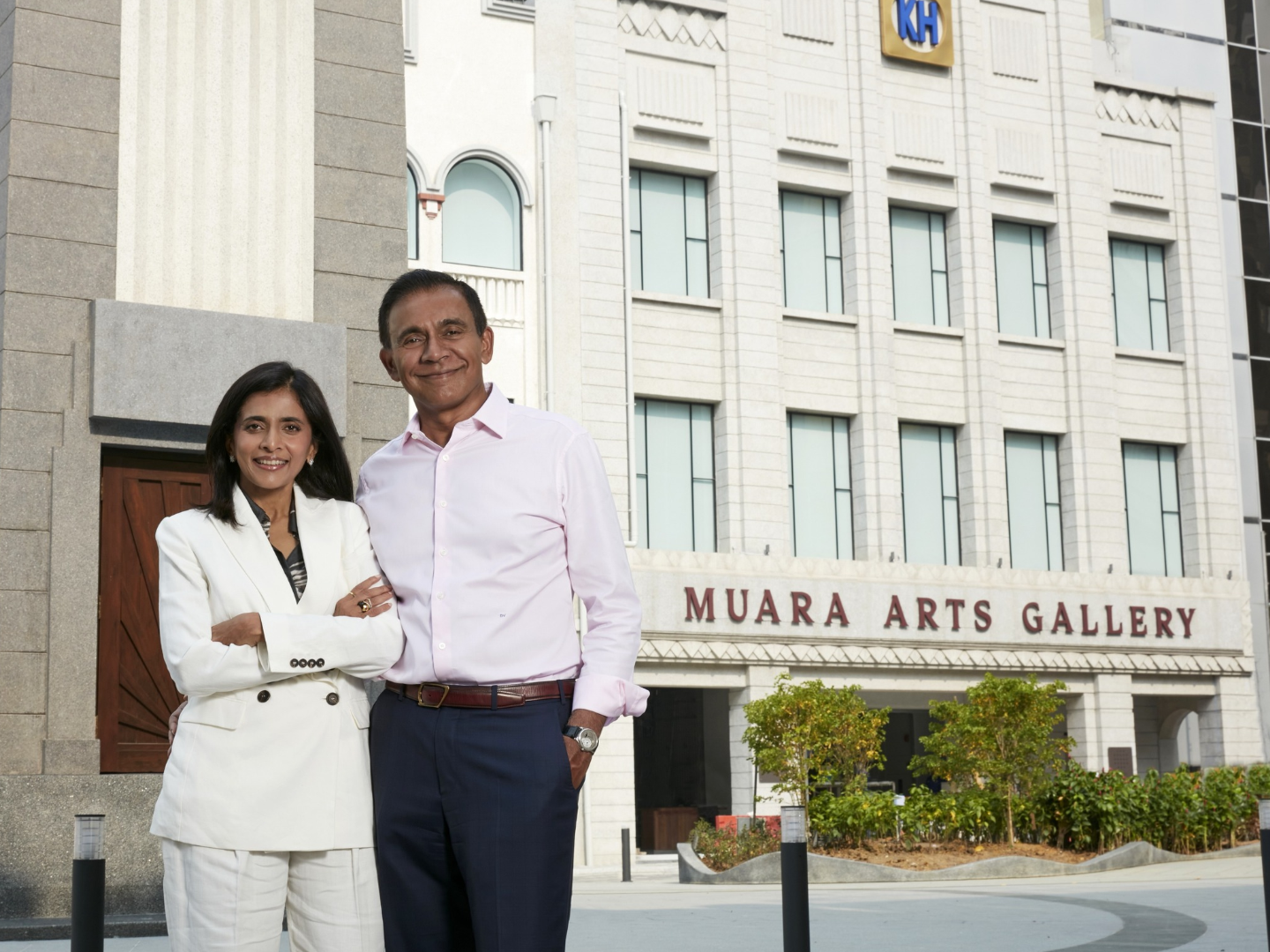
Shanthi Kandiah and Brahmal Vasudevan photographed outside Muara Arts Gallery (All photos: SooPhye)
Market squares have always been the focal point of life in cities with a long, storied history. From the well-preserved Grote Markt in Bruges, Belgium, still stunningly beautiful thanks to the contributions of 13th- to 15th-century merchants who considered it the commercial capital of northern Europe then; to Rynek Główny in Kraków, Poland, hailed as the world’s most famous and largest medieval market square, these public open spaces, designed for trade, community gatherings and civic assembly, were often the linchpin of a place’s sociocultural fabric.
Old but gold
Kuala Lumpur, built on the fortunes of tin mining, boasts its own agora or, literally in Bahasa Melayu, “Medan Pasar”. Credit for the area’s establishment goes to Raja Abdullah Raja Jaafar, a member of the Selangor royal family and Malay pioneer. In 1857, the nobleman financed an expedition comprising 87 Chinese miners up the Klang River in sampans to prospect for tin ore. Upon reaching the confluence of the Klang and Gombak Rivers, the group proceeded through the jungle towards what is now Ampang to begin work. According to lore, the capital’s name was derived from the Malay words for confluence (kuala) and mud (lumpur), the murky water being a churning blend of silt, soil run-off and high mineral content, such as tin and iron.
It is said that harsh conditions and malaria wiped out most of the miners within a month. And it was the intrepid, hardy survivors who established the region’s first tin mining settlement — presided over by a succession of Kapitan Cina such as Hui Siew, the first headman of the Chinese community, followed by Liu Ngim Kong and the famous Yap Ah Loy — that would grow to become modern-day KL.
It was Yap whom historians credit most with the founding of KL and, by default, its old market square, propelling it from frontier land into thriving settlement. By 1895, it became the capital for the Federated Malay States and, by the mid-20th century, had evolved into a financial district populated by banks and legal offices. But trouble loomed as the once-lucrative tin industry collapsed in the 1980s following a dramatic drop in global prices. The massive open mining pits, mainly in Sungai Besi (Malay for “iron river”), were phased out and redeveloped into commercial precincts.
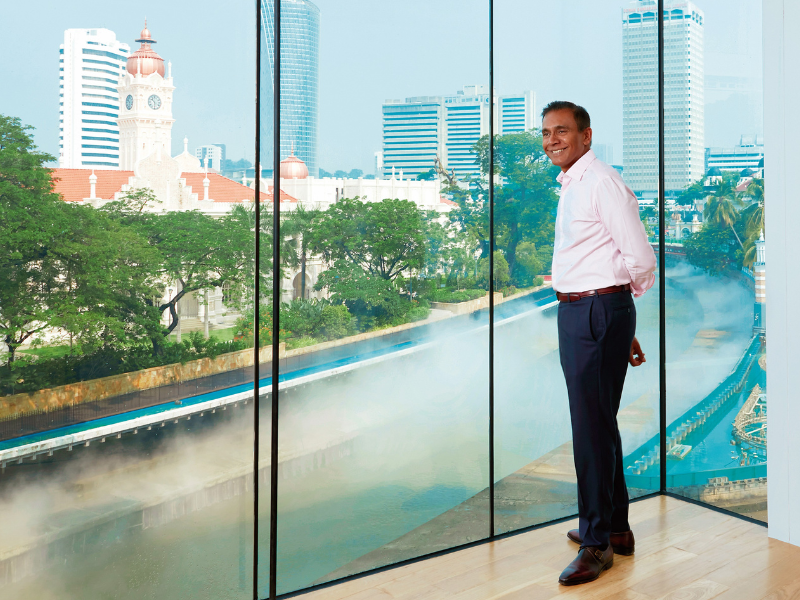
“Medan Pasar is still very much a hub,” says Brahmal Vasudevan, founder and CEO of private equity firm Creador. Together with his wife Shanthi Kandiah, founding partner of SK Chambers, he is on a mission to restore and rejuvenate the old market square into a cultural hub. “With projects like the newly restored Bangunan Sultan Abdul Samad by the government — which is a stunning piece of architecture, by the way — you can see that the soul and energy is coming back to this part of town. So we are very lucky to be part of this journey.”
For those not in the know, the journey he is referring to is a major urban heritage conservation project aimed primarily at and around Medan Pasar. The couple — via their philanthropic platforms Creador Foundation and Alaka Holdings — has been steadily acquiring and leasing a large number of heritage properties in the area, including several that do not belong to them but are undertaken as goodwill and part of a big picture vision for the square. They include the former Bangunan UOB right in Medan Pasar and, most recently, the nearby RHB building on Jalan Tun H S Lee. The once-thriving square and headquarters for financial houses such as the Mercantile Bank of India, Lee Wah Bank, Kwong Yik Bank and HSBC, had, of late, been looking a little worse for wear. Many of the Art Deco and Neoclassical shophouses were showing signs of heavy neglect or outright abandonment. And while new structures had sprung up in the surrounding area, the couple worried how “in erasing the old, they produced buildings that dwarfed what had come before — towers whose scale overwhelmed the grain of the square”.
“By the time we went to look at things in May 2023, the conditions weren’t great,” Brahmal says. “Buildings had fallen apart and the city’s centre of gravity had already moved elsewhere, namely to Jalan Sultan Ismail, Cyberjaya, KLCC and so on. You couldn’t blame the building owners either. Rents were very low then, and it didn’t make economic sense for people to invest in restoring the buildings.”
2.png
Serendipitous start
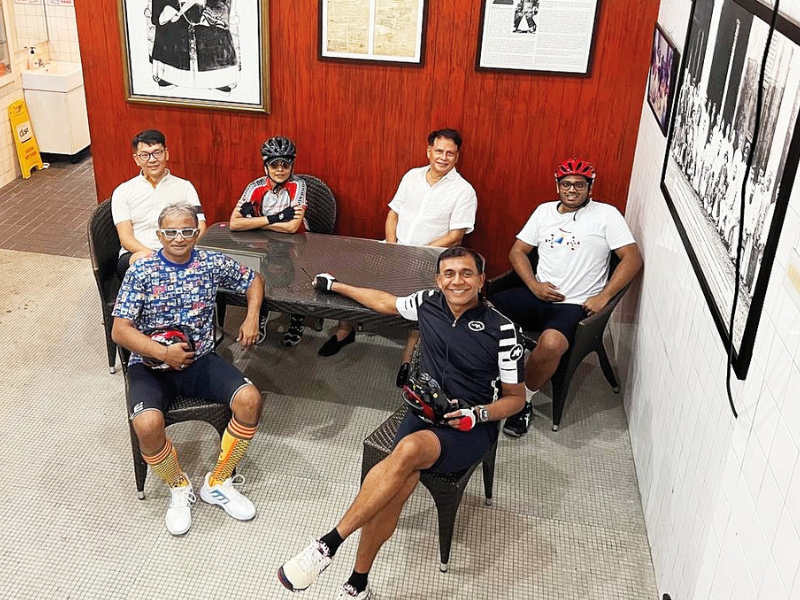
It might surprise many to learn that it was a bicycle ride that sowed the seed for what would become a passion project for the couple. The turning point occurred three years ago when the world was still emerging from the shadow of Covid-19. “We were cycling, as we liked to do, and decided to stop for nasi lemak at Makan.Buzz,” says Brahmal, referring to a café that was right by the bank of the confluence of the Klang and Gombak Rivers. “Shanthi then looked across the river at a corner shoplot and began reminiscing.” The lot in question? The former location of Sin Seng Nam.
Housed in a pre-war Dutch-style colonial building, one of many designed by Abdul Kadir Moosdeen for the 19th-century tycoon Loke Yew, the kopitiam was run by a family of Hainanese immigrants. Christened Sin Seng Nam, it soon became the preferred meeting place for the city’s legal and political fraternity, whose members would come for chicken chop, half-boiled eggs with pepper and soy sauce, or plates piled with charcoal-grilled kaya toast and washed down with cups of strong kopi.
Tan Sri V C George, a retired Court of Appeal judge and former Bar Council president, recalls shooting the breeze at Sin Seng Nam before going to witness the historic Merdeka celebrations at the stadium in 1957. “Those who could not afford to join any of the members-only clubs (I only joined the Royal Selangor Club in 1970 after relocating from Seremban to KL) went to Sin Seng Nam, which had somehow earned itself the nickname of the Vatican, and whose counter was presided over by the fat Chinese owner, who, naturally, was called the Pope, because as gatekeeper of the cash register, he decided just who was allowed to buy food and drinks on credit!”
5.png
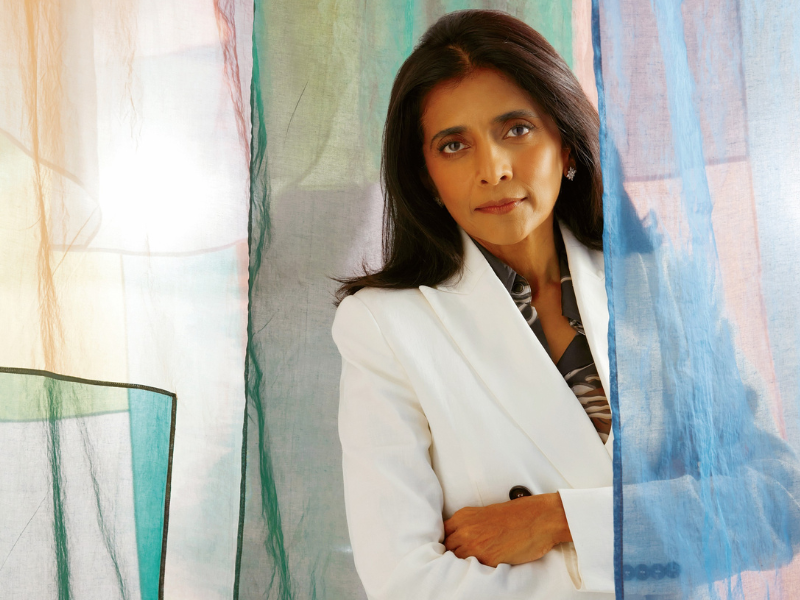
Brahmal notes: “It was the place for many lawyers to grab a drink or a bite as the courts were, at that point in time, at the Sultan Abdul Samad Building just across.” Adds Shanthi: “When I was a chambering student, my law firm master loved to have breakfast and lunch at Sin Seng Nam. It was truly a legal canteen.” And it just so happened that one of Brahmal’s cousins volunteered the crucial piece of information that would set the wheels of Medan Pasar’s regeneration in motion. “He let slip that he knew Sin Seng Nam’s owner who might be interested in selling the place.”
It turned out to be retired lawyer and businessman Datuk Abdul Ghani Abdullah, a regular patron who, in a bid to preserve it, had acquired the heritage coffee shop and renamed it as Kafe Old Market Square. “Shanthi immediately asked, ‘Can we see it? Can we buy it and restore it to the famous kopitiam it once was?’” laughs Brahmal.
“It was Brahmal who felt the urgency first,” she shares. “What began as an instinct to save one place slowly widened into something neither of us had anticipated: a commitment to the square, to the streets around it and to the layered history held within its walls. I mean, imagine the things this building has seen. Conservation, we discovered, has a way of expanding its own brief.”
Things began to move at lightning speed — in keeping with the couple’s preferred work pace — and a swift sale quickly ensued. Another realisation soon hit. There was no point in fixing up just one lot while “everything else around was crumbling down”. Brahmal asserts, “Shanthi and I had been going through this iteration of: What should we do, how should we do it, so on, so forth. Every week, we would have discussions that resulted in more new ideas. That was when we decided, if we were going to take this on, we needed to have a clear vision and strategy. Doing up just one building wasn’t going to make an impact and the big picture revolved around restoring as many buildings as possible properly, followed by activating it — for want of a better word — with something new”.
Incidentally, while Medan Pasar itself dates back to the 1800s, a fire and severe flooding in 1881 ravaged all the original structures. In the years that followed, the British colonial government, led by Frank Swettenham, the British Resident of Selangor, decided to rebuild everything using bricks and tiles, rather than timber. Yap Ah Loy, followed by Yap Kwan Seng, set up brick kilns in what was then known as Batu Lima Belas. “That was how Brickfields literally got its name, being the centre of brick-making,” Brahmal adds as a side note. “And that was how you have all these beautiful period buildings surrounding the square.”
6.png
Bringing life back
The thrust of the couple’s work, as a member of Warisan KL and in partnership with Kuala Lumpur City Hall (DBKL), can be segmented into a few key areas — restoration, filling in the gaps left behind by mid-century demolitions and the creation of a cultural anchor for the long term that is open to all.
Another critical criterion was to entice locals back while making it an attraction for visitors to the city. “Yes, many tourists come to see the Twin Towers and all those beautiful places. But what they want is also to experience the city’s heart and heritage,” observes Brahmal. “Naturally, we started with Sin Seng Nam, which Shanthi badly wanted to see restored. We were cracking our heads as to who would help us through this journey. It came down to Laurence Loh (of Arkitek LLA), who did this amazing restoration of the Blue Mansion in Penang — an absolutely stunning piece of work — and we felt he would be able to guide us through it all.”
Faced with another cluster of six buildings, they turned to Dr Tan Loke Mun, an architect and art patron, whose three Ur-Mu (Urban Museums) have already done much to revitalise the local arts scene, by pioneering the private, boutique contemporary art museum model and making private collections highly accessible to the public. “Ur-Mu has really brought a new dimension to art and culture in KL, and it also enables many Malaysian artists to display their works,” Brahmal says.
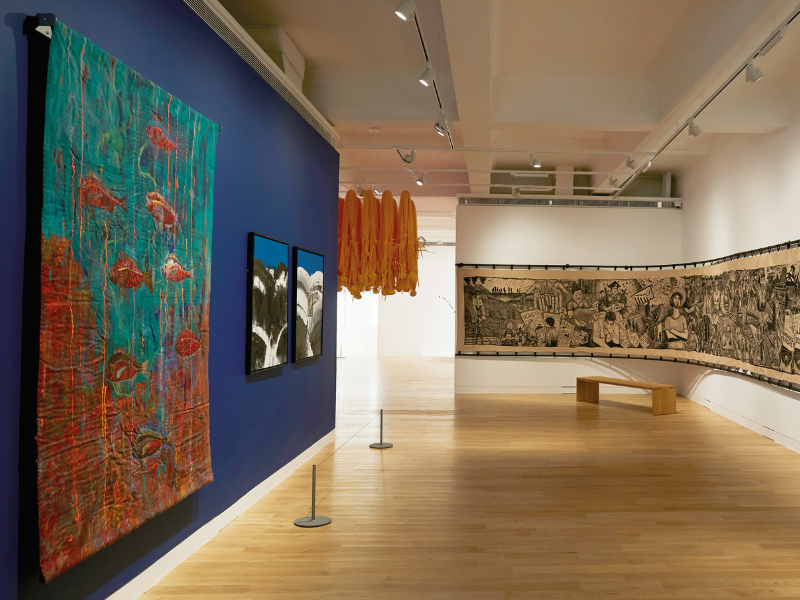
The first major unveiling is the not-for-profit Muara Arts Gallery, which opened over the weekend. Its 16,000 sq ft of space — including a stunning double void ideated by Belgian architect Jean-Michel Gathy — is currently showing A-Z of Southeast Asian Art: A Critical Dictionary, an ambitious exhibition inspired by renowned Singaporean artist Ho Tzu Nyen’s generative work The Critical Dictionary of Southeast Asia (2017-ongoing), which explores the perspectives, tensions and connections shaping Southeast Asia today through an alphabetical list of words, from animism to zoomorphism. Hints also abound of the next exhibition being headlined by Latiff Mohidin, largely considered to be Malaysia’s greatest living artist and the national Picasso, while a children’s book about his life is said to be in development.
“It was the late Valentine Willie who gave the gallery its name and taught us to see Southeast Asia not as a collection of nations, but a region with a shared history. A gallery also lives through the people who walk in, so please come and bring the children,” Shanthi implores. “Reaching new audiences, especially the young ones, is central to our mission. If you have stories to share about Medan Pasar, also tell them to us and our team of researchers. Tales of these connections — of people, the significance of the confluence, the risks people took to carve out livelihoods — make you feel that much closer to this city we all call home. That is a gift in itself.”
The second phase will be the upcoming Muara Arts Theatre, an also not-for-profit performing arts centre conceptualised by celebrated London firm Foster + Partners together with Malaysian practice Veritas and theatre specialists Stage Right. Design enthusiasts can pique their curiosity by imagining how its façade will pay homage to tin, the resource that built the city.
Both institutions, of course, take their name from the Malay word for “estuary” or “river mouth”. “It embodies our vision as places where art, creativity and ideas can come together,” says Shanthi. The gallery aims to stage two major exhibitions a year, while the theatre would have two distinct spaces — a 345-seat proscenium auditorium and 190-seat black box — to effectively enable the performing arts industry.
“When we first embarked on this project, we saw in it the chance for Medan Pasar to become a cultural hub. There is something quietly romantic about heritage buildings given over to artistic life,” muses Shanthi. “The Medan Pasar I knew was simply the setting of ordinary days — habit, routine… it was the square lawyers had to pass through as part of their workday. It was only when one of our most beloved haunts shut its doors that we understood what had silently been at stake all along.”
4.png
Talent-scouted
Today, Sin Seng Nam has been reincarnated as KLCG, an extremely lively bakery and coffee spot. The café’s founder Herman Lee acknowledges it is an honour to witness — no, make that being an active part of — one of KL’s oldest heritage districts gradually coming back to life. “As Malaysians, we sometimes overlook just how much history and beauty exist in our own city. It is wonderful to see the collective effort going in to preserve heritage while introducing a new generation to these spaces. We are incredibly proud KLCG gets to play even a small part in this transformation.”
“KLCG’s popularity actually gave us both the conviction we needed to move forward,” shares Brahmal. “Contrary to popular belief, we were always having second thoughts, thinking, ‘Are we a bit too crazy to do this?’” Shanthi adds: “Seeing the warm reception KLCG received upon the completion of the old Sin Seng Nam was amazing proof of concept. It also gave others the vote of confidence to return to and invest in the area.”
Believing that a city also needs to breathe and be walkable, the couple are overseeing the installation of bollards, restrictions on vehicular traffic and ongoing design works to make the entire area greener and pedestrian-friendly. “About six months ago, we had YB Hannah Yeoh (Minister in the Prime Minister’s Department, Federal Territories) come visit, and it was she who seeded this idea of opening up the park, making it more accessible, with greener spaces and sponge city-like characteristics,” says Brahmal in reference to the urban planning model that uses nature-based solutions and green infrastructure to absorb, store, filter and reuse rainwater instead of rapidly channelling it away through concrete drains.
Naturally, it goes without saying that the minister is rooting for Medan Pasar’s success. “I remember my first meeting with Brahmal and Dr Tan. They were so excited about Medan Pasar and what it could become,” Yeoh comments. “And what I really appreciate about both Shanthi and Brahmal is that they didn’t just talk about bringing this place back to life; they actually put their time and resources into doing something about it.”
3.png
With Medan Pasar 2.0 slowly coming into its own, a palpable perception shift has already taken place, drawing like-minded parties who believe in the capital city’s potential to come in and cast their lot. Just slightly beyond Medan Pasar, across the road at the corner, is what will be Market House by the third quarter of next year.
The new development, on what was once OCBC Bank’s lot as well as the former MS Ally building (originally built for Yap Ah Loy’s eldest son), is being overseen by Ng Ping Ho, a former TV director and producer turned hospitality owner. “I grew up in Bukit Bintang and attended St John’s,” says the director of Kindness of Strangers, a hospitality company behind the retro chic KLoé Hotel downtown and LOKL Coffee on Jalan Tun H S Lee. “I remember tagging along with my grandmother as she ran errands, buying fruit and fabric, around Petaling Street and Medan Pasar, so this area holds a lot of memories for me. Over the years, Downtown KL has fallen on hard times, so the idea of rejuvenating it is exciting for me, plus the bonus of all the work being actually done on the very location where KL was first founded.”
Complementing Medan Pasar would be the 41-room Market House hotel, spread out over two buildings connected by a link bridge. “The first building will have 31 rooms, the second 10. We will also have an in-house café to be operated by a partner, with plans to create a rooftop deck that might have a bar, and where small events can be held. We are also upgrading a whole block of shophouses on Jalan Hang Lekiu, near The Toffee, which we will launch next year.”
Beyond walls and spaces, talent is another of Medan Pasar’s keenest considerations. In light of this, Lydia Yee, former chief curator of the Whitechapel Gallery as well as the Barbican in London, was recruited as Muara Arts’ new consultant artistic director, while the news of Chris Lee’s appointment as CEO of both Medan Pasar Realty and Muara Arts has just been announced. Expected to assume his roles on Dec 16, Lee brings over 30 years’ experience in business and the arts, having most recently served as assistant chief executive of the National Gallery Singapore.
Asked how the always-on-the-go couple somehow manage to balance work, rest and family, Shanthi says, “Brahmal is one of those people who thrive on having every minute of his day filled. For me, I don’t know. But put it this way: When you are interested in something or have passion for it, somehow time is not an obstacle. Also, a vision like this is never the work of one or two people. Behind every opening is a team, and ours has been with us at every step.” Brahmal nods in agreement, adding, “Once it is all complete, we hope for Medan Pasar to become a centre of attraction for all Malaysians to come and hang out in this part of town.”
To that, they can count on Yeoh to make more than an appearance. “My plan is simple,” the minister says. “I would get a shio pan (salt bread roll) and piccolo latte from KLCG to take away, find a nice spot near the Clock Tower and enjoy the park… preferably early in the morning or in the evening. We need more little spaces like this in KL where people can just sit, relax and enjoy the city. Not everything in KL has to happen inside a shopping mall.”
This article first appeared on Nov 2, 2026 in The Edge Malaysia.