
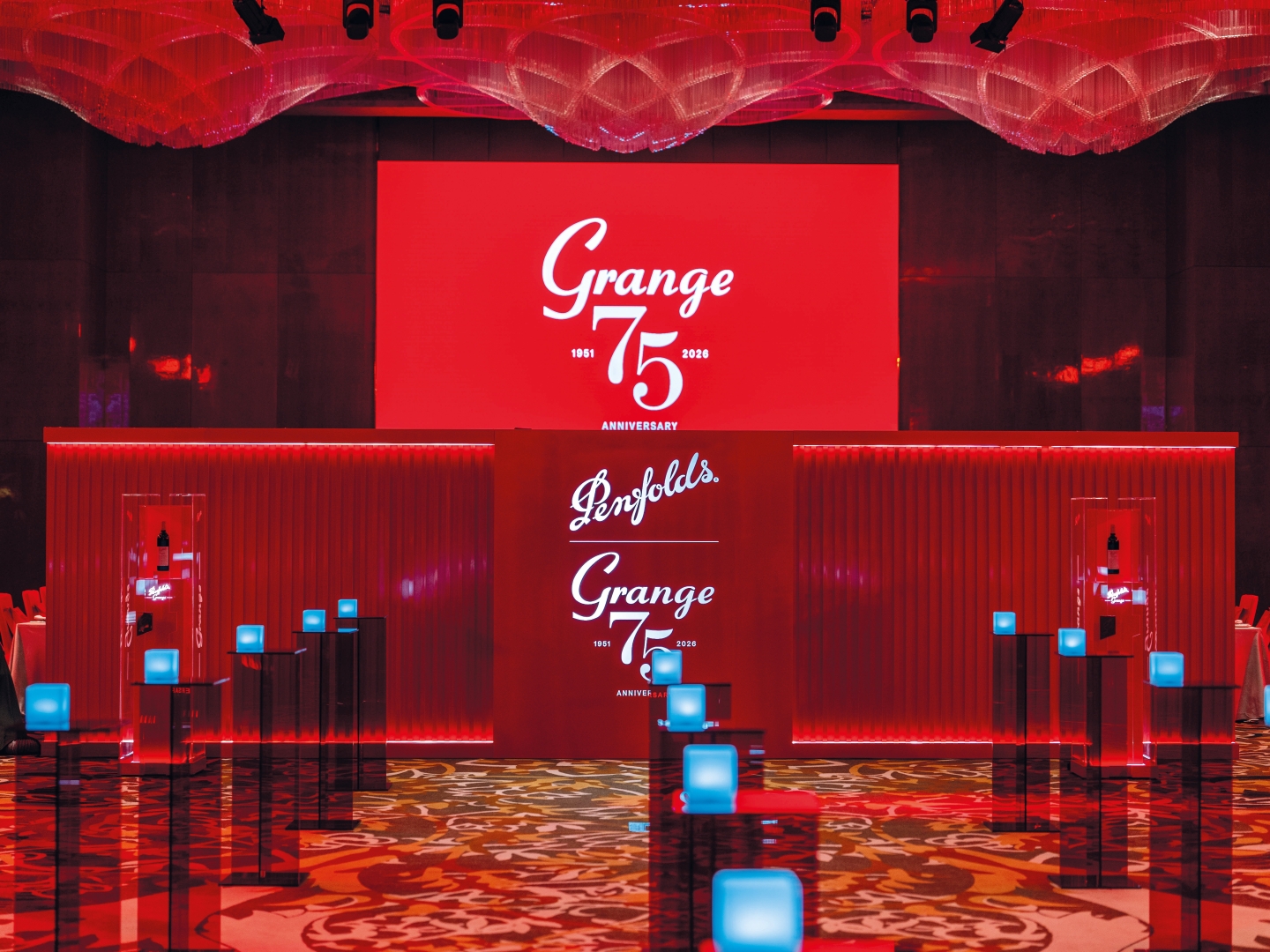
The event's tastings, hosted in the hotel’s ballroom, were divided into two segments (All photos: Penfolds)
Good things come to those who wait: a maxim that gets doled out with extra cogency in this modern age, when information is dealt in microseconds and attention spans crave immediacy. It feels almost like cheating, then, to be able to pop the cork (or unscrew the cap) on something as rich in history as a bottle of Penfolds. A pour, whiff and sip — those are all the gestures it takes to unleash the sum of love, patience and craftsmanship accrued by the legendary Australian brand over the past 182 years.
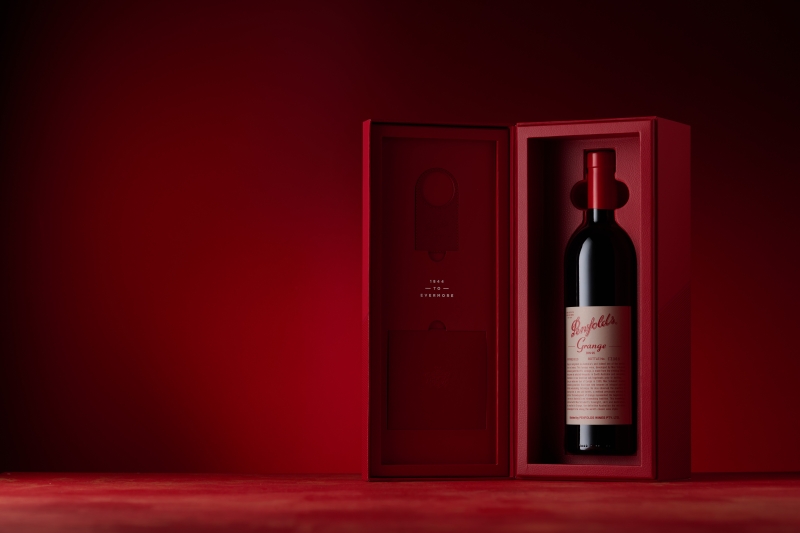
While the house is lauded as a trailblazer and emissary of the Australian wine style, no collection better defines its commitment to consistency, innovation and excellence than Grange. Started by chief winemaker Max Schubert in 1951 following a trip to Europe, the early attempts to craft full-bodied wines with exceptional cellaring potential were met with universal disdain. Rather than shutter the operation as instructed, Schubert doubled down, maturing vintages in seasoned hogsheads and hiding them in underground drives.
The gambit paid off. In 1960, production was reinstated, and Grange made it big with its intense flavours, collectability and underdog-turned-superstar backstory. As The Rewards of Patience — also affectionately known as the Penfolds “Bible” or “Form Guide” — by Master of Wine Andrew Caillard states, “The story of Grange captured Australia’s resourceful way of life and the country’s ambitions for a more impactful place on the world stage.”
This year, Down Under’s most recognisable and ageable wine celebrates its 75th birthday. In Malaysia, the occasion was marked by an exclusive dinner at Four Seasons Hotel Kuala Lumpur, featuring solo and vertical tastings, as well as a curated line-up of dishes intended to draw out each bottle’s intricacy and individuality.
1.jpg
The evening prelude is facilitated, as any good party is, by pours of bubbly — Champagne Thiénot x Penfolds Grand Cru Blanc de Noirs Vintage 2014. Fittingly, the partnership between both houses was originally established to commemorate Penfolds’ 175th anniversary of experimentation and curiosity, evoking anew the French origins of Schubert’s vision for Grange. This 100% Pinot Noir from Aÿ’s Chambre aux Loups vineyard boasts an enticing, lasting perlage, with burnished orange rind aromas and a distinct palate of apple, grapefruit and brioche — peppy and upbeat.
Guests are then invited into the ballroom, where a surreal wash of red lighting, dramatic fog and illuminated pedestals await. This is Act 1, a solo tasting to precede the pairing dinner. The number of smoke machines is justified instantly by the appearance of the 2018 Grange, a remarkably decorated expression with seven 100-point ratings and predicted in the Form Guide to become “one of the great vintages of all time”.
An introduction to the Grange story commences, but eager attendees (ourselves included) find it hard to resist giving the stems a swirl and nose: we detect delightfully juicy blackcurrants and strawberries, tinged with nuttiness. The crimson liquid is exceptionally balanced in ripeness, complexity and piquancy, presenting a refined blend of berry acidity, plum, chestnut and savoury chocolate, bolstered by fine, velvety tannins.
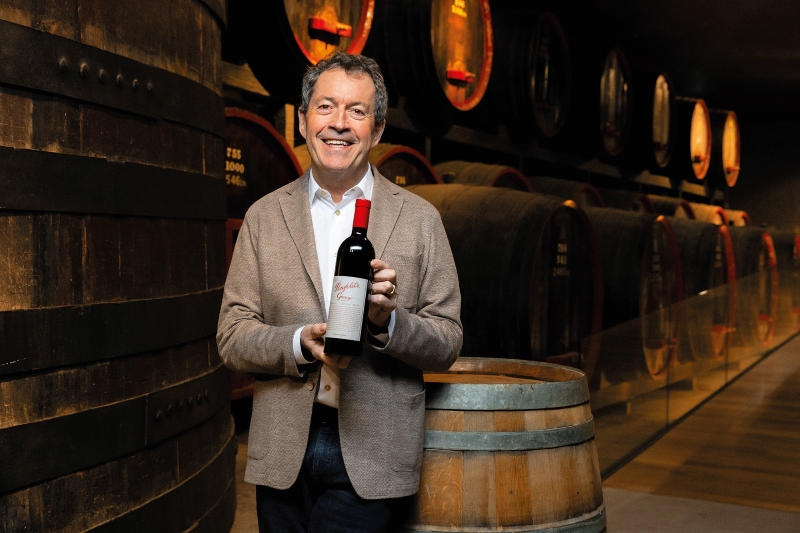
Soon we are ushered to our seats, set with no fewer than a half-dozen glasses for Act 2 — one white and five reds, all double decanted for minimal in-glass sediment, to be explored alongside a three-course meal. “Tonight is an exciting night. We’re going to be a bit greedy and taste four Granges side by side. I often say at dinners such as this, there’s only one objective: enjoyment,” shares current chief winemaker Peter Gago.
2.jpg
Beginning with the Yattarna Bin 144, the revered “White Grange” that redefined Australian Chardonnay in 1995, one finds little resemblance to the cloying buttery florals often associated with the “C” word. Instead, the 2019 vintage strikes the nose with vivacious curry leaf, green pepper and light stone fruit. Its entry is clean and voluminous; teeming with flinty minerality, gooseberries and wisps of vanilla that recede into a lengthy lemony finish.
An appetiser of seafood is, of course, a no-brainer. Gently cooked lobster and scallops keep their sweet slipperiness and bring out the Yattarna’s refreshing crisp quality. Accompany that with charred octopus and briny pecorino foam on saffron risotto, and the motion of reaching for the glass between bites becomes too instinctual.
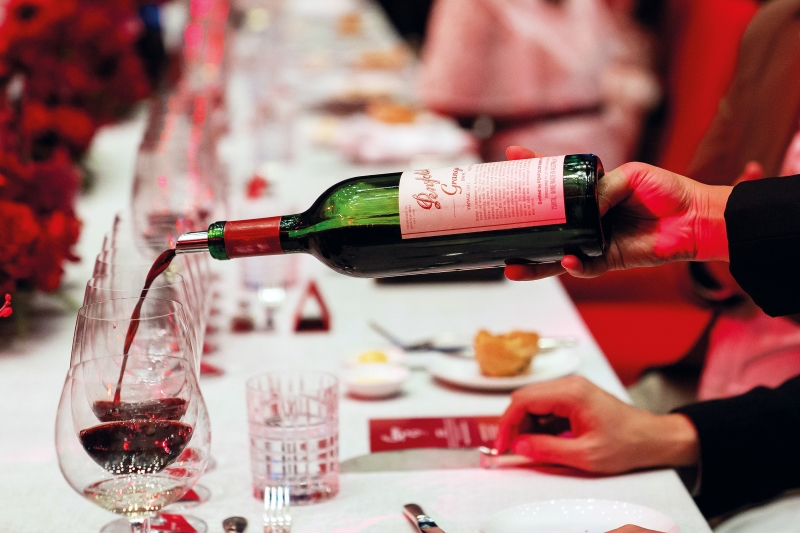
For the vertical tasting, the four Granges are poured in pairs before and during the arrival of the main courses to allow guests to, in Gago’s words, “have a think” between them.
The 1983 is of particular rarity, as the 1982 bushfires in South Australia disrupted harvests and the Modbury vineyard has since been sold. “There wasn’t very much made, so it’s good to look at such a small but very impressive batch 43 years later,” says Gago. And impressive it is, having retained a surprising degree of fruity energetic character tamed by mature notes of mocha, cedar and raisin. The texture is firm, with a taut body and persistent perfume that clings. On the leathery spiced side, the 1991 is rife with florals and star anise — think antique books with bergamot tea, and an assertive palate of black cherry, espresso and molasses.
Keeping things classic, a dish of wagyu tenderloin, morel jus, charred vegetables and shaved black truffle bring a mélange of musky earthiness and substantial texture to stand against the Granges’ depth and tannins. The 2001 is markedly removed from its predecessors, decidedly lighter with its manuka honey-gula melaka nose and blueberry, apricot, preserved plum and tangerine flavours. Youngest of all but certainly no slacker, 2012 brings together red fruit and ginger, with a touch of floral oakiness and a real density of personality.
3-1.jpg
On the blind selection method for blending the flagship, Gago adds, “We choose what goes in purely on quality and style. There’s this impression that Grange is a big wine, but it’s not about bigness or boldness. It’s the other, magical ‘B’ word — balance. We’re not striving for Australia’s oakiest, most alcoholic or most extracted wine. We’re trying to make Grange.”
The final tasting bears, by the winemaker’s admission, a somewhat pretentious name: “‘Superblend’. Like ‘Superman’. But we also think of superfoods and Super Tuscan. What we’re doing with this is positioning the greater Australian wine style. The magic of blending Cabernet Sauvignon with Shiraz is tried and proven.” Superblend 802.B 2018 is, to its credit, just that: a blend of the most superb parcels destined for Grange and Bin 707, produced only in extraordinary years. Nimble and even, the expression is imbued with citrus from French oak hogsheads dancing in equilibrium with the savoury, cacao palate and slightly grittier mouthfeel. To round out the meal, a dark chocolate and coffee-infused mousse on cocoa sablé with a melty hazelnut core strategically hangs back the sweetness, instead playing up the Superblend’s fragrance with its strong bitter elements.
As a parting memento, each guest is gifted a freshly printed ninth edition of The Rewards of Patience, with updated evaluations from independent experts on every bottle. “Can you imagine any property just opening up their museum salon and saying, ‘Assess these wines, the good, the bad and the ugly’? We’re not very clever, so we do it, and we’ve now done it nine times,” jokes Gago. “When you’re judging wine, you usually get it wrong. Bottles we wrote off 15 years ago can bounce back, so these are our contributors’ commentaries. There are no absolutes.”
This article first appeared on July 20, 2026 in The Edge Malaysia.