
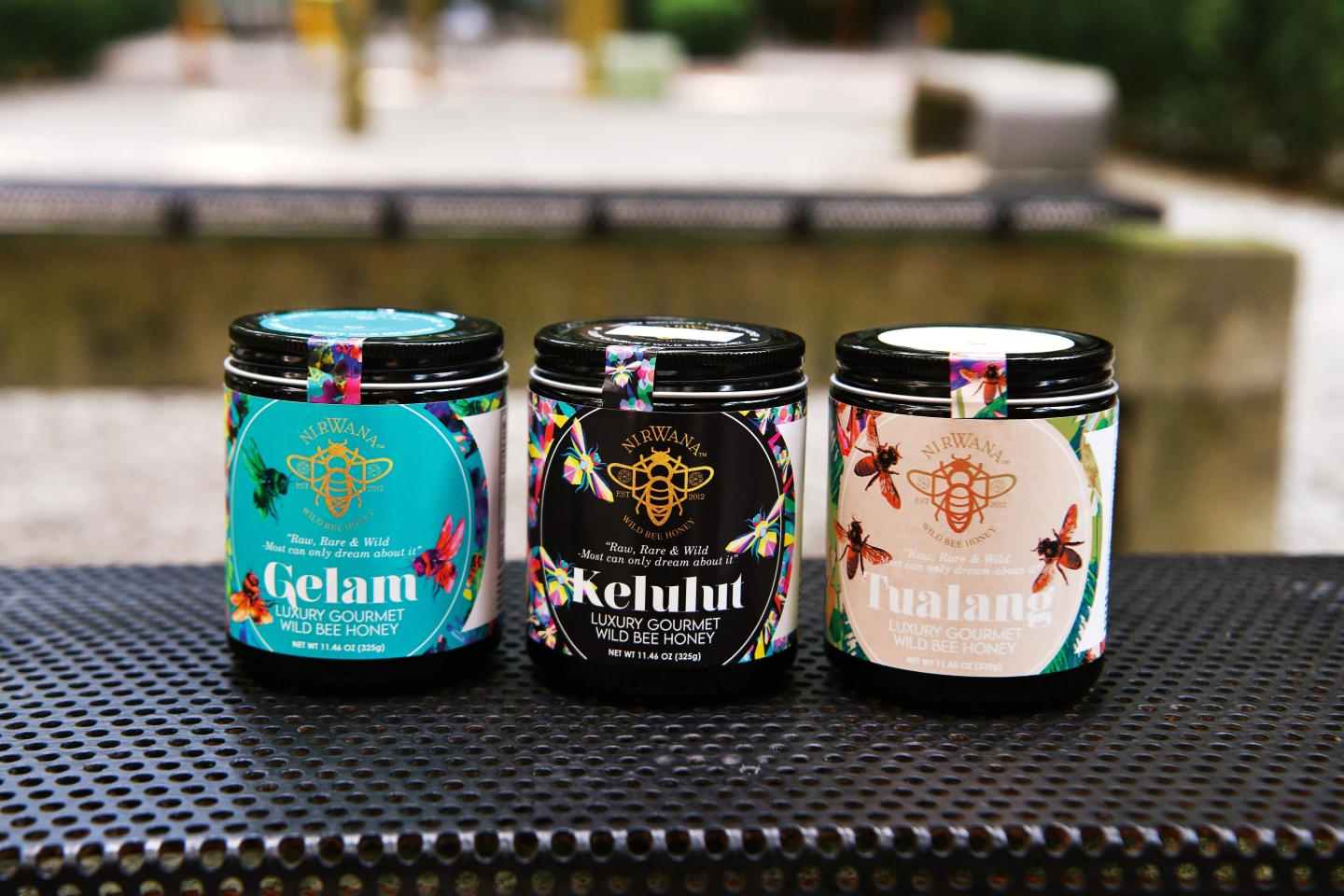
Eat Honey Pretty offers three golden elixers, each boasting their own unique flavour characteristics (Photo: Shahrin Yahya/ The Edge)
Getting to do meaningful work for the community and nature is the biggest motivation for Terengganu-born Nirwana Tuan Sariff to keep pursuing her lifelong journey in the honey industry after more than a decade. “I think the business found me, not the other way around. It makes me a better person and entrepreneur. It feels like I was destined to do this because I keep wanting to invest in learning and talking about the topic. It’s almost like an obsession.”
It all started by chance in 2012 when she was searching for something to do as a housewife. “It sort of happened because my sisters and I were looking at ways to earn an income without having to leave home so we could be with our children.”
They had acquaintances who introduced them to a group of villagers who had collected a large volume of honey but did not really know how to market it. Together with her siblings Amalina and Syarifah Zawani, she sold the honey at bazaars in malls. “We did that for a few months and the response was really good. However, it was not suitable for me as I had my small kids with me at the time. We wanted to run the business just from our place,” says Nirwana.
She saw an opportunity to tap into the overseas market after the enterprise was featured in a documentary on Fox News in 2016, which highlighted the challenging Tualang honey trade and the benefits of the golden liquid. The show gave them the boost they needed and they were able to sell the product on an online platform in the US.
“The business had no name before because we were just home-based. But once we started to export, we had to register the company and it was called East Honey and Herb. We were lucky we broke into their market ahead of time as the regulations were not as strict as they are now. That’s how we were able to flourish abroad. From the US to Hong Kong and Dubai.”
20250425_peo_eat_honey_pretty_msy_5.jpg

East Honey and Herb offers three types of honey — Tualang, Kelulut and Gelam — obtained from prime locations such as Terengganu, Pahang and Kelantan. Save for Gelam which can only be harvested in August, the other two variants are collected monthly from March to October.
As the honey is produced by wild bees such as Apis Dorsata and Kelulut, its taste and texture largely depend on the insects’ food source. “That’s the beauty of it. Sometimes, you will find the honey is a bit woody or the smell is like kayu buruk. Those who don’t know may think it is not fit for consumption or has gone bad.”
While her sisters assist with sales and administrative tasks, Nirwana works directly with partners and stakeholders, including bee hunters and freelancers from Terengganu, and goes into the jungle with them to harvest honey.
“One hundred kilos of honey from one tree takes around four hours to gather. If the beehive is near our base, we can harvest and filter in one day. But if the places are a bit further, I’ve set the SOPs [standard operating procedures] to make sure the filtration process happens within three days because we don’t want the honeycomb to deteriorate and contaminate the honey. We want the honey to be as fresh as possible. After that, the substance will be sent to Mardi [Malaysian Agricultural Research and Development Institute] to reduce the moisture content,” she says.
Her job is primarily to address the issues surrounding the business. When she ventured into the industry, she observed that bee hunters had very good knowledge of the trees — “They know more about the rainforest than the encyclopaedia” — but she discovered food handling was a big issue for them because they had not been taught to manage the stock post-harvest. “The tree will always be there and we know how to take care of the risk and ensure safety but people with certain habits are prone to do things their way. So I sent them for training to learn proper handling.”
20250425_peo_eat_honey_pretty_msy_1.jpg
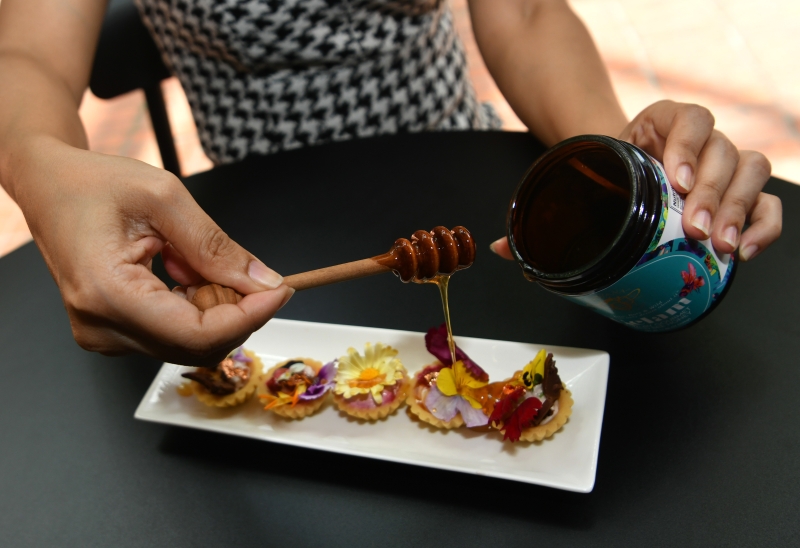
Nirwana also makes it a point to debunk myths about honey. “Some say the honey is not original when it is crystallised after a few days. Or if the honey attracts ants, it means it has been mixed with other ingredients. I have tested these claims and they are not true. In fact, from what I’ve gathered through classes and experiences, crystallisation is a process that shows the authenticity of the product. I feel obligated to refute the misconception because it directly affects the livelihood of the honey hunters.”
Climate change also poses a serious threat to honey production. “In 2022, when we were faced with widespread flooding across the peninsula, our yield was less than 100kg for the whole year. Unpredictable weather has a big impact on the food sources for bees. Usually, bees produce three times more honey than what they need. But when the situation is dire, they make only enough for themselves,” she explains.
When it comes to the benefits of honey, Nirwana receives testimonies from clients who frequently write in to give feedback. There are those with common wound problems, high cholesterol and high blood pressure as well as serious bone issues. But one she remembers clearly is a cancer patient who was trying to conceive and became pregnant after a year of doing a variety of treatments, including consuming her product.
“We don’t really publicise these because they are personal experiences that cannot be backed by scientific research. We might get into trouble if we try to make medical-related claims. Personally, I’ve benefited from Tualang honey postnatal as it helped heal my C-section scar,” she says.
honey_tasting_workshop_1.jpg
The shift in consumer behaviour over the years triggered the need to refresh the brand and its offerings. “Customers are no longer buying products, but experiences. I realised it is a bit hard to put our honey in the same position as Manuka if I don’t try to market it creatively. People compare it to those on store shelves but we cannot even sell it that way because our stock is very limited — it’s rare and special. It’s almost like a delicacy.”
In 2022, Nirwana reached out to long-time friend Dura Ki Hana, a contemporary abstract artist to work on a revamp plan. It was not until last year that East Honey and Herb was rebranded as Eat Honey Pretty. “We want to change the narrative and introduce a community where those who share the same passion for honey and wellness can come together,” says Dura. The partners then started a bee conservation project by selling Dura’s painting from a series called Garden of Hope. A portion of the proceeds will go to pollinator conservation efforts, community initiatives and environmental awareness.
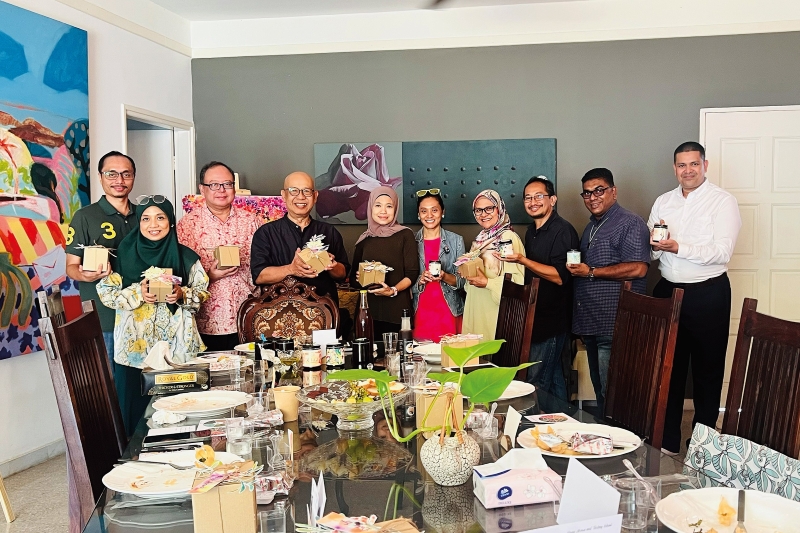
Besides this initiative, they also give talks to schoolchildren and organise honey tasting programmes. The first session was held last December after Nirwana received her honey sommelier certificate from the Italian National Register of Experts in the Sensory Analysis of Honey in May. “Since I got into the business, I observed that Malaysians prefer imported honey over locally harvested ones because they believe our honey is adulterated and hence, not good. So it is crucial for us to communicate the quality of our national produce to the public, especially kids,” she says.
“We hope to spread awareness of the industry through our products and programmes so people can see the importance of taking care of the environment and discuss what more can be done for our planet.”
This article first appeared on June 16, 2025 in The Edge Malaysia.