
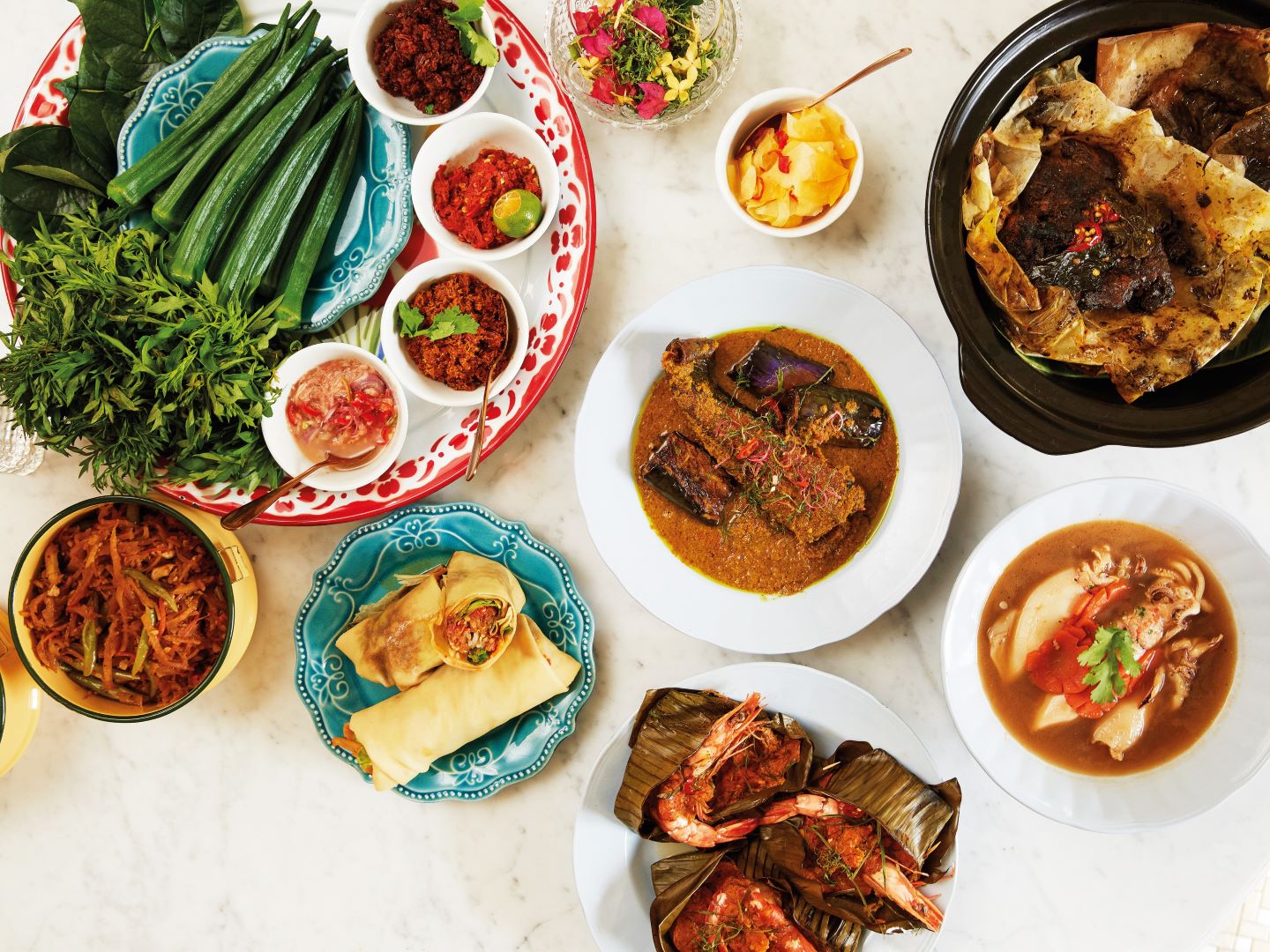
Guests will dine at two tables in the kitchen, surrounded by kitchen implements, memories and stories (All photos: SooPhye)
Those familiar with Melaka’s food scene would undoubtedly know the names Donald and Lily. The loving Baba and Nyonya couple — Donald Tan Yew Chye, who sadly passed away in Nov 2018, and Lily Lee Ah Toh — made their foray into F&B by selling cooked food from a simple pushcart. Venturing from location to location, such as Glutton’s Lane to a corner near the Stadthuys and an open padang where Dataran Pahlawan mall now stands, hawking local favourites like porridge and laksa, they then decided to operate out of their simple house, set on stilts, at 31 Heeren Street (now Jalan Tun Tan Cheng Lock). “Our family has owned the property since our grandfather’s time. The sea used to be just behind. That’s why the abode was slightly raised. There was a godown nearby too,” says Jennifer Tan Kim Choo, 49, the only daughter of Donald and Lily (they also have a son, Kelvin).
Tan’s family has called Melaka home since her great-grandfather, Tan Kim Bong, arrived in Malaya in the 1800s. “We assume he was a merchant but we are still researching,” she says. Her paternal lineage speaks of a great fortune won — old family photos from the 1920s show young children dressed in suits and a Chrysler Imperial family car — and lost. Her mother’s side tells of hardship and heartbreak, not uncommon in those days. “Mum was given away as a child and her adopted mother was abusive, so she ran away at the age of 13, working hard to survive since then. She had to jaga budak, kopek kerang and deliver food for a few cents per plate.”
_s1a5705a.jpg
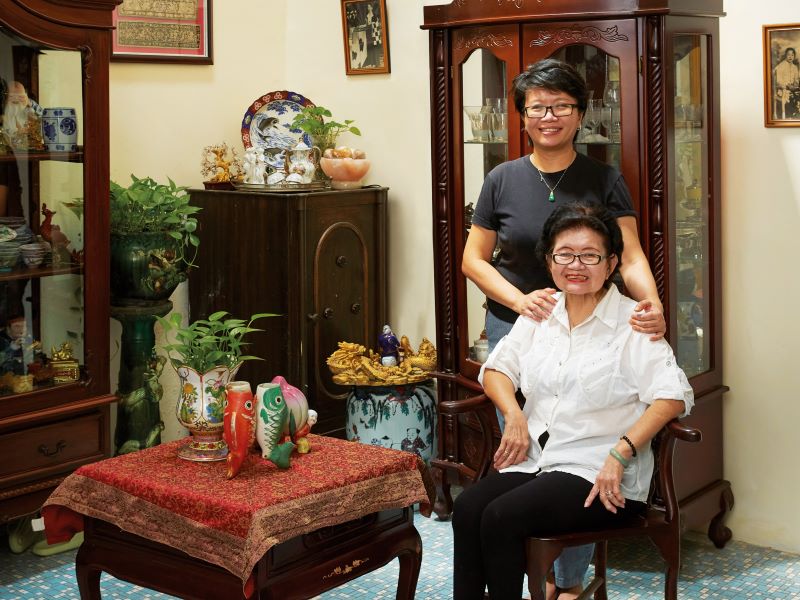
Determined to provide for their children, Donald and Lily worked hard, both proving to be adept cooks. “My dad’s mee siam, nasi lemak and char kway teow were terrific while it was mum who handled the laksa,” says Tan. The couple’s business has undergone several evolutions, first from a tricycle and pushcart to the Heeren Street home and then a proper shoplot in Kota Syahbandar, which they ran from 2012 to 2021, until Covid-19 put paid to that dream. Then, pop-ups were organised at The Bendahari Markets community store. “But now, we feel it is time to come home, to teman mummy.”
Starting next month, Tan, who lives nearby, will host private dinners at the family home, charming and filled with generations’ worth of treasure — from ancestral tablets to colonial-era furniture and ceramic bric-a-brac lovingly collected over the years. “We hope to start with one a week, 10 pax each time. I want to share the food I grew up eating, and also to honour my parents, their culinary legacy and their labour of love for us.”
_s1a5656a.jpg

Guests will dine at two tables in the kitchen, surrounded by kitchen implements, memories and stories. “Being the only daughter, I felt responsible to carry on the business. I also want these dinners to bring life back into the house. As we were not rich growing up — there weren’t even enough funds for me to further my studies — it would be wonderful now to be able to prepare elaborate, celebratory dishes regularly, to fill this house with richness and sumptuousness, in a way.”
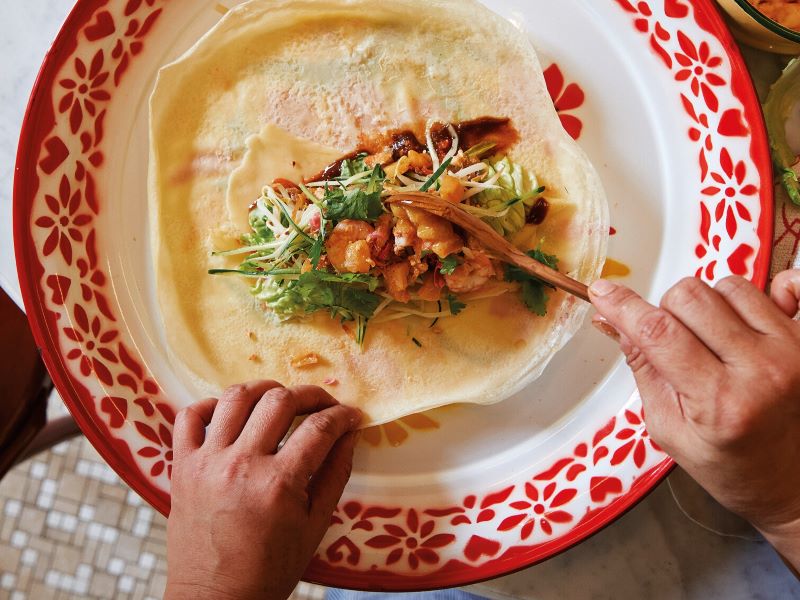
Guests may leave the menu entirely up to Tan or discuss which favourites make the cut. The family’s Nyonya Popiah, for example, is not to be missed. “Popiah is a special-occasion dish, for sure,” she says. “We didn’t get to eat it much while growing up.” It uses soft yellow egg roll wrappers, it is richer and tastier than regular popiah skin, made from a mixture of wheat flour, water and pinch of salt. Her rendition is extra tasty because of her special schmear of, not hoi sin, but bee cheo, a sweet black sauce comprising toasted rice flour and gula melaka. Diners can also opt for a full-blown laksa or popiah party, with extra side dishes and dessert, or have the table practically groaning under the weight of tradition: sotong sumbat soup, bendi cheloh (blanched okra) with homemade hae bi hiam, mousse-y otak-otak and paper-wrapped meat with keluak paste.
_s1a5449a.jpg
In between, expect Tan to regale you with fun facts and local tales. “Everyone knows buah keluak, which comes from the pokok kepayang, needs to be extensively treated to neutralise its toxicity. After I get my supply of black nuts, I will painstakingly bathe them, first in ash, and then soak them for at least a week, changing the water daily before we can ketuk them keluar! There is also a saying of how if one is in love, they are mabuk kepayang,” she laughs.
And should guests come during durian season, be sure to ask Tan to serve the utterly simple but addictive dish of white rice, creamy durian and hae bee hiam. “I would need D24 or Musang King for this. It sounds odd but you need to try it. Trust me, it works and is a nice second appetiser before the rest of the dishes come out. For an auspicious occasion, you can also have mee sua manis with red dates and telur merah, really great for birthdays. I love it if guests are game to try whatever is in season.”
She will also ensure the space is delicately scented with bowls of bunga rampai, a traditional Malay and Peranakan decoration of chiffonade pandanus leaves and a mixture of different flowers for both fragrance and colour. “You will see bunga rampai at special events, like weddings, engagements and other important ceremonies. Here, I use jasmine, ixora, bougainvillea and finely shredded daun pandan. It’s easy to make.”
_s1a5243a.jpg
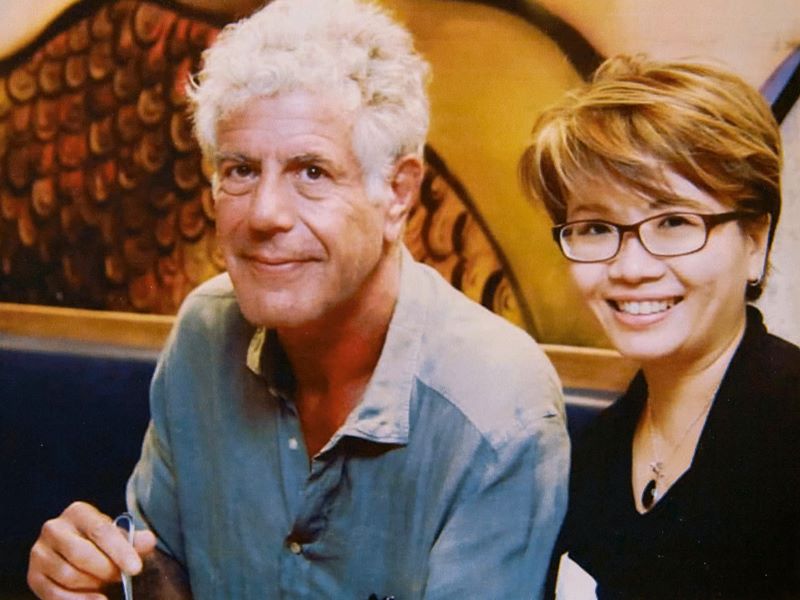
On the all-important question of corkage charges, Tan smiles and says, “None for the moment. You are more than welcome to bring whatever you think will match the food served.” Despite having inherited her parents’ skills, she does acknowledge it remains hard graft. “If you ask me if I love cooking, the answer is ‘I have to’,” she half-sighs. “The Hokkiens would say bo pian or ‘no choice’. Preparation is hard work and cooking is tedious but I really do love seeing people enjoy themselves. Besides, just like mum, we are survivors. The private dining is just part of us pivoting to a new venture.”
When she is not testing or tweaking recipes, her favourite indulgence is a plate of hot white rice, enjoyed with telur goreng, kicap hitam and cili patah. “The chili must be whole, [and then] broken or bitten off to accompany each scoop of rice. That’s the absolute comfort food for me.”
To book, contact Jennifer Tan at (012) 691 8901 or email [email protected]
Spice girls + boys
Donald & Lily’s authentic Rempah Nyonya is available to help you whip up authentic flavours in a jiffy
_s1a5757a.jpg
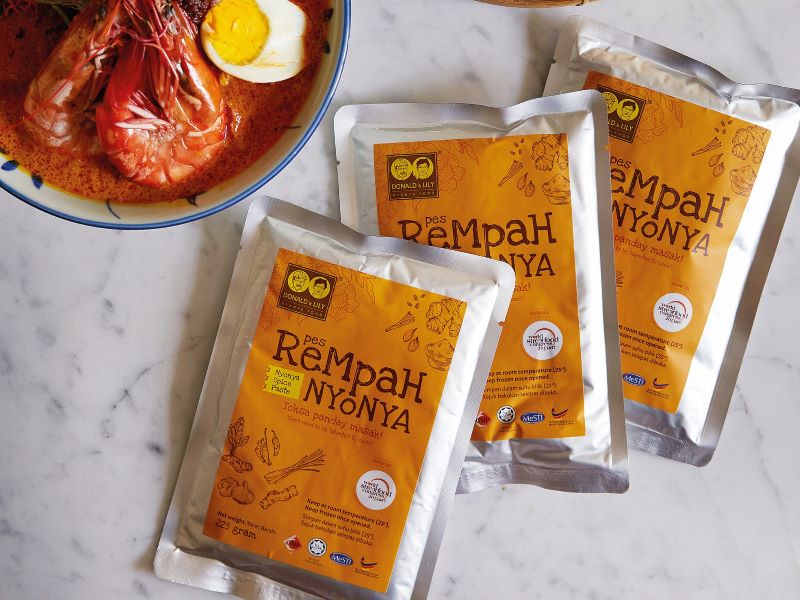
Desperate to try Jennifer Tan’s cooking but can’t get down to Melaka just yet? Or you need a bit more time to cobble up a table of 10? Well then, just log on to the Shopee Malaysia or Singapore platforms to order the family’s famous spice paste. Designed to help those new to Nyonya cooking, it makes whipping up laksa and curries easy and fuss-free. Featuring a secret blend of no less than nine types of herbs and spices, not to mention eight hours of patient, slow cooking, it can be used to make prawn and pineapple curry by just adding coconut milk, a rich and aromatic chicken curry and, yes, even the famous Donald & Lily laksa.
OTAK-OTAK
Serves 5
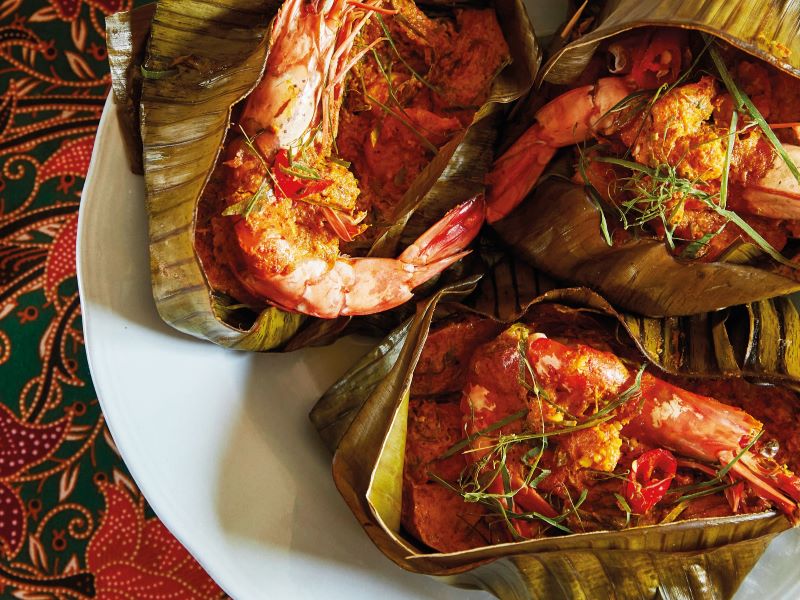
Ingredients
- 250ml thick coconut milk
- 500mg Donald & Lily Rempah Nyonya
- 300g small prawns, shelled and de-veined or boneless white-fleshed fish, cubed
- 1 egg
- 2 tbsp rice flour
- Salt and sugar to taste
- Turmeric leaves, julienned
- Kadok leaves, julienned and whole
- Banana leaves, blanched or softened using direct fire
Method
- Fold the banana leaves into the shape of a box, with a broad and steady base.
- Line with whole kadok leaves, if available.
- Pour batter into the banana leaves.
- Steam for 15-20 minutes until cooked through. Serve immediately.
If you prefer grilled otak-otak, fold the mixture into the banana leaves, securing the ends with toothpicks and grill directly in a pan or oven (about six minutes each side) until cooked.
This article first appeared on Feb 24, 2025 in The Edge Malaysia.