
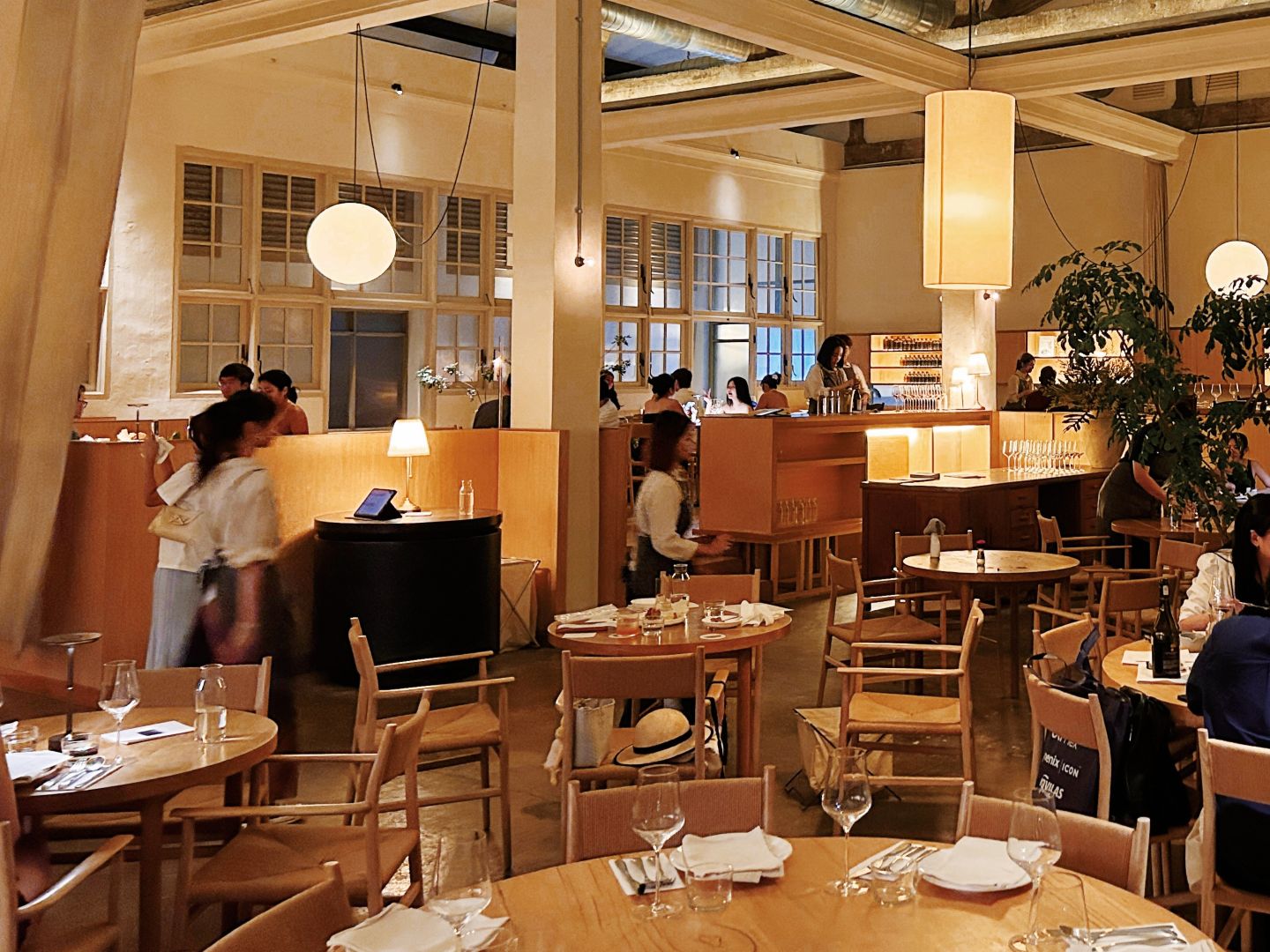
The restaurant promotes modern Aussie dining (Photo: Quincy Tan)
Fusion cuisine has not been around as long as some of its single-origin peers, but what it lacks in time it makes up for in importance and ingenuity. This is especially true in Malaysia, where our multicultural community has blessed us with a vividly blended food culture, but can also be seen the world over — Peruvian Nikkei and chifa, Tex-Mex and Wolfgang Puck’s Pacific Rim cuisine are among the most notable examples.
But tell your friends that you will be having fusion food for dinner and, more often than not, there will be some sceptical shrugs. Admittedly, the modern hybridisation of dishes has been known to birth contentious results, so the bad rap is not wholly unfounded. It can be hard to place faith in a genre of food that identifies itself with being neither fully one thing nor another, out of fear that neither is executed particularly well.
All this to say, we try not to carry such hesitations with us when walking up the staircase to Peninsula House in Penang, a contemporary casual spot opened late last year by the folks at Norm Café. While nowhere does the word “fusion” appear in its biography, the description of “modern Aussie dining” has us feeling cautious. Australia does not have a distinct culinary tradition. Rather, the country’s website vaguely acknowledges it comprises “global influences and native ingredients”. Online posts of Peninsula House’s menus — a compact selection for lunch, a more fleshed-out list for dinner — conveyed its offerings as intriguing, experimental and promising, if not particularly Antipodean.
Quandaries about culinary categorisation aside, we must admit Peninsula House makes a good first impression. Stepping into the space, the ambience is immediately fantastic. Wunderwall Design has done a stellar job of transforming the dilapidated pre-war India House building into a warm, luxurious haven with light and dark wooden elements, exposed piping, rustic lightbulbs and lush, sculptural foliage. One can understand why guests have been flocking to snap a photo of themselves in this highly Instagrammable dining room.
The tasteful use of floating fabrics paired with huge windows make the entire area feel beautifully airy during the day, while the moody lighting at dinnertime lends itself perfectly to more intimate conversations. (Maybe a bit too moody though — a waitress catches us squinting at the menu’s tiny typewriter font and promptly brings candles and a lamp.) There is also a small gravelly oasis and pathway leading to a room where one can purchase organic vegetables grown in the restaurant’s own indoor farm, Commons Farming.
20250630_202052.jpg
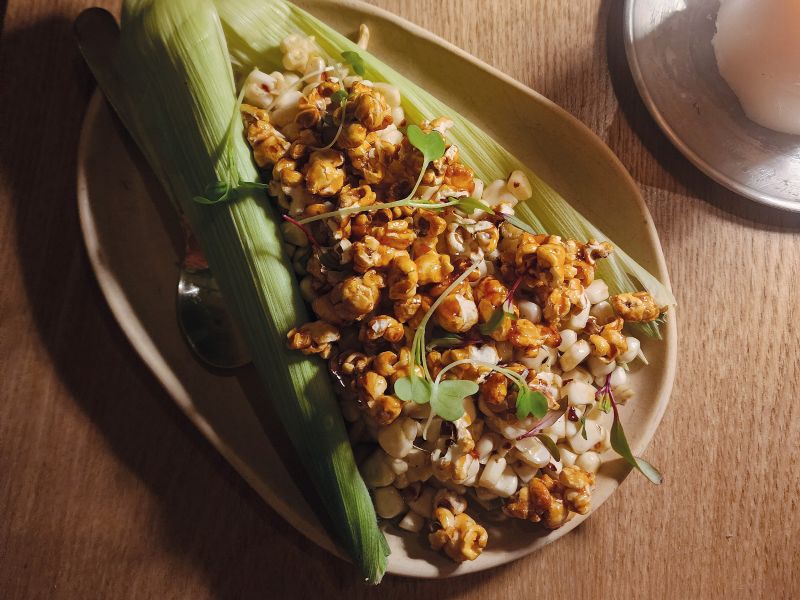
We take the staff up on their entrée recommendation of the charred sweet white corn (RM28.90) which seems to be the popular choice of most other tables. Juicy kernels imbued with a wonderfully smoky flavour and spruced up with chilli butter are topped with a helping of pleasantly bitter caramel popcorn for an engaging mix of textures. The plating — piled on a husk — is photogenic, but the dish does get a bit monotonous; we would have enjoyed a more creative treatment to the crunchier topping.
The scallop and snapper carpaccio (RM45.90), on the other hand, is a standout, seamlessly melding fresh snapper and sweet, tender scallops with the tanginess of pineapple gin ponzu and shaved rhubarb. Even the small additions of briny olives and aromatic Thai basil play their role in this plate’s harmony. Each element is best scooped onto a delicately crisp yam chip and enjoyed in a single bite.
As far as drinks go, we are served a rather unremarkable glass of house white (RM45.90) and the considerably more impressive Peninsula Martini (RM55.90), one of the restaurant’s signature distilled cocktails. This strong yet smooth concoction plays heavily on floral notes from flower tea distillate and lavender wine in tandem with citrusy lemon oil to draw out the elegant botanicals of the gin and vermouth. Other potions include local ingredients like nutmeg and plum, while the locale also offers a variety of non-alcoholic and caffeine-free beverages.
cod.jpg
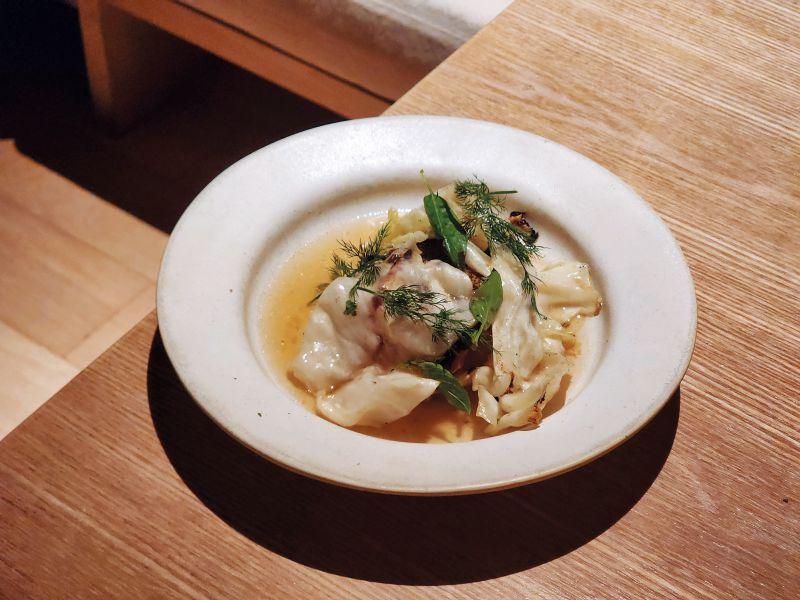
Things start to get a little more complicated when we reach the mains. The aged black cod (RM78.90) is well executed, perfectly cooked with a rich flavour from the fish’s natural oils. The skin appears sufficiently seared but unsurprisingly becomes soggy in the pool of clean-tasting consommé. Leaves of roasted cabbage introduce a charred taste that at times overpowers the otherwise understated composition of the dish, but we appreciate the levity sprigs of dill and Thai basil provide.
On the other end of the spectrum, the duck cannelloni (RM59.90) is anything but straightforward. The three parcels of overcooked pasta filled with ground duck and parmesan are not particularly helped by the chilli capsicum gremolata and topping of parsley and (again) Thai basil. More perplexing is the underlying sauce, which suggests an unexpectedly tropical profile of lemongrass and coconut milk. Our bafflement, however, does not end there.
Presented with a list of three possible desserts to close out our night, we feel obligated to take up both the safest and most experimental choices. The mille-feuille (RM32.90) with chestnut diplomat, whipped ganache and vanilla Chantilly is a nice and easy treat, if not rather plain with its three relatively similar creams. The puff pastry needs a tad more flakiness though, as some middle layers are slightly tougher.
cauliflower.jpg
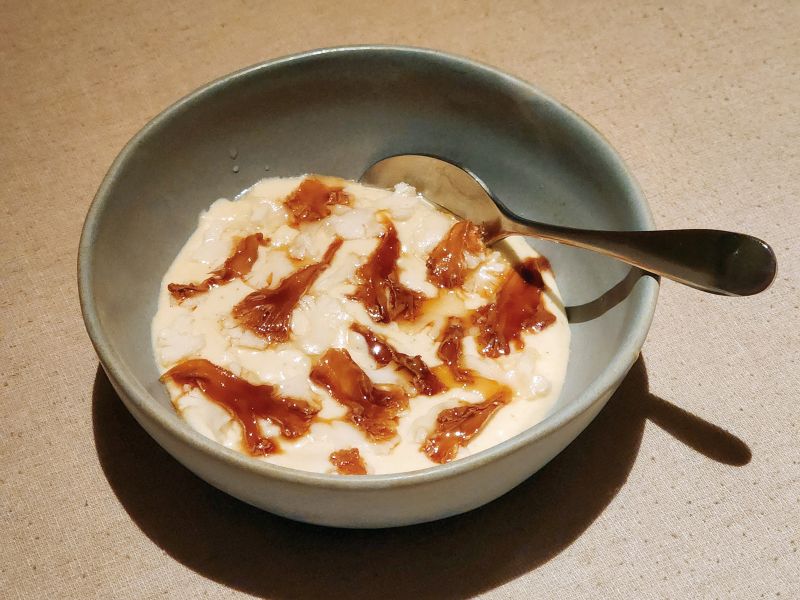
Where we feel truly tested is the succinctly named le chou-fleur (RM28.90), simply “cauliflower” in French. It is not often one finds an almost fully cruciferous-based dessert, and there is a reason for this. Neither the puréed, pickled nor caramelised preparations of the florets can mask its fundamentally raw, vegetal flavour that refuses to make friends with the vanilla crème diplomat. As duty compels our spoons to dig through the vegetable pudding, we excavate a base of cashew praline that comes in oddly hard chunks. Unfortunately, this confusion is the note we end our meal on. Our curiosity is sated, but at what cost?
We do not wish to diminish the hard work put in by the team at Peninsula House — there has been clear thought and ample ambition baked into each dish on this menu. However, we cannot help but feel there is room yet for refinement, especially when dinner for two without a bottle of wine runs to nearly RM450. As is though, we come away from our dinner with more questions than answers. What about this fare is Aussie? Why is there so much Thai basil? And most critically, will we ever be able to look at cauliflower the same way again?
Peninsula House, 25-b, Lebuh Pantai, George Town. Contact (016) 439 1335. Thursday to Tuesday, noon to 4pm; 6pm to 11pm.
This article first appeared on Aug 4, 2025 in The Edge Malaysia.