
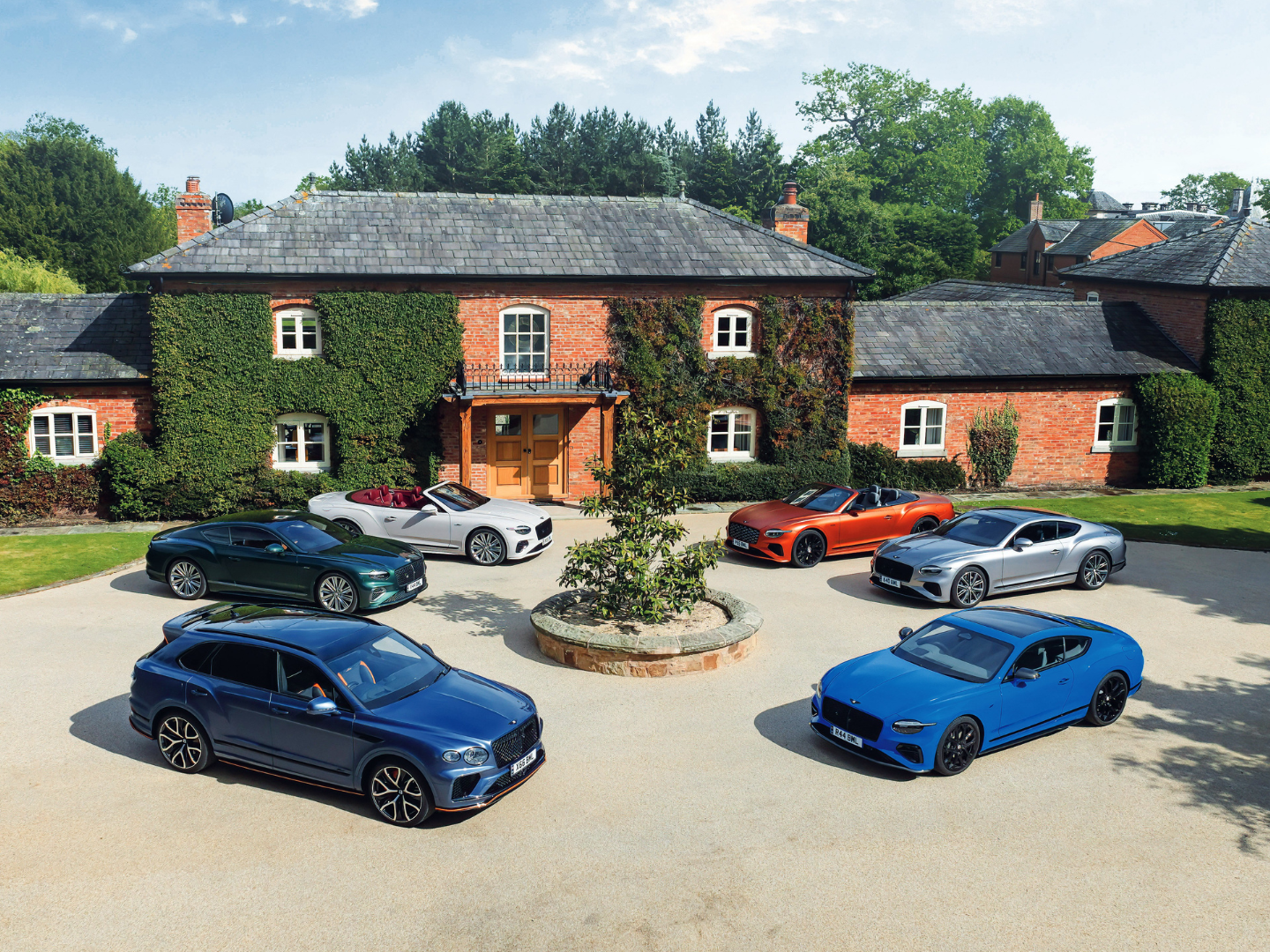
A handsome fleet of Bentleys parked at The Mews in Crewe, the UK (All photos: Bentley Motors)
Located in the county of Cheshire, northwest of England, the town of Crewe is historically known as one of the UK’s most significant engineering and industrial epicentres. It played a pivotal role in the development of Britain’s train network in the 19th century, transforming a tiny hamlet into a burgeoning railway hub that produced thousands of locomotives.
Parallel to the Crewe Railway Station track is Pyms Lane, where a shadow factory was once erected on potato fields to manufacture Merlin aero engines in preparation for WWII. To camouflage against airstrikes, the building’s external walls were painted to look exactly like standard streets and houses.
Fast-forward to the present, an aerial view of Pyms Lane tells a completely different story. Flashes of sunlight glint off vast, orderly rows of solar panels crowning a facility that has grown to the scale of an actual miniature township, the expansion sculpted entirely by its legendary successor, Bentley Motors.
The British marque has long been the single largest private-sector employer in Crewe, with over 4,000 employees at its sole manufacturing plant. A tour of its production facilities usually begins at CW1 House, its flagship showroom named after the area’s postal code, where guests can explore the latest model range and preview its nearly limitless bespoke offerings.
1.png
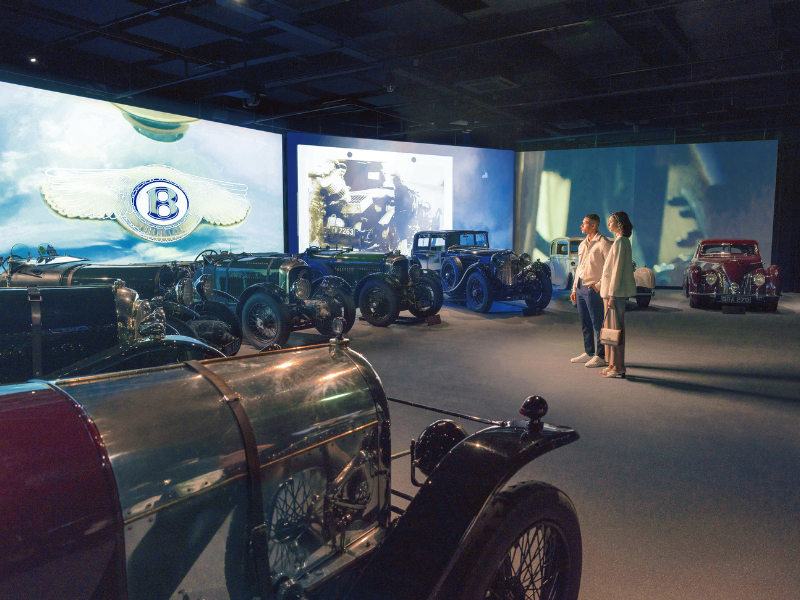
It is also home to the Historic Lineage Exhibition, an immersive showcase usually reserved for Bentley owners, though occasionally opened to motoring aficionados for limited runs. The experience includes a curation of the carmaker’s most historic pre-war vehicles, notably the 1919 3 Litre EXP2, the oldest surviving Bentley in the world. It is also the second car built by the founder Walter Owen Bentley himself, affectionately known as WO to enthusiasts and historians.
Across the room is the famed 1930 8 Litre, designed to represent the pinnacle of luxury and performance at a time when the world was plunged into the Great Depression. Due to its steep price tag during the economic downturn, only 100 units were ever produced. The model on display was WO’s personal company car. Fun fact: Serving as a symbolic token of leadership, the keys to this vehicle have been passed down through a succession of Bentley CEOs and today reside with Frank-Steffen Walliser.
Forward thinking
In 2022, the brand announced its commitment to investing £2.5 billion in sustainability over the next decade. It involves a total reimagining of the historic Crewe site into a next-generation “Dream Factory”. By integrating cutting-edge, greenfield-style facilities on the existing footprint, the campus will be optimised for the complexities of electric vehicle (EV) production — a critical cornerstone of Bentley’s Beyond100+ strategy.
These advancements are already taking shape at the carbon-neutral headquarters, where over a million British Apis Mellifera bees produce delicious Bentley Honey for client visits and corporate events from on-site wildflowers planted to boost biodiversity. Recent infrastructure additions include a new design studio, engineering technical centre and state-of-the-art paint shop in the final stages of completion.
2.png
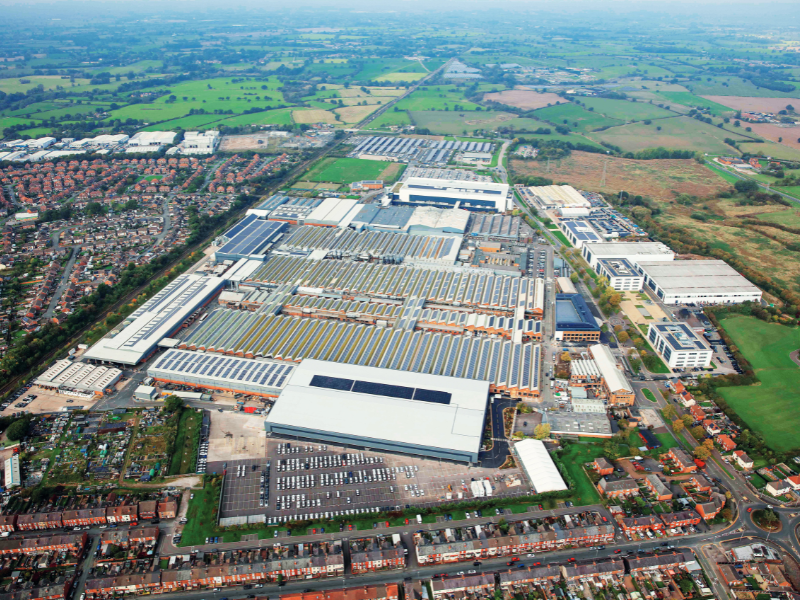
While currently off-limits to visitors, the extensions signal Bentley’s steadfast drive into the next stage of its journey. The historic site is quietly gearing up for a monumental milestone — the debut of the marque’s first fully electric luxury vehicle. Primed to redefine automotive personalisation, the upcoming EV will offer a staggering 46 billion configuration options straight from launch. Yet, amid this surge towards the future, an equally passionate debate remains: Can Bentley preserve the century-old heritage, timeless craftsmanship and core values that defined it in the first place? Stepping inside the factory reveals the answer.
Modern industrialisation
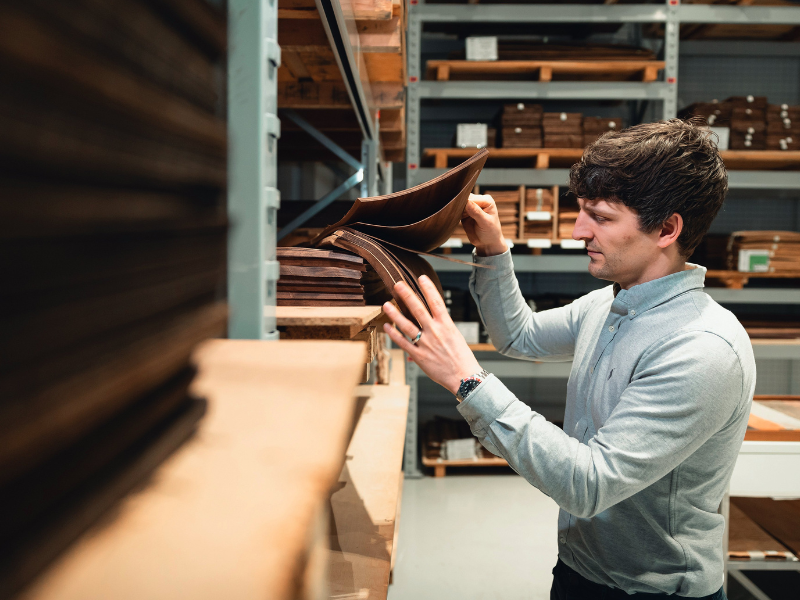
The cacophony of the manufacturing plant takes on a different rhythm as one meanders from one department to another. Inside the wood veneer workshop, artisans meticulously sand down wafer-thin sheets by hand before polishing them to a glossy shine. Our tour guide shares a fascinating detail: Bentley had to decommission its polishing robots because they simply could not match the precision, intuition and touch of the human hand. Similar decisions echo across other divisions, standing as a proud testament to the irreplaceable value of traditional craftsmanship.
A dedicated team is employed to scour global auctions for the rarest, most complex wood grains, such as Tamo Ash. This chatoyant hardwood features an undulating grain that shifts from a creamy straw hue to a rich, liquid gold under the light, evoking the hypnotic pattern of rain cascading across the cabin. The brand is also making a conscious push towards sustainability, offering equally resplendent veneers crafted from stone.
3.png
At the thread shop, skilled seamsters and seamstresses (some representing generations of the same family) focus intently over sewing machines, meticulously stitching leather panels that will line each vehicle’s interior. People remain at the absolute heart of the company, with much of its continuous innovation born right here on the factory floor. Once, a Californian customer sent his car back because the seat bolster was frayed from daily use. A craftswoman proposed a specialised thread reinforced with a steel wire no thicker than a strand of hair. The solution easily cleared Bentley’s rigorous quality checks and is now standard across every seat.
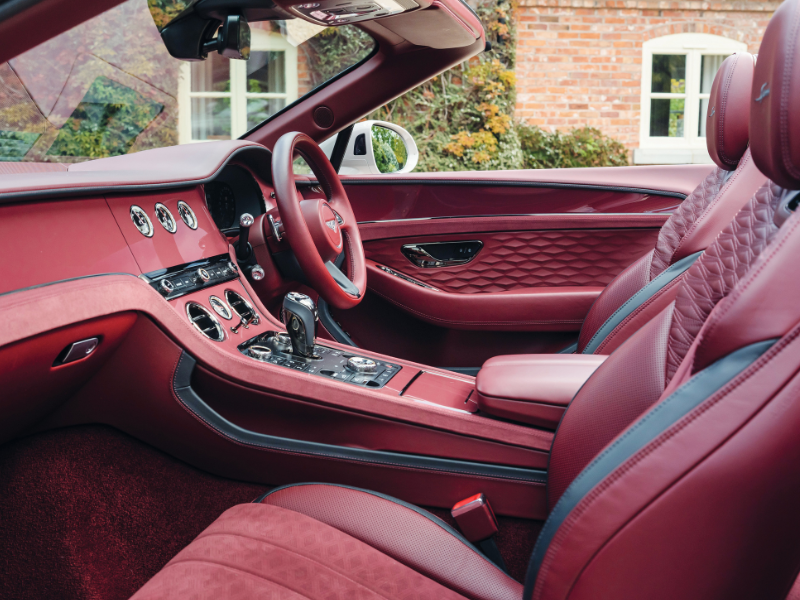
While Dinamica — an eco-friendly, suede-like microfibre — serves as an exceptional leather alternative for the carmaker’s performance-focused line-up, a distinct segment of clients still favours the classic elegance of smooth hide. By working with systems powered by artificial intelligence (AI), the experts can optimise the usage of hides for over 200 trim parts and detect defects at a microscopic level, from growth lines to healed scars and insect bites, to improve product quality and reduce leather waste at the same time.
Entering the assembly floor, the iconic architecture of Bentley’s line-up comes into view with the muscular shoulders of a Continental GT taking form on one side and the stately poise of a Bentayga on the other. The area is split into four zones: Chassis 1 for hardware and wiring loom, Chassis 2a for engine marriage, Chassis 2b for ancillaries and Final 1 for interior trim. Each station runs on an 11-minute takt time for maximum efficiency, whether that is pulling 38km of wiring through over 5,000 connections on the Flying Spur or installing a dashboard within a strict 0.4mm tolerance.
5.png
A spectacular array of cars in every imaginable hue suspend in the air like floating sculptures. Our guide points to a GT in Jetstream, one of the marque’s most popular blues, recalling how it was inspired by a customer’s Kitchen Aid food mixer. Another tale involves a client from the Middle East who requested her Bentley’s bodywork to perfectly match her favourite nail varnish. Reluctant to part with her last bottle, she sent the visiting (and clearly dedicated) representative back with his nails painted instead. That humorous workaround birthed one of the brand’s most popular shades: Passion Pink.
The vehicles reach completion at the final quality station. Here, they enter a specialised tunnel that can mimic any daylight condition for paint inspection, while technicians carefully examine the electrical wiring and sumptuous interior for the slightest blemish. Each car is granted a comprehensive 30-minute takt time for this holistic evaluation before earning approval for road testing. The bay of finished Bentleys is a breathtaking sight, even though it often presents a unique problem. Seeing the vibrant custom specifications of neighbouring vehicles frequently prompts clients to change their minds at the eleventh hour, but the marque is always more than happy to accommodate.
Heart's desire
A short drive from the Crewe factory lies The Mews, a country retreat offering clients an intimate space for bespoke commissioning. The property historically served as the private residence of Bentley’s CEOs, but transforming it into a luxurious lounge to welcome VIP guests was an excellent decision, notes Walliser. Located right next to Rookery Hall Hotel & Spa (the charming manor where the Beckhams announced their engagement in 1998), The Mews is led through a sweeping driveway framed by lush parkland.
“When I started [at Bentley] two years ago, we created the Beyond100+. The ‘plus’ is the important part as it covers all areas of our business, including a new hybrid and BEV strategy. We’re looking to provide a choice for our customers, not forcing them to choose between drivetrains. Our approach is different and changing, but sustainability stays a foundation within the business model,” says Walliser. In less than two years, many new ideas have already come to fruition. “Supersports is a very good example. We realised it in 24 months. We put a lot of speed into that project to deliver new and maybe unexpected ideas from Bentley,” he says. Enhanced with a twin-turbo 4.0 litre V8 engine, all 500 units of the sporty coupé sold out in a matter of weeks.
“The most exciting car is also in the making,” he adds, referring to the purely electric model — nicknamed D-Luv internally — which the brand had been teasing for months. “It represents a very important moment for Bentley, but will not replace what we have on offer.”
Hinting at how the new product will look, Walliser says: “It’s more compact than a Bentayga, so it’s shorter, but it doesn’t lose its spaciousness because of the electric drivetrain. It will be very powerful, but for practicality reasons, it will offer everything you’d expect from an urban SUV.”
Great care is being taken to shape the sonic identity of D-Luv. “Sound supports your driving and natural behaviour. People can argue about it being artificial, but I’m not interested in that. At the end of the day, it’s how you feel, what you hear and how you’re immersed. Everyone who has had a chance to drive in it has been convinced by the engineering team.
“The moment of launch will be at the end of September and you can imagine there is a lot of excitement inside the company, but there’s also a lot to prepare, from the retail network and ramping up production to the final tests.”
4.png
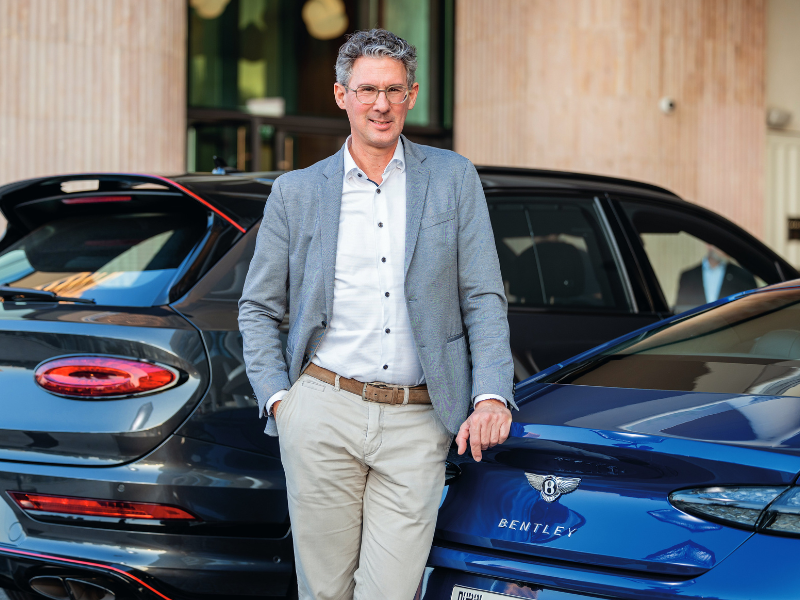
A huge push came through the factory from an innovation perspective as manufacturing systems were completely upgraded, with software handling being the most radical change introduced. “With the new generation comes a new electronic architecture. The sheer amount of data it generates… it needs a different kind of thinking, so we have had to adapt our manufacturing process,” he says.
Fresh off a convoy drive of six iconic Bentleys, including the formidable new Continental GT S and Bentayga Speed, the visual impact of the fleet parked outside is undeniable. This showcase of nearly infinite specifications brilliantly underscores the marque’s unrivalled ability in crafting truly distinct automobiles that boast both style and substance.
More than a century ago, WO’s founding motto for his company was simply to build “a fast car, a good car, the best in its class”. Little has changed since, though the brand had to redefine those objectives to better adapt to the current economic market. “We have a very rich and long heritage. It would be a mistake if we did not make use out of that, but heritage is not enough. It’s a strategy, not a source. We can benefit from it but cannot lean back on it,” he shares.
While the new EV will certainly broaden Bentley’s customer base and a fully electric line-up is the ultimate end goal, Walliser is adamant on offering clients an option for as long as possible. “Our customers define what they want and how the car looks like. ”
This article first appeared on June 8, 2026 in The Edge Malaysia.