
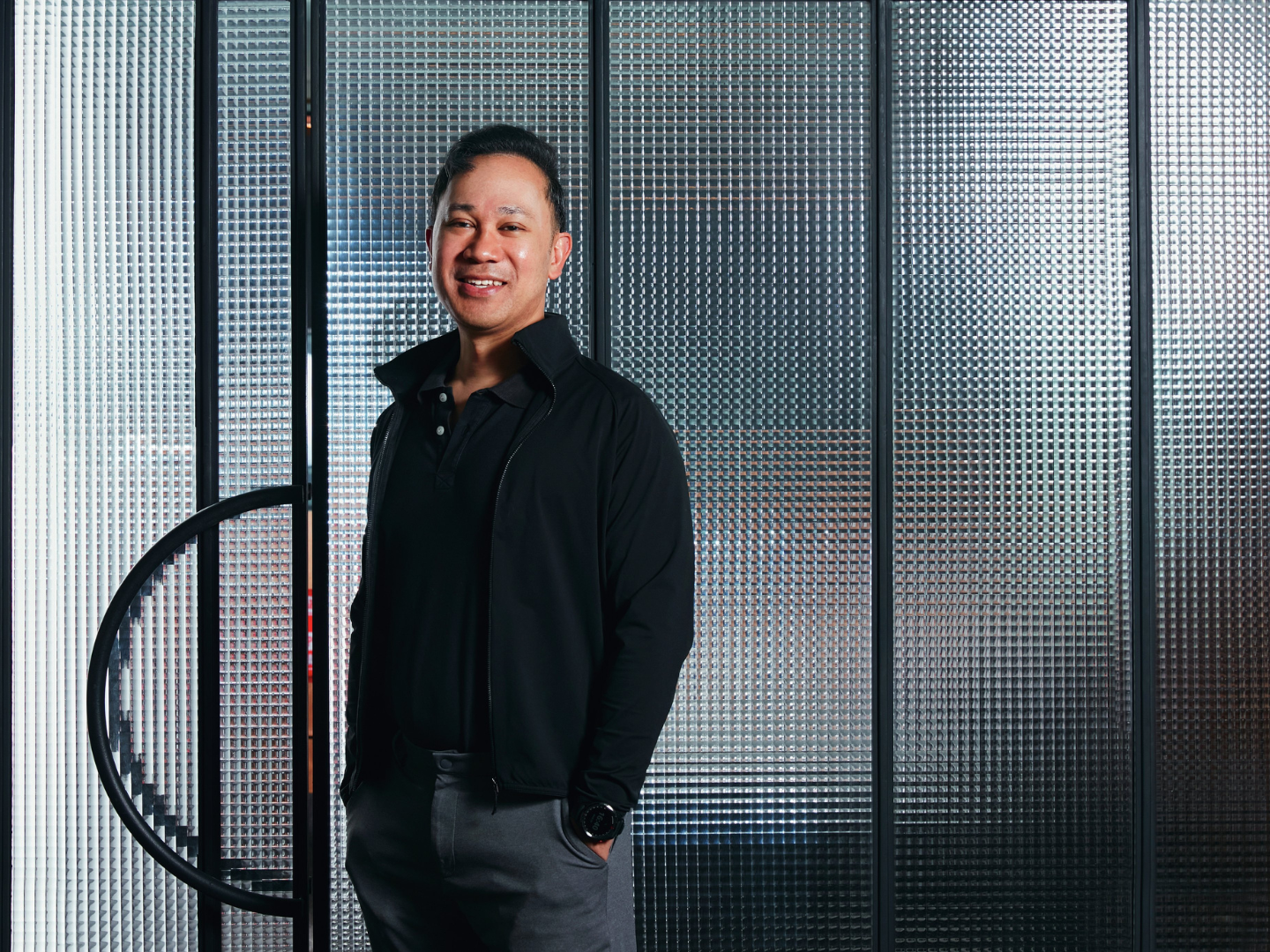
Growing up, Johan saw how acts of selflessness, service and sacrifice could change lives (Photo: SooPhye)
"Finance is just about the most selfish profession you could possibly imagine,” insists Datuk Johan Rozali-Wathooth. It goes without saying that this is the kind of statement most investment executives would avoid making — well, because who would willingly describe their job as the antithesis of Robin Hood?
But Johan is not one to let harsh truths, uncomfortable realities or media training dictate his moral code. The founder of Bintang Capital Partners was raised to hold kindness and generosity close to his heart — principles that have not only guided his mission to reframe what being a responsible corporate citizen should look like, but also shaped his 2½-decade journey in the charity and social impact space.
He currently serves as treasurer of the Malaysian Leprosy Relief Association (MaLRA), an independent member of Yayasan Wilayah Persekutuan, a trustee of Impact Integrated and chair of Yayasan Tunku Abdul Rahman’s (YTAR) administrative committee. Notably, YTAR celebrates its 60th anniversary this year, marking a renewed vision to empower underprivileged students with great leadership potential through its 2026 Action Plan.
Where one might see two traditionally opposing forces — the dark and light sides of cash-generating corporate machinery versus saintly selflessness for the greater good — Johan has devoted much of his time and energy to aligning universes that both fundamentally revolve around using resources to make the world a better place. That is putting it elegantly — “I’m more like Mr Fantastic, stretching and trying to bring everything together,” he jokes.
Still, the charismatic CEO continues to passionately uphold the spirit of giving and his belief in a brighter future on his own terms. He discusses conducting business with social mindfulness, what he has learned from working with impact groups and how a charities commission could reform Malaysia’s third sector.
Root cause
When Johan reflects on the defining moments of his youth, it is the enduring influence of his parents that he points out first.
“My mum graduated with three degrees and was one of the pioneering lecturers at MARA Technology Institute. And then, she gave everything up in 1979 when I came along,” says the eldest son. Casting her career prospects aside, she took on the mantle of loving Mak to two boys: cooking meals, helping with homework and driving them to classes and extra-curricular activities day in, day out. Seeing the foundation she had painstakingly laid for her children to chase their dreams drove him to always leap a little higher and treasure the unsung hero.
“Her aspiration for both of us — which ended up with a 50% failure rate — was that we should be Oxbridge graduates,” he jests. After flunking his Cambridge interview, he turned down his father’s offer to take a year off and apply at the other place, opting instead to attend the London School of Economics and Political Science (his brother Faisal did make it in to read law, so at least Mum got her wish there).
If hers was the tale of sacrifice, Dad’s was one of service. One of eight Malaysians sent to Sydney to train in open-heart surgical techniques in the 1980s, his father established the country’s first cardiac surgery unit at Hospital Kuala Lumpur. A young Johan’s prevailing memories of his father’s position as one of the nation’s most respected healthcare professionals came from the people who would approach in public to tell him, “If not for your dad, I wouldn’t be alive today”.
“It really impressed upon us that his story was one of being useful to other people. The measure of the man was never wealth, position or title. It was what he gave to others. He saved thousands over a career that spanned decades,” says Johan.
1.png

Those deeply ingrained values stayed firm even when life seemed to pull him astray. His earliest roles in the finance world were doing corporate restructuring in London for three years, then on the buy side for another seven. But for all the interesting projects and collaborating with talented visionaries, he had to contend with a gnawing moral quandary.
“A family friend recently said to me, ‘Finance is for people yang berkiblatkan wang’ — those whose north star is the accumulation of wealth,” says Johan. “A big part of my purpose was to enrich the already wealthy. When we invested in companies and needed to ‘extract synergies’, which was a very euphemistic way of saying ‘squeeze costs’, the first to get squeezed was people.”
Telling employees they were being made redundant and watching them break down, only to send them off with a tidy severance package, was disturbingly dissonant. Every number on a spreadsheet corresponded to a human being’s entire livelihood, a system of security that was imploding and leaving dependants stranded.
“We all grow up with this notion that we can be knights, riding in to rescue others, but we don’t realise that some of these pathways might lead us to that villainous archetype. You wake up one day and go, ‘What am I doing with my life? There’s got to be more to it than making money!’”
Determined to re-engineer the way business is done, Johan started Bintang in 2018 with the acknowledgement that humanity’s actions were taking a toll on the world and investment should be done with consideration of the planet and its inhabitants. “We are the only impact investor in Malaysia and one of very few in Southeast Asia. Our model is about building companies that are not just better for their shareholders, but also stakeholders, including employees, the community, environment and supply chain.”
Give + let live
Asked what led him to the impact groups he serves, Johan explains, “One of the most amazing gifts my parents gave me was that every summer as a student, they would force me kicking and screaming to spend time at a charity. I helped out at PAWS on the old Airport Road in Subang; Rumah Hope, an orphanage in Petaling Jaya; and what was then called Persatuan Kanak-Kanak Spastik, now the Spastic Children’s Association of Selangor & Federal Territories.”
Time was the first commodity he contributed as a student. When he became a professional in finance, he gave talent. Once he had consolidated influence, he offered ties, leading those in his network to support these organisations in ways he could not. Helping the community became just as much a matter of advocacy and solidarity as it was a means to open himself to new causes and learn about issues affecting the marginalised.
Joining MaLRA, for example, was one such step — albeit a surprising one. “In 2010, my godfather, the late Datuk Roger Tan Kim Hock, called me out of the blue one weekday,” recalls Johan. Uncle Rog, president of the association, needed a ride that Saturday, which Johan agreed to without much thought. Upon arriving at Armada Hotel in PJ, he was casually corralled into the hall with the promise of free food and air conditioning, only to find himself at an annual general meeting. The first order of business? The election of new office bearers — with Johan’s name among the nominees.
“It became quite a frosty car ride home. We drove along the Federal Highway in total silence,” laughs Johan. As it turned out, the ambush was the very tactic Uncle Rog’s father had used on him 25 years ago, and this was his way of reliving that rite of passage. “I ended up frog-marched into this organisation not knowing anything about what it did or what leprosy was, and it’s been 16 years. It completely changed my perspective on a lot of things.” As a member, Johan has led the group’s collaboration with the Ministry of Health and supported its mission to assist patients while dismantling stigmas surrounding the disease.
2.png
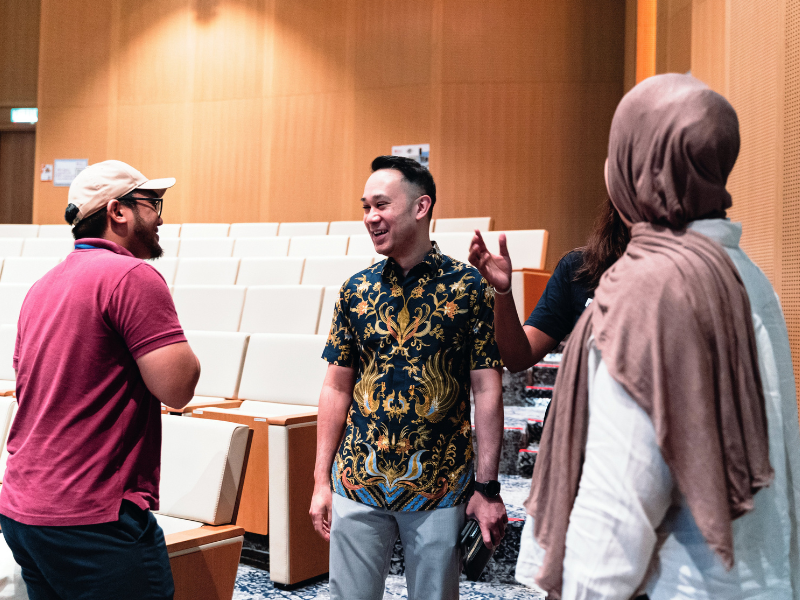
Getting recruited to YTAR, meanwhile, involved a little less blindsiding. “Following [the 14th general election in 2018], I was approached by some very senior politicians who were part of YTAR. They saw an opportunity to revamp this thing that had become very sleepy and almost moribund with no incoming ideas. Because of my background in corporate restructuring and what I had done with MaLRA, they asked me to come in and do something similar.”
The influx of new blood on the board of trustees meant the foundation was committed to experimenting, and with Johan being the youngest, they looked to him for fresh direction. “There are so many scholarship bodies in Malaysia, so we stepped back and asked, where are the weak points in the local offerings?”
What he discovered was that no institution was yet focused on rewarding or developing individuals with leadership quality. “We looked to Tunku’s [Abdul Rahman] ideals. His personal slogan was famously ‘Bebaskan’, and everyone thinks it’s about independence, but it actually goes deeper than that. Even after breaking the chains of colonialism, he found we were still bound by our own presumptions and mindsets. His idea of freedom was all about leadership. Free yourself from racism, ignorance, prejudice, everything — that’s how we develop,” asserts Johan.
Tasked with finding a new CEO for YTAR’s transformation, Johan proposed Dzameer Dzulkifli of Teach for Malaysia, believing his energy and perspective could help reimagine the education landscape at large. The six-month courtship was “Sisyphean”, but once the trustee pitched what good the foundation could do by identifying Malaysians with great potential, who could go above and beyond as long as they had the backing, it was a done deal.
“We have some amazing stories of kids who probably wouldn’t have gotten a second look from other scholarship bodies, but who eventually graduated summa cum laude or magna cum laude,” says Johan.
He shares the account of a student from Johor who had lost his father at an early age. The boy dreamt of fulfilling his parent’s dying wish for him to become a lawyer but, in working to support his mum, could not attain the Sijil Tinggi Persekolahan Malaysia (STPM) grades to enter Universiti Malaya. Refusing to roll over, he would take a bus every week to the school’s law faculty to plead his case. After a year, the department relented, but with no funds for his personal expenses, he was referred to YTAR for a scholarship opportunity, where he employed the same modus operandi.
“So the team finally agreed, ‘Okay lah, let’s give him a chance’. Would you believe that he got the Yang di-Pertuan Agong scholarship to attend Harvard University for his LLM and graduated summa cum laude? This kid literally went from Muar to Massachusetts, all under his own steam. And even after getting half a dozen offers from law firms all over New York, he declined them all to return and work for the Bahagian Hal Ehwal Undang-Undang,” says Johan.
“I could repeat half a dozen anecdotes like that. People always assume it’s me inspiring these kids, when it’s completely the other way around,” he says. After learning that a foundation scholar interning at Bintang had been saving money every summer to offset a financial internship’s lower pay and skipping meals with his well-to-do peers, Johan appealed to the YTAR trustees to provide those doing degree-relevant internships with a stipend. The CEO also goes the extra mile by personally writing reference letters for prospects at Bintang entering the workforce.
3.png
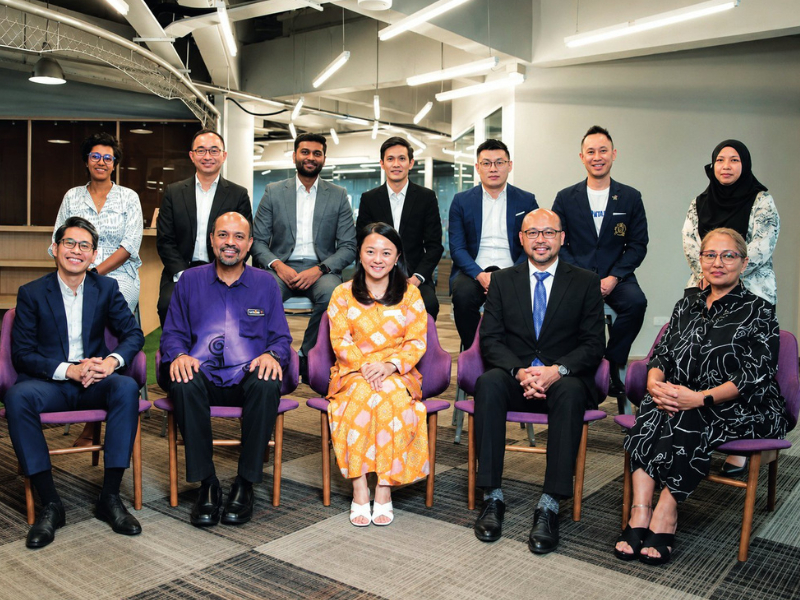
“It’s truly a matter of empowering these lives and helping to rewrite their stars. They can now imagine a future they previously considered unimaginable because of the circumstances into which they were born.” Apart from financial backing, YTAR offers programmes like Closing the Gap, providing secondary school students with career path coaching to improve university access.
In the years leading up to its 60th anniversary, the foundation has strived to scale its operations and impact 700 students annually while refining its programmes to help with professional, social and emotional readiness. The Action Plan also outlines goals to increase awareness of YTAR’s message, legacy and network, as well as grow its resources through strategic partnerships while strengthening internal capabilities.
Fighting back against the wave of disenfranchisement and nihilism in the new generation, which has been largely bred by late-stage capitalism, climate change and political corruption, is also crucial. “The combination of all these factors has made young people feel lost, and it’s up to organisations like YTAR to change that mindset. From the depths of despair come the reservoirs of hope. If we can convert their struggles into a feeling that something can be done, they could be the hope of our country.”
The good fight
In the past seven months alone, news of fund abuse in non-governmental organisations have repeatedly made headlines, many to the tune of several million ringgit in misappropriated donations. Such breaches in trust have led to a heightened resistance from institutional donors, subsequently causing inefficiencies in the third sector, Johan remarks. Probes into these cases by the Malaysian Anti-Corruption Committee have also raised the need for a regulating body or legislation in place to govern them.
“I think it’s high time we had a Charities Act. Part of the challenge is that it’s an inter-agency issue, because there are so many different ministries,” says Johan. Currently, there are over 90,000 registered organisations overseen by multiple separate laws and authorities. “My personal view is that if you have a ministry or commission for welfare, with a specific Act that gives it locus standi, it sets a very clear standard that all charities must adhere to. It’s up to you whether you want to get income tax exemption, and if you don’t, then maybe you wouldn’t sit under this whole umbrella, but then it becomes a caveat emptor to donors.”
At the moment, while the conditions to qualify for tax exemption status under the Lembaga Hasil Dalam Negeri (LHDN) are stringent — and rightly so, Johan adds. However, the complicated red tape can often negatively affect smaller groups that end up expending too much of their resources on bureaucracy instead of actual social work.
“A big crusade is really around equipping these organisations with skill sets or facilities to reduce the friction of needing to comply. At MaLRA, we are developing a manual, which can be equally applied to any charity as a pragmatic guide on how to comply with LHDN. By making these tools publicly available, even a small charity that doesn’t know where to start can take a look at it,” he says.
4.png

Sorting systemic stickiness is one piece of the puzzle, but the human part is a bit more complex. As neighbouring nations like Singapore and Indonesia make strides in better rewarding those in the third sector, Johan believes Malaysia ought to follow suit.
“One of the major problems we face is brain drain. There are some very intelligent, talented people working in this space. Yet, the mindset persists — and I had it initially too — that those in this field don’t do it for financial reward or might be here because they couldn’t do anything else, and that’s dangerous. Those who deliver should be recognised. Just because you work for a charity shouldn’t make you a charity case.” He also championed multiple salary benchmarking exercises across YTAR, MaLRA and Impact Integrated to ensure individuals are fairly remunerated.
The ongoing project to establish such legislation is presently being pushed by Jason Wee of Architects of Diversity, Anita Ahmad of Yayasan MySDG, Danial Rahman of Asli (under the Jeffrey Cheah Foundation) and Dzameer. As for where they are at, Johan says the groundwork has been done, in terms of research into similar legislation in the UK and Singapore, as well as the pain points of charities and governing bodies. The Securities Commission Malaysia has been a particularly helpful model and ally in suggesting feedback for drafting and amending laws. “We’re moving now into mobilisation and execution. We need to get the first principles down of how this Act should look. A significant part will be persuading the lawmakers and politicians that it’s actually worth doing.”
Nation-changing undertakings are no one- or two-year things — “I probably won’t be on the right side of 50 anymore by the time this gets done,” he quips — but what matters now is taking that first step, daunting as it may be. “Let’s not make perfect the enemy of good. We need to move these conversations into creating something, and if we figure out later that it’s not bulletproof, all we need is the will to improve it. Better to fail trying to do something good than succeed trying to do something bad.”
The cost of stretching himself between all these projects is that there is simply not enough time in one day, but Johan makes doubly sure equal attention is allocated to his roles in investment as well as the third sector — even if it means a few hours get knocked off his sleep schedule.
“Jokes aside, it’s a privilege. Being able to help a family affected by leprosy or change the fate of a young person through education creates a sense of happiness I don’t think any amount of money can buy. I really genuinely enjoy it. When you’re so blessed with these opportunities, I can’t imagine a situation where I could possibly not want to do it.”
This article first appeared on Aug 10, 2026 in The Edge Malaysia.