
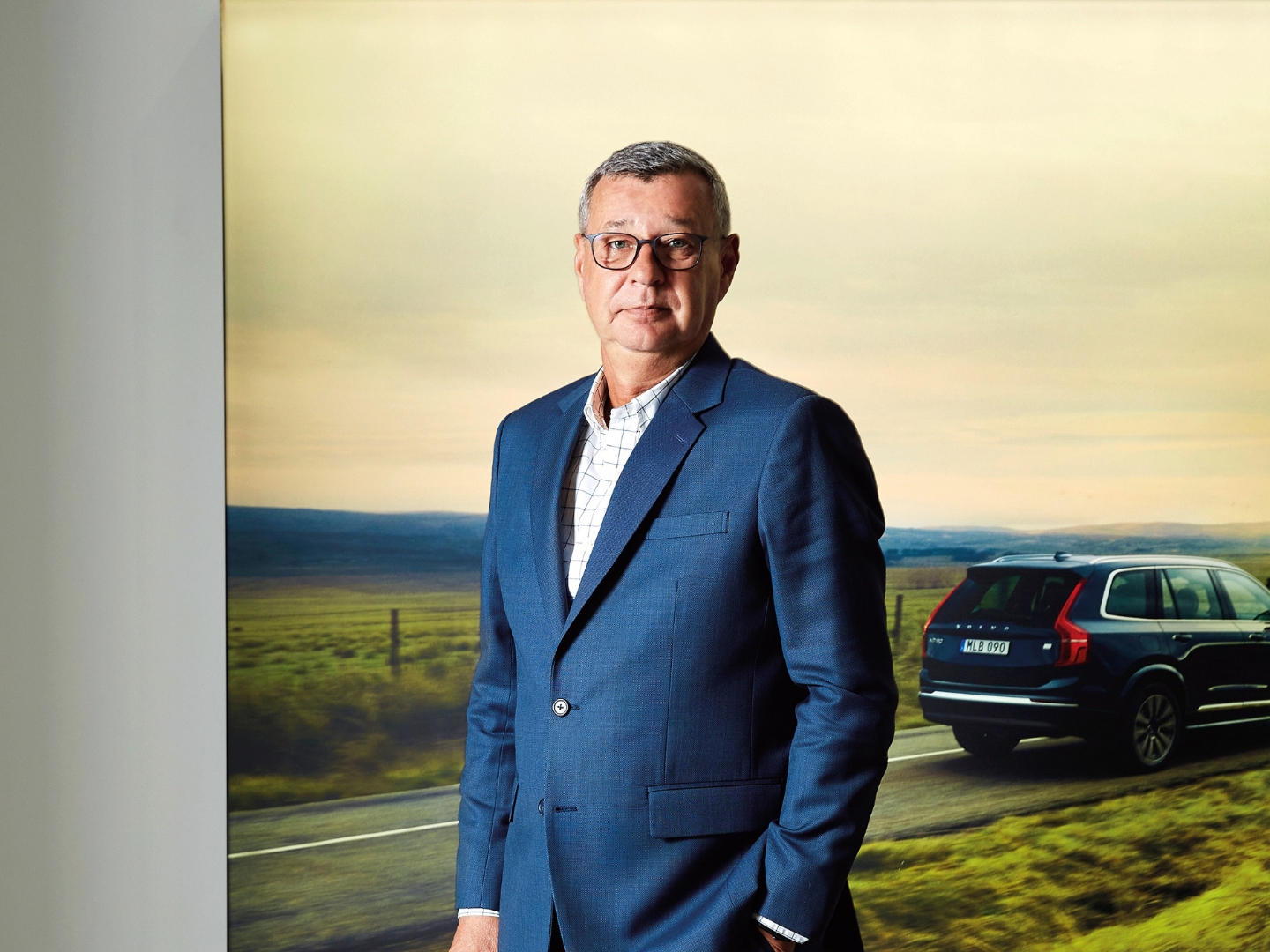
Wailes notes how though the rationale to buy a new vehicle is the same everywhere in the world, it is the customer's needs that differ from person to person (Photo: SooPhye)
Those in the automotive industry cannot say enough about specs, design and performance. Chris Wailes takes the route less travelled, one that veers towards customer retail experience, maintenance and service. Ask him more and you come away convinced the business is also about people and emotions, not just man and machine.
The managing director of Volvo Car for Thailand and Malaysia is aligned with the Swedish company’s philosophy of putting customers first and building trust with communities. Translated into action, it involves engaging with people on a personal level rather than doing events to sell more vehicles.
“It’s not just about the hard product but the brand, the emotion and the rationale as to why we do what we do. It’s more about when you are a Volvo owner, this is why you are one,” says British-born Wailes, who has been helming operations in Thailand since 2017 and took charge of Malaysia as well starting last year.
Straddling both countries makes a lot of sense, he thinks, as they are next to each other and flights to and fro are not particularly long. “Which means I can divide my time equally between both. It seems to be working quite well so far.”
Wailes is up for the challenge of balancing two roles but laughs when people say it is interesting. “I call it mad. It certainly keeps my mind ticking. What I tend to do on the plane is use the time to make notes and come up with ideas on what we are doing next.”
What struck him most after he arrived here was that although the country has a lot in common with its northern neighbour, their cultures and markets are not alike. The way people look at cars and what they want or need in a vehicle differ as well. “I think the only thing that is similar would be the traffic.”
As with every posting, the first thing he set out to do was understand the home team by asking a lot of questions. Piecing together the nitty-gritty of the business gives him a fuller picture of its focus, after which he starts charting the strategic direction. “But as with everything, you’ve got to be flexible because things change, and very fast.”
Like online shopping, for example. Despite the shift towards that, consumers preferred to see a retailer when buying big-ticket items, he found: “If you’re asking me to spend RM200,000 upwards on a product, I would still want to touch it, feel it first and make sure it aligns with what I want.”
When the team realised most of their online business was actually done inside the dealership, they stopped home line sales and set about making direct sales channels as seamless and easy as possible for the consumer. This is among the business lessons Wailes is keen to share from Thailand. The same goes for what he gathered in the places he has worked under Volvo for more than three decades, from England to Europe (where he was responsible for markets in Russia, the UK, Ireland and Iceland) to the company’s headquarters in Gothenburg, Sweden, and then Shanghai, China (serving as market area director, Asia-Pacific) before his current postings.
“One of the things I always smile at now is that when I was in China, everybody — and that includes myself — thought I [knew] the Thai market. When I arrived, I realised I understood so little. There are many similarities but it takes a good six to eight months to really start to understand a market and what makes consumers tick.”
In 2020, Wailes recalls, only four automotive Chinese brands were selling electric cars in Thailand. Last year, there were over 20. “The growth is fast and very big.”
Lessons about competitive brands entering the market from China can be applied in Malaysia, he thinks. “I have taken certain things that work really well here and implemented them in Thailand as well. It’s a win-win for us.”
ex30_saftey_day.jpg
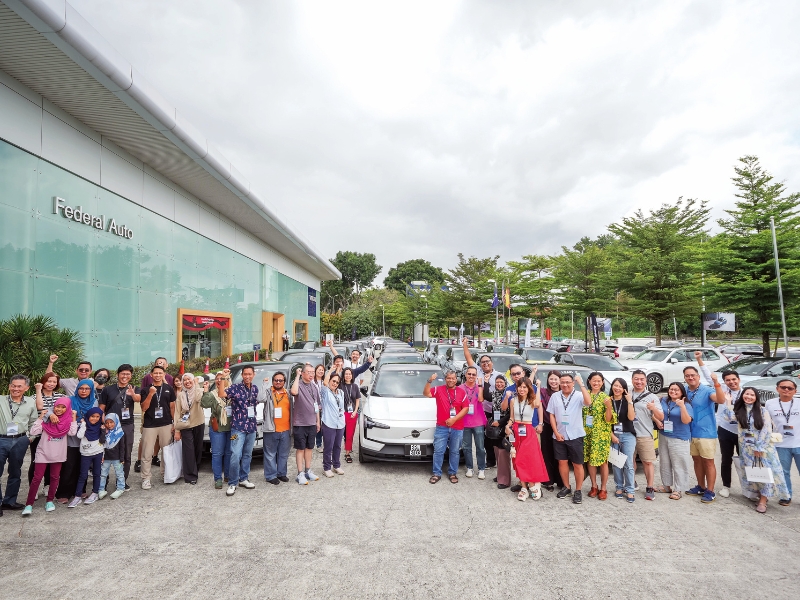
But, the rationale that spurs people to buy a new car is the same anywhere else in the world, Wailes shares. “It doesn’t change. What it is depends on the consumer. Some may want to replace their three-year-old car because it’s what they do. Some will use a vehicle for seven years, then hand it to a family member and get a new one. They tend to do that in Thailand.”
In Malaysia, purchases are more desire-driven but buyers do not necessarily want to be seen in the latest version. People may also pick up something and tell themselves they need it when, actually, it is a matter of want.
Human beings are a bit bizarre in that we talk ourselves into justifying buying something expensive, which works the same way as a similar product that costs less, he notes. But there can be good reasons for paying extra: You get better quality and more functions, the item consumes less energy and the product has more safety features.
There is no definitive target Volvo buyer, Wailes adds, because everyone’s beliefs, wants and needs are different. Therefore, dealers should not pigeonhole themselves into thinking they should go after certain customers.
“Possibly, anyone can buy a Volvo, whether it’s a new car or second-hand. But we need to ensure they can get spare parts or service their car. Anybody can buy if they believe as well what we’re trying to do as a company.”
What the 98-year-old brand aims to do is to give people the freedom to move in a personal, sustainable and safe way. Its customer retention rate is very strong but going beyond that, the company is working to grow that base, and encourage younger people into the brand, Wailes says.
The EX30 — Volvo’s smallest electric SUV launched in Malaysia last September — has reduced its average customer age, so the demographic is different now. But that brings new challenges because buyer expectations are also different. “This is the reason we need a very flexible approach. We learn as we go through the journey and adapt at the same time.”
Safety is still the reason people buy a Volvo, he adds, although “it is not something we need to actively promote in that sense because I think people know. We’ve always had safety at the core of everything we do and that will never ever change. But from time to time, you still need to raise the flag to say, ‘We’ve got this’.”
“This” is a generation of seatbelts where artificial intelligence (AI) and real-time data input from interior and exterior sensors are used to monitor the load of the individual using it as well as traffic variations. For example, a larger occupant in a serious crash will receive a higher belt load setting to help reduce the risk of head injury, while a smaller occupant in a milder crash will receive a lower belt load setting to reduce the risk of rib fractures.
The world’s first multi-adaptive safety belt designed to provide even greater protection in the event of an accident will debut in the fully electric Volvo EX60 in 2026.
Then again, safety is not something every individual has his eye on, especially if they think, “It won’t happen to me”.
Changing people’s attitudes and beliefs is not a car brand’s role, Wailes says. “Ours is to say, ‘Look, if that is important to you, this is what we offer’. More importantly, you are not just getting safety but the full ownership experience of being part of a brand focused on safety, the environment, sustainability and everything else. It’s a fun place to be.”
Talk about sustainability leads him to news reports that building an electric vehicle (EV) is more damaging to the environment than building one with a combustion engine. “That’s very true because it does require a lot more electricity. It then depends on where you source that electricity.”
Volvo’s plants are climate-neutral and use renewable energy. Car production requires a lot of water and that water is reused, he explains. “We look at the end-to-end cycle of production through to the end of life of a vehicle and the recyclability of that car as well. It’s not just about producing the vehicle. We recently had an agreement with a company in Sweden to start using recycled steel. That will bring down carbon emissions because it is a lot less harmful to the environment than new steel.”
Volvo cars are transported to Southeast Asia by boats that run on renewable and sustainable fuels. The company uses blockchain to trace where its suppliers get their raw materials for its batteries and EVs. “We focus on sustainability in ways a lot of people don’t see.”
As AI transforms cars in the industry, intuitive technology enables the company to give people what they need and want rather than just introducing gadgets for tech’s sake, Wailes says. “It is fairly easy for carmakers to put whatever app or function they wish in their car through software. But if the person behind the wheel does not understand why they have that function in the first place, you’re wasting a lot of money developing something nobody knows how to use.
“At the same time, we have to think forward because we’re a global company. It’s not just about Malaysia or Thailand. It’s also about Singapore, Japan, South Korea or even the US or South America. Customers have very diverse needs and wants and it’s always a challenge — and I think it is one we seem to overcome pretty well.”
Zooming in on EVs, Wailes says customer journeys and the speed of that differ here and in Thailand, which has been quick to embrace them. Not so in Malaysia because of its fuel subsidies. How that develops will depend very much on what happens in the country, he thinks.
Wailes drives a fully electric EX90 in Thailand, which he charges every two weeks. When he sits in traffic, which he normally does every day, like here, he likes the fact that “motorcyclists around my car are breathing clean air, not any NOx [nitric oxide and nitrogen dioxide] or CO2 [carbon dioxide] that’s coming from me. I like that I’m not contributing to any particular damage to them as an individual”.
But a car that is quiet and at the same time does the environment good may not be for everyone. He reckons after trying an EV and knowing what it can do, people can decide if it fits with how they use their vehicle — for daily commutes in the city or to travel long distances frequently. Thus the company’s balanced portfolio of mild hybrids, plug-in hybrids and fully electric cars.
A few years ago, EVs had a range of 100km to 200km and it took between eight and 14 hours to charge the battery. Now, they cover 600km ranges and the battery can take half an hour to charge.“The pace of EV tech and the way we can adapt is very fast. Which is why it’s such an interesting industry to be in right now.”
moose_day.jpg
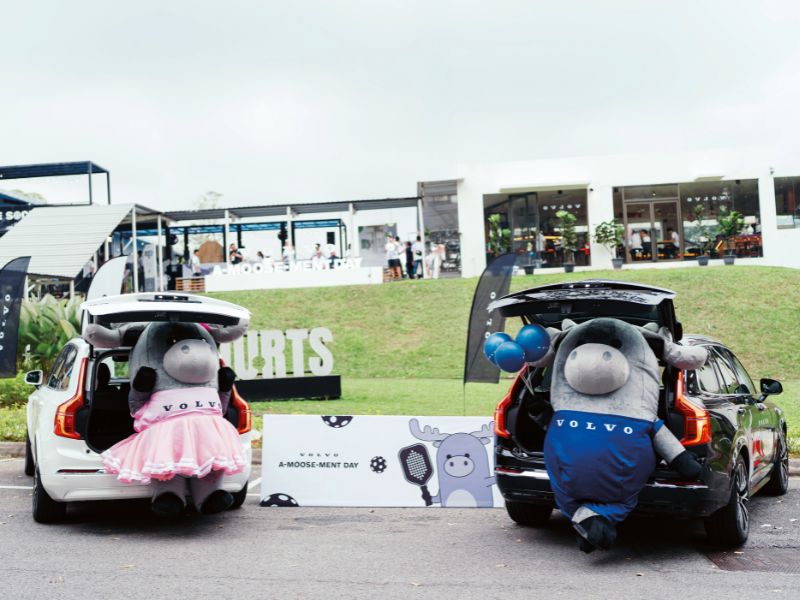
Wailes has many plans for Malaysia but will continue to focus on the ownership experience. “For me, it’s not about buying a car — anyone can go out and purchase whatever new vehicle they wish. The most important part is, what is it like to be the owner of a Volvo? That’s the reason you’re starting to see a lot of events to bring our customers together.”
Activities converge on the concept of koppla — Swedish for connect — so they feel they are part of the Volvo family, not just part of a brand. From sports to health and wellness, there is something for everyone — be it padel, pickleball, yoga, personal pampering or child-friendly games and crafts.
“We want customers to feel part of something that’s different from what everybody else is doing. It’s about doing things the Volvo way, who we are as a brand, what people are buying into and what that gives them back, as part of a family.”
Wailes knows full well the ownership experience: His family had Volvos and, growing up, his mum drove him around in her 240 Estate. “I remember the orange seats inside and trying to open the tailgate at the back, which I couldn’t because it was so heavy. It’s a brand I’ve always known and the reason I joined Volvo. I genuinely believe what we’re doing makes a difference. That’s why I’m still here and won’t be going anywhere.”
The job gives Wailes, who turns 54 in July, grey hair and stress sometimes but it is a nice place to be, especially when he see customers’ reactions to new products, such as the all-electric EX90 and the updated XC90, both launched in Malaysia in April.
“It’s a great feeling to see the enjoyment and passion people have as well. Not just us in terms of the work for Volvo Car, but consumers too. That kind of gives you the motivation to go, ‘Yeah, we got that right’, then build on this and make it better.”
The fun bit is getting to drive the various car models before they hit the road, checking their interiors and taking them out. Even more rewarding is interacting with customers, from whom he learns a lot. “They’re always great for providing feedback, which maybe I don’t get from [my] team and dealer partners.”
Rolling back the years, he says all his postings have been memorable, for different reasons. “I would say the most challenging is where I have been now, in Southeast Asia, certainly Thailand and Malaysia from the point of view of making sure our strategies are aligned, and being on track in the business and going in the same direction. What we have between both countries is what I call a one team approach and we get a lot of synergy there.”
Come weekends, Wailes sets aside dual duties and heads for a third country, Singapore, where his wife and daughter reside, for some downtime. It is a big triangle of travelling, so going off somewhere together or 15km of cycling with the latter is a welcome break.
Or, he could put together a meal for the family, starting with shopping for raw ingredients. Cooking is one of the things he enjoys — “my only creative side, really” — and he can do Thai, Chinese and Western cuisine but is not good with Japanese. “Some of it works and some doesn’t. Sometimes, it can be an absolute disaster and you get a takeaway. It has happened.”
This article first appeared on June 23, 2025 in The Edge Malaysia.