
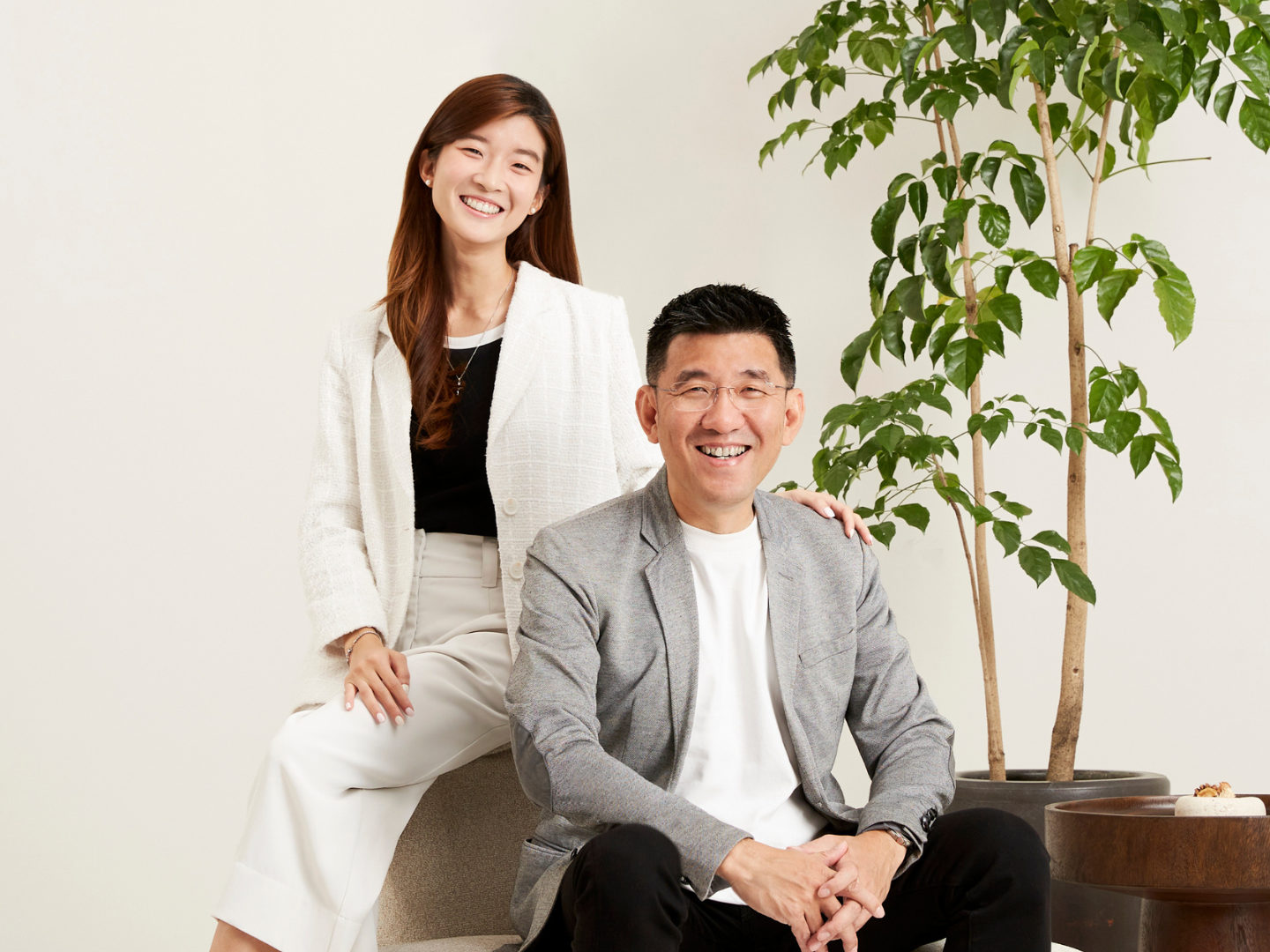
San Wen (left) joined Feruni in 2024 as assistant manager of corporate social responsibility for Yayasan Feruni (Photo: SooPhye)
For a company that produces something as solid as tiles, Feruni Ceramiche has constructed its entire business philosophy upon change, disruption and breaking the mould. Those who have never had to pick out surfaces for a home project might be surprised to find out it is a proudly Malaysian brand established by Datuk Ngei Chee Chau (better known as CC), with the intention of challenging industry norms and questioning what a tile retailer can be.
“When we started in 2010, the industry was quite set. Everyone was doing the same thing again and again. With Feruni, we asked ourselves, ‘What are the things we can do differently, from our showrooms to products?’” the managing director says. On top of its bold artistic collaborations and mission to refine the customer experience, the corporation is also making great strides in social impact through its CSR arm, Yayasan Feruni, now headed by CC’s daughter San Wen. Its flagship programme Feruni Happiness Homes transforms the physical environment and emotional well-being of underserved children while setting up an aspirational model to uplift the market as a whole.
How do you sustain a successful business and inspire all stakeholders while learning from each generation? The family duo discuss the creative soul that drives Feruni, cultivating a culture of charity and what balancing their work and family relationships has taught them.
Building blocks
Long before daughter joined dad, a teenaged CC was helping his own tiler father rinse off dirtied mosaic fragments to be turned into whole slabs in a small attap shack on Jalan Peel, Kuala Lumpur. “In the 1980s, [my dad] would ride his motorbike out every day to collect cartons of these leftover pieces that had been loosened by rain from job sites. He would put them into this makeshift swimming pool at our house, and when it was filled, we would wash, reform them and apply the paper backing to resell,” shares CC of his first work experience.
He later dropped out of secondary school, not having passed his Sijil Rendah Pelajaran, and opted to follow in his father’s footsteps, assisting with sales at their branches in Taman OUG and Seri Kembangan. “After a while, I was getting a bit bored with his business model — just sitting in a shop waiting for people to come in — which is why I decided to set out on my own [in 2001] to explore the world. I was quite young, so I wasn’t thinking of the risks so much — it was just exciting to travel and meet people.”
But when he felt that his subsequent import-and-distribute company seemed to have no future, CC decided establishing his personal brand would enable him to truly stand out from competitors. Thus, Feruni came to fruition, becoming one of the first companies in Malaysia to make and sell its own tiles.
“Everyone asked, ‘Can survive ah?’ People were saying we would close down within a year,” he chuckles. But CC was nothing if not full of conviction: among his resolutions were doing away with negotiation tactics by setting fixed prices, as well as offering unusual tessellating designs via Feruni’s iconic iShapes collection so consumers could truly customise their projects.
1.png
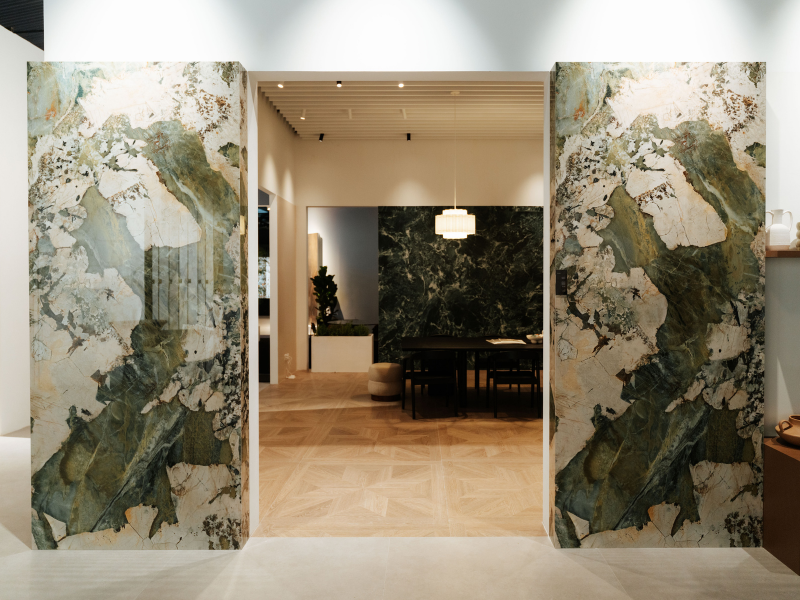
“We have also set up our stores in a way where people can visualise how it will look in their homes,” he says, referring to the recently refurbished Feruni Retail Store in Petaling Jaya which features several nooks modelled to showcase different tile types across certain settings. CC even brought a Nespresso machine back from his trip to Europe in 2011 to serve customers coffee, since the perusal and purchase process can be time-consuming. “We wanted to make something that challenges expectations. That’s why it’s called Feruni — ‘for unity’ and ‘for uniqueness’,” he reveals, noting they swapped an “o” for “e” since “Foruni” did not have the same ring to it.
Beyond customer-facing changes, the company has also made a point to address more deeply rooted issues within the construction world, where CC says underhanded practices tend to get treated as typical or even a formality. When it comes to upholding respectable business practices, he is not afraid to admit where he has faltered in the past. “I was not always running my business this transparently, and it made me constantly worried,” he states plainly of his previous venture. “One morning in 2008, some people in uniform showed up to raid our office. It was something of a breaking point for me — I had depression and anxiety, and could barely function.
“I had to ask myself what I really wanted in life: was it to make money at the cost of peace? Looking back, I think part of why operating [Feruni] based on transparency and honesty is so important to me is that it means I don’t need to worry. I know there are people around me who can help and work together to the benefit of ourselves, our families and customers. Our success challenges the belief that such toxic actions are necessary.”
Drawing inspiration
4.png
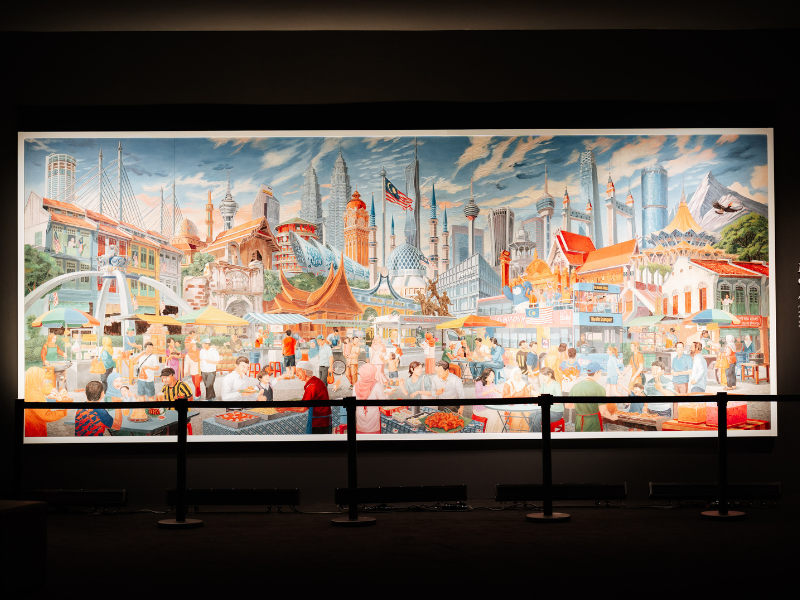
The eternal quest to keep things fresh is often the bane of the trends-driven design world, but Feruni finds its solution in constant interdisciplinary collaboration. CC explains, “Having done this for so long, it can be very hard to think outside of the box. This is a key reason we team up with various creatives and how we came up with our tagline, ‘Where every tile is a work of art’.”
Beginning with the Mandi Bunga collection with Lisette Scheers of Nala Designs two years ago, the partnerships are one of Feruni’s attempts to spark new ideas and think beyond how the company has been operating, giving new dimension to its work.
“Our products function as a platform to present our traditional art forms to the world using an alternative material. As an entrepreneur, I want to think not only about making money, but spotlighting extraordinary Malaysian talent, especially since heritage and culture are so important to our country.”
Last year, Feruni tapped Novak Batik’s Farah Mohan to create the Tutur Alam series, a batik-themed rendition of the Malay folk tale Bangau Oh Bangau that incorporates delicate and whimsical natural elements. It also worked with creative brand Loka Made on Mosaic of Harmony, a carved tile mural incorporating multicultural motifs that has been recognised by the Malaysia Book Of Records as the largest of its kind in the nation. “Hopefully, we can keep these collaborations going annually for people to anticipate, much like a regular exhibition,” says San Wen.
CC remarks, “Those who want to work with us see us as a player with whom they can elevate their creations.” Ever the visionary, he says this approach means more than just revolutionising their own industry. “I have friends who tell me, ‘If you can turn something as boring as tiles into a creative thing, surely I can do something even better with my own business’. To which I say, that is why I’m doing this! This is the shift in mindset we want to create, to breathe excitement into all the different types of businesses and uplift ourselves as a country instead of sticking to the status quo.”
Building the future
2.png
In 2024, San Wen went from “just the daughter of the guy who runs the company” to assistant manager of corporate social responsibility for Yayasan Feruni. “Running a foundation is something I personally feel committed to, so my dad has been quite smart in allowing me to be part of it,” says the University of Warwick graduate.
Feruni has been consistently donating 10% of its profits towards charitable projects since its founding, as well as dabbling in several one-off efforts including the Feruni Tiling Academy, all of which was handled by volunteers, says San Wen. “I was brought in to bring a bit more structure to the programmes we had and grow the community arm, to make it both a sustainable long-term initiative and rally other industry players to join us.”
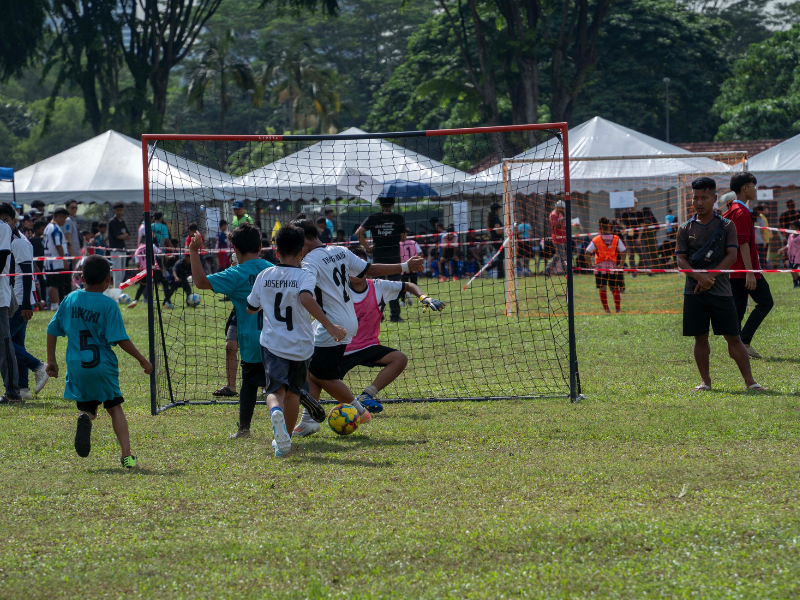
Following a major restructuring, the brand is now focusing its resources solely on the Happiness Homes project to provide holistic support and lasting impact with positive ripple effects. “There are children out there who feel unwanted or unworthy, but we believe everyone is a masterpiece, and we all have the potential to thrive. We decided to pioneer a transformation programme through art and creativity.”
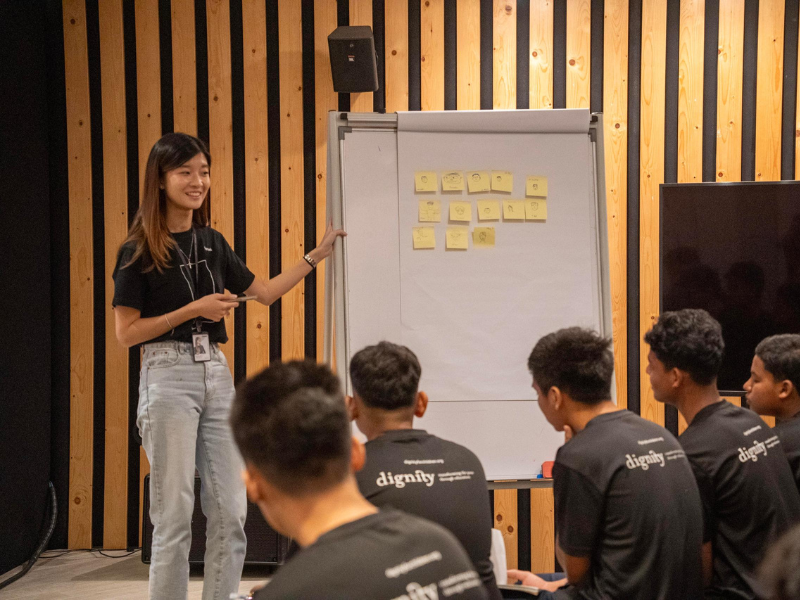
The initiative, still in its pilot phase, functions on two levels: first, the physical renovation and beautification of children’s homes; second, a series of workshops to nurture learning and well-being. The latter includes art classes and industry exposure sessions to introduce older kids to creative career paths, while an entrepreneurial track fosters business skills and gives them a platform to present their work. It also gives those interested in architecture or design-related degrees a chance to further their education.
body_pics_2.png
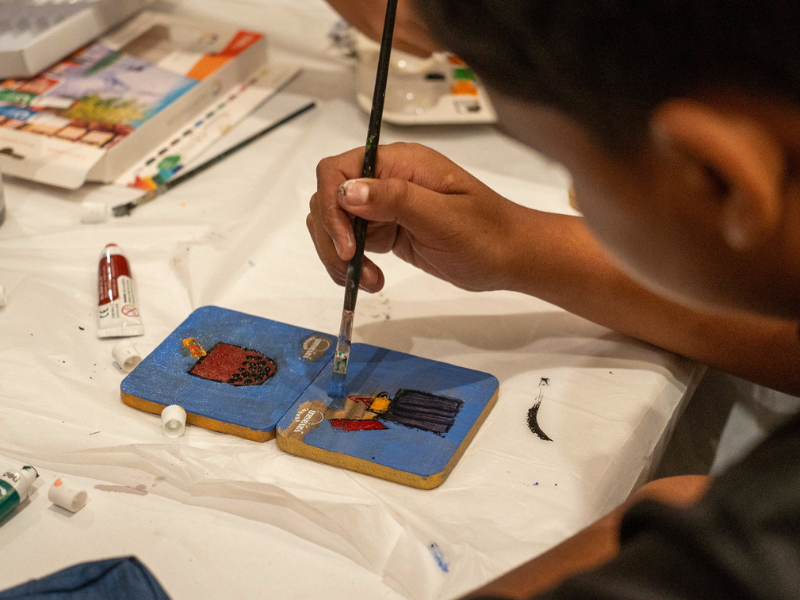
“By guiding and empowering these kids who might want to become architects or interior designers, they actually feed into the future of our field. Previously, we tried to juggle many different things like tree plantings or small entrepreneurial projects, but we felt it’d be better to take away those distractions and focus on something that can journey meaningfully with them while uplifting our industry as a whole.”
Situating the project as a prime opportunity for individuals and other companies to get involved is also a crucial part of maintaining operations. “For each of the pillars we’re piloting — renovations, school holiday programmes, enterprise campaigns — we’ve gotten a lot of responses from people who are very willing to partner with us. It’s quite heart-warming because we know we can’t do all these things alone, so we want to gather as many people as possible,” San Wen explains.
The approach is curated to allow interested parties to come in and get involved in the capacity most accessible to them, therefore greatly boosting the support Happiness Homes is able to receive. CC notes, “We want to reach out to our end users, who might wish to engage in social outreach but do not know how. We’re very clear that they can come in as full- or part-time sponsors. Individuals can solely support the educational or design portions, or even just donate.” As with their artist collaborations, he wishes to create a CSR model that can be easily adopted by other corporations, therefore inciting a wider calling to do good.
Looking inward, both CC and San Wen articulate the importance of cultivating an attitude of charitability within the Ferunians (as the staff are affectionately known) themselves. Volunteering opportunities and incentives like extra leave days to anyone who participates in charity programmes beyond the workplace imbue community-building values, and a special fund for B40 employees means they can be well taken care of should medical or financial emergencies arise.
Family matters
3.png
It is naturally hard to miss the parallel between CC joining his father’s enterprise and San Wen taking up her role in the foundation. CC likens the comparison to a mirror. “Frankly speaking, I’m still learning how we can do better in terms of managing our relationship while allowing her to grow as an individual. We’re figuring out how to mutually understand why we do what we do.”
Asked if working together has changed their relationship, San Wen laughs, “It was a bit hard to adjust. Like, how do I separate feedback given by my boss versus my father?”
Mum was adamant about setting a physical divide between house and office though: “I don’t call him dad at work, but once we reach home and he steps through the door, he’s dad again.” The two agree that sharing a workplace has given them an insight into each other’s thought processes: CC sees how his daughter’s educational background makes her an efficient problem solver, while San Wen feels humbled by her father’s experience in balancing profit and purpose.
But even with the second generation joining the fold, neither of them necessarily consider Feruni a conventional “family company”. “From our perspective, this is a business we are stewarding, as opposed to something we own as a family, and that has a lot to do with our faith. The idea is that all the resources, people and funds we have are for us to watch over in a way that is full of love, grace and excellence,” affirms San Wen.
Likewise, CC says, “To me, what matters is that it is overseen by someone who believes in what we do and that the corporation can touch lives. Running a company in a sustainable manner is already not an easy job, but on top of that, to inspire your customers and enrich the community... You really need to have a calling to do this.”
As Feruni enters its 16th year, CC emphasises it is the spirit of helping others that drives all its efforts. “The numbers and all, are not a big thing to me. It always goes back to how we can help people improve themselves. I really look forward to bringing our ideas to other countries — maybe with an international expansion,” he adds keenly.
Meanwhile, San Wen is interested in rising above conventional ways of giving and turning the foundation into a natural part of the Feruni lifestyle. “I’ve always believed we are more than just a business selling tiles. We want to chase all these positive effects to make the world a better place — as clichéd as that sounds!”
This article first appeared on Jan 5, 2026 in The Edge Malaysia.