
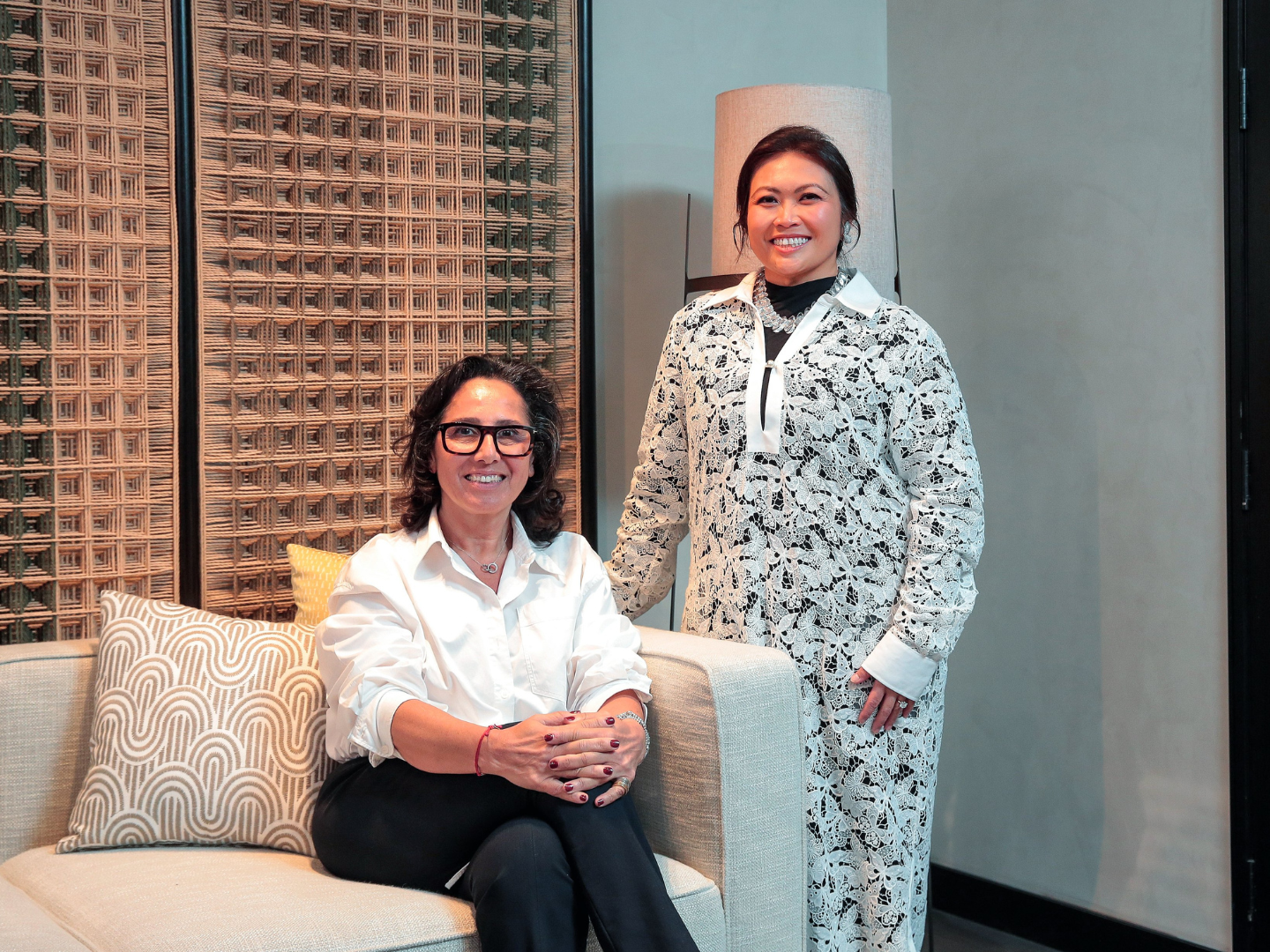
Maryam Meddin (left) of The Soke and The Kuaya founder Siti Hajar Onn (All photos: Zahid Izzani/ The Edge)
Before psychological well-being entered the mainstream lexicon, distress hid behind softer synonyms such as pressure, anxiety and fatigue. Burnout, which continued to climb the occupational ladder, was seen as a badge of overexertion rather than a cry for help. Consequently, people pressed on, continuing to work and function without realising what they harboured even had a name. But, awareness often comes from the outside looking in. For Siti Hajar Onn, that moment arrived during Covid-19, when a prolonged silence prompted a friend to reach out.
That acquaintance was Maryam Meddin, the founder of The Soke — a London-based private mental healthcare centre established in 2020 — which Siti had invested in with her husband Liam Sloane. “She checked in on me and said I was displaying classic symptoms of depression. I couldn’t quite believe it because I didn’t feel doom and gloom or deeply sad. I wasn’t aware of what I was going through. So Maryam arranged a therapy session for me, and I discovered that seeing a professional didn’t need to feel clinical,” recalls Siti.
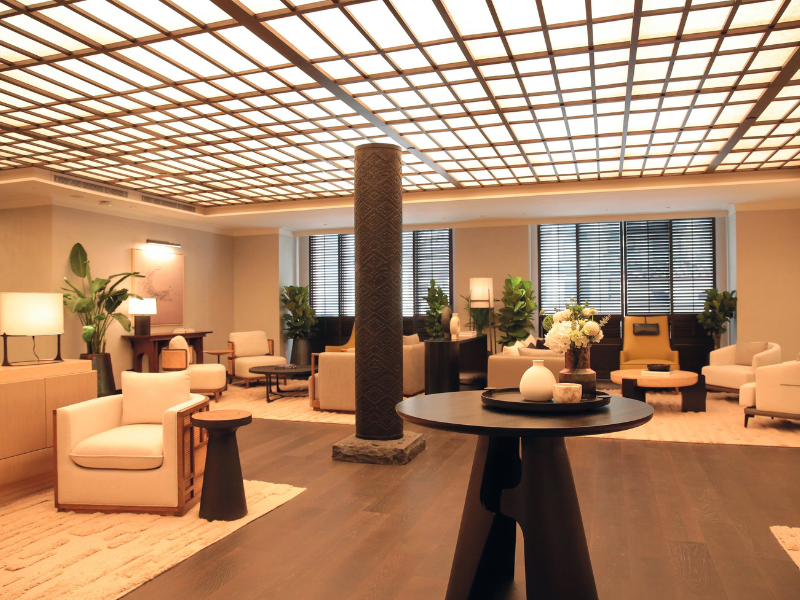
That personal turning point planted a seed, particularly back home in Malaysia, where discourse around mental health remains cautious and avenues of support are not always visible. Acting on that conviction, Siti established The Kuaya, which opened its doors last month on the sixth floor of Faber Imperial Court in Kuala Lumpur. Developed in association with The Soke — rated “Outstanding” by the Care Quality Commission UK — the space moves away from the language and look of crisis. Conceived to feel more like a curated residence or hotel reception than a traditional clinic, the environment draws on Siti’s family background in hospitality, creating a gentler encounter for walk-ins and making the first step less daunting.
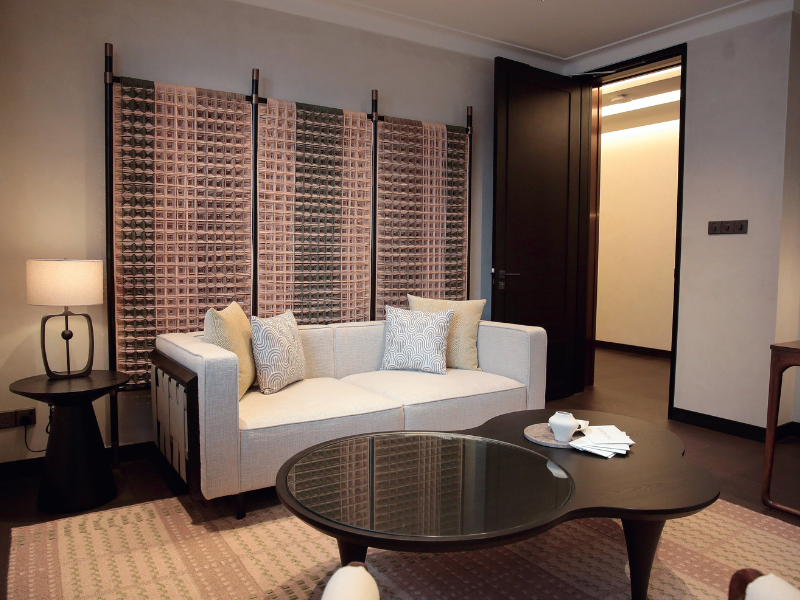
Conceptualised by interior designer Tegan Kajewski, whose portfolio includes the Waldorf Astoria Kuala Lumpur, the calm refuge is layered with subtle nods to Malaysia’s cultural heritage. The kawung pattern — defined by intersecting circles and squares that symbolise togetherness — appears at thresholds and points of transition. In the middle of the arrival lounge stands the tiang seri or mother column, a reference to the heart of a traditional Malay home that gestures towards groundedness and protection. Contemporary interpretations of songket motifs are threaded into textiles and bespoke screens, framing the 14 therapy rooms as well as five individual pods where clients can unwind or collect themselves after a session.
body_pics.png
Even the centre’s name was chosen with intention. Maryam was keen to avoid labels that carry assumptions or emotional weight. Hence, The Soke is derived from a portmanteau of its place of origin, South Kensington. The Kuaya follows the same logic, adapting it locally by echoing Kuala Lumpur while also reading as an open-ended acronym for youth and adult. The ambiguity is deliberate, intended to spark curiosity and prompt people to seek it out online.
What, then, can first-timers to The Kuaya, modelled after its UK counterpart, expect? Maryam explains, “When someone gets in touch and says, ‘I’m not feeling myself’, our client services team starts by gathering context — a form of triage — around what has been happening in their life or what feels off. From there, we can determine if they might benefit most from a psychotherapist, psychologist or a coach. Callers sometimes begin by asking whether we accept a particular insurance, which we usually don’t. But we never let the journey end there. Anyone who has found the courage to pick up the phone deserves to come away with some answers.”
Behind the scenes, a collaborative approach guides the next step. At The Kuaya, care is delivered through a multidisciplinary team, allowing perspectives to evolve as needs become clearer. A conversation that begins with a therapist may, for instance, lead to a recommendation for further assessment — whether that involves neurodevelopmental evaluation or input from another specialist — without requiring the individual to navigate multiple external providers on their own. Working within a shared framework allows decisions to be made collectively, preserving continuity. The focus remains on the person, with provision delivered in one place rather than scattered across different appointments. An initial cohort of eight practitioners has been assembled, including clinical psychologist Ashwin Thind, who specialises in substance use, behavioural addictions and trauma; counsellor and hypnotherapist Joyce Hue; senior consultant child and adolescent psychiatrist Dr Norharlina Bahar; as well as Dr Siti Nordiana Dollah, whose work focuses on military and community practice.
“One thing we do differently here is that we don’t dispense medication. It’s not something we want positioned as a first step. There’s also a concerted effort to ensure practitioners are never incentivised to do anything other than look after the patient’s best interests, so clients don’t feel there’s an ulterior motive. The objective isn’t for someone to stay longer than necessary; it’s to assist them in reaching a point where they can go and live their life, rather than be in therapy forever,” says Maryam.
body_pics_1.png
That said, approaches that encourage emotional expression can feel threatening in societies where baring one’s feelings is perceived as shameful. Even those celebrated for extraordinary talent, such as athletes and artists, often want to be seen as people first, without their weaknesses diminishing their humanity.
“These attitudes could also be generational,” admits Siti. “Many from the older generation remain hesitant or cynical about the topic. My father, for example, is one of them. In his opinion, needing to see or speak to someone about your mental health means you’re already crazy — in his own words. But family is your immediate support system so you shouldn’t need to bury your soul.”
Maryam, on the other hand, believes that the fight is no longer about dismantling stigma but about making emotional awareness part of everyday life.
“We want looking after yourself to feel like a lifestyle choice,” she asserts. “One of the biggest misconceptions about therapy is that the therapist fixes you. In reality, it’s much more about holding up a mirror. There’s still this stereotypical image of an expert sitting in silence, saying nothing, and charging a hundred dollars for it. But silence can be incredibly powerful because sometimes you hear yourself speak and realise things don’t quite add up.
“Therapy has also been turned into something of a caricature. People lament that you go in to complain about a terrible boss and end up being asked about your childhood. However, that’s not random. You can’t change your boss’ behaviour but how you respond is often influenced by much earlier experiences. Starting there helps a therapist understand the reason you responded in a certain way or why these patterns continue to surface.”
If there is a broader lesson to be drawn, it is that mental health cannot be understood in isolation. While struggles are often experienced in private, they are shaped by the surroundings people move through — by workplaces, families, teams and institutions that either make room for vulnerability or quietly suppress it. As Maryam argues, seeking professional aid should not simply be normalised but made commonplace.
“It’s absurd that we spend thousands of pounds or ringgit on gym memberships, beauty routines and tanning beds, yet hesitate to invest annually in what’s happening in our minds. Ultimately, if your head is not in the right place, everything else becomes meaningless.”
This article first appeared on Feb 16, 2026 in The Edge Malaysia.