

Papi relocated to Asia in 2022, seeking to explore the potential to grow pickleball in the region (Photo: Sam Fong/The Edge)
The 1960s was a sorrowful period in America, marked by the assassination of its 35th president John F Kennedy on Nov 22, 1963, and the escalation of the Vietnam War, with the start of Operation Rolling Thunder and increased troop deployments in 1965.
But, conversely, the world of sports thrived in this tumultuous time as it provided an avenue of escapism, distracting people from the traumatic events, so much so that author Miles Coverdale Jr declared the 1960s as “the greatest decade in sports history”.
Baseball, basketball, football and golf became popular pastimes. There was also increased interest in the Olympics as well as track and field events. While these activities were embraced by young people across the country, a new fun diversion was being invented by three friends in the summer of 1965.
Washington congressman Joel Pritchard, businessman Bill Bell and naval officer Barney McCallum had gathered a hotchpotch of equipment to create a game for their children who were idling around the house. Using a badminton court, ping-pong paddles and a perforated plastic ball known as a Wiffle ball, they developed a sport that combined elements of table tennis, badminton and tennis.
Considered a contemporary game, pickleball has seen steady growth in the US. Due to its casual and family-friendly nature, however, a proper rating system was never set in place to help with player evaluations.
Jan Papi, founder of Pickleball Global and the World Pickleball Championship series, saw an opportunity to address this gap.
Steady beginning
store.jpg

Born and raised in Czechoslovakia, Papi left his birthplace for Canada when the nation was dissolved into two countries (the Czech and Slovak Republics) in 1992. He then migrated to Naples, Florida, where he bought and ran a tennis shop for 20 years.
The 64-year-old was introduced to pickleball in 2012 on the opening day of his second outlet in Florida. “Somebody from the country club, located right across, came to ask if I would want to carry pickleball paddles. At this point, I had never heard of pickleball.”
He played tennis and nurtured his seven children to get into the game as well. Naturally, he had no idea about this relatively modern sport. Not one to shy away from challenges and new experiences, though, he agreed to sell pickleball paddles at his shop. As it turned out, for the first five years, the address became the only go-to for the sport’s equipment in the state. “People would travel up to 200km to buy paddles at our shop. It was a golden period for us,” he recalls.
In 2017, Papi decided to renovate the store to include an indoor pickleball court, offering a communal area for residents nearby to enjoy the game comfortably. By now, he was well acquainted with both tennis and pickleball.
“My kids played tennis, and they competed at the junior level as well as pro. One thing we saw in tennis, which we did not see in pickleball, was a rating system,” he says. “In the US at the time, people were playing, playing and playing, but there was no outcome or final measurement that could compare players. So in 2019, we developed the Global Pickleball Ranking (GPR).”
lads.jpg

The scale became a major breakthrough for him as it led to the establishment of the World Pickleball Championship. Dedicated to inclusivity and advancement of the sport, WPC is a movement that aims to bring together players of various skill levels, ages and backgrounds. It focuses on creating opportunities for everyone, from beginners to professionals, supported by a passionate international community.
“Our ranking is based on age because we believe a 60-year-old cannot compete with a 27-year-old. If I want to succeed, I need to play with people in my age group. I can be the best among the 60-year-olds, but I may not be the best in the 50+ age group, I will have less of a chance in 35+ and I’m nobody in 19+. This is especially important for players who want to keep a record of their progress and achievements,” Papi explains.
“If the system does not account for age, among 1,000 participants, there will only be one victor. But if you have categories like this, you can have four winners. A 37-year-old can be the best in the 35+ category. How would that make you feel? It would be really nice, surely.
“That’s the motivation. We want players to not only enjoy playing, but competing as well. They need to be recognised for what they do. They may be rewarded with medals and money, but most importantly, they want to know how they compare with other participants.”
The first two tournaments were held in the US prior to the Covid-19 outbreak. “Before the pandemic, I lived in America and all my activities were organised there. But during Covid, I realised I was missing so much of the world. I believed that Asia was going to be the next pickleball powerhouse.” In 2022, he decided to relocate to another continent, this time to explore the potential to grow pickleball in Asia. Since then, he has been living in Bali, Indonesia, and travelling across the region to bring WPC to as many countries as possible.
Positive growth
body_pics.jpg
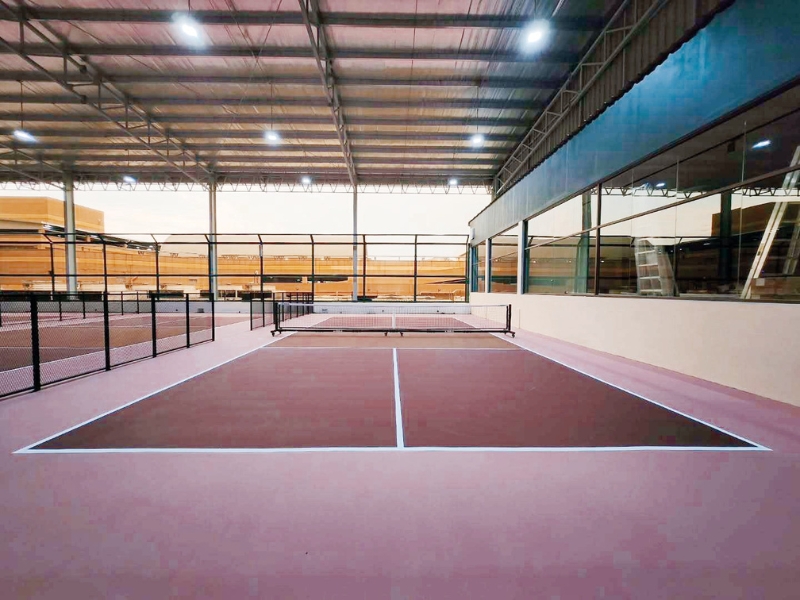
If you are not one of those who devote their weekend mornings to an hour session of pickleball, you will surely come across social media acquaintances who indulge in this multigenerational sport with family and friends. On a professional level, it serves as a networking event, providing a platform for company representatives to spend time with clients and close deals in a more casual setting.
Therefore, it is not an exaggeration to conclude that the game has a solid presence in Malaysia, as evidenced by the burgeoning market for pickleball products and facilities, especially in the Klang Valley.
As an industry expert, Papi attests to this healthy development in the country. “In Bali, the growth of a sport relies heavily on businesses to back it up and give it exposure. And that is what Malaysia is doing fantastically because there are so many entrepreneurs building properties and spaces to stir up interest among the public,” he observes.
“Unfortunately, in Indonesia, where pickleball is probably six to seven years old, it is perceived as a cheap sport. It was originally spread through teachers and adopted as a sport in school. Sadly, it never cracked into the community. Nobody is investing in setting up places like these.”
He recalls the game being abominated in the US when it began to gain ground in the country. “The US Tennis Association hated pickleball. They wanted to squash it because they felt it was a competition. So for a few years, my store in Florida was the only one that sold pickleball equipment because [the organisation] was completely ignoring the sport. But after some time, USTA realised that they could go against the stream, but they could never stop the stream.”
This resistance is rooted in the similarity found in both games, which are played on a rectangular court with a net, incorporate groundstrokes and volleys, and have a combination of power and control. “There are features of tennis in pickleball. So tennis players can get into the latter very easily, at least singles, because they can use the same techniques. Doubles is a little different,” he says.
“With pickleball, the learning curve is short. Within one week, you can compete. With tennis, you have to train for seven, eight years to have a meaningful match. The fact that it is a social game, easy to learn and start competing is something that draws people in. That’s why USTA was afraid that they would lose many of their players. Eventually, they had to acknowledge the sport.”
ceremoney.jpg

Its positive growth in Malaysia recently allowed the country to be the host for the World Pickleball Championship Asia Grand Slam 2025 last month. It was the largest tournament in Asia, with over 1,500 participants from more than 20 countries in attendance.
Held at The Pickle Grounds in Petaling Jaya, it was officiated by Deputy Minister of Youth and Sports Adam Adli. “Pickleball is fast becoming one of the most exciting and inclusive sports in the world, especially among young people,” he said at the grand launch on July 15.
“We are proud that the Ministry of Youth and Sports, alongside key partners like the Ministry of Tourism, Arts and Culture, can play a part in supporting events like these that position Malaysia as a preferred destination for global sports tourism. This championship is a testament to our commitment to youth empowerment, sports tourism and Malaysia’s growing presence in the global sports arena.”
In conjunction with the WPC tournament, an inaugural Asia Pickleball Summit was conducted at One World Hotel for two days, where more than 500 attendees, 28 global speakers and representatives from 14 countries convened to discuss and map out the future of pickleball in Asia and beyond.
At the summit, Malaysia Pickleball Association has signed a memorandum of understanding with WPC. Under the MOU, MPA will certify and endorse the Global Pickleball Ranking and WPC Ranking as the official ranking system for local players. This framework will also serve as the primary selection criteria by MPA for identifying national representatives to compete under the Malaysian flag in international tournaments.
Made for everyone
guy.jpg

Pickleball is easy to start playing, says Papi. “That is the reason it is the fastest-growing sport in the world. Three generations can play meaningfully on one court. Grandma or grandfather, son and grandson can participate, and they can go all out while still having fun. There’s no other sport that allows you to do it like this.”
The value of camaraderie, which the sport was conceived upon, continues to be embraced by today’s players too. “The court is relatively small. When you play tennis, there’s just so much distance between players. With pickleball, most of the time, people are standing maybe three or four metres from each other, so they can talk while playing. It is very special from a social point of view and it’s becoming a sport for the pro, with real competitions in place.”
Now in his mid-sixties, Papi recognises the benefits of wielding the paddle among the elderly. He says those in his age group want to participate in a physical activity but do not want to be by themselves on a big tennis court. “When they have to bend their knees to pick up a ball from the ground, that itself is exercise. Without really noticing, they are doing something good for their body. It was reported that any racket sport — pickleball was on top of the list — can extend life expectancy by 10 years. So you get the benefit without exactly thinking about doing fitness.
“One thing about going to the gym, you are planning the workout to build muscle and in a way, you are torturing yourself, thinking: ‘I’m doing something for my body'. With pickleball, you pick a ball, play for one hour, and it will have the same effect on your body. Obviously, you need to have a good group of people who can accept your level to have fun. But once you find them, then you will surely fall in love [with the game].”
Papi expresses his confidence that the sport will be around for a long time and it is not just another trend. “The growth is exponential. As mentioned earlier, some parties tried to quash the sport, but they did not succeed. So that’s a blueprint for anybody else. Pickleball is not going away. It is here to stay and it’s up to people what they are going to do with it. Are they going to join or neglect? Everyone has free will, but I also think they would be missing out on so much fun in their lives.
“Many people say it gives them a second chance in life because they thought they could never enter a sport tournament in their forties or fifties, believing that their opportunity to compete had gone. I believe in second chances, and pickleball is that second chance for a lot of people.”
This article first appeared on Aug 4, 2025 in The Edge Malaysia.