
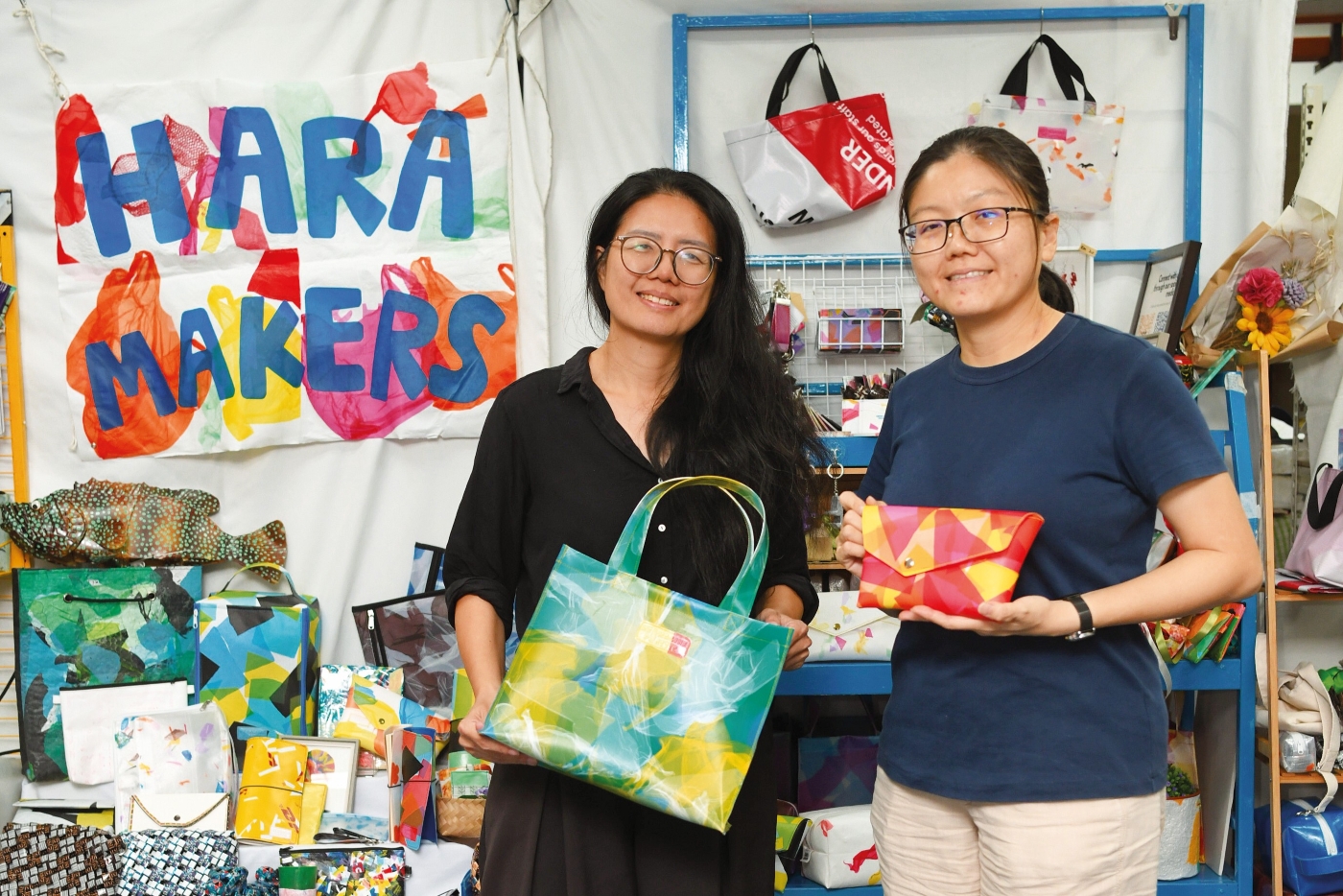
From left: Hung and Chee at their store in PJ Eco Recycling Plaza (All photos: Low Yen Yeing/The Edge)
At its heart, Hara Makers is all about community. Founded by Hung Bee Ling and Chee Lee Yoon, the social enterprise was established with the mission to empower the homeless community and underprivileged mothers through various programmes that largely revolve around the environment.
The idea to start Hara Makers emerged after the duo volunteered for Kedai Jalanan — a student-led initiative by Universiti Malaya — in downtown Kuala Lumpur while doing research for their university courses. “We studied history, and we engaged with the homeless to record their life story and look at the history of KL from their perspective. At that point, we were giving out food but also thinking about what else we could do to improve their livelihoods,” Hung says.
“We wanted to shift our tasks from providing sustenance and clothes into something more impactful like offering job opportunities.”
Chee says: “Before volunteering, our understanding of helping the homeless was limited to monetary donations and meal distributions. We thought that was the only way and did not consider what happened after that. Hara Makers was set up to address and solve the ‘What next?’”
whatsapp_image_2025-10-28_at_12.33.47_d0f14138.jpg
While the world shut down because of the Covid-19 pandemic, the duo rolled up their sleeves to come up with a plan to help those in need. “We applied for grants from different places and were awarded about US$3,000 from an NGO in Thailand, but we were still unsure just what or how much could be done in that period of uncertainty,” Hung says.
Following discussions with the homeless themselves, Hung and Chee decided to use the funds to buy plastic items collected by the group for RM5 per kg, which was 10 times higher than the market price. “It was low-hanging fruit since everyone had lots of plastic waste, and they didn’t need to go anywhere. It also helped ensure they cleaned up after themselves and their surrounding spaces.”
One problem was resolved before another quickly took its place. “After gathering the waste, we didn’t know what to do with it since we just continued to buy [plastic] to support the community. It was grant money after all; so, we could not simply distribute it, as there were requirements we needed to meet.”
Slowly, the partners began to research on how they could manage or repurpose the materials. “Otherwise, our homes would become a dumpsite. We looked for ideas from open-source initiatives like Precious Plastics to see whether the plastics could be melted and turned into coasters. We also tried to make bags but they didn’t come out well. Maybe it was the machine — although it’s not cheap — or our primitive techniques,” Chee says, laughing.
“Because of our background, we struggled to understand the world of plastics and how we could transform the waste into something useful again.”
hara_makers.jpg
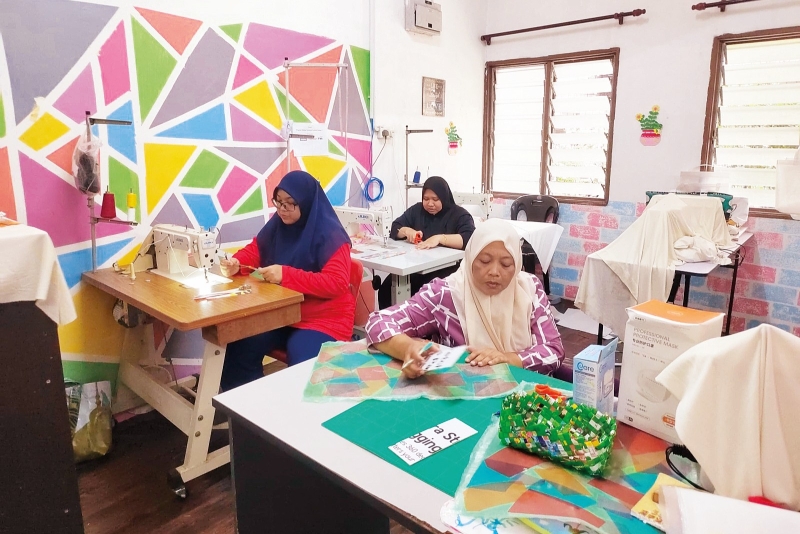
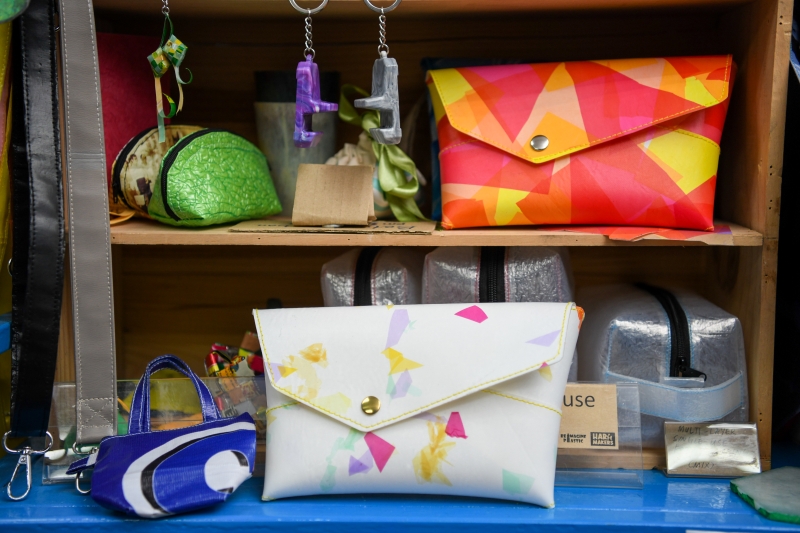
After countless experiments, they eventually discovered how to convert the material into fabric. This then allowed them to move on to their next endeavour, which was to work with women, especially mothers from low-income households. Hara Makers currently employs residents of PPR Lembah Subang 2 in Petaling Jaya to produce shopping bags and pouches.
The participants are guided through educational and vocational programmes, allowing them to gain recycling and upcycling knowledge, as well as get acquainted with the process — such as plastic collection, washing, fabric production and sewing — involved in transforming trash into treasure.
During the early physical lessons, the two found that it was difficult for people to segregate plastics according to categories. “Previously, we tried to explain the terms such as PET and PPO, but it was confusing. So, we ask them to separate according to brands like Gardenia or Mamee. This way, it is easy for them to understand. Whenever we want to make new products, we just tell them the materials needed by these labels.”
While the founders spent considerable time mastering the process, they are eager to show how simple it is to craft plastic sheets. “After collecting the waste, we need to wash it. Then we do the segregation, which involves several steps of separating single and multilayered plastics before sorting them into their types and colours. Then, they are cut and rearranged to form a pattern. Finally, heat and pressure are applied to bind the pieces together. Then, you can sew them into a bag.”
20251009_peo_hara_makers_25_lyy.jpg
Depending on their interest, skill or ability, the ladies can choose the task they wish to do or feel most comfortable engaging with. “We have a division of labour that can cater for everyone because you cannot force a person who doesn’t like to sew to sew,” says Chee.
In addition to creating everyday accessories, the team occasionally produces organic mosquito repellents made from food waste salvaged from wet markets.
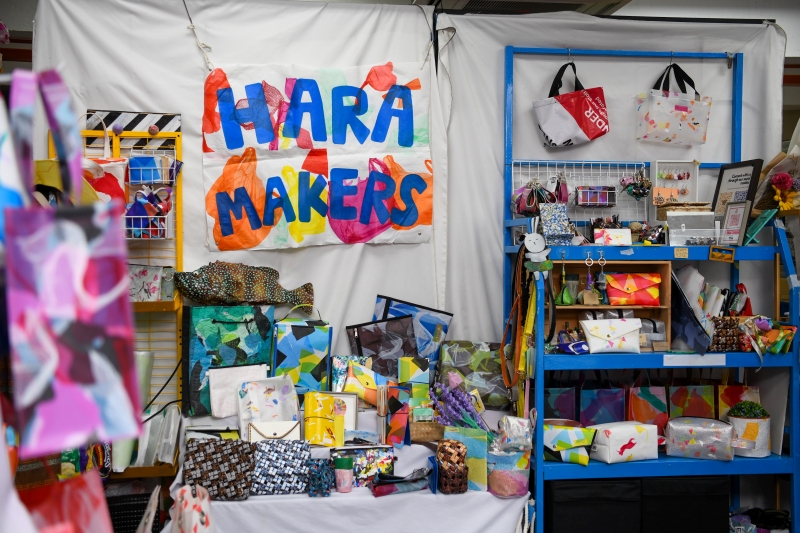
Hara Makers now has a physical space at the PJ Eco Recycling Plaza — an education and recycling complex set up by Jabatan Pengurusan Sisa Pepejal dan Pembersihan Awam under Majlis Bandaraya Petaling Jaya — alongside 14 other strategic partners, but much of their work is done from a small corner inside a hall at the PPR. This arrangement offers the mothers the opportunity to generate income while still being present for their children.
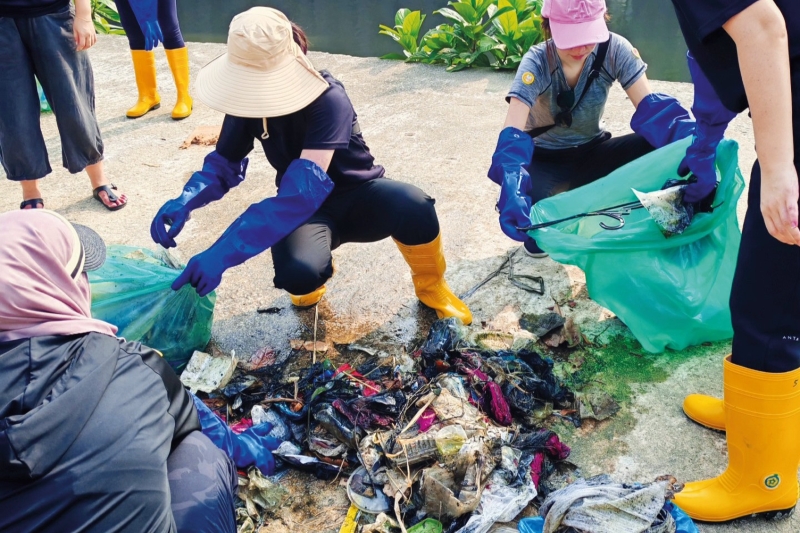
Aside from upskilling and empowering women, Hara Makers also launched a clean-up project to tackle river pollution. Their environmental initiatives, which began in the city centre, later extended to the suburban area of Kepong after they discovered a heap of garbage floating in Sungai Keroh — a river vital to the communities of Kepong, Selayang and Segambut. “We were shocked. What is happening to the environment and how come people are still littering nowadays?” Chee laments.
They then met up with tenants of nearby flats who were looking after the river. “It was inspiring because their homes are actually beside the river, which used to be a dumpsite. They took the initiative to clean up the area and build their own community garden. So, we joined them to learn more about the work as well,” Hung says.
20251009_peo_hara_makers_10_lyy.jpg
Before the ball got rolling, they followed the trail to see the real condition of the river. “We realised that the source came from FRIM [Forest Research Institute Malaysia], which was surprising because it is a place for leisure but polluted by trash left by visitors. We found a spot beside KTM Segambut where we could safely access the river for our clean-up work,” Chee says.
This initiative, organised every Saturday morning, runs on a voluntary basis and is often carried out by students and corporations. So far, the volunteers have removed nearly five tonnes of trash — from everyday objects such as diapers, sanitary pads, mattresses and a sofa to electronic devices like TVs, laptops and mobile phones. They have also come across industrial waste such as construction materials, tyres and bags of discarded clothes, which suggests the possibility of illegal dumping activities.
“The solution is to have multilayers of intervention. Regulation might help but we also need to do a lot of educating — many people are not afraid of fines because they can pay. If you are rich, settling a RM30,000 summons is nothing. So, we need to constantly raise awareness of the issue,” Hung says.
Chee chimes in: “The clean-up project is not really to solve the problem but educate the public about pollution and how we can segregate our waste before they can be recycled. We hope more people can volunteer so they can see for themselves the sad state of our environment.”
Their humble wish is simply for people to feel inspired to do something meaningful in their own community. “We really want the public to support us, but I hope they buy our products because they want to use them, not because they feel sympathy for us or the underprivileged groups we are working with,” Hung says.
This article first appeared on Nov 3, 2025 in The Edge Malaysia.