
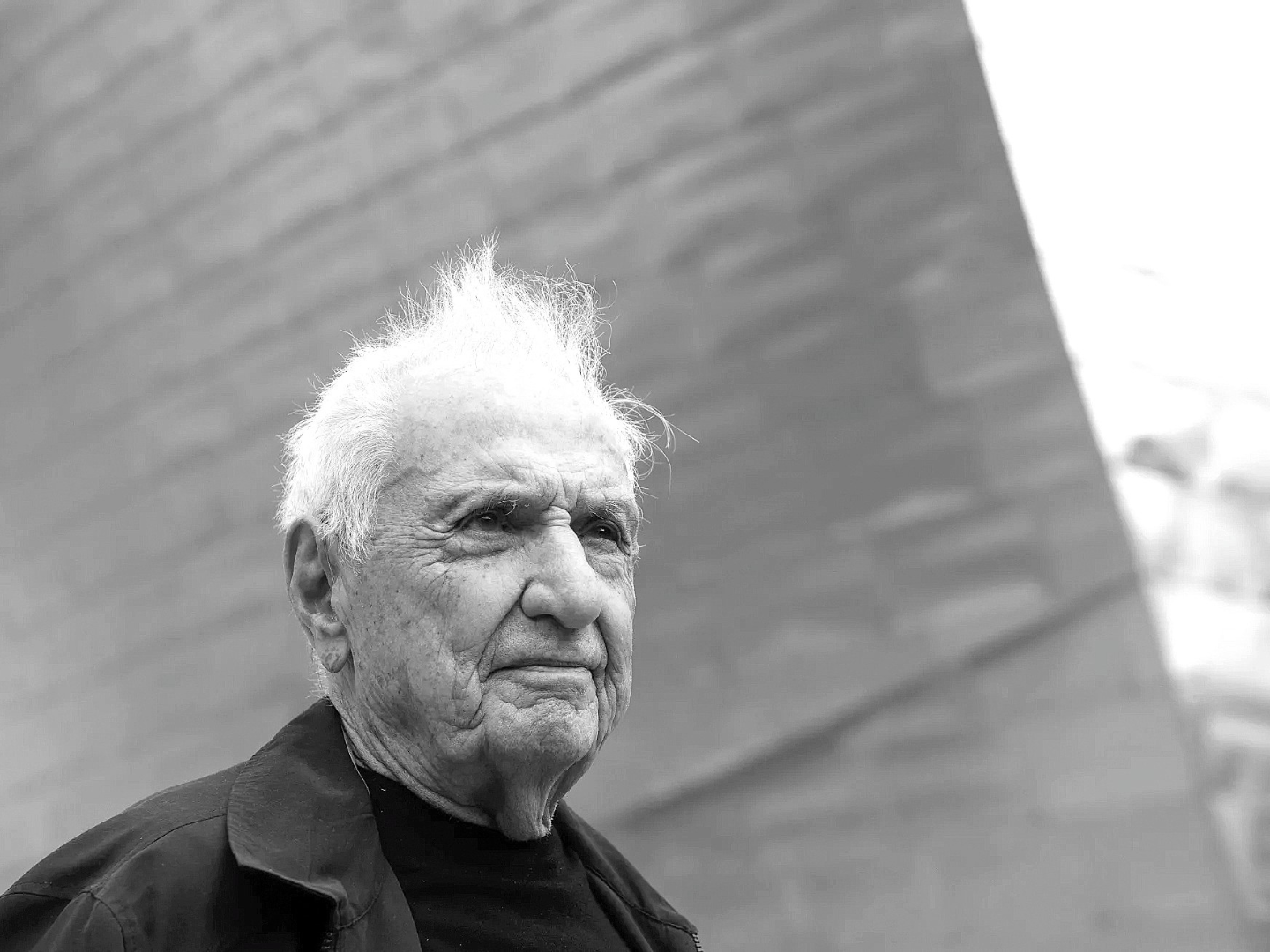
Love or loathe his buildings, he has more than earned his place among the legends of design (Photo: Bloomberg)
Even those unfamiliar with the world of architecture would probably have heard of Frank Gehry — or at least seen his works, from monumental buildings like the Fondation Louis Vuitton (covered in giant glass shells) in Paris to the Dr Chau Chak Wing Building, part of the University of Technology in Sydney, Australia (critics described it as a squashed brown paper bag) and, more recently, Prospect Place, a housing development (Gehry’s first in the UK) within London’s iconic and revitalised Battersea Power Station. It is nevertheless the Guggenheim Museum Bilbao in Spain that immortalised the Canadian-American as a “starchitect”, a term he hated as he considered it demeaning and derisive.
Gehry also dabbled in the world of luxury, designing jewellery for Tiffany & Co and watches for Louis Vuitton as well as flirted with popular culture by voicing himself in a 2005 episode of The Simpsons, in which Marge sends him a letter asking him to design a concert hall for Springfield. But to town planners and economists, it is, again, the Guggenheim Bilbao that propelled him into public consciousness as his design single-handedly lifted the Spanish city out of economic doldrums. But love or loathe his oddly shaped, fantastical buildings now found all over the world, no one can deny that Gehry has more than earned his place among the legends. And despite triggering a wave of copycats, all hoping a flashy, architecturally challenging building might spark similar waves of prosperity, it should be noted how Gehry’s now-famous Bilbao Effect was not planned for. In a 2021 interview with the highly influential online architecture and design magazine Dezeen, he famously admitted how he did not mean to change the city, saying: “I just meant to be part of it.”`
Prof Dr Jimmy Lim
Jimmy Lim Design
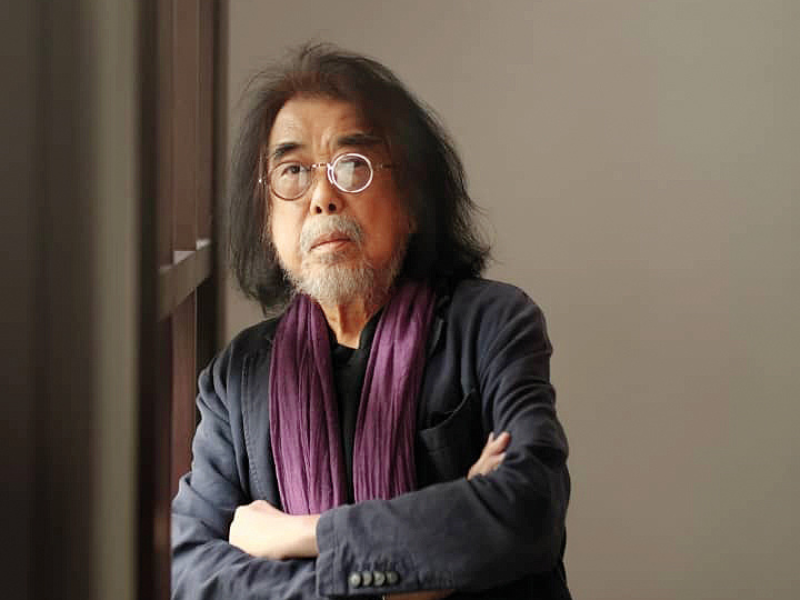
If I had to use one word to describe Frank Gehry’s work, it would be ‘unorthodox’. A certain museum, for example, was said to be inspired by the crumpling of a piece of paper. Would you describe that as genius or anything inspirational? Gehry’s designs are very difficult to build as they do not follow any geometrical form. Their shapes are whimsical and, therefore, expensive and prohibitive. Many of our architects are trained in the West, hence their natural gravitation towards Western-style architecture. But I feel this is on the decline already, given the geopolitical situation. It is only a matter of time we will have a great number of great Asian architects.
Dr Tan Loke Mun
DrTanLM Architect
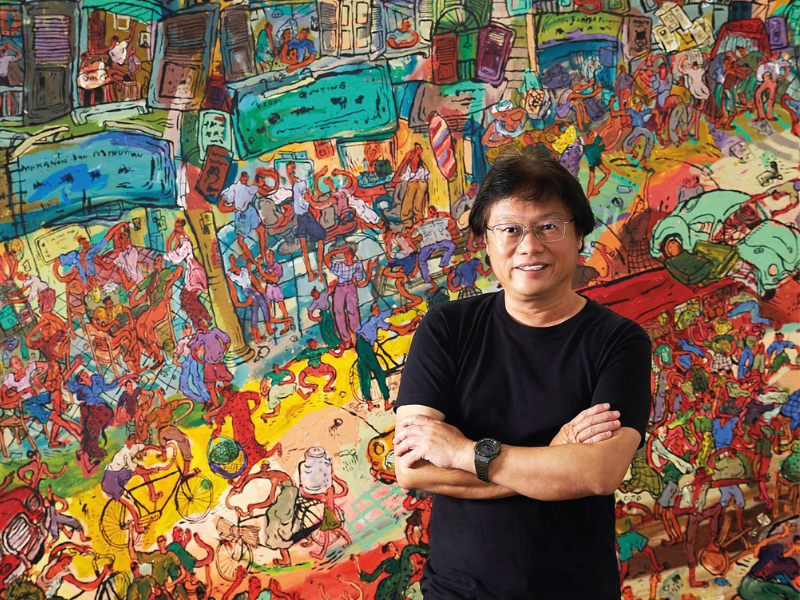
Frank Gehry, while in his sixties, captivated the world with the unveiling of the Guggenheim Museum in Bilbao, showing how architecture and one single building could transform and bring new life to what was once a dreary industrial city. This became known as the ‘Bilbao Effect’ and Gehry, in one fell swoop, took his craft to the level of art. When my eldest son Matthew decided that he too wanted to study architecture, I planned a family trip to Bilbao just so he could see Gehry’s work — and the corresponding influence it has (and the power of built spaces) — for himself.
Choo Gim Wah
Choo Gim Wah Architect
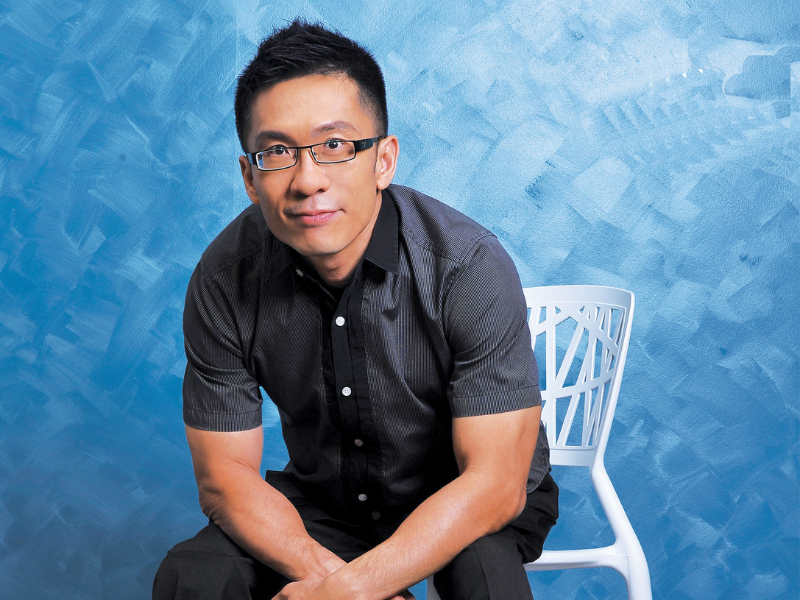
He was definitely a pioneer in the way he approached his work. Imagine, as an architect, doing the designs he did back in the early 1990s, without any kind of sophisticated design software. I remember he was working on a museum project in Ohio, the US. My lecturer’s firm then was also working on the architectural implementation team for it and shared how a minimum of 2,000 drawings was required. He also used architectural models and I had read about him breaking the components into pieces and bending them to the shape that he wanted, in order to experiment with form and space — much to the horror of his young assistants. But one thing about Frank Gehry was that he was always consistent with his design philosophy, whether in the US or anywhere else in the world. One look and you would know it is a Gehry building, no doubt.
David Mizan Hashim
Veritas Design Group
When I first met Frank Gehry back in 1983 at Harvard University, I didn’t know what to make of him. He had recently completed his ‘chain-link fence house’ renovation which caused such a furore among critics and was also really into fish mobile sculptures. Aside from that, he hadn’t really built that much. But he spoke convincingly about the future of architecture being one that ‘breaks out of the box’ and disrupts the rational orthogonality of modernist architecture. His stunning output over the last four-plus decades confirms that there is indeed a growing trend of design ideation, supported by digital and construction technology which presents a valid alternative to ‘the box’. It is left to be seen whether the future post-Gehry will continue to explore non-linear and parametric design. And, if in doing so, transcend the exclusivist, high-profile cultural projects, like museums and theatres (for which Gehry is so famous) and filter into more functional typologies, such as housing.
Rene Tan
RT+Q Architects Pte Ltd
From what I can see and understand of Frank Gehry’s works, I would say he liberated architecture from the constraints of dogma and academies. He clearly showed that buildings can take on freer forms and even have a sense of fun about them. His own house in Santa Monica, for example, shows that architecture can indeed have a lighter side and can be more incidental, incorporating elements of improvisation, just like jazz.
Edric Choo
O2 Design Atelier

Frank Gehry redefined architecture by proving that innovation is not a style but a spirit. He transformed metal into movement, cities into galleries and dreams into structures that breathe. His legacy endures in every bold line that challenges tradition and every creator brave enough to imagine more — just as he did.
Datuk Hajeedar Abdul Majid
Hajeedar and Associates Sdn Bhd

Frank Gehry’s iconic Guggenheim Museum in Bilbao, is the most appropriate example to showcase his global architectural legacy. The freeform flow of the external structure reflects the excitement his interior spaces created, introducing a new socio-economic impact and lasting identity for the city along with it. If I had to pick, this would surely be the most worthy lifetime testament to this extraordinary architect.
Lillian Tay
Veritas Design Group

Frank Gehry was fearless with his disregard and questioning of institutional and bureaucratic processes. One standout story I remember hearing of Gehry was where he simply crushed up paper with his hand, threw it on the table and declared that was what the building should look like! And the client agreed. True or false, he definitely had amazingly persuasive powers when it came to getting his fantastical designs built.
This article first appeared on Dec 15, 2025 in The Edge Malaysia.