
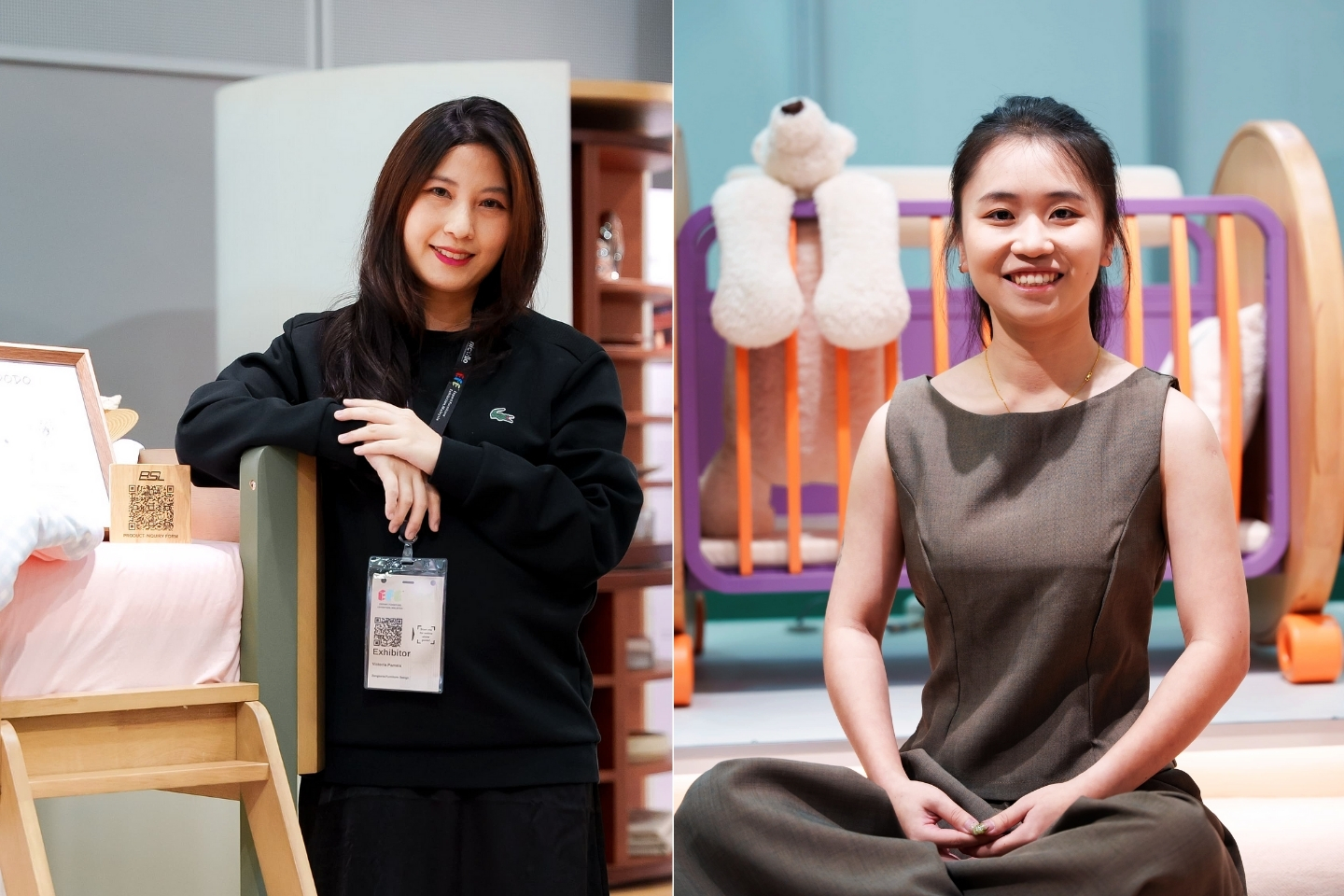
Yap's Dodo Bed and Chew's The Mighty Nest are among 24 other products that have been chosen for the 4th edition of the TIMB3R Design Incubator Programme (All photos: TIMB3R DIP)
Stylish and smart — that is the trend for children’s rooms today, notes furniture designer Victoria Pamela Yap Wei. Bulky, over-decorated beds are out. What is in are innovative pieces equipped with convenient storage, soft curves and calming colours.
Interior designer Skylar Chew Enn Qi agrees, saying children’s furniture that saves space and can evolve into practical items as the child grows serves the needs of young families today. As many live in compact urban homes, function, efficiency and adaptability are key.
Yap’s Dodo Bed and Chew’s The Mighty Nest are among 24 products that have been chosen for the TIMB3R Design Incubator Programme 4.0, which connects designers and manufacturers to conceptualise, design and develop creative timber furniture and products. Final results from collaborations will be showcased to potential buyers at events such as EFE (Export Furniture Exhibition), and RiX (REKA Interiors Exhibition).
The Malaysian Timber Council, Malaysian Furniture Council and Malaysian Institute of Interior Designers are behind this annual initiative, which specifies that at least 30% of the material used have to be timber. Imported parts and components are allowed, provided the end products are either made or finished in the country.
dodo_bed.jpg
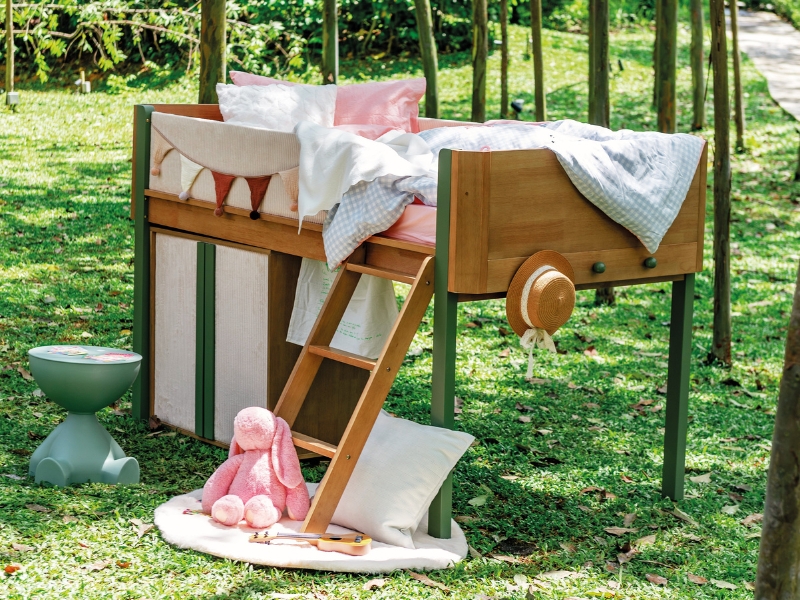
“Dodo” refers to the series’ multi-function, “like do, do, it’s doable”, says Yap. After becoming a mother, she realised the importance of safety in furniture for children. Storage space is a plus, as toys, books and clothes pile up over the years. Parents also care about design: Will what they buy now still fit the room and occupant over time?
A crucial step to staying relevant is to make things modular for flexibility, says Yap, founder of ZangToria Designs. Her loft-style Dodo Bed has a section for storage and a sanctuary where kids can play, read or just curl up and dream. Should another sibling need to share the room, the bed can be converted into a double decker and two can sleep as comfortably as one.
The idea to give children a cosy nook springs from Yap’s memories of climbing into an elevated hideaway when young. “It felt like my own little world and I wanted to recreate that same sense of wonder for kids. “Furniture can tell a lot of stories — for example, [Arne Jacobsen’s] Egg chair or even the pieces left behind by our grandparents.” It is this mix of nostalgia and modernity that makes it fun to design furniture, she thinks.
nest_1.jpg

Longevity in everyday objects is a concern for Chew, whose The Mighty Nest can be turned from baby cot into a study table or sofa that seats an adult and child. She likes to play with materials, textures and colours, the last especially because they bring energy, warmth and engaging playfulness that form an environment children are drawn to.
Still new in the industry, she joined the TIMB3R programme enticed by its purpose of turning designs into products. “We had discussions with manufacturers on how to make our ideas real. It takes about nine months to come up with a prototype, as there are lots of trials and tests,” she says, crediting a professional team for guidance on the different standard operating procedures for building children’s furniture, working with wood, as well as what ergonomics and flexibility involve.
nest_2_details.jpg
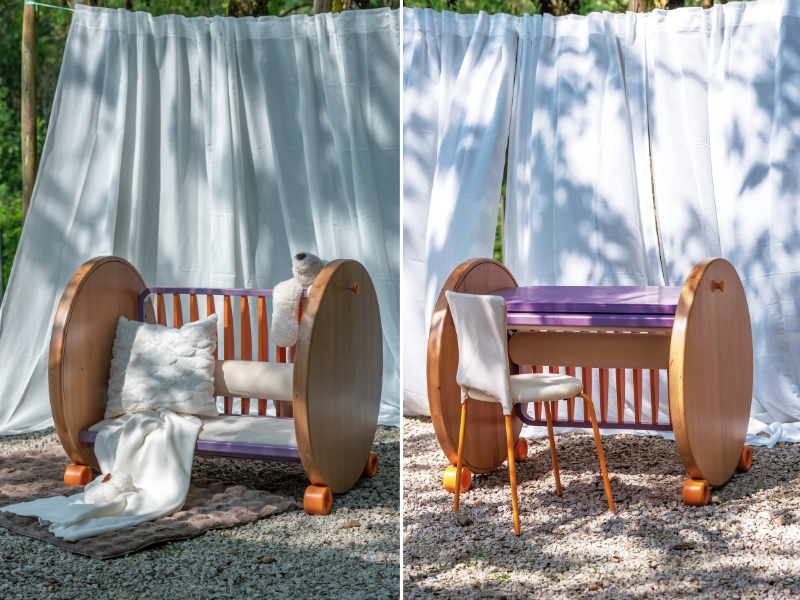
While Yap’s Dodo Bed is made from rubber wood, Chew uses beech sourced from Germany for her cots. She layers slabs of the wood for thickness and to strengthen The Mighty Nest’s structure — fitting for a product built to grow with its user.
This article first appeared in issue No. 116, Summer 2025 of Haven.