

The lifestyle hub was formerly Nan Chiau High School on Kim Yam Road in Singapore (All photos: Finbarr Fallon)
Once filled with the hum of morning roll calls and scratch of chalk on blackboards, the former Nan Chiau High School on Kim Yam Road in Singapore has been thoughtfully rejuvenated into a 20,156 sq m lifestyle destination in River Valley, faithfully preserving much of its initial form and intent. Education persists within its storied halls, now unfolding across the landscape of culture and community, where people of all ages come to unlearn, relearn and connect. “New Bahru” may sound redundant to a Malay speaker, but developer The Lo & Behold Group aims to foster a creative spirit that cheekily celebrates Singaporeans’ fondness for repeating words to emphasise meaning, like swee-swee (beautiful or excellent in Hokkien), play-play and jalan-jalan.
For over 80 years, 46 and 58 Kim Yam Road has witnessed the shifting tides in Singapore’s social and architectural history. Formerly a strategic headquarters for volunteer soldiers resisting enemy forces during the Japanese Occupation, and later a prestigious institution for young girls at a time when education for women was not yet a given, the site has long functioned as a vessel for progress — its walls have echoed with resilience, reform and reinvention.
07_new_bahru_-_architecture_detail_photographer_credit_finbarr_fallon_-_print.jpeg

Today, that narrative — especially in a booming metropolis where relatively young structures are routinely demolished or ripe for revamping — is not merely retained, it has been reactivated to empower a new generation to engage with its spaces and, by extension, its stories. To materialise this, The Lo & Behold Group assembled a cross-disciplinary team blending local expertise and global sensibilities, collaborating with London-based Singaporean creative consultant Sacha Leong of Nice Projects, architecture studio Farm, as well as renowned botanical design and landscaping studio This Humid House.
Originally designed by James Ferrie and Partners in 1969 (its eponymous founder having served as president of the Institute of Architects of Malaya from 1966 to 1968), the campus’ brutalist architecture — a stark departure from the more basic, modular schools built by the Public Works Department at the time — has been largely kept across its halls, classrooms, science labs and canteen. New additions were carefully integrated to ensure coherence with the building’s existing structural and stylistic language.
12_new_bahru_-_architecture_detail_photographer_credit_finbarr_fallon_-_print.jpeg

Key elements of Nan Chiau — many of which would have been overlooked or discarded in a more conventional overhaul — have been treated as valuable assets. The breezeblock façade, a hallmark of mid-century modernism in the tropics, was meticulously maintained, providing both visual appeal and passive ventilation. Barrel-vaulted arches above the hall, cascading concrete steps in the science labs and the distinctive U-shaped motifs crowning the pillars all remain intact. They are not held onto out of mere nostalgia, but as integral components that infuse a landmark, previously dedicated to academic instruction, with renewed clarity and energy.
The layout and spatial planning of New Bahru reimagine how people interact with their environment. The ex-garment factory on the first floor, now called The Factory, is dedicated to a rotation of events and pop-ups. The School Hall — once the beating heart of student life — has been reinterpreted as a venue for performances and exhibitions. Perhaps the most symbolic act of revival is the creation of a central Lawn, replacing a car park that covered the original running track and basketball courts in the 1970s. This green expanse, abutting the nation’s tallest communal slide conceived by award-winning playground specialist Playpoint, reshapes the traditional notion of a schoolyard from one of order and discipline into a fertile ground for discovery.
alma_house_finbarr_fallon_03.jpg
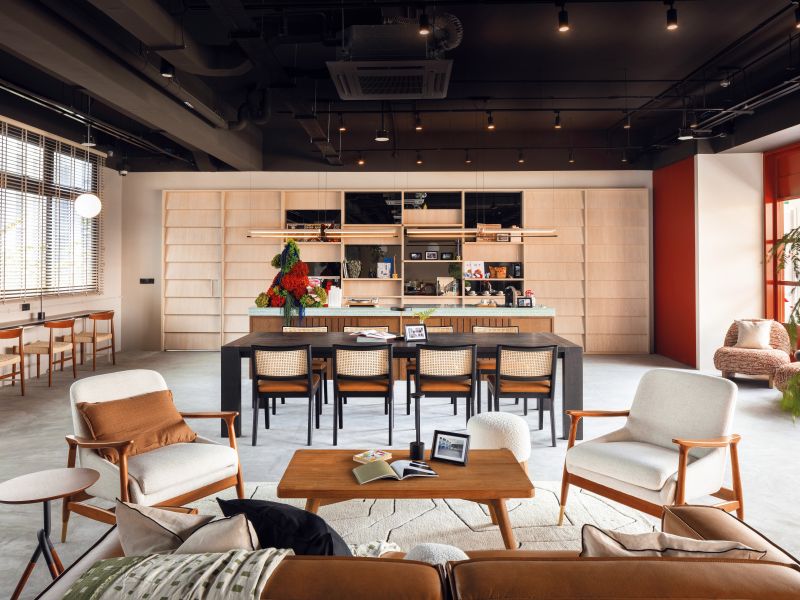
Leong envisioned the Lawn as a “shared living room” to bring people together, complete with seating and children’s play zone that evoke the iconic 1970s recreation hubs in Singapore’s public housing estates.
Launched in phases since June last year, New Bahru now showcases over 40 leading creative talents and businesses, spanning F&B, retail, wellness, entertainment and the arts. The development also introduces Alma House, a new 83-key serviced apartment concept fashioned from former classrooms. Whether you are a food enthusiast or a keen shopper, the creative cluster caters to diverse interests, including microbakery and granola expert Dearborn; lifestyle label Beyond The Vines (famously known for its viral Dumpling bag series); plant studio and ceramics purveyor soilboy; artisanal coffee roasters Morning; and Odem, a handcrafted makgeolli (Korean sparkling rice wine) bar.
space_tcc_rv_04.jpg
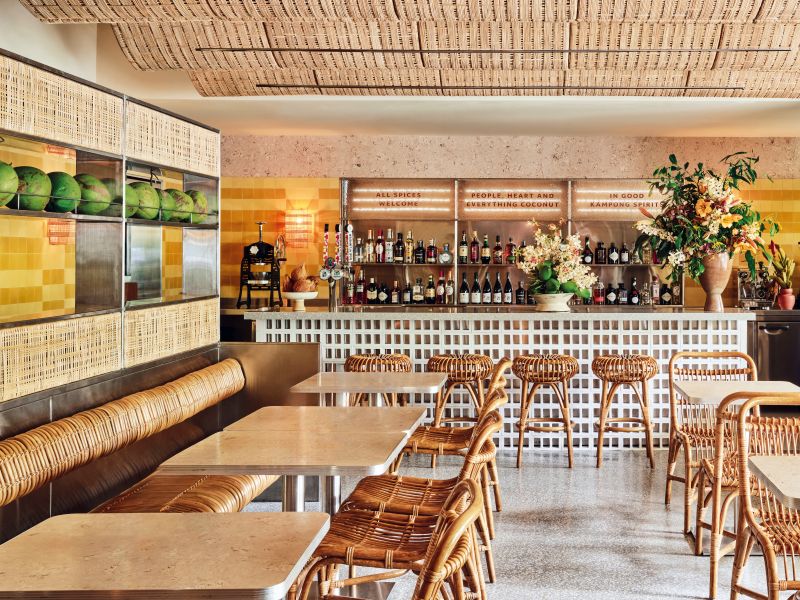
Tenants, too, have embraced Nan Chiau’s artistic attributes, weaving them into their identities. Modern Middle Eastern restaurant Artichoke and Sri Lankan dining spot Kotuwa have repurposed the distinctive jalousie windows and vintage wrought-iron grilles from the canteen, while the louvres have made their way into Alma House’s interior design. Leong even borrowed cues from the breeze blocks when he put together the newest outpost of The Coconut Club, a nasi lemak haunt that uses coconuts of Malaysia’s West African (MAWA) hybrid in Selangor and the kampung variety from Johor, both prized for their rich, creamy texture.
As with all great schools, the legacy of this house of knowledge stretches beyond its physical form, while nurturing innovative ways of thinking. A fusion of memory and movement, New Bahru offers locals and visitors a dynamic blueprint of the future, one where heritage need not stand still.
This article first appeared in issue No. 116, Summer 2025 of Haven.