
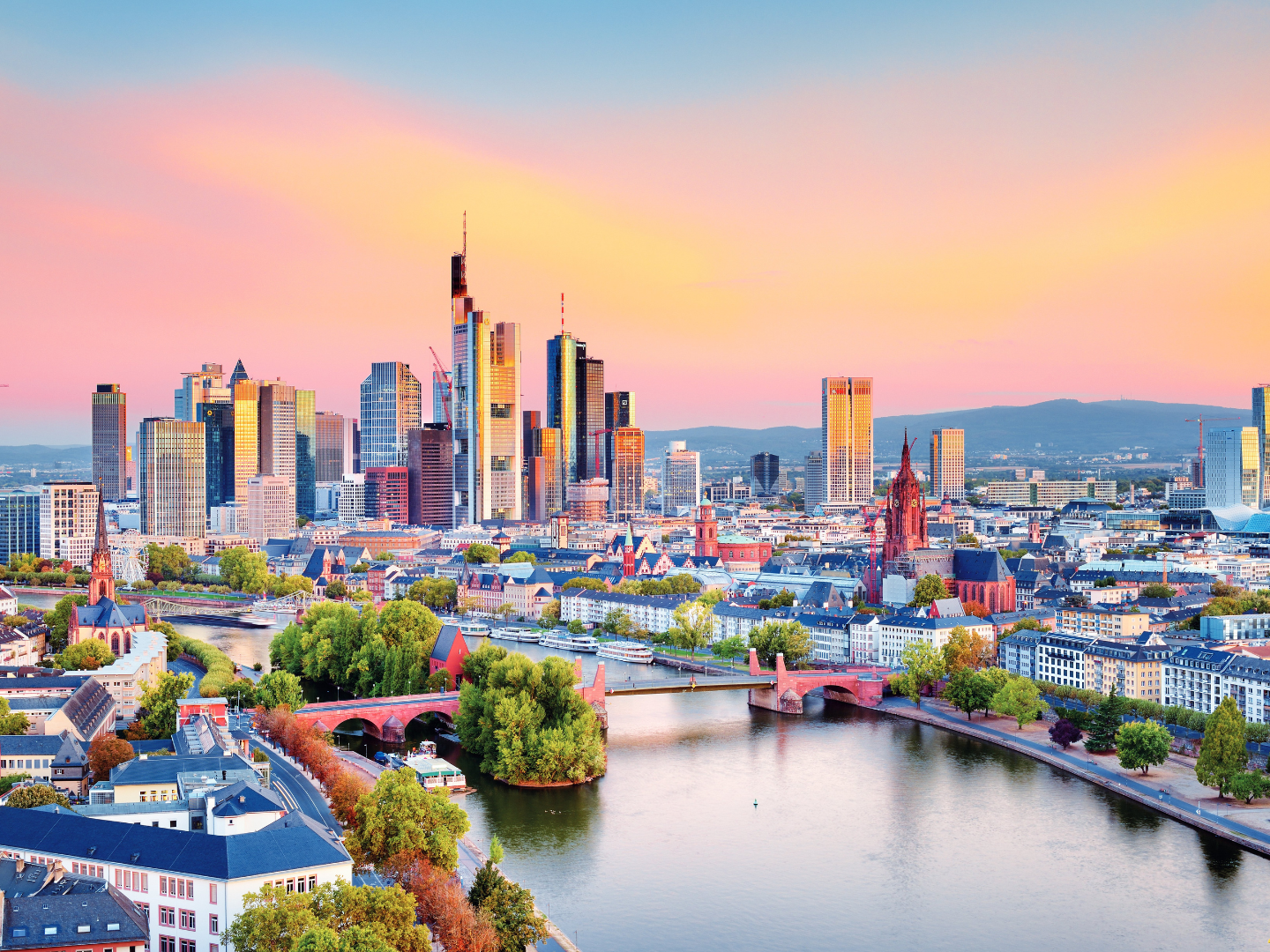
The Main River and city skyline are best viewed (and photographed) at sunset (Photo: Francesco Caravillano)
The locale that births the likes of author Johann Wolfgang von Goethe, diarist Anne Frank, composer Hans Zimmer and painter Philipp Franck has to be as fascinating and futuristic as it is complex and unyielding. Frankfurt has almost always had such power, since the 9th century when the East Frankish Carolingians established their royal residence at the city’s imperial palace and the Golden Bull of Emperor Charles IV designated the state as the site for the election and coronation of German rulers from 1356 to 1792.
Officially named Frankfurt am Main (denoting the river that cuts through the city, and so as to not be confused with the smaller Frankfurt an der Oder in the state of Brandenburg), the metropolis has an intricate history. The altstadt (meaning “old town”), which grew around the castle and cathedral, was the largest intact medieval city in the country, characterised by famous landmarks such as the Römer and Old St Nicholas Church, until WWII.
Allied bombings destroyed much of this quarter in 1944, which was painstakingly restored and the surrounding area rebuilt with contemporary influences after the war. Peeking over gabled roofs and timbered buildings is a crest of towering glass and metal multi-storey offices and residences, breaking the fairy tale spell of the historical architecture.
1.png
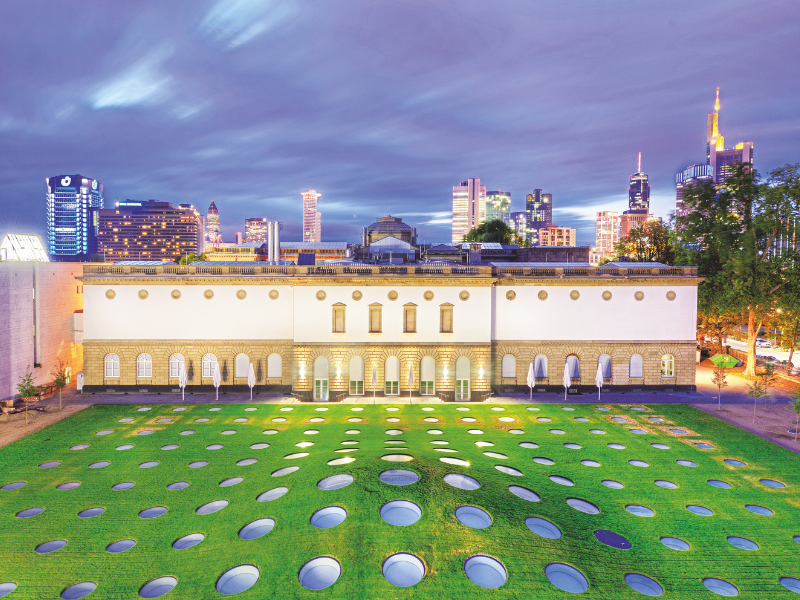
At the heart of the modern construction is Four Frankfurt, an ensemble of skyscrapers erected on a previously inaccessible area that was once occupied by Deutsche Bank. Done by UNS Studio and HPP Architects, the quartet of multi-use high-rises demonstrates the city’s approach to urbanity designed for the long-term well-being of the local community. Comprising apartments, a hotel, daycare centre, as well as F&B and retail outlets, the development and the surroundings imagine a “city for all”, catering to the varied needs of Frankfurt’s diverse population.
While advancements in infrastructure and public amenities are what give a 21st-century city its look and vibe, infusing these spaces with culture and the arts is what brings it all to life. The prime example of how Frankfurt accomplishes this can be observed along the Museumsufer, a collection of 39 museums and galleries dotted along the Main River, most of which are located within walking distance of each other. Visiting all of them can easily fill up your itinerary for several days. If the luxury of time is not available, however, some of the particularly notable ones worth squeezing out an hour or two for include the German Romanticism Museum, Jewish Museum, Städel Museum, Museum of Communication and Schirn Kunsthalle. Whether you have a week in the city or just a long layover, adding these world-class institutions to your schedule is something you will not regret.
2.png
A cosmopolis that fosters life is also one that is effortless and enjoyable to get around on foot. In combination with a well-connected, reliable public transport system and pedestrian-friendly urban planning, a walkable environment must have green patches to provide respite from the hustle and bustle while helping to cool things down during peak summer. These natural havens become increasingly important as global warming rears its ugly head, transforming once pleasantly warm European summers into dangerous periods with record-breaking temperatures that last well into the late evening.
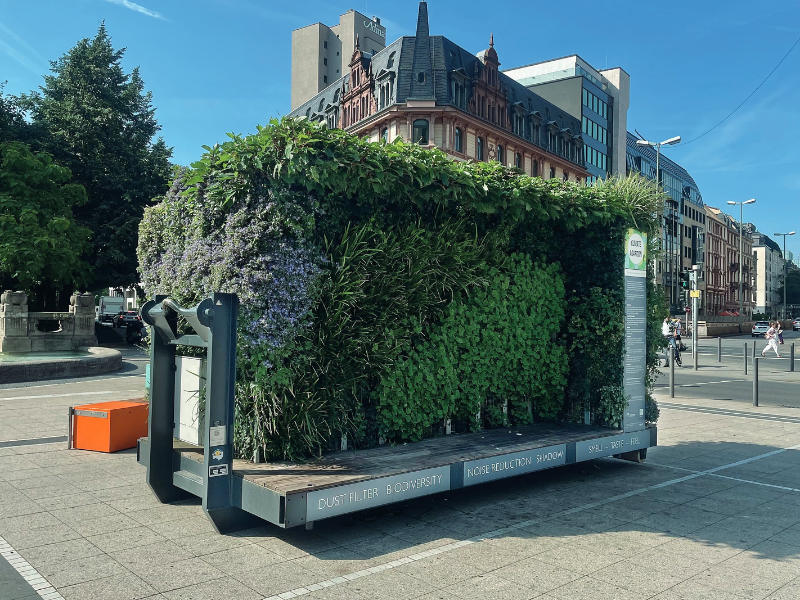
With just over half of the city dedicated to nature and public parks, Frankfurt has it better than many of its metropolitan neighbours. Several of these lush landscapes make up the Green Belt — a roughly 64km stretch of gardens, fields and forests explorable by walking or biking. During warmer months, these green lungs host families sprawled out on picnic blankets, students perched on benches with a book in hand and children dashing around playgrounds. Even after leaving the parks and entering the financial district, verdant corners surprise you where you least expect them to. Most interesting are the mobile green living rooms, rest stops covered in leafy plants that, on a searing hot day, offer a chill spot to take a breather before continuing on your way. Most parks also sit in close proximity to wasserhäuschen (water houses), small refreshment kiosks scattered throughout the city.
3.png
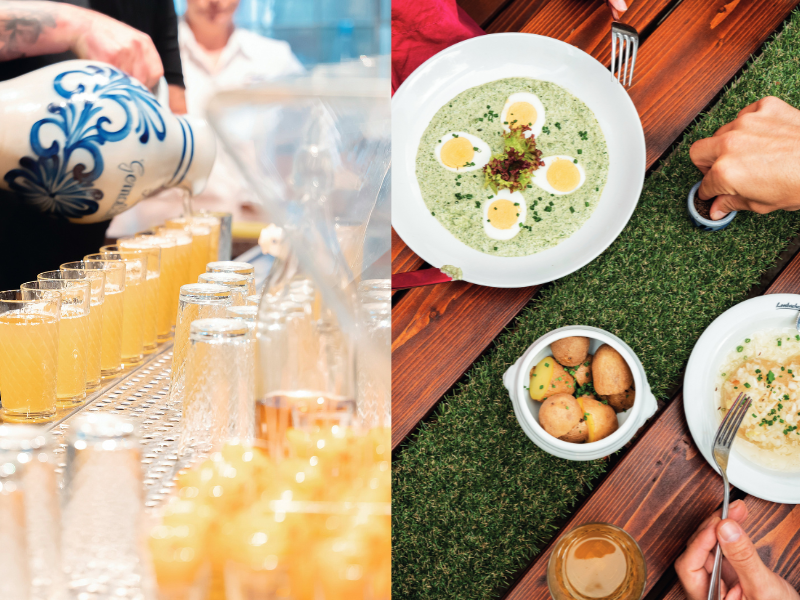
A great city must have a memorable food scene. The uninitiated may assume German cuisine is just sausages and sauerkraut (fermented cabbage), and though you cannot miss out on the rindwurst (beef sausage) and wurstchen (thin parboiled sausage), Frankfurt boasts a few other specialities for the adventurous palate. Green sauce, traditionally eaten with boiled eggs and potatoes, is the ultimate must-have. Served cold, it is made from a combination of seven herbs — parsley, chives, chervil, borage, sorrel, garden cress and salad burnet. The result is a thick, creamy sauce with a sharp, fresh flavour.
In terms of tipples, an icy cold beer from a home-grown brewery is always a treat. That said, if there is one Frankfurt bevvy you need to try, let it be the apfelwein (apple wine). The traditional taverns known for it are primarily housed in the Sachsenhausen district, and can usually be identified by the green wreaths hanging above the entrances. Locals gather around long tables and enjoy the drink poured from Bembels, the iconic grey-ish ceramic jugs with blue detailing. Depending on the establishment, batch and variety of apples, the wine can be dry, tart or lightly sweet, and might be an acquired taste for some. It is typically paired with traditional finger food and dishes. Want an authentic experience but don’t know what to nibble on? Go for handkäse mit musik, a pungent cheese with onions and spices that offers a strong enough flavour to match your libation.
Despite all it has to give, Frankfurt remains a business destination in the minds of many. Most who come here are either passing through to a final destination elsewhere, or staying for a short work trip. To get familiar with a place and appreciate its beauty, though, one must linger longer and be open to letting go of preconceived notions. The next time you find yourself in Frankfurt, dare to look beyond its industrial and commercial facets. Stroll by the river, lounge in a park, visit a museum and have a drink with the locals. The impression you leave with will likely be more vibrant and exciting than earlier assumptions would have allowed you to imagine.
This article first appeared on July 20, 2026 in The Edge Malaysia.