

The new Classique Tourbillon 7357 is a direct descendant of the maison's first tourbillon wristwatch (All photos: Breguet)
In order to escape the Great Plague that ravaged London from 1665 to 1666, Sir Isaac Newton took a furlough from Cambridge University and returned to his hometown of Lincolnshire, east of England, where he kept his mother company at Woolsthorpe Manor. One summer evening, as he was sitting out in the garden, he watched an apple fall from a tree and wondered if the same force that drew upon the fruit also applied to the moon and planets. From there, Newton began to untangle the nature of gravity and shared his findings in Principia in 1687, forever changing our understanding of physics and the universe.
About a century later, a similar scenario unfolded in Paris. During the French Revolution, Abraham-Louis Breguet, who established his watchmaking workshop on Quai de l’Horloge along the Seine, had to return to Switzerland to evade the tumultuous political and social upheaval. In Neuchâtel and subsequently Le Locle, he took advantage of the respite to revisit some of his creative visions while contemplating the future of his company. Upon returning to Paris in 1795, he unveiled a number of horological breakthroughs, chief among which was a tourbillon regulator device that was eventually patented in 1801.
It was also through keen observation that Abraham-Louis realised that because pocket watches were often carried around vertically, the oscillation of certain components — more critically the balance and balance spring — were being “pulled” downwards due to gravitational force, thus adversely affecting the regulating organ’s operation. To circumvent this issue, the watchmaker invented a system where the escapement and regulating mechanisms are enclosed within a cage and kept in constant rotation around an axis in all positions. This assembly continuously realigned the centre of gravity, “mixing up” all vertical positions as he intended to achieve a higher average accuracy.
3.png
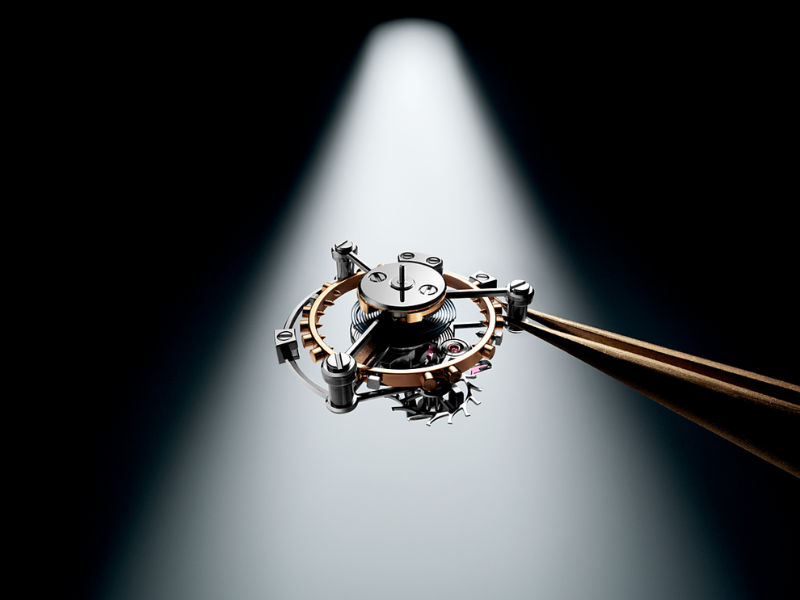
Celebrating the patent’s 225th anniversary, Breguet commemorates Abraham-Louis’ fateful innovation with new timepieces featuring the hypnotic complication. The Classique Tourbillon 7357 is a direct descendant of the historic Ref 3550 — the maison’s inaugural tourbillon wristwatch introduced in 1989. Inside, the Calibre 187B is optimised based on the legendary Calibre 558, which powered its flagship tourbillons for decades.
“While our collectors are not the sort who speak only in terms of movement reference numbers, Calibre 558 is an exception. It is entirely and solely due to this calibre that the tourbillon made its spectacular return to the forefront of horological watchmaking in the 20th and 21st centuries,” CEO Gregory Kissling reveals.
“Creating a new generation of this movement was a weighty responsibility, as it is not every day that one designs the successor to an exceptional movement that has defined the contemporary history of the tourbillon for nearly 40 years.”
The hand-wound Calibre 187B maintains a frequency of 2.5Hz, but the power reserve has been increased to 60 hours. The movement’s accuracy is enhanced by the use of a Breguet Nivachron balance spring with a silicon pallet lever, guaranteeing complete immunity to surrounding magnetic fields, thereby meeting the criteria of the Breguet hallmark. Even the hands are made of gold rather than steel to prevent magnetic interference.
1.png
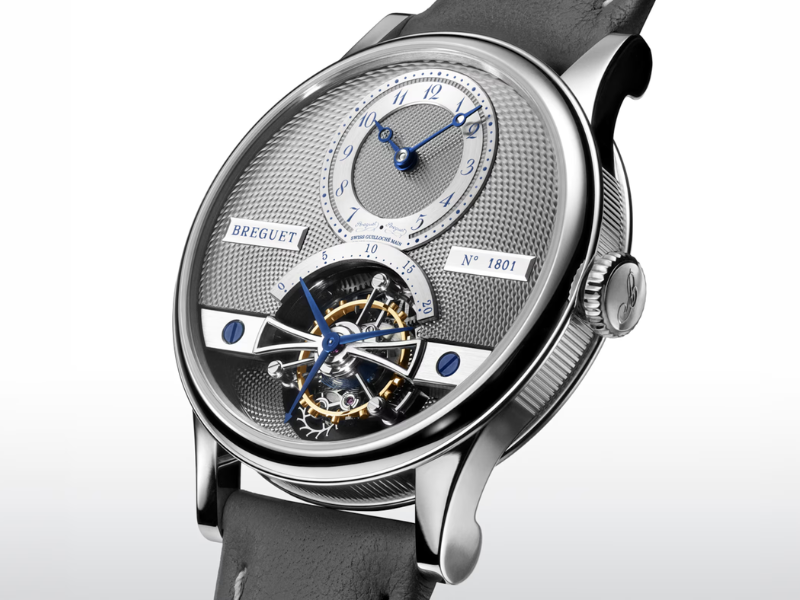
The Classique Tourbillon 7357 takes several design and material cues from the maison’s 250th anniversary line-up from last year. Arabic numerals once again take centre stage on the 18-carat gold dial, with a mesmerising Clous de Paris guilloché sweeping across it and Barleycorn around the periphery. To create more visual depth, the tourbillon at 6 o’clock is positioned just a few tenths of a millimetre below the dial and directly on the mainplate. Hawk-eyed connoisseurs will also notice the triple-bladed seconds hand is delicately curved to follow the subtle curvature of the tourbillon.
At 35mm wide and 9.2mm thick, the slim case lends a distinctly vintage charm that perfectly complements the overall aesthetic. Meanwhile, the redesigned lugs ensure a balanced, comfortable fit, allowing the watch to slip effortlessly beneath the cuff of your favourite dress shirt.
To mark this special commemorative edition, several components and inlays feature Breguet’s Bleu de France treatment — a distinguished hue reserved exclusively for exceptional timepieces — from the hands to the appliqués. Turning the watch over reveals a ravishing caseback that spotlights an intricate hand-guilloché pattern, devised by the maison as a direct homage to the Dent de Vaulion, the legendary peak framing the Vallée de Joux where the manufacture was born.
2.png
The Classique Tourbillon 7357 is offered in two executions. The first pairs a platinum case with a gold dial sporting a cool electroplated anthracite finish. Resolutely contemporary, this version takes on a monochromatic look that strikes a balance between understated elegance and a sharp, modern edge. A grey calfskin strap and three-part folding clasp in 950 platinum complete the package.
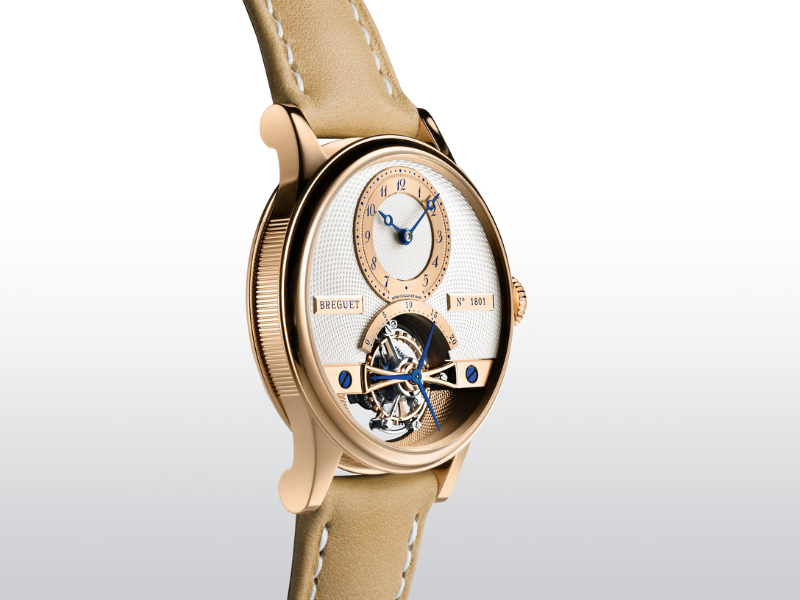
On the other hand, the second variant embraces the delicate rosy hues of Breguet gold, an 18-carat alloy also introduced last year as part of the maison’s semiquincentennial. Composed of 75% gold and enriched with silver, copper and palladium, the blend is modelled after the materials favoured by 18th century horologists. A silvered gold dial serves as the canvas here, heightening contrast while allowing the subtle warmth of the alloy to shine through. Our pick between the two, this Classique Tourbillon embodies the timeless elegance at the very heart of the manufacture.
This article first appeared on Aug 24, 2026 in The Edge Malaysia.