
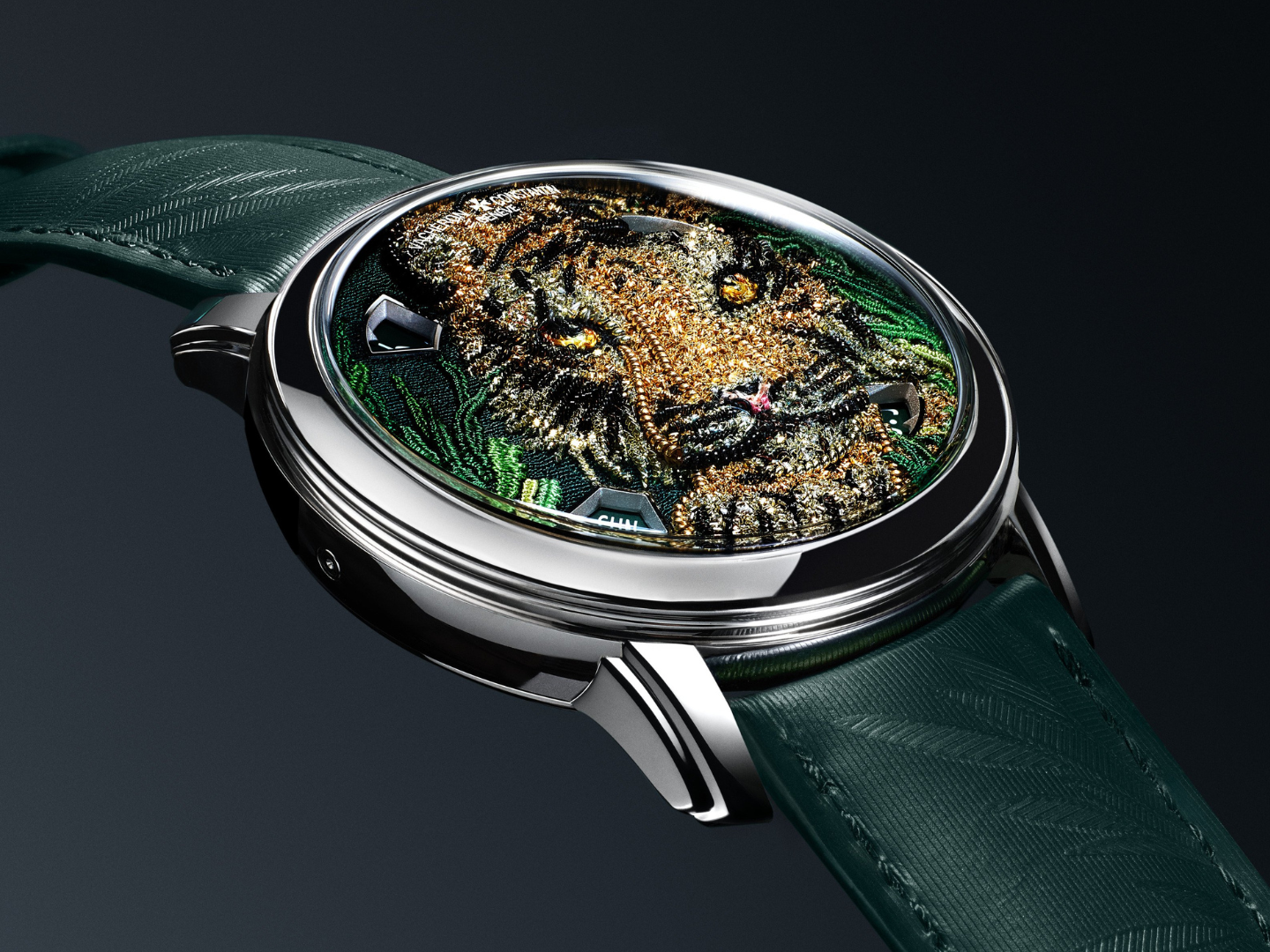
Vacheron Constantin’s Tigerbroidery is part of six concept pieces created for Homo Faber (Photo: Vacheron Constantin)
The era of treating a watch as a mere functional accessory is well and truly over. Today, fashion and horology share an increasingly intertwined ecosystem, with a sophisticated timepiece carrying every bit as much aesthetic weight as an architectural Balenciaga shoulder bag or a sculptural Iris van Herpen silhouette.
What is most compelling, however, is how the ateliers are swapping notes. Watchmakers are boldly stepping beyond their traditional vocabulary of diamond paves, classic guilloché and Grand Feu enamelling to appropriate the savoir faire of haute couture. From dial to bracelet, old codes are getting rewritten with the likes of feather marquetry, intricate embroidery and bespoke leathercraft.
Case in point: Vacheron Constantin’s latest suite of concept timepieces for the Homo Faber biennale in Venice, Italy. Through its One of Not Many Crafts initiative, the Genevan manufacture commissioned artisans from disciplines far beyond horology’s usual repertoire, challenging them to transpose their craft onto the scale of a watch dial. The Métiers d’Art Tribute to the Animal Kingdom series features six unique creations where glass-blown octopuses and micro-origami manta rays come to life within a 42mm frame offering no more than 4mm of clearance between the dial’s surface and sapphire crystal.
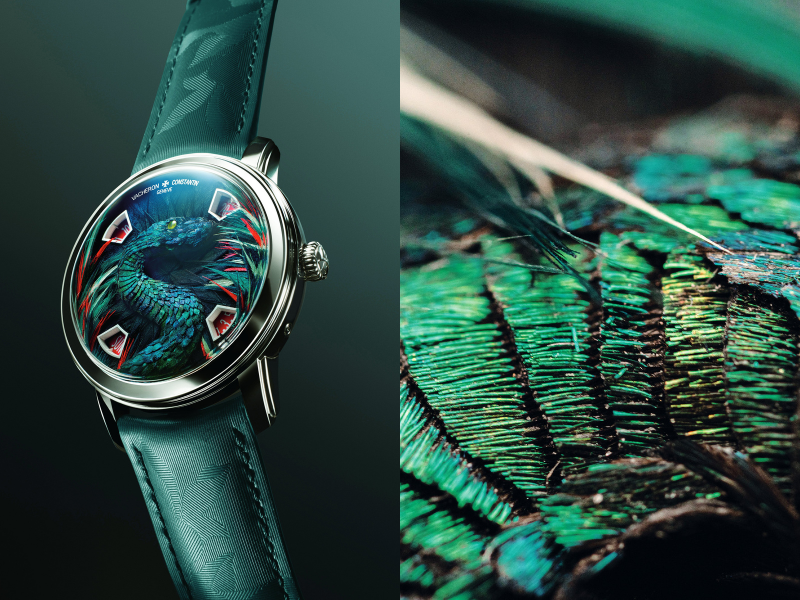
Fashion’s master plumassiers are currently operating at the peak of their powers. From Schiaparelli to Alexander McQueen, the season’s narrative hinges on tactile tension — setting gossamer ostrich plumes against razor-sharp tailoring or crafting trompe-l’œil plumage so convincing it rivals the real thing. Meanwhile, French artist Julien Vermeulen was tasked with using featherwork to coax a viper to life.
The snake’s three-dimensional curve relies on a specially developed metal applique, which serves as a support for the plumes. It is layered with over 200 hand-trimmed fragments cut from seven rare Lophophore feathers, their petrol-slick sheen creating the optical illusion of iridescent scales. Set against an enigmatic backdrop of goose feathers, the snake examines the wearer with a beady eye crafted in 18-carat gold and enamel. Because existing tools proved inadequate for the intricate work, Vermeulen shaped his own, modifying a needle into a scalpel. He spent over 250 hours across R&D and assembly to bring the Feathersnake to fruition.
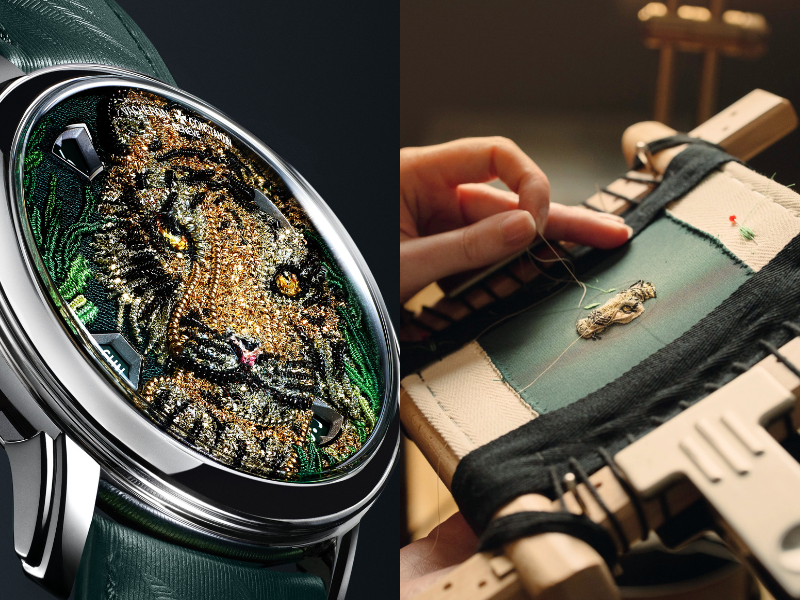
Needlework also served as a popular narrative device across the runways in Paris. Zuhair Murad leaned into dark romance, sending three-dimensional rose brambles winding around waistlines and sleeves, while nightjars scatter across black tulle. Meanwhile, inside Chanel’s fairytale garden, hand-embroidered ladybugs, wild strawberries and paper-thin physalis blossoms nestle into tweeds and plunging necklines. On another of Vacheron Constantin’s canvases, a creature in shimmering hues of honey and tangerine prowls across an ink-dark jungle. The scene owes its lush depth to a technique exceedingly rare in the watchmaker’s workshop: gold embroidery.
London-based Laura Baverstock, whose work includes the costumes of Oscar-nominated film Mary Queen of Scots, used nine-carat yellow and white gold wires alongside ceramic-coated black wires to depict the piercing look of a tiger’s gaze. The surrounding wilderness is set against bespoke British green silk, punctuated by Japanese silk rendered in textured weaving techniques to mimic the undulating sway of real foliage. One of the most complex aspects of the Tigerbroidery collaboration was the development of a perforated dial plate made out of titanium to allow the embroidery to be stitched directly onto the watch structure without affecting the movement’s functionality.

Beyond embellishment, watchmakers like Patek Philippe are also drawing direct inspiration from textiles. The Ref 4946G-001 Annual Calendar showcases this crossover with its blue-grey dial decorated in a shantung pattern, a finish defined by ultra-fine vertical and horizontal satin brushing. Historically, shantung is a rich silk fabric famed for its characteristic “slubs” — slight, organic variations in yarn thickness that create a crisp light-catching weave. On the watch, these micro-textures subtly reflect ambient rays without detracting from its primary complications, which also include a moonphase and date.
The theme extends seamlessly around the wrist with a matching calfskin leather strap embossed in a distinctive denim motif. Rather than utilising actual cotton denim, which can fray and degrade quicker over time, the maison meticulously stamps and dyes the calfskin to mimic the diagonal twill weave and faded patina of the fabric. Accentuating the white gold details, contrasting white hand-stitching gives the strap a deliberate balance between casual ease and refined luxury.
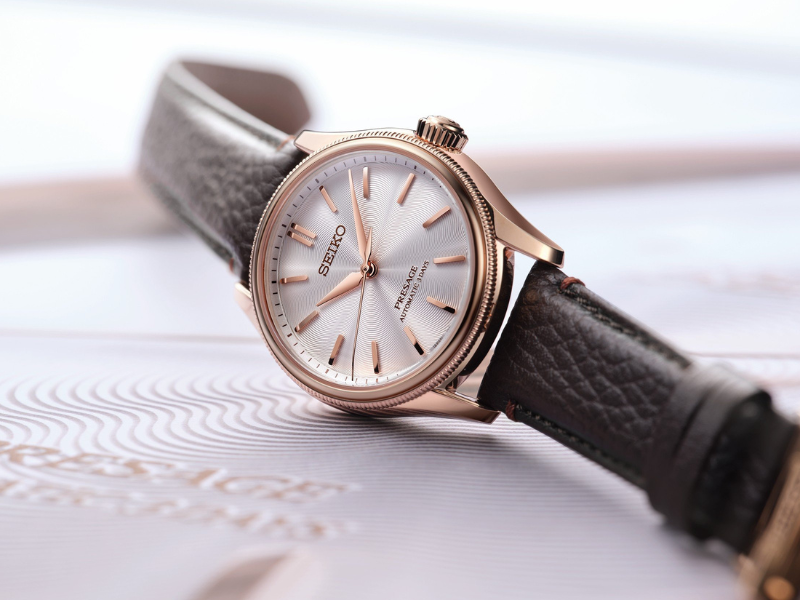
On the other hand, Seiko pays homage to Japan’s rich textile heritage and sericulture by incorporating the legacy of Tomioka silk into its Presage Classic Series. Produced in the region surrounding the Tomioka Silk Mill — a Unesco World Heritage Site — in Gunma Prefecture, northern Kanto, the premium material is made exclusively from local cocoons and prized for its fine, uniform threads crafted by skilled artisans.
The dials reinterpret the delicate, organic lustre of woven raw silk through radial textures that dance under changing light. Presented in a pink gold-coloured case, the watch comes with a dark brown leather strap sourced from sustainable tanneries. This specific timepiece is limited to 2,000 units. Three regular-production models also join the line-up: Shironeri, an immaculate white reflecting refined silk threads; Wakatake-iro, a vibrant green historically favoured in kimono dyeing; and Sakura-iro, a soft pink evoking cherry blossoms paired with a deep brown leather strap inspired by cherry wood.
The sartorial convergence of haute horlogerie and haute couture signals a vital turning point in luxury watchmaking, expanding the dialogue from pure mechanics to personal style. After all, telling time is essential, but doing it in an impeccably tailored dial is simply good manners.
This article first appeared on Sept 21, 2026 in The Edge Malaysia.