
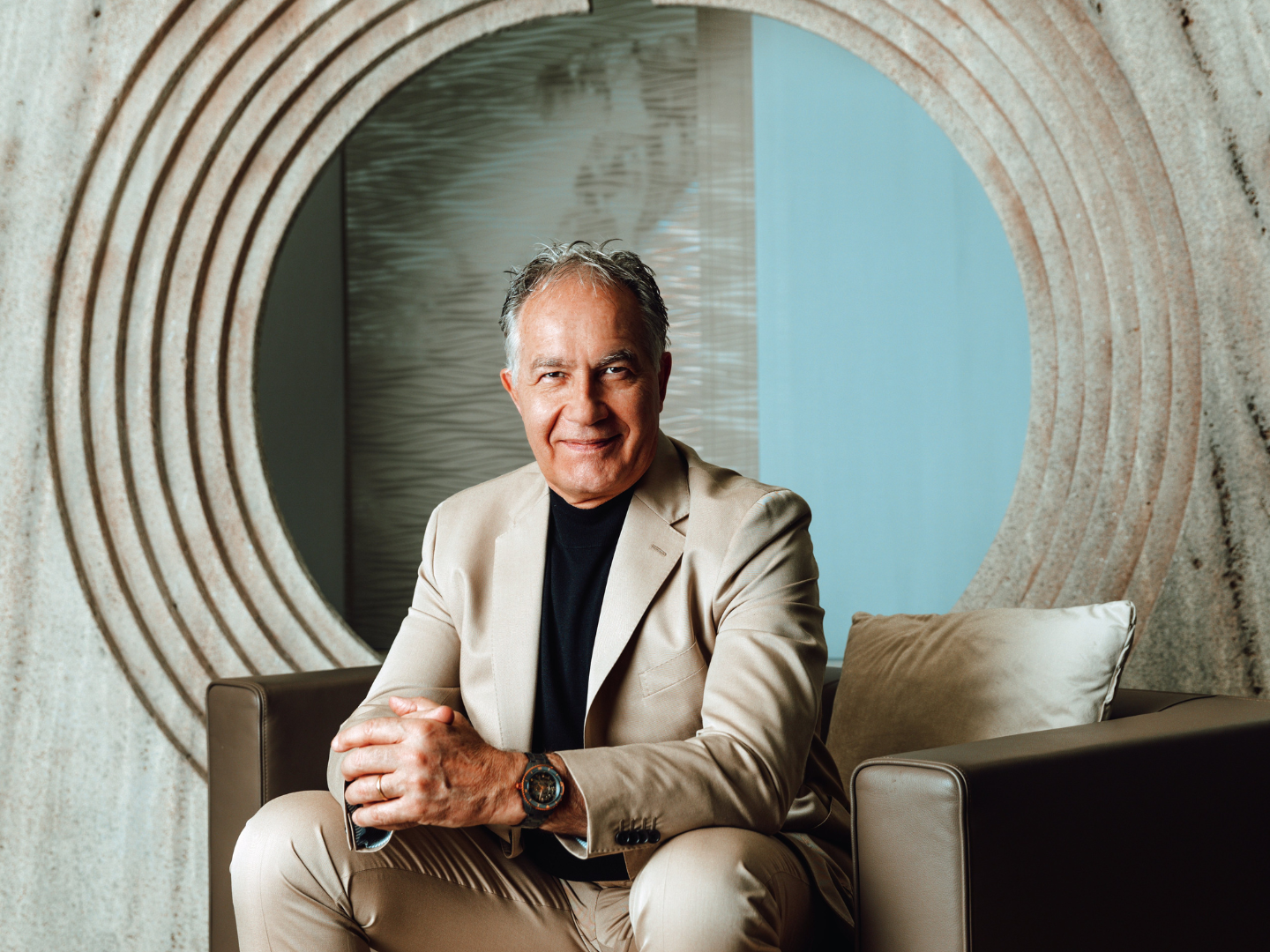
Once an avid racer, Bosshard found himself working for a sponsor, Certina, and quickly rose through the ranks in the horology world (All photos: Rado)
A little after noon on April 4, 1993, with the asphalt at the Shah Alam circuit throwing up heat one could lean against, Adrian Bosshard sat astride his Honda RS250R at the Malaysian motorcycle Grand Prix and waited for the lights. He was competing in the 250cc class, the shrill two-stroke division billed as the day’s undercard. All around, a field of featherweight machines screamed as their tachometer needles hovered near the redline, glory and gravel separated by little more than a sliver of rubber. Looking back, he remembers never having felt more nervous, or more alive.
That Bosshard once made his name on two wheels is no secret. Any cursory Google search or glossy profile will reveal the Rado CEO earned a living beating time before overseeing a business that sells it. What few people know, however, is that some of his most formative seasons played out on our shores between 1993 and 1996.
“The humidity and temperature on the track made managing the tyres a constant challenge. You could not push too hard or you would destroy them, and it was very easy to crash,” he says, tipping his body sideways and flinging out an arm to mime a fall. “I was lucky. I broke bones, but never suffered the kind of severe head or back injury that ends a career. To be honest, my memories of Malaysia are good.”
He had come a long way to sit in this particular furnace. The journey began in Biel/Bienne, Switzerland, where his father took him to his first motocross race at the age of 12. Awed by a rider who launched from the ground and spun his motorcycle through the air, he declared he would do the same one day. Bosshard senior, reasonably enough, called it madness. Nonetheless, the boy pursued the sport well into adulthood before trading dirt for tarmac at 27, just as five-time world champion Mick Doohan was tightening his grip on the premier 500cc class.
“In the beginning, my father was entirely behind me. He had two main passions, watches and racing, and I inherited both in full measure. What changed everything was the moment I told him I was getting serious. At 18, I said I would finish my education and then give myself to the sport completely. He was appalled, since he had imagined an engineering degree for me — a university or profession with some security in it. Instead, I was proposing to gamble it all. ‘If you want to study, the money is there,’ he told me. ‘If you want to do this, you go alone.’”
1.png
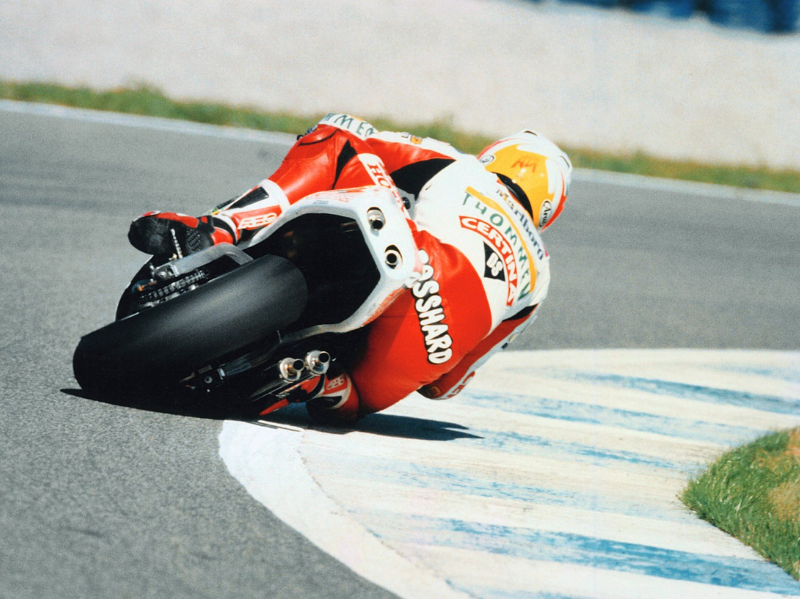
But wanting the part and being equipped for it were different matters. Unattached to any factory or squad, Bosshard had to assemble the entire team himself, from machinery and engineers to transport and the hospitality infrastructure that kept sponsors close. To finance it, he took out a second loan against a house he had nearly finished paying off and emptied the savings accumulated from risking his neck. There were days when the disparity rankled and strain gnawed at him as he noticed rivals arriving with their logistics and funding already taken care of. He came away from the experience a harder judge of people, with a talent for keeping lean organisations coherent under pressure — qualities that later followed him to Rado.
A man’s heroes tend to reflect the standards by which he measures himself. Wayne Rainey, winner of three consecutive 500cc world titles, found hundredths through precision where others looked to horsepower, wringing each championship from his Yamaha before a crash at Misano in Italy fractured his spine and left him paralysed from the chest down. In Formula One, there was the great Ayrton Senna, whose win-at-all-costs determination and courage bordering on foolhardiness inspired near-religious devotion among fans until the Brazilian’s tragic death in 1994.
“They were admirable because they could push beyond what seemed possible and still remain composed enough to win. In some ways, that was what I went through too. After fulfilling my childhood dreams and continuing until I was 34, I wanted to build a future with my wife and two children. I was ready for my next chapter.”
Lap of luxury
A life’s work rarely knocks at the front door. Bosshard retired from the white-hot churn of the paddock believing his next act would keep him close to the world he knew, perhaps through a motorcycle dealership, with the smell of oil still on his hands. He mentioned his plans to Certina, one of the sponsors who had stood by him on the grid, fully expecting the conversation to be a formality. Instead of an amiable farewell, the brand’s president answered with an offer. A commander who could create an operation from scratch, sustain the loyalty of a crew and keep his composure when everything depended on it belonged every bit as much in business. There was a sales position waiting for Bosshard if he wanted it.
The buoyant recruit accepted it, convinced he was only making a pit stop — a season indoors; an education in the workings of a global enterprise — before striking out on his own. But one responsibility flowed naturally into the next. He rose through the ranks at Certina to take the helm in 2003, after which Nick Hayek Jr, chief executive of the Swatch Group, widened his mandate to Eastern Europe and, later, Union Glashütte. Then came Rado in July 2020, a trailblazer he had long regarded as a design provocateur, its innovation in ceramic having coalesced into a recognisable character.
If the timing appeared cruel, Bosshard never framed it that way. He has repeatedly insisted the appointment had nothing to do with the pandemic, nor did it require a wholesale reinvention of the maison. Demand, after all, rebounded once the economy reopened. The more consequential pivot, in his view, was to resist the gravitational pull of Switzerland’s fair calendar. Since leaving Baselworld with the rest of the Swatch contingent in 2018, Rado has redirected resources once poured into a single annual spectacle to market-by-market activations, an approach that has brought it closer to customers and generated stronger engagement. He has shown little interest in reversing the course.
That self-belief was not merely corporate bravado — the brand could afford such confidence because its strongest foothold had never been built on home base. By the close of the 1950s, it was trading in more than 60 countries, with a flush, Swiss-buying America proving largely receptive as the Golden Horse watch — distinguished by its retro emblem of two floating seahorses — propelled the name abroad. In March 1979, with the ink on Deng Xiaoping’s reforms barely dry, a one-minute Rado spot became the first foreign-brand commercial broadcast on Chinese television. Shown on Shanghai TV before the watches were even available on the mainland, it reportedly sent hundreds of viewers to state-run shops asking for a product they would have to wait another four years to acquire. In Seoul, the same fervour assumed a more civic guise: some 1,500 station clocks were installed across the subway network, giving commuters a common gauge for arrivals and departures amid the daily rush.
Recognition may promise attention but, alas, cannot guarantee longevity. Founded in 1917, Rado understood early that familiarity had to be renewed with each generation, not through heritage alone but by wagering on the next material breakthrough. The house’s founding provocation, the 1962 DiaStar, was hailed as the world’s first scratchproof watch, pairing a Hardmetal case with sapphire crystal during an epoch when the industry’s imagination ran the full gamut from gold to steel and, on adventurous days, brass. Its distinctive ovoid shape was not a stylist’s whim but a consequence of manufacture. Tungsten carbide is so hard it must be coaxed into form rather than machined, and the resulting cabochon-like case became a signature born of necessity. That predilection for converting limitations into looks has endured ever since.
4.png
The consecration came in 1986 with the Integral, the first design produced in series from high-tech ceramic, a material so far outside horological convention that critics needed a moment to decide whether Rado had proposed a ticker or a taunt. Sintered from zirconium oxide (a hat tip to IWC Schaffhausen for its inaugural use in the 1985 Da Vinci Perpetual Calendar) at 1,450°C, the substance was harder than steel, resistant to all but diamond and quick to warm against the skin. It recast luxury in a new definition: not heft or lustre, but endurance made tactile. Soon, the public provided the sobriquet that no marketing department could credibly have invented for itself: Master of Materials.
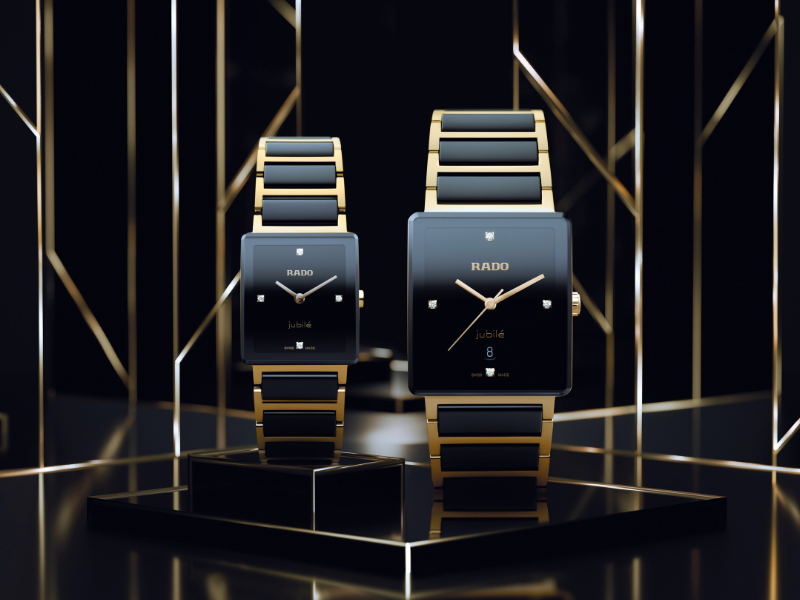
Forty years later, the Integral — which debuted as the DiaStar Anatom before settling on its present name in 1988 — has come full circle. Reissued in April for its 40th anniversary, the new edition preserves the lean rectangular architecture and uninterrupted lines that made the original so radical, while sharpening the formula with yellow-gold PVD steel, polished black high-tech ceramic, curved sapphire crystal and a PreciDrive quartz movement. The temptation with an icon is to embalm it, mistaking fidelity for reverence and caution for respect. Yet what looked audacious in 1986 now appears almost inevitable, which may be the clearest evidence of how thoroughly the model reset the terms.
Bosshard has an unusually personal stake in the verdict. “Actually, I received the 1986 Integral as a wedding gift from my wife in 1991. That was 35 years ago, and I still wear it for family occasions. It’s a watch I know very well. So when I look at the updated variant, I’m proud that its design inspiration is exactly from the past but with a big step in technological evolution,” he says.
“I often compare it with the Porsche 911. Place one from the 1970s beside the current version and you recognise the lineage immediately. The silhouette and essential character remain but everything beneath the surface has evolved. It is the same with the Integral. The proportions have been adjusted because tastes have changed. The movement is slimmer and more precise, the metallisation is more refined and the anti-reflective treatment makes the crystal seem to almost disappear, allowing the dial and hands to emerge with far greater clarity. You retain the sensation of the predecessor, but the result is entirely contemporary.”
The comparison is one he returns to in considering whether aesthetics and engineering ever pull in opposite directions. “Between 1962 and 2010, Rado crafted several amazing icons — the DiaStar, Integral, Ceramica and Centrix. The difficulty is knowing how far to take them. A facelift is not enough, nor can you alter an icon until its identity vanishes. Everything else may advance, but the soul of the design has to be intact. Once that is lost, customers may appreciate the savoir faire, but they no longer recognise the piece they cared about in the first place.”
6.png
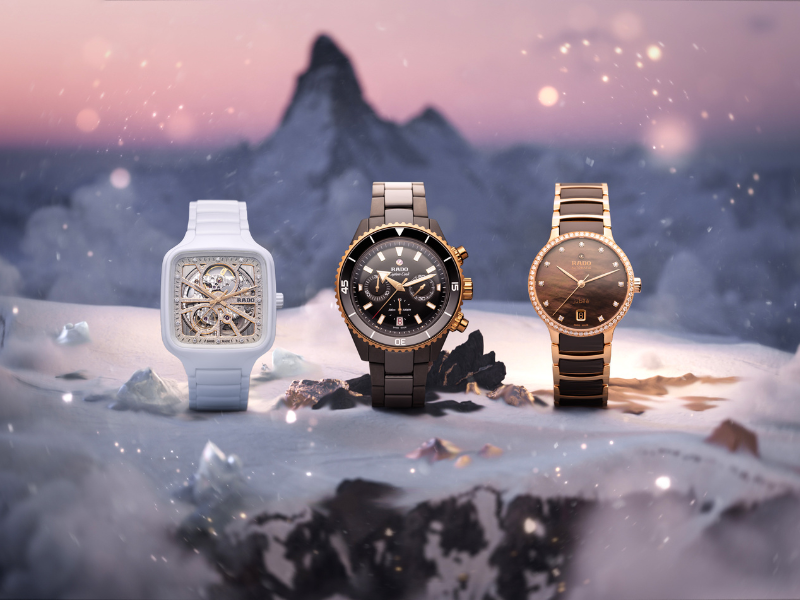
Luxury is often treated as a question of price: the more expensive an item, the greater its prestige and more elaborate the pageantry surrounding it, from celebrity ambassadors and museum retrospectives to waiting lists. Rado has deftly inverted that arrangement. Most of its catalogue sits conspicuously below the upper reaches of Swiss horology — between CHF1,000 (RM5,020) and CHF5,000 — often occupying the territory where other established maisons place their entry-level steel models. The difference is that Rado benefits from the industrial scale and technical resources of the Swatch Group, so it can produce high-tech ceramic, sapphire crystal, extended power reserves, skeletonised movements and meticulous finishing without reserving them for the rarefied end of the spectrum.
The implications are substantial because not everyone wants, or is able, to strap the equivalent of a car to their wrist. Premium craftsmanship should not require financial recklessness, nor should a more attainable outlay automatically render an object ordinary. India provides perhaps the strongest validation of that idea: Rado’s proposition maps neatly on how buyers already think about ownership. In a culture where gifting carries symbolic weight, a present must hold its beauty and relevance for decades after its initial purchase. A penchant for lasting value also repeats in the UAE and across the wider Middle East. At a collectors’ event in Dubai, the team encountered enthusiasts who acquire five or six new pieces annually and already own collections numbering 50 or 60. The dedication runs deep enough that the company has even bought back watches from a collector in Oman for its archive in Lengnau.
The more Rado seeks to keep its offering competitive, the more fiercely it must protect the expertise that makes such quality and accessibility possible. But how does the brand safeguard that institutional knowledge and ensure its transfer from one generation of engineers to the next, especially when so much of the horological landscape — even within Swatch itself — draws on the same manufacturing ecosystem?
“The Comadur factory in Boncourt produces high-tech ceramic components primarily for Rado, while supporting Omega and Longines. Another facility in Le Locle supplies Blancpain. That said, Comadur itself is entirely dedicated to Rado. Although several maisons use ceramic, we’re not competing internally. Rather, we work in the interests of the group, which means no technology is withheld from one another. Each provides a precise brief, outlining how it envisions the product. The manufacturing process is adapted accordingly to preserve its individual DNA,” explains Bosshard.
“Keeping that proficiency in-house was a strategic decision. Even the tooling is developed internally, despite the fact that some moulds can take months to complete. When we began, ceramic meant black, and little else. Today, our palette spans around 30 colours, including plasma ceramic made in ovens operating at temperatures comparable to the sun’s surface. That accumulated knowledge gives us a significant advantage and, more importantly, protects our capabilities for many years to come.”
2.png
Glaze of glory
For all his faith in judgement, Bosshard has resisted the comforting temptation to hire familiar versions of himself. Agreement feels efficient until a room full of identical thinkers confidently marches into the same wall. What he trusts, however, is the sporting temperament: team players who understand no one wins alone, surrender ground without losing their head and return to the bench prepared to perform the same gruelling drills again the next day. It is no coincidence that vice-president of international marketing Rico Steiner was an accomplished tennis player, or that head of retail René Furler spent nearly a decade in professional ice hockey, vying in Switzerland’s top divisions and captaining HC Biel.
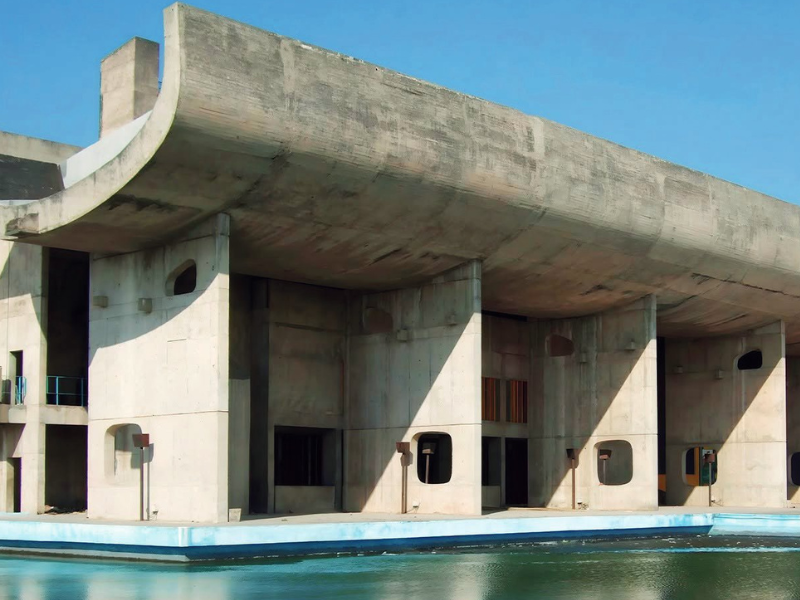
The same stringent criteria apply to collaborators, with Bosshard favouring contrarians whose sensibilities are distinct enough to unsettle Rado’s own without overwhelming it. With Tej Chauhan — “a chemistry that just kicked off”, the CEO recalls — the alliance brought about the True Square, its taxi-cab yellow set against rounded numerals and the gleeful futurism of 1970s product design. For the DiaStar Original, Chauhan maintained its elliptical silhouette while introducing a gold-toned Ceramos bezel that played squarely into the resurgent appetite for vintage design among younger buyers. Departing from pure instinct, the Les Couleurs Suisse crossover eschewed the easier route of attaching a famous name to an otherwise minimalist, monobloc instrument. In earlier collections, the manufacture put together 12 editions drawing on Le Corbusier’s Architectural Polychromy — 63 carefully composed shades developed in 1931 and 1959 — and turned selected colours into high-tech ceramic. A further three references followed in 2026, translating surfaces of the architect’s buildings into wearable formats, demonstrating how an aesthetic conceived for concrete façades can be miniaturised without losing its intellectual rigour.
3.png
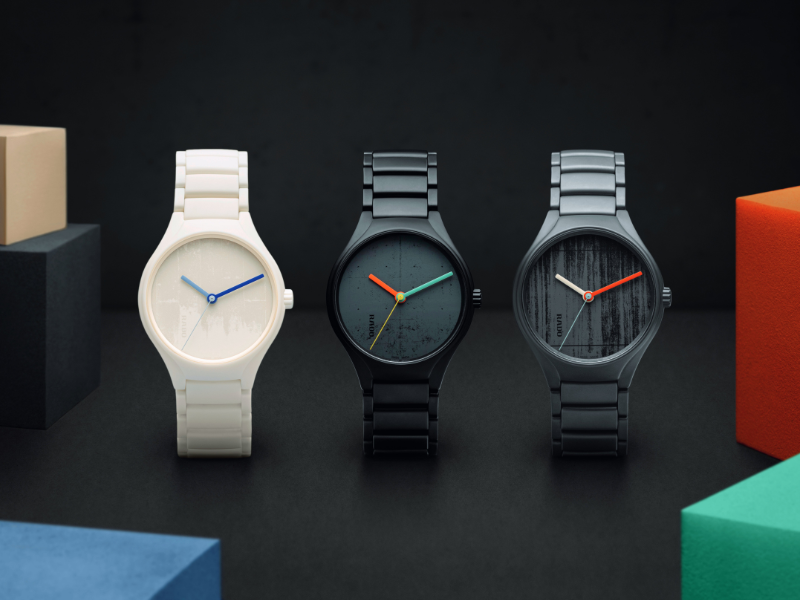
In horology, being first may establish authority but cultural impact ultimately belongs to whoever gives technology its most vivid expression. A French fashion house proved as much at the turn of the millennium, when an unapologetically unisex black ceramic marvel did more for the medium’s desirability than decades of technical persuasion. At Watches and Wonders this year, a discerning few embraced a slew of white iterations, among them a case infused with the highly potent Super-LumiNova that allows the shell to glow for more than 24 hours. The question for Rado is no longer whether it can master the material, but how it intends to teach it new tricks.
“High-tech ceramic is one of the noblest mediums available, so it’s no surprise that more people are working with it. But few can deliver the same breadth of colours, finishes and constructions we can. Our responsibility is to keep customers interested by giving them the maximum in features, uniqueness and exclusivity, while remaining selective. This is why we limit ourselves to two carefully chosen design collaborations a year,” admits Bosshard.
He believes what separates inheritance from legacy, sometimes, is the willingness to endanger what is already proven. “It’s like rolling onto the starting point. You intend to win, but there are 30 other riders beside you with exactly the same ambition. It is up to us to convince customers with products that are beautiful and enduring. But without uncertainty, nothing important happens — in sport or business. Every major step we have taken with high-tech ceramic demanded a considerable leap into the unknown. We took those risks; and they did not merely bring us here, they made Rado what it is.”
This article first appeared on July 20, 2026 in The Edge Malaysia.