
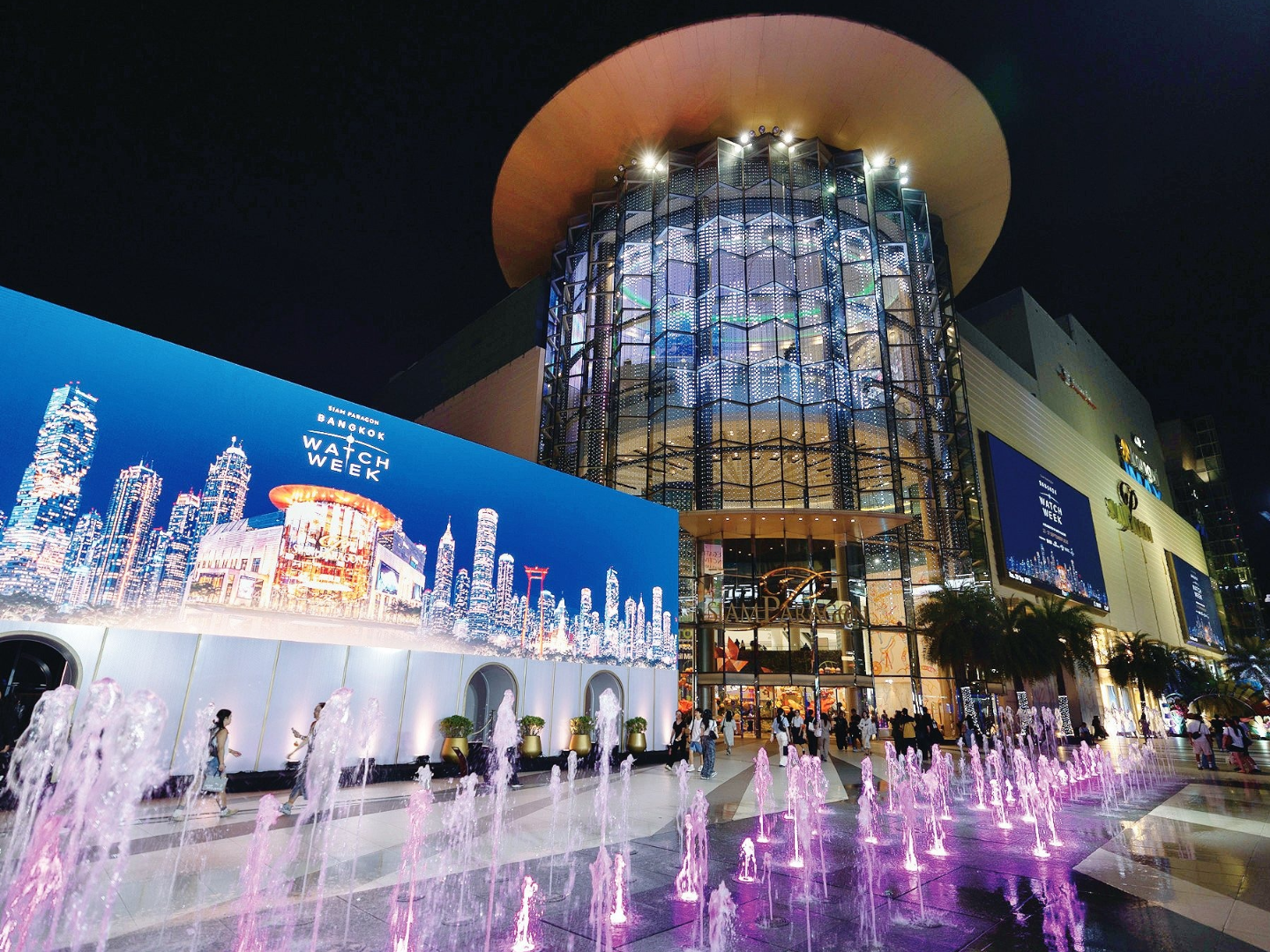
Organised by Siam Piwat, this year's Bangkok Watch Week returns to Siam Paragon (All photos: BWW)
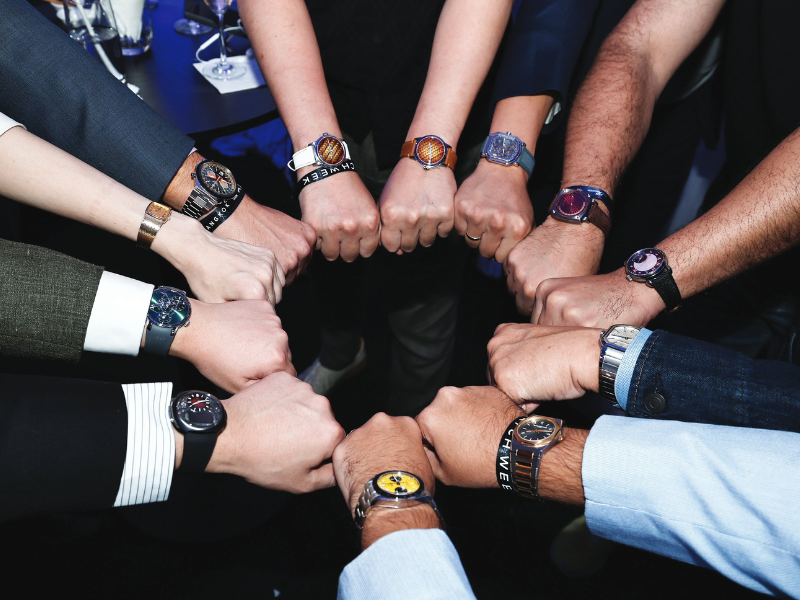
By polite industry standards, horological etiquette usually dictates a strict decorum in how the C-suite conducts itself in public — at least until Revolution founder and editorial director Wei Koh disarmingly cajoled rival maison leaders into a full-throated birthday chorus for Franck Muller CEO Nicholas Rudaz. Moderating the opening symposium of Bangkok Watch Week (BWW) on Sept 22 — the fair’s kick-off and, fortuitously, Rudaz’s big day — Koh unwittingly set the tone for the days ahead. Where Swiss protocol often runs on starch-collared austerity, this was an arena in which executive posturing dissolved into camaraderie, buoyed by the generous hospitality of its host city.
The contrast felt all the more striking given how swiftly BWW had thrived. Occupying luxury shopping mall Siam Paragon for its second instalment, the six-day showcase had attained a magnitude that reaffirmed its inaugural success was no fluke. Participation swelled to 45 names from an initial 30, bringing together heavyweight returnees such as A Lange & Söhne, Vacheron Constantin and Cartier with newcomers MB&F and Parmigiani Fleurier, as well as the regional debut of a newly revived Universal Genève under Breitling’s stewardship. More than 40,000 attendees, including some 400 international collectors, thronged the venue to survey the impressive breadth of 2026’s novelties.
8.png
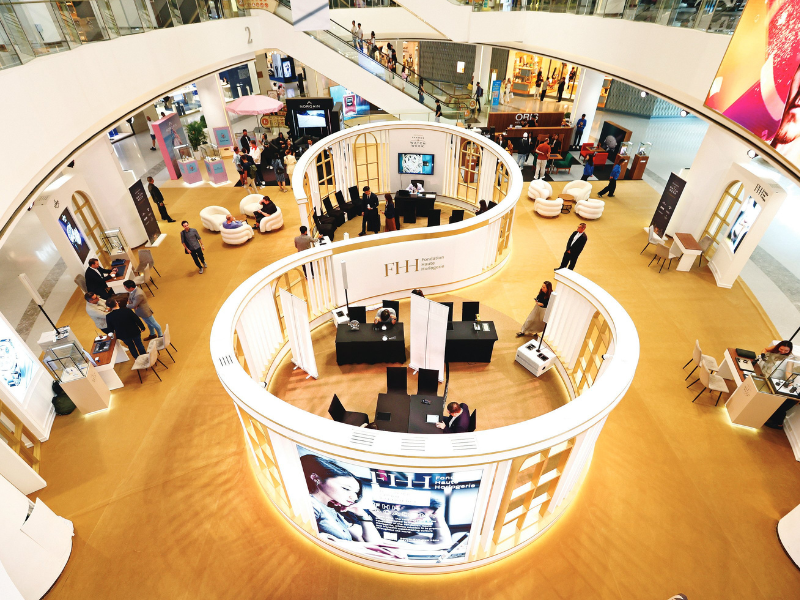
Instead of the cavernous aisles, monolithic booths and fortified VIP suites characteristic of Geneva’s annual Watches and Wonders, BWW adopted a more organic, boutique-style presentation woven into the mall’s retail landscape. Visitors drifted between displays at their own pace without the usual sense of entering an exclusive enclave; the cognoscenti indulged their curiosity in lively exchanges about everything from escapements to elusive grails; and the uninitiated found themselves turning a casual afternoon’s wandering into an unexpected introduction to fine watchmaking. The format was hardly revolutionary, but its accessibility signalled a refreshing departure from the formality and pomp typically associated with such rarefied pursuits.
Crucially, organiser Siam Piwat — the Thai property developer behind Siam Paragon and the forthcoming IconPhuket, a THB10 billion (RM1.2 billion) hybrid retail and entertainment destination slated for 2029 — recognised that a credible gathering needed to bolster its credentials through more than an impressive inventory. The actual gravity came from an expanded symposium programme, where 18 panels convened seasoned commentators, master artisans and head honchos in direct dialogue with the floor. That so many heavy-hitters flew in from their respective headquarters to anchor the sessions sent an unmistakable sign: BWW was no peripheral stopover but a platform gaining international clout. Enriching the proceedings with a more scholarly dimension was the Fondation Haute Horlogerie (FHH), which marked its Southeast Asian outing with an Academy Lounge devoted to workshops and interactive learning to deepen one’s technical literacy.
“After our first year, it was clear that BWW resonated outside of Thailand. That encouraged us to widen the scope and invite those even without a permanent presence at the mall. Our ambition was never to serve only the existing tenant mix, but also the broader horological community,” explains Thanaporn Tantiyanon, managing director of Siam Paragon.
6.png
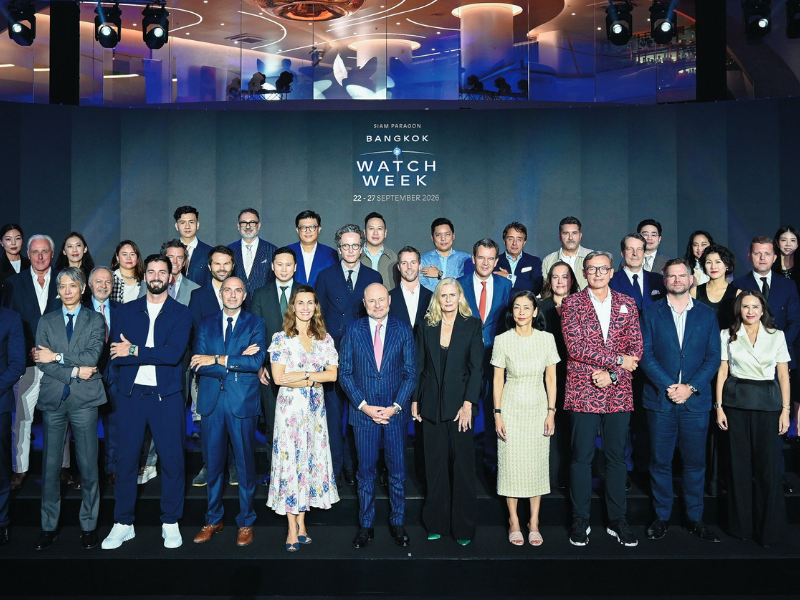
While organisers anticipated the strongest response from home-grown connoisseurs — “a remarkably discerning and tight-knit group”, as Thanaporn described them — the turnout revealed a far more diverse cross-section of enthusiasts geographically. Although, perhaps predictably, some of Swiss watchmaking’s most storied titans such as Audemars Piguet, Rolex and Patek Philippe have yet to throw their weight behind the event, the influx of overseas visitors creates a rising tide that lifts all boats, driving engagement and footfall well beyond the official roster.
“This is about cultivating lasting trust with everyone who has a stake in BWW’s future. We’re laying the groundwork for relationships that will span generations. It’s a long game we’re willing to invest in,” adds Thanaporn.
7.png

Thai breaker
Any decent atelier can chamfer an edge but very few can articulate why their latest drop is not an expensive exercise in irrelevance. Putting brand principals before an open audience strips away the comfort of the usual carefully orchestrated launch narrative, compelling them to contextualise their creations within the horological canon and justify their significance on merit alone. Today’s collectors, after all, are well past accepting rehearsed origin stories at face value; they expect to be engaged as informed peers rather than treated as captive chequebooks.
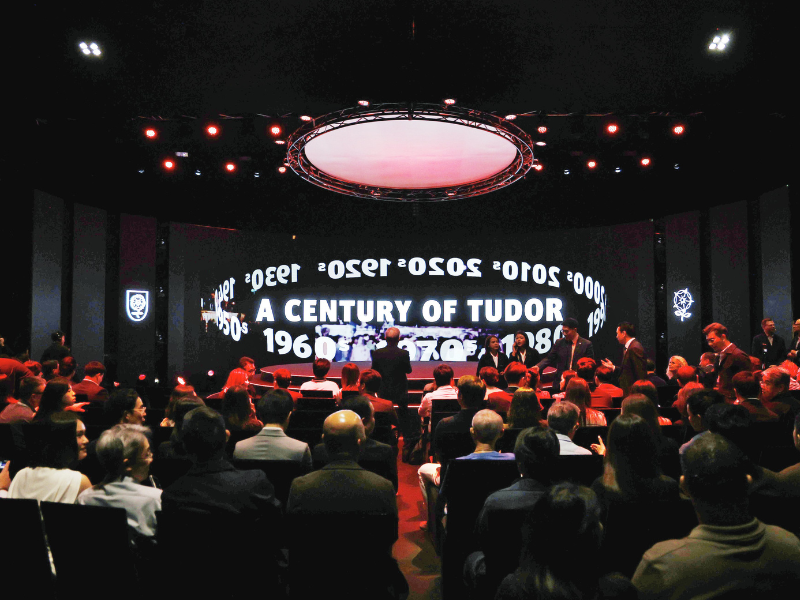
Enter the symposiums. Arguably BWW’s most insightful and intellectually rewarding component, they steered the conversation beyond promotional platitudes and corporate self congratulation. Tudor’s centenary, for one, provided ample occasion for nostalgia, but marketing manager Cole Pennington — formerly an editor at Hodinkee — sidestepped a dutiful march through familiar milestones in favour of accounts rooted in real-world use, from aviator Marchesa Carina Massone Negrone reaching 12,043m in an open-cockpit biplane to Royal Engineers captain J D Walker documenting his watch’s performance during a North Greenland expedition. An especially telling detour led back to Bangkok’s historic SAB Building in Pom Prap Sattru Phai, home to a retailer of European luxury goods established in 1907, which would go on to stock Tudor pieces in the years following the brand’s founding. Pennington, who once lived in the city, then drew a neat connection to the present that elicited knowing smiles from the room: “The level of deep nerdiness of Thai aficionados rivals anywhere else.”
2.png
In a particularly astute move, be it by design or serendipity, the organisers paired two maisons of divergent pedigrees and temperaments to tackle a more elusive question: What enables an icon to outlast its moment without calcifying into a formula? Franck Muller’s Rudaz and Vacheron Constantin style and heritage expert Morgan Maillard contemplated the longevity of signature aesthetic codes amid shifting sensibilities and the perils of creative stagnation. The dichotomy was apparent: Franck Muller is comparatively young, flamboyant and disruptive by Swiss standards, while Vacheron Constantin claims an uninterrupted lineage dating to 1755. However, both confront the same dilemma: the extent to which an emblem can evolve without surrendering its essential character.
For Maillard, that balance is demonstrated by the cushion-cased Historiques American 1921, whose slanted dial layout still holds untapped possibilities. Rudaz supplied the more irreverent counterpoint with the Crazy Hours, inspired by a 2002 holiday in Mauritius when Muller’s frustration with rigid resort formalities culminated in an impulsive midnight plunge into the pool. Emerging from the water, the eponymous founder reportedly fixated on the arbitrariness of rules themselves — including those governing time — and carried that rebellious impulse back to the workshop, where it took shape as a jumping-hour mechanism coupled with famously scrambled numerals. Together, both examples allude to the fact that an icon’s staying power owes as much to the strength of its original idea as to the freedom it leaves for future reinvention.
4.png

The remaining symposiums also covered a gamut of concerns, from the sacrosanct standards of chronometric excellence to the artistic latitude of independent watchmakers. Grand Seiko global division vice-president Takeshi Sakamoto and communications adviser Jonathan Bues deliberated on whether the manufacture’s engineering innovations represented an alternative path of advancement or challenge to European dominance. Looming over the talk was a larger paradox, made all the more pertinent in the smartphone age: What purpose does ever-greater accuracy serve when a digital device can already tell the hour more precisely? Tracing Spring Drive from Yoshikazu Akahane’s original 1977 concept to today’s Ultra Fine Accuracy calibre, capable of keeping time within ±20 seconds a year, they illustrated the enduring appeal of narrowing margins of error even when such exactitude has long ceased to be a practical necessity.
Elsewhere, Emmanuel Breguet, seventh-generation descendant of Abraham-Louis Breguet, transported the audience back 225 years to the invention of the tourbillon, elucidating the conundrum of gravity-induced rate variations that gave rise to the complication. On a more contemporary note, Ressence founder Benoît Mintiens, Louis Erard’s Manuel Emch and Gerald Charles CEO Federico Ziviani explored the opportunities and constraints of operating outside the dominant conglomerates, from radical departures in dial architectures to experimental designs and collaborations that defy established norms.
1.png
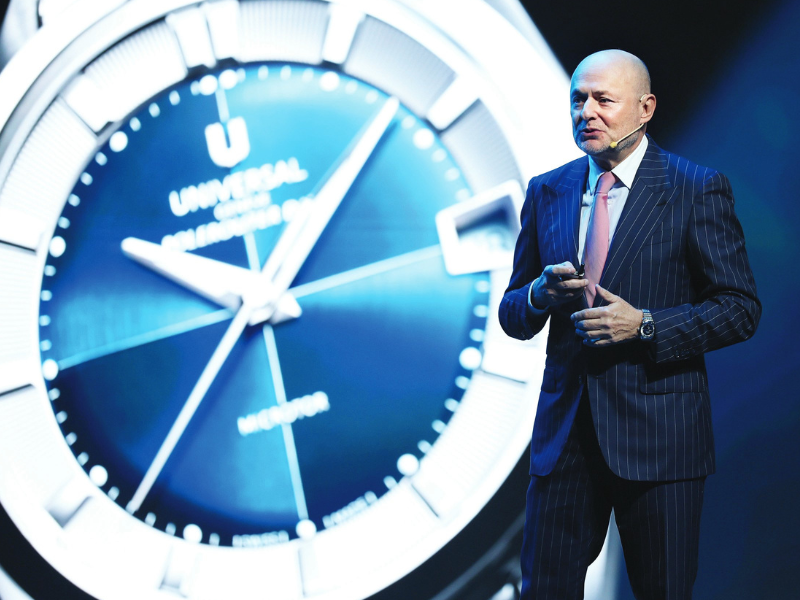
It is no exaggeration that House of Brands CEO Georges Kern was among BWW’s star attractions, pulling few punches in his dissection of the watch business, its commercial realities and the conventions he sees little reason to follow. Off the bat, he addressed Breitling’s participation in Watches and Wonders next year, maintaining it hardly needs another medium to sell its wares, even if such exhibitions can serve as powerful media megaphones.
“I don’t believe in the old days or the way we extended luxury brands,” Kern declares, recalling an era when companies indiscriminately lent their names to everything from trousers to sunglasses. His vision now encompasses hospitality and real estate, from the forthcoming B Social New York members’ club to a Miami residential development in the US. Unlike the invitation-only world of fashion shows, the former will welcome visitors even if they have never owned a Navitimer or Chronomat.
That pragmatism also informs his strategy for Universal Genève and Gallet, two historic marques being rejuvenated to serve distinct clientele and price brackets. “If you charge more without content, you have a serious problem,” he cautions, arguing that a premium must be supported by palpable improvements, much like paying more for a car equipped with a V12 engine. “That said, there’s a fundamental difference between the two. As automobiles become quieter, and you might not be able to drive anymore in the future [due to autonomous driving], cars risk losing that visceral aspect that an emotional mechanical piece retains. A watch is a statement, lifestyle, and indisputably, a piece of art.”
3.png
Dialling it in
Premieres once reserved for private salons in European trade shows are steadily finding launchpads in Southeast Asia. Few curtain-raisers confer legitimacy quite like a genuine world first, and Roger Dubuis delivered a head-turner in spectacular fashion with the 13th Excalibur Knights of the Round Table, The Metamorph Merlin. The collection harks back to 2013, when the maison first populated its Round Table with 12 micro-sculpted gold knights, building on the audacious Excalibur family introduced in 2005. More recently, its mythology has turned to Merlin, with the latest creation completing a trilogy centred on the wizard’s shapeshifting powers. Beneath a dozen 6mm-tall knights, 57 hexagonal blocks of green CVD-coated glass, polished pink gold and transparent crystal, embellished with Crystalium inlays, conjure the enchanted forest of Brocéliande. For the first time, the fantasy spills over to the case middle, where hand-engraved reliefs depict Merlin in his human and animal guises.
For lovers of Arthurian lore, the details conceal a mischievous backstory. Merlin’s powers of disguise were central to the legend, most famously when he helped Uther Pendragon assume Gorlois’ likeness to gain access to Igraine, leading to Arthur’s conception. The wizard was also said to take animal form, including that of a great white stag — a transformation Roger Dubuis renders in micro-relief along the right case flank. The opposite side continues the medieval theatre with engraved knights, one caught in the act of slaying a dragon.
body_photo_-_2026-11-02t193923.928.png
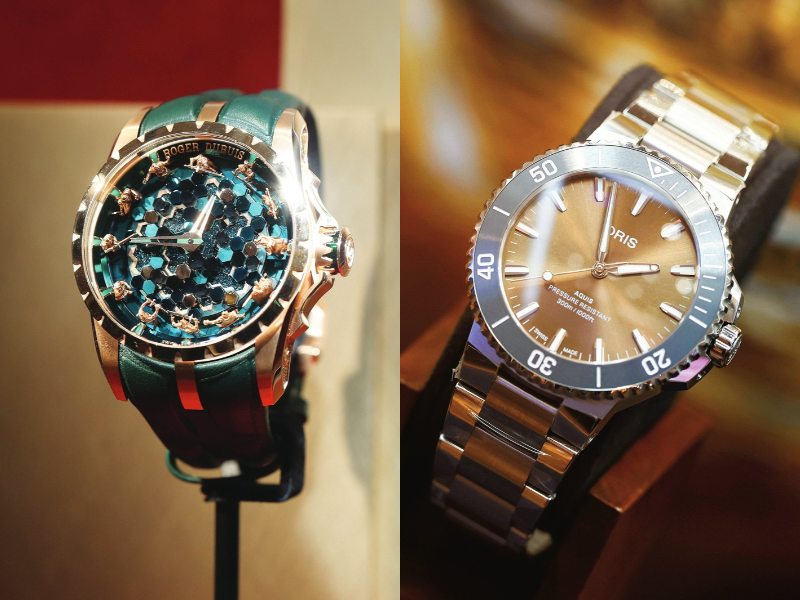
Oris, on the other hand, embraced the spirit of localisation with the Aquis Bangkok Limited Edition, a tightly capped run of just 50 pieces. Its 41.5mm steel case frames a dial awash in warm brown and glinting gold, capturing the fleeting moment dusk engulfs the Thai capital. On the reverse, the city is rendered in miniature through the spires of Wat Arun, and sweep of Rama VIII Bridge and Chao Phraya River below. Still, the ticker is every inch a formidable diver, equipped with the automatic Calibre 733-1 and 300m water resistance. In the end, it was the specificity of the homage that proved most persuasive, with the entire allocation selling out within 72 hours of BWW’s opening.
By most measures, the fair has shaken off the tentative energy of an upstart, acquiring the confidence of a fixture that has found its footing. A reported 92% increase in sales last year has helped dispel doubts about the format’s capacity to command sustained brand buy-ins, even though Siam Piwat has been explicit that its long-term goal stretches beyond immediate commercial returns. The pressing task, then, is the identity it intends to forge. For now, BWW can function simultaneously as a collector convention, public cultural festival and an educational forum without feeling unduly conflicted. But after two editions, simply assembling a high-wattage constellation will no longer be an achievement in itself. The next phase will hinge on its ability to transform all that access, scholarship and spectacle into a point of view engaging enough to make Bangkok feel necessary rather than merely successful.
For starters, the symposiums are ripe for that evolution. Most still prioritise maisons explaining their own histories, strategies and signatures — valuable access, certainly, but seldom the stuff of real argument. A more assured programme could give historians, journalists and industry observers room to challenge prevailing narratives, such as the justification for rising prices, monetisation of nostalgia, growing pains of independents and tension between archival fidelity and the constant demand for novelty. That would give BWW something harder to imitate than scale or star power: a critical voice of its own.
This article first appeared on Oct 19, 2026 in The Edge Malaysia.