
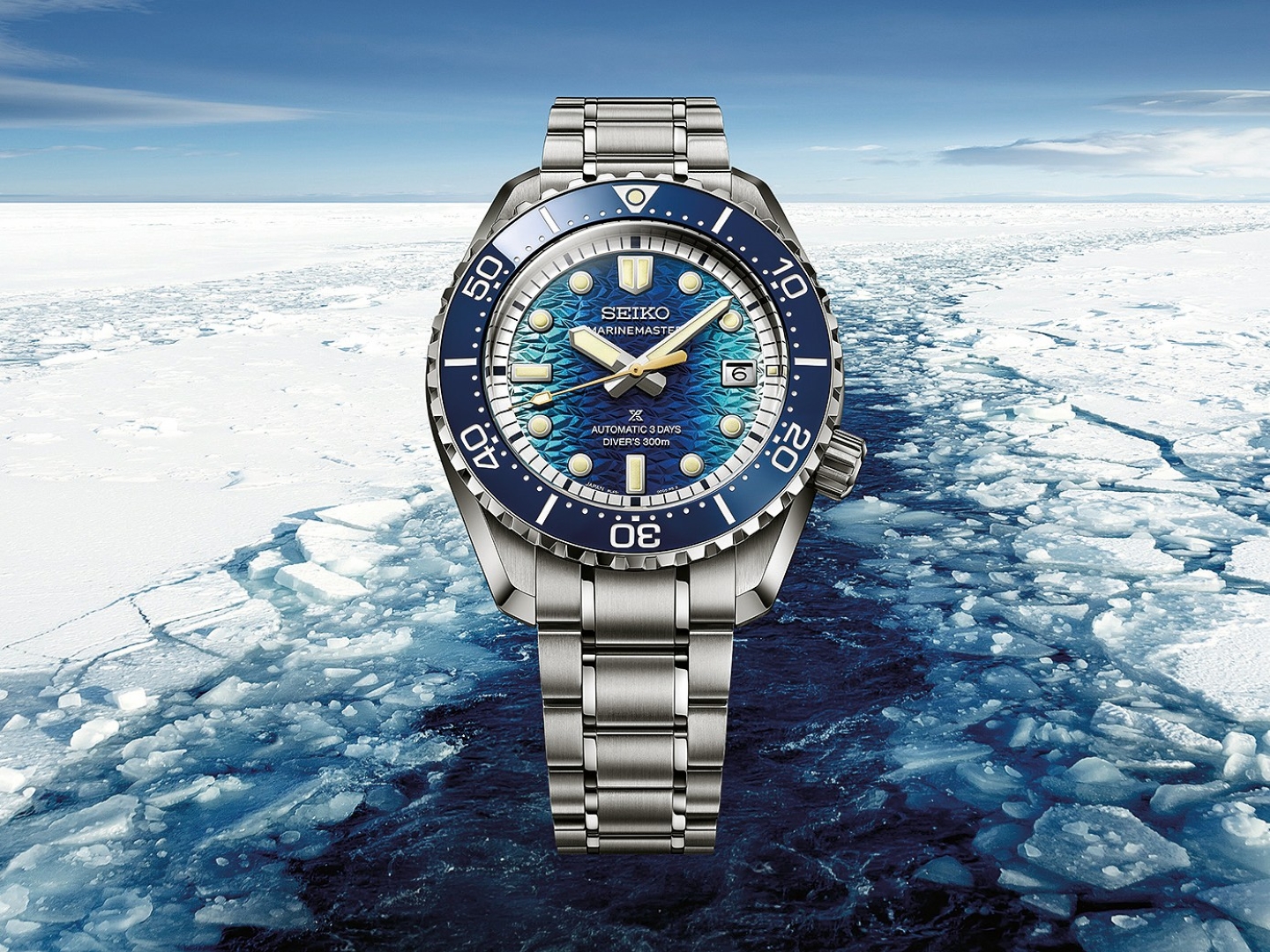
The limited-edition HBF002 features a textured dial and blue ceramic bezel (Photo: Seiko)
Seiko’s foray into the deep began at a time when specialised dive watches were still a rarity. In 1965, the brand introduced Japan’s first domestic diver. Housing an automatic mechanical calibre and boasting a water-resistance rating of 150m, the timepiece was engineered for absolute legibility and reliability in the harshest environments.
The litmus test, however, did not present itself in the ocean, but across the frozen isolation of the South Pole. In an era when navigational aids were still rudimentary, an accurate timekeeper was vital for astronomical observations in polar regions. The diver was chosen to accompany the Japanese Antarctic Research Expedition from 1966 to 1969 and it endured sub-zero temperatures, unrelenting ice and punishing pressure. It returned not just unscathed, but vindicated — having passed the ultimate field test with flying colours.
That pioneering model was followed by a slew of infallible tool watches, with the first high-beat Professional Diver’s 300m launched just three years after. In 1970, Japanese adventurer Naomi Uemura famously wore a Seiko on his record-breaking journey from Greenland to Alaska and solo expedition to the North Pole. Spurred by a letter from a professional in Hiroshima requesting a watch for saturation diving, the manufacture responded with the Professional Diver’s 600m, featuring an airtight, corrosion-proof titanium case.
1.jpg
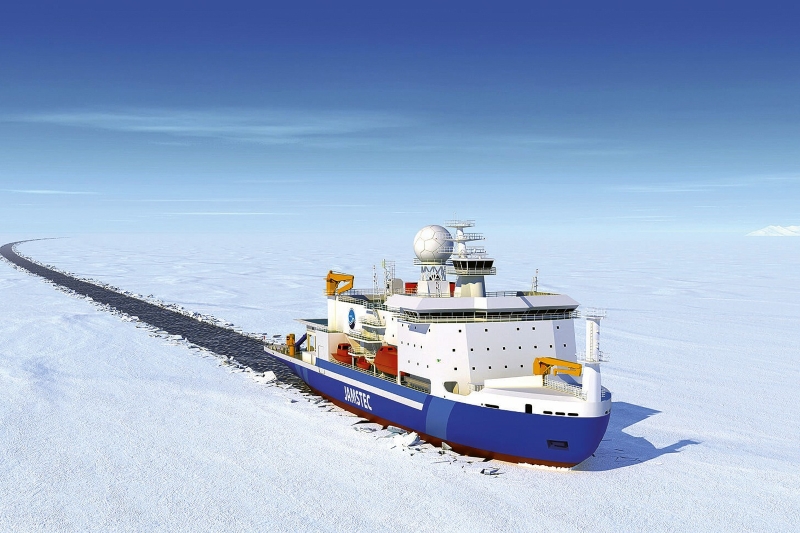
In the 1980s, the brand forged a partnership with the Japan Agency for Marine-Earth Science and Technology (Jamstec) to support its marine conservation efforts. In 1983, two diver’s watches rated to 600m were supplied to the crew aboard the Shinkai 2000, a manned submersible that had been on the forefront of marine surveys during that time.
Through decades of exploration, Jamstec has been driving scientific and technological breakthroughs to unlock the secrets of our planet. As part of its Arctic Research Program, the institute has been constructing a vessel with icebreaking capabilities. Dubbed Mirai II (meaning “future” in Japanese), it will be completed this year, enabling data collection in ice-covered seas.
Inspired by a shared spirit of bold exploration, Seiko and Jamstec have introduced two additions to the Prospex Marinemaster series. Leading the release is an exclusive limited edition model, accompanied by a continuous-production timepiece. Both are powered by the high-performance, self-winding mechanical Calibre 8L45 and are reliable 300m underwater.
3.jpg

Produced in 1,000 pieces, the HBF002 sports a new textured dial that evokes the trail carved by an icebreaker as it advances through a frozen sea. A blue ceramic bezel enhances the cool hues while providing exceptional scratch-resistant quality.
On a recent visit to Kuala Lumpur, Masanori Kawamura, who has been helming the Prospex design team since 2024, acknowledges that the creation of the dial posed a difficult challenge. In the first draft, the reflection of light against the pattern was simply too strong, obscuring the intended visual effect.
“By revising the cross-sectional shape of each element, from pentagonal to triangular, we were able to better control light reflection and shadow, resulting in a more natural and refined sense of depth,” he explains.
“The second challenge was achieving a blue gradient that deepens towards the centre of the dial. To minimise variations caused by the painting process, we worked closely with the manufacturing teams and conducted repeated adjustments to achieve the optimal finish. Ultimately, by combining a transparent clear layer with the 3D structure, we believe we succeeded in expressing the clarity and depth of the Arctic Ocean.”
2.jpg
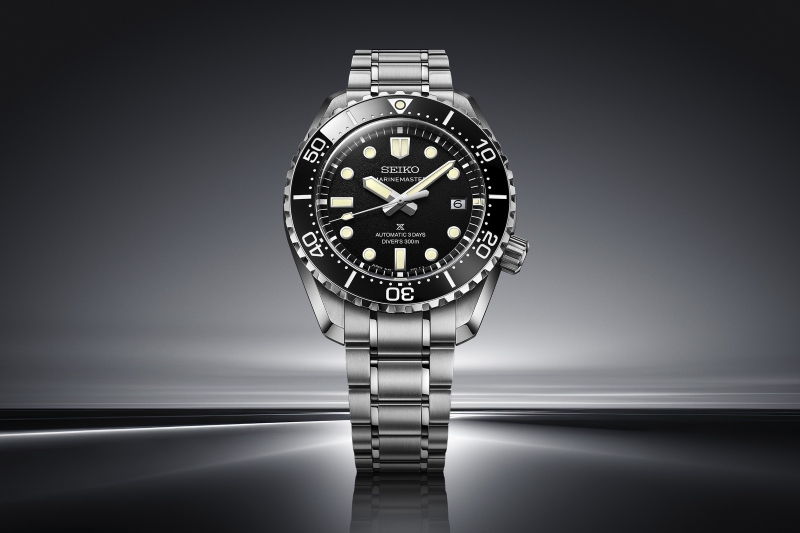
As for the HBF001, it takes after the classic 1968 diver’s design. The dial’s deep black shade and fine-grained texture minimise light reflection for optimal visibility while a glossy ceramic keeps the entire unit monochromatic. This is the first Prospex in continuous production to be equipped with the Calibre 8L45, which offers a power reserve of 72 hours and operates within a tolerance of +10 to -5 seconds per day.
“Both the hairspring and mainspring use our proprietary Spron alloy, which maintains stable characteristics despite temperature fluctuations. It offers excellent resistance to wear, corrosion and fatigue from repeated winding. This allows the mainspring to deliver stable torque, while the hairspring maintains consistent accuracy. Combined with the Diashock system, the movement is designed to maintain operational stability under harsh conditions,” says Kawamura.
While the new watches retain a number of hallmarks from the original 1968 model, such as its flowing silhouette and the position of the crown at 4 o’clock, the design team also introduced subtle refinements throughout.
“With the change in movement, the thickness has increased slightly. However, we fine-tuned the overall case proportions, so that this would not be perceptible. In addition, by revisiting the position of the end pieces to lower the centre of gravity, we have improved the fit on the wrist. We also shortened the length of each bracelet link, ensuring that the design takes into account actual wearing comfort,” he reveals.
4.jpg
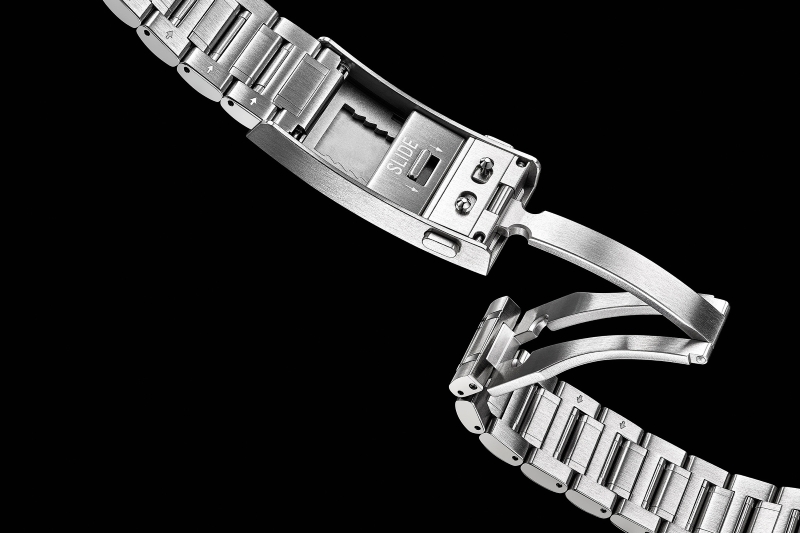
An updated crown construction improves serviceability as well. With the “detachable screw-down crown pipe structure”, even if damage occurs over long-term use, only the pipe needs to be replaced rather than the entire case. Moreover, a new clasp with an adjustment range of 16mm allows flexibility for changes in wrist size during diving or daily wear.
Kawamura joined the company in 2013 and led the Astron division two years before taking charge of the Prospex line. “What I care for every year is defining and protecting the design of Seiko. From a designer’s point of view, I not only need to visualise and protect our concepts, but also evolve those designs and traditions,” he stresses.
Touching on the partnership between the two establishments, Kawamura says: “Seiko Prospex actively supports various marine conservation initiatives by contributing a portion of its sales to the Jamstec research team. We also began supporting its Arctic research last year.
“By leveraging our respective areas of expertise and complementing one another, we have continuously pushed the boundaries of our fields through exploration and innovation. Today, this partnership extends from the deep sea to polar regions, and ultimately contributes to creating broader societal value related to the global environment.”
This article first appeared on July 20, 2026 in The Edge Malaysia.