

Leong (left) and Hong (right) came together in 2019 to form Better Dads Malaysia (Photo: SooPhye)
There is a common image we have of the “Asian Father”: a firm man, kind but untalkative, who functions foremostly as the provider of his family’s physical and financial needs. He is the sole breadwinner and, more often than not, rarely involves himself in the child-rearing responsibilities shouldered by his wife. While these characterisations may come across as outdated, they remain undeniably familiar to many Malaysian families, invariably shaping the expectations placed on our men. Masculinity often means being stone-faced, tough and materially successful. But presumptions come with a price: More and more, emotional stuntedness and unempathetic behaviour are brewing in our future generation of boys.
Luckily, a movement is rising in Malaysia — one that says repeating cycles of absence is not good enough and asks male guardians to step up as role models.
Born from a wish to break stereotypes about detached dads and cultivate a culture of intentional fathering, Better Dads Malaysia (BDM) was co-founded in 2019 by friends Jason Leong and Joshua Hong to offer support systems, raise awareness and provide educational resources for all fathers and father figures. The NGO, which marked its sixth anniversary on Nov 19 in conjunction with International Men’s Day, conducts informative workshops and parent-child bonding activities prioritising the role of men in the family, and has grown to be recognised as an authoritative voice advising on family-friendly governmental and corporate policies.
“Both of us came to the understanding that it’s so important to have fathers who are responsible. That’s why we started BDM,” says Leong. “A lot of men have good intentions, but the problem with intentions is that they are not enough. There needs to be action and follow-through, as well as the discipline to keep at it. Sometimes you need your partners or other dads to hold you accountable.”
Passionate, profound and undaunted by an uphill battle, the co-founders discuss their relationships with parenting, how they teach others to bond effectively with their children and the importance of championing healthy, positive masculinity against the barrage of misogynistic radicalisation facing modern society.
Father time
body_pics_1.png
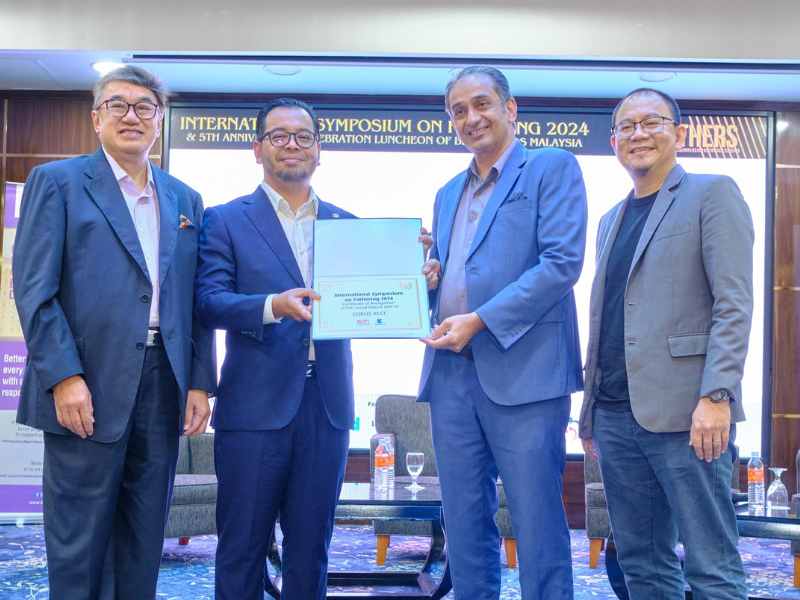
When the firstborn arrives and one suddenly finds the mantle of mum or dad thrust upon them, most guardians will tell you no amount of research or classes truly readies you for the real thing. “As part of the new generation, we thought we were prepared. We were listening to talks, reading books … but when our firstborn came, we were still kelam kabut,” laughs Hong, father to two teenage sons and a younger daughter. “My experiences with all three of my kids have been unique. We had some assistance from my wife’s side, but in terms of parenting and discipline, we learnt it along the way.”
Meanwhile, Leong expresses how he and his wife opted to postpone having their first child as he was occupied with his corporate advisory firm. The couple had their eldest daughter, now 19, when Leong was in his early 40s, followed by a boy three years later. “I did not know how to be a father, there is no manual,” he says matter-of-factly. “I remember the first time I held my daughter after she was delivered, all I did was count her fingers and toes. From there, it was a whole flurry of routines getting disrupted because of feeding times and whatnot. Everything was very new.”
Life has a way of getting the better of you, though. Both men admit they reached a point where they were not as present in their children’s lives. “After a few years, I was very much distracted. My clients were seeing me at my best, but when I got home, my family saw me at my worst,” explains Leong. “It was really sad, because that’s when your children and wife want to talk, engage and communicate. But I was totally exhausted with nothing left to give. It was not a tenable relationship.” He counts himself lucky for having noticed this distance as his kids were just entering secondary school, and wanted to make a concerted effort to close the gap. He sought counselling and through his church pastor discovered Dr Ken Canfield’s The 7 Secrets of Effective Fathers, a research-based book with practical principles about family strengthening.
This epiphany would prove pivotal. Having gotten to know each other through other NGOs, Leong and Hong came together to establish BDM during the pandemic with not only their personal fathering experiences in mind, but the rising incidence of juvenile crime and youth suicide. “We had been paying attention to these cases for the longest time, and I felt that something wasn’t adding up,” says Hong. “Through my research, I came to know of this joint study conducted between the US and Singapore, which found that paternal absence is a critical contributor to a lot of social ills.” The co-founders hoped that by tackling the issue of paternal involvement upstream, the subsequent social problems would begin to reduce.
Asked how their own dads influenced the way they behave with their families now, Hong shares, “To an extent, I was fortunate. Although my mother passed away when I was eight and my single dad was very occupied with the five of us, he cared in that traditional Asian parent way: silently and humbly.” In hindsight, Hong attributes his courage and willingness to take risks to the constant sense of security his father has given him — the quiet support of being told “Okay lah, see how” when he wanted to quit his job and explore something new.
Leong describes being brought up by a “typical Chinese father”, the capable provider of few words. Their interactions were sparse, but “what little [conversation] we had made a great impact on me” and taught him to be independent even from those early years. While the old stereotype of father as the sole breadwinner still feels like quite a pervasive standard many men today aspire to, Leong says, “Dads are almost always good providers. But beyond that, there is a severe lack of emotional provision. How does a young boy begin to deal with his feelings? Without communication, he has no role model. Providing is a minimum threshold — there are many others beyond that to meet! Fathers need to learn, and it is our job to spread that message.”
Taking action
1.png
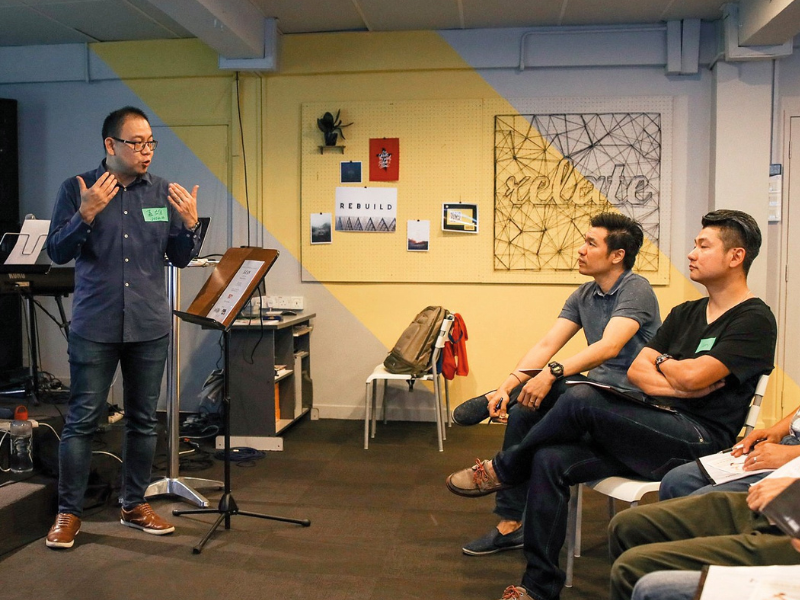
One of the earliest projects Leong and Hong sought to offer when BDM began was the ICAN fathering workshop, a six-hour interactive course based on Canfield’s framework designed to teach men meaningful engagement and reliable commitment. The class (which stands for involvement, consistency, awareness and nurturance) has since become one of the non-profit’s signature workshops, and can be conducted in English, Malay and Mandarin for accessibility.
These intense workshops for up to 30 pax push participants to not only consider what they can do for their young ones, but also work through their own baggage. “The problem is we all father by default: I father my children the way my dad fathered me. Often, that’s not sufficient, especially when many men have not had the most positive experiences as far as how they were parented. If they repeat that negativity, you get a vicious cycle,” warns Leong. “These hang-ups need to be processed for them to get closure so they can move on and be effective dads to their own children.”
The classes are often a wake-up call for men who underestimate their emotional importance to their families, and attendees who want to show they care might not always know how. For those who struggle to come up with common-ground activities, BDM curates several father-child bonding events, such as their Shoot with Dad programme where a celebrity photographer teaches youths basic photography techniques and dads stand in as models. Other programmes encourage parents to cook with their kids, foster patriotism and unity, and advise on how to navigate the teen years.
Additionally, the co-founders developed special cards for fathers to write messages and tuck into their little ones’ lunchboxes or backpacks. “We teach men to always tell their child, ‘I love you’, ‘You are good at what you do’ and ‘I’m proud of you’. If you can’t articulate it aloud, write it on a note or ang pao packet. These are some helpful, practical tips we give,” offers Leong.
The sound of a “men-only, all-dads club” can be a tough sell, though. Hong remembers the many suspicious reactions they received in response to their organisation. Many assumed the movement was simply a social club for hypermasculine hobbies, and though attitudes have improved over the years, presumption and a lack of awareness make it such that support for fatherhood struggles to be taken seriously.
3.png
“The new generation of dads are very open to learning and want to improve themselves. In my time, if I was carrying a diaper bag or taking my kid to the clinic, people would ask me, ‘Where’s your wife?’ Can’t I do these things too? I’m the father!” Hong recounts a time when he had no place to change his first newborn’s diaper as the mall facilities forbade men from entering, though he notes this is no longer the case in most locations. “People have these misconceptions, but now society is growing more accepting and you seldom get such questions. I like to believe we’ve contributed a little bit to that.”
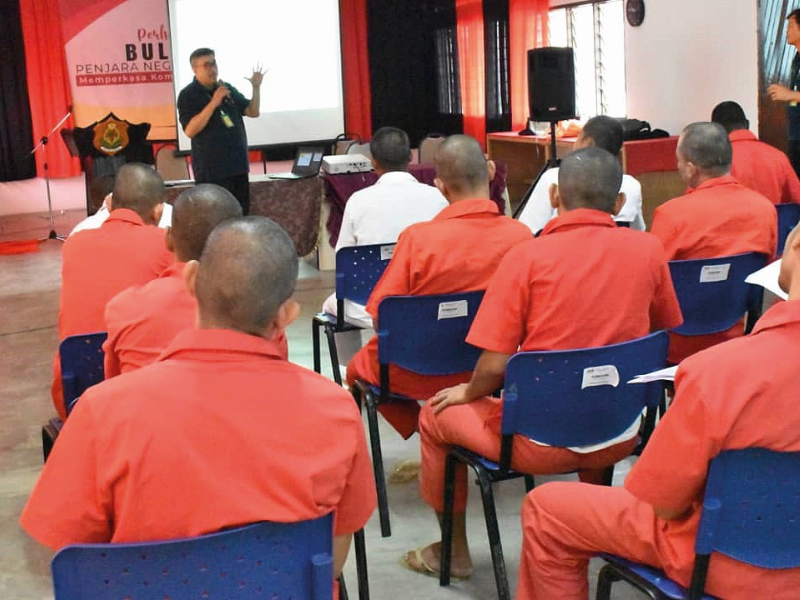
BDM also focuses on strategic engagement and advocacy, working to influence government policies. The 2024 amendment to the Employment Act (1955) granting married male employees one week of paid paternity leave has been a good first step, though the group has been lobbying for a full month. Aside from being put on a high-level task force to advise the government and LPPKN (National Population and Family Development Board) on parenting workshops, Leong and Hong have conducted sessions within prisons to equip inmates with parenting skills for reintegration into society and family. The NGO hopes the data collected from the prisons can be published as research to guide future policy. Next year, the government will launch an official national module for fathering in Malay called Modul Kebapaan, designed with suggestions and plans from BDM.
Risk + realities
In recent months, Malaysian news outlets have been reporting article after article on the deeply disturbing cases of bullying, violence and sexual assault being committed within schools. The gruesome incident of a 14-year-old boy stabbing 16-year-old Yap Shing Xuen to death at SMK Bandar Utama Damansara 4 left the nation shaken and speechless, and as details of the perpetrator’s intentions and behaviour pointed towards a radicalised mindset, citizens and authorities alike seemingly raced to rationalise how such an event could have occurred. Officials put forward a list of “dangerous” video games to avoid, while the government has allocated a RM3 million budget for installing CCTV cameras in schools. Online comments sections are packed with images of belts as livid netizens urge teachers to hit students.
“These are all very simplistic statements on a very complicated situation,” Leong says, shaking his head. “Many talks have touched on the topic, but some go very much into the mental health aspect. That is only one factor, it is not the whole story. Abolishing social media or phones won’t help because there is a lot more going on.”
Despite the wide coverage, few platforms have been willing to acknowledge this — and the majority of similar cases this year — as gender-based violence. “Why is it just boys? Even worldwide, you notice the same trend of teen misogyny. A boy’s parents might call him an introvert who doesn’t cause trouble. Suddenly when something happens, they are shocked. How could he be such a monster?” In the wake of these painful stories, an equally concerning trend has emerged — male students gleefully tossing around cruel jokes that girls should simply submit to a boy’s intentions or suffer the same fate.
Leong explains how they become radicalised: “Being withdrawn and not being able to socialise show these boys are usually very lonely, isolated and have low self-esteem; they receive little affirmation of their self-worth from their parents or fathers.” With no male role model in their lives, boys are likely to turn to the internet, becoming enthralled by influencers promoting toxic masculinity, sexist jokes and misogynistic attitudes under the guise of being a “real man”. “It feeds into them very powerfully because for the first time, they feel validated.”
These “man-fluencers” then provoke impressionable teens to fault girls for their struggles. Blame festers into hate, always pinning their problems on women, and eventually degenerates into extreme action. “And all along the way, the internet and social media create an echo chamber. They find camaraderie among strangers from online chat groups; every time they post something anti-feminist, they get followers and likes, which just egg them on. It is very dangerous,” he stresses.
Deep issues cannot be solved with quick fixes. Instead, parents must make consistent efforts to pay close attention to their child’s internet activity, looking out for buzzwords and tendencies towards sexist or extremist mindsets. “We created a course called Digital Parenting to educate adults about setting up appropriate restrictions on their child’s devices,” says Hong, noting how with the presence of artificial intelligence, it is increasingly critical to shield kids from content they cannot differentiate as real or moral.
Following the stabbing, BDM released a press statement outlining the risks of radicalisation and detailing actionable recommendations for parents, teachers, governmental bodies and even other students. The group has also conducted a series of awareness talks intended to spark serious dialogue among parents and teachers so that schools can adopt a protocol for prevention and detection.
Hong expands on how conventional definitions of a “successful man” — wealthy, powerful, womanising — convey outdated and harmful values. “It’s no wonder women complain about us. If that is the image of success we paint for boys, can you imagine what kind of damage we are dealing to daughters? There is still a big silent majority, but we have to rise up to portray positive masculinity to society.”
Speaking on the level of gender education in Malaysia, he cautions, “Some talks put forward this idea of tough boys and tender girls, segregating certain emotions as being for only one or the other. But when you start to categorise feelings in terms of gender, you are dehumanising them both. Worse, this can be a root cause for misogyny — dehumanising women and desensitising others to it.”
Modelling respect begins at home. “The best things you can do for your children are to love their mother and treat women correctly. From there, kids learn the right way to value and cherish them. Fathers must align with their wives as allies,” says Leong. When a man confides in Hong that his wife nags despite him helping with chores, he sternly advises, “That’s where you’re going wrong — ‘helping’. It means you think it isn’t your job to begin with. But [parenting] has no ‘my’ job or ‘your’ job; it is ‘our’ job.” Acknowledging not every family has a man, the two also encourage senior men (or women) whose children are grown to volunteer as trusted adults for youths who need a mentor in their lives.
Where the heart is
There is no such thing as a “perfect” dad — parenthood is a highly personal, individualistic journey, and the best most men can do is engage mindfully and lovingly with their families as much as they can. “Most fathers need to stop making a living and start making a life. Too much has been defined by material success. No man on his deathbed will ask for his diary of appointments; he will ask for his family members,” says Leong.
Companies also play a role in ensuring dads do their best. Hong suggests, “Corporations could consider father-friendly policies like paternity leave, and we would love to make parenting workshops HRDF (Human Resources Development Fund) claimable. Better parents make better employees, especially when they feel their bosses are invested in their families’ well-being.”
At home, the co-founders practise what they preach by investing time in mutual hobbies with their kids. Hong frequently brings his three out for sports and swimming, while Leong’s house is packed with books he shares with his children. Baking is popular in both households — the latter beams proudly when he mentions his daughter’s creations are restaurant-quality, but Hong confesses cleaning up after his second son can be a small headache (“At least he has a hands-on hobby,” he reassures himself). Filling mealtime conversations with in-depth questions also ensures both men are keeping apprised of and involved in their young ones’ daily lives.
“I’m really glad that, if my kids get into trouble outside, the first person they call is dad,” affirms Leong. “I’m happy to be able to give them that feeling of safety, that even if you mess up, I’m here for you. For me, that is the most satisfying and fulfilling thing.”
This article first appeared on Nov 24, 2025 in The Edge Malaysia.