
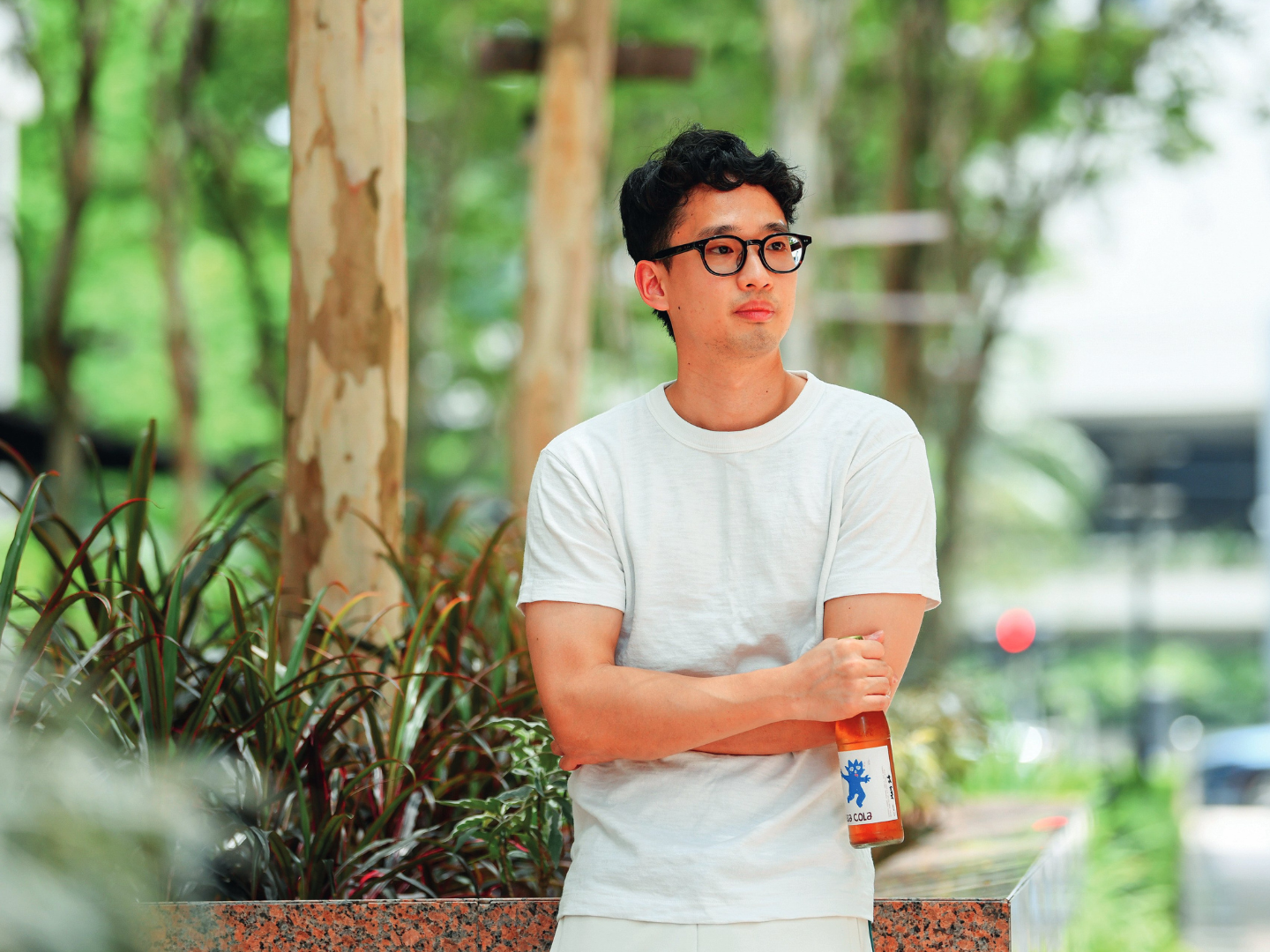
The full-time data scientist discovered his passion for the craft from his girlfriend (All photos: Low Yen Yeing/The Edge)
Sichuan pepper, ginger and clove might sound like the beginnings of a hearty soup or stir-fry, but Malaysian-Japanese Kenji Tee’s special spice blend is not for any seasoning powder or secret sauce. When his combination of fruit and aromatics spends hours in a pot, they come out as something bold, bubbly and just the right amount of sweet.
The 29-year-old devotes nearly every free hour outside of his full-time job as a data scientist to brewing and bottling Passa Cola, his brand of homemade craft cola and one of the only products of its kind in the country.
“[The name] comes from the Italian phrase tutto passa, everything passes, but it’s also meant to be ‘pass a cola’,” he explains, pointing to the laid-back blue figure adorning the label.
You may have spotted the minimalistic glass bottles in more and more eateries around the Klang Valley since the brand officially took off two years ago, but Tee’s fascination with the beverage began well before you could order one of his fragrant, fizzy creations alongside a flat white.
“I generally don’t enjoy soda because of the artificial taste you get. The sweetness really lingers and doesn’t feel great,” he shares. “The carbonation is nice but for a long time I couldn’t come across one I actually liked.” Often regarded as sugary and unhealthy, soft drinks are to some the kind of thing that seems delicious in theory — until you get more than two sips in and are stuck with a can of unpronounceable chemicals and buyer’s remorse.
Things changed when his girlfriend Sabrina Lee visited Japan, where craft colas are a staple beverage in most establishments, each with their own specialised recipe. Upon trying the in-house interpretation of a café in Kawaguchiko, Yamanashi, she was blown away by how different it was from the typical qualities of commercial cola and insisted upon bringing a can back for him. Utterly infatuated with this strange, enticing new drink, Tee swiftly fell into a research rabbit hole, spending two weeks in Japan with his mother on a pilgrimage to try every version he could find.
“Every region has its own craft cola but I’d say I have tried almost every variety in Japan — even the one from Muji,” he remarks. A majority, including the popular and most common Iyoshi Cola, is light on the palate, with Iyoshi itself leaning towards citrus and ginseng.
“I came back and decided to make something similar but with a local twist by using spices we could appreciate and are familiar with. To Malaysian-ify it, I wanted to add more cardamom, which we would associate with chai or biryani, and ginger, which appears in a lot of Chinese dishes, as well as Sichuan pepper.”
1.png
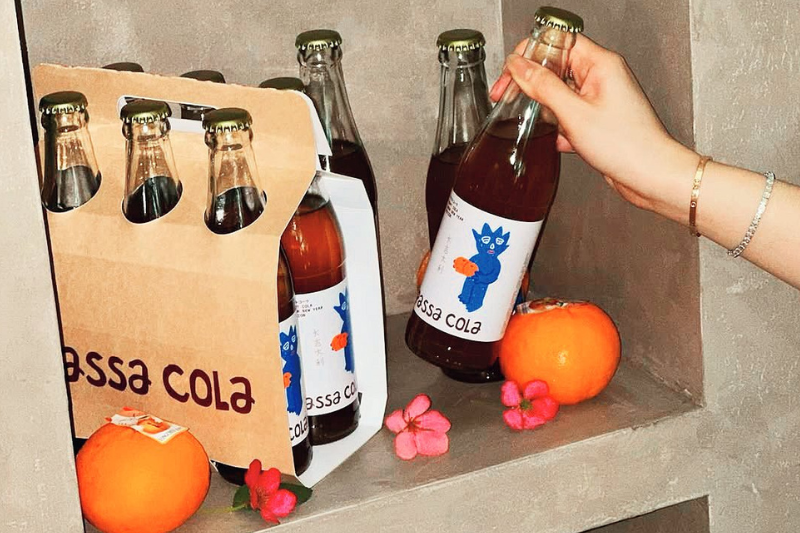
Tee’s early experiments came from the simple desire to create something he could not find here. As with any new hobby though, things rarely turn out right on attempt number one: his first “tasted like cough syrup”. What followed was a punishing yet rewarding process of trial and error that taught him how to tame the pronounced notes. Knowing to crack spices without crushing them, which to toast and what to remove at certain points have all taken try after try to get a balanced profile that is distinct yet not harsh.
After enough batches, his creations felt like they could pass muster as products, leading Tee to conceptualise a proper brand for his hobby turned side gig. Passa Cola got its start in early 2025, shortly after which beloved bakery Plump became its first stockist (owner Cheah Wen Tao is one of the soda’s staunchest fans and advocates, says Tee). Didi’s Cafe and Bakery in Wangsa Maju, Basic Wine Store in Mont’Kiara and Francobolli in Wisma Cosway are just a few of the other dozen or so spots where the cola is available.
Over the years, the founder repeatedly refined his recipe based on customer feedback to arrive at Batch 39, its current optimised state. “It took me a long time to learn! I take my craftsmanship pretty seriously, which is probably the Japanese side of me,” he chuckles. “It’s that instinct of, if I’m going to do this, I have to do it right.” He keeps a separate range of kitchen tools purely for cola production, taking hygiene and contamination risks very seriously. If anything so much as feels off, it goes in the trash.
Lime, goji berries and nutmeg are just a few of the other ingredients that make up Passa Cola’s impressively complex, addictively refreshing composition. Comforting warm spices fill the nose, with an entry that is bright with citrus and vanilla and ends in a clean, snappy finish. The carbonation is tantalising without being aggressive — certainly nowhere near as abrasive as a brand-name can.
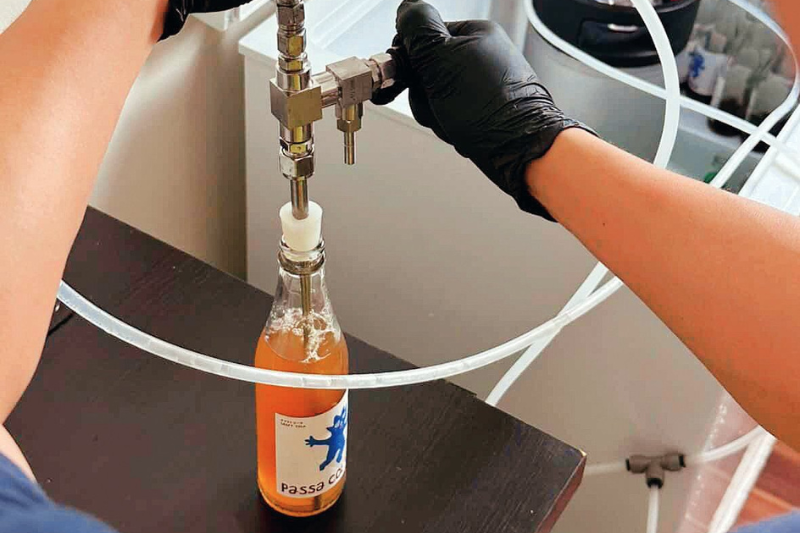
All told, it takes around eight hours for a handful of fruit and spices to transform into a frosty glass of drink. Tee begins by weighing the components and extracting the aromas, followed by a four-hour steeping process. The brew is left to sit and is then filtered in several rounds using a cheesecloth to catch any sediment. To package, this concentrate is diluted, carbonated and bottled using special equipment. The founder makes an estimated 200 to 300 bottles a week, only ever working in medium-sized batches to maintain quality control.
2.png
With its flagship flavour solidified, when can Passa fans expect a new addition? As it turns out, pretty soon. “We have labels prepared and it’s very Malaysian — even more so than the original,” laughs Tee. If all goes to plan, we can expect to see an assam boi soda by mid-year — with the mascot looking extra cheeky.
But despite his brand’s current popularity, Tee recalls needing to contend with the inevitable expectations surrounding the word “cola” at first. Those expecting a Coca-Cola substitute did not find the homemade version as intense as they might have liked. He tempers expectations by likening it to ginger ale or sarsaparilla and, for the most part, customers have appreciated Passa Cola for what it is — its own unique beverage.
The ongoing uptick in wellness solutions has been a boon too. “We try not to market it as a ‘healthy’ drink but the trend does help,” says Tee. Ingredients like turmeric and black pepper, which combine to have antioxidant properties, are incidental benefits rather than intentional selling points.
With the drink gaining real traction and the trade-off of his free time mounting, he is reaching a crossroads. “I’m at this brink now of, if I want to scale, I need to get a team,” he admits. In the long term, he wants to move operations to a dedicated space and for Passa Cola to take over as his primary job. Spreading to more locations in Malaysia is a big wish too as the founder handles all deliveries by himself. “We have cafés from Penang reaching out but it’s just not feasible right now because we insist on glass bottles.”
He has an even greater goal though, something grand yet humble. “When you go to a café, your options tend to just be coffee, matcha or maybe kombucha. But you might not be able to drink these things all the time, because of caffeine or digestion issues. That’s why one of our hopes is for craft cola to be a new choice,” he affirms. “We Malaysians are pretty easygoing and that’s how I want the drink to feel — that it’s chill, not something you need to think too hard about and that you can just grab and enjoy.”
This article first appeared on March 23, 2026 in The Edge Malaysia.