
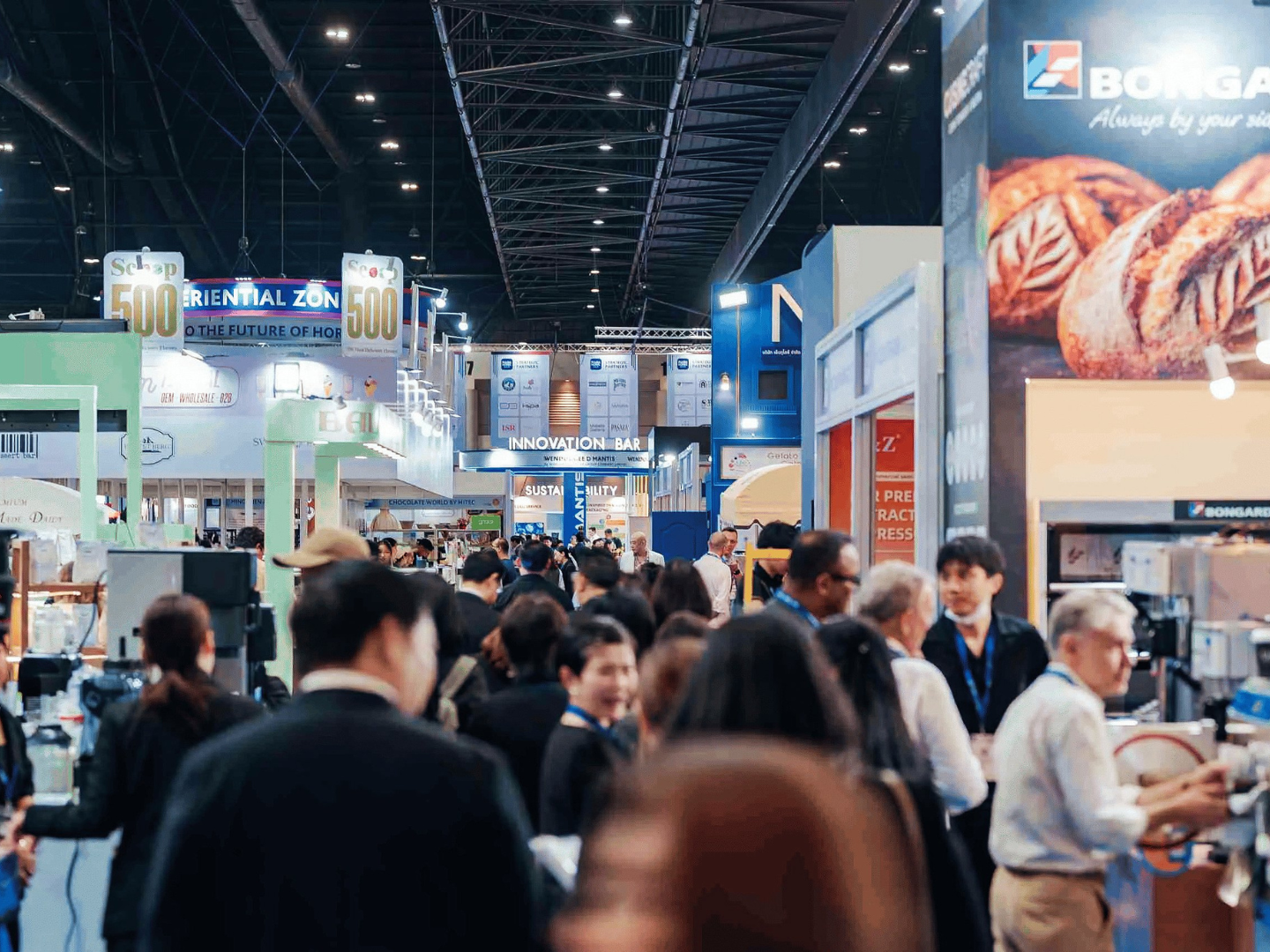
The sprawling event covered innovative machines, food sections and demonstrations centred on hospitality (All photos: Koelnmesse Pte Ltd/ Thaifex - Horec Asia)
Between Malaysia’s Asean chairmanship in 2025 and the Visit Malaysia 2026 campaign, the country has been experiencing something of a hot streak.
Last year, it welcomed the highest volume of tourists in the region, with Tourism Malaysia reporting around 42 million global visitors. But despite rising foreign investment confidence and multiple key campaigns highlighting the country’s natural, cultural and culinary assets, the hospitality sector continues to suffer brain drain. Positive growth outlooks have a dreary shadow of fragility trailing closely behind, as the ongoing decrease in workforce and faltering talent retention spell long-term trouble.
Luckily, employers are minding the gap. A growing number of restaurant and hotel groups have been hosting university engagements, corporate social responsibility initiatives and training programmes to upskill employees, promote entrepreneurial thinking and offer clear career paths for young professionals. With the promise of explosive potential on the horizon, trade shows like Thaifex-Horec Asia 2026 could not have been a more opportune avenue for senior executives, hoteliers and systems suppliers to stay ahead of the curve.
Jointly organised by Koelnmesse, the Thai Chamber of Commerce and Thailand’s Department of International Trade Promotion, the Bangkok-based event is the region’s largest platform for those in the hospitality, restaurant and catering fields. The German company has been a long-time collaborator with the local agencies for Thaifex-Anuga Asia, an F&B-focused exhibition founded in 2004.
Compared to its older sibling, Thaifex-Horec Asia, which began in 2024, represents a younger project intended to leverage Anuga’s stability and existing partner relationships to address the needs of HoReCa (hotel, restaurant and catering) service providers in a rapidly flourishing sector. The fair and its strategic location signal the growing appeal of operational solutions and market expansions in Southeast Asia. “In terms of language, convenience and price, it’s very easy for the region to come together [in Thailand]. You have this strong domestic market coupled with good infrastructure,” says Koelnmesse managing director and regional president Mathias Kuepper.
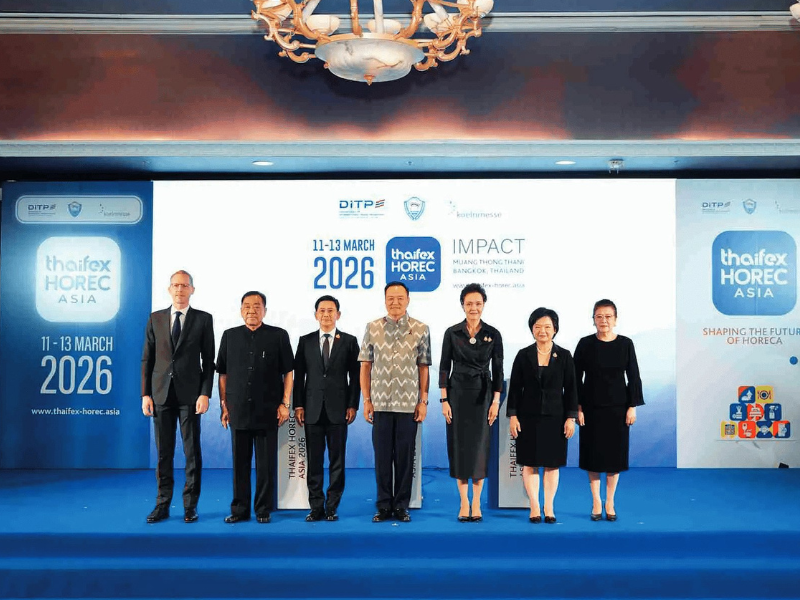
From left: Kuepper; Thai Chamber of Commerce and Board of Trade of Thailand chairman Poj Aramwattananont; Ministry of Commerce permanent secretary Vuttikrai Leewiraphan; Charnvirakul; Minister of Commerce Suphajee Suthumpun; Department of International Trade Promotion director-general Sunanta Kangvalkulkij and adviser to the Minister of Commerce Banjongjit Angsusing
The third edition was held from March 11 to 13 at the world’s largest column-free event space, Impact Challenger in Muang Thong Thani. Encompassing nine vital industry segments — Bakery & Ice Cream, Café & Bar, Cleaning & Laundry, Dining, Kitchen, Services, Tech, Wellness and Furnishing — the comprehensive show invited attendees to discover, experience and confer on the main challenges and cutting-edge developments facing the sector. This year saw show space expand to 35,000 sq m (a 30% increase from 2025) and featured close to 700 leading exhibitors from key markets like Thailand, China and Singapore, as well as newly participating countries such as Brazil, Canada and Poland. The event welcomed some 21,305 participants from 70 countries and regions.
Presiding over the launch was the Prime Minister of Thailand Anutin Charnvirakul, who stated: “Thaifex-Horec Asia… enables entrepreneurs, investors and buyers from across the globe to connect, exchange knowledge and turn opportunities into tangible business outcomes, while also shaping the future direction of the HoReCa industry together.” The opening ceremony also recognised the awardees of Thailand’s Best Friend 2026 programme, during which 20 key importers from various nations were honoured for their roles in strengthening trade relations.
Grounds of actions
5.png
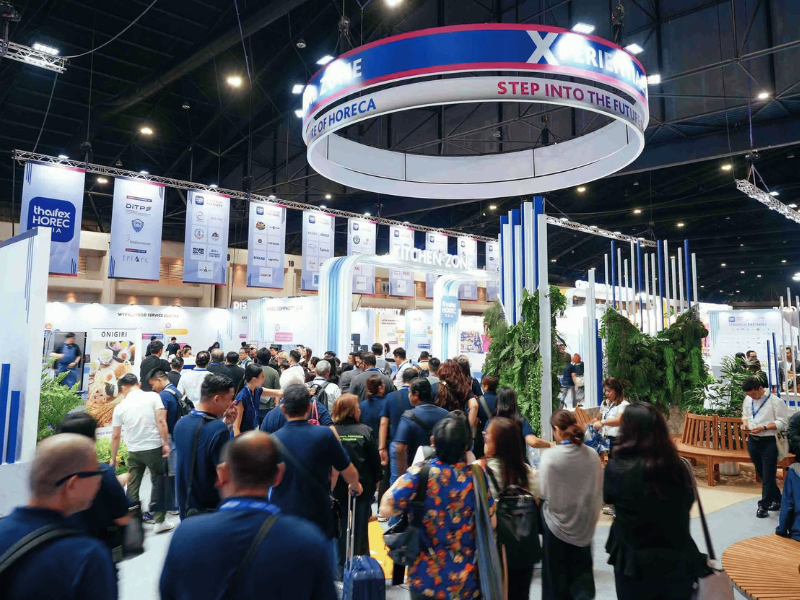
Spread across the venue’s first and second halls, Thaifex-Horec Asia 2026 was a bustling flurry of revolutionary machines, impressive displays and free samples around every corner. Once we settled in to the stimulation though, learning to navigate the maze of lights and booths came with relative ease.
The grounds were primarily divided into nine categories, plus an added HoReCa Food section, with colour-coded carpeting for easy identification and an intuitive layout. A companion app provided a complete list of booths and events sortable by trend, segment and country.
Outside the main area were a food court plus some smaller stalls meaning plenty of spots to break for a bite or drink, but we opted instead to splurge on artisanal lattes and ceremonial grade matcha in the spirit of discovery and exploration. There were also many strategically located seating corners and charging utilities, so whole-day excursions were slightly less exhausting than anticipated.
Over at the Thaifex-Horec Academy and Workshop, visitors could register for speaker sessions, panel discussions and hands-on classes designed to empower professionals and foster the exchange of fresh perspectives, best practices and cross-sector knowledge. Topics ranged from broader deliveries targeting regional market performance and leadership strategies in hospitality to specialised lessons on tea preparation, meat butchery and the perfect tiramisu.
To test products in real time, the dedicated Xperiential Zone offered immersive live demonstrations of the most innovative submissions. Guests could embark on guided tours along one of three routes — chef, front-of-house and back-of-house — to explore and compare relevant technologies as they would function under service conditions.
2.png
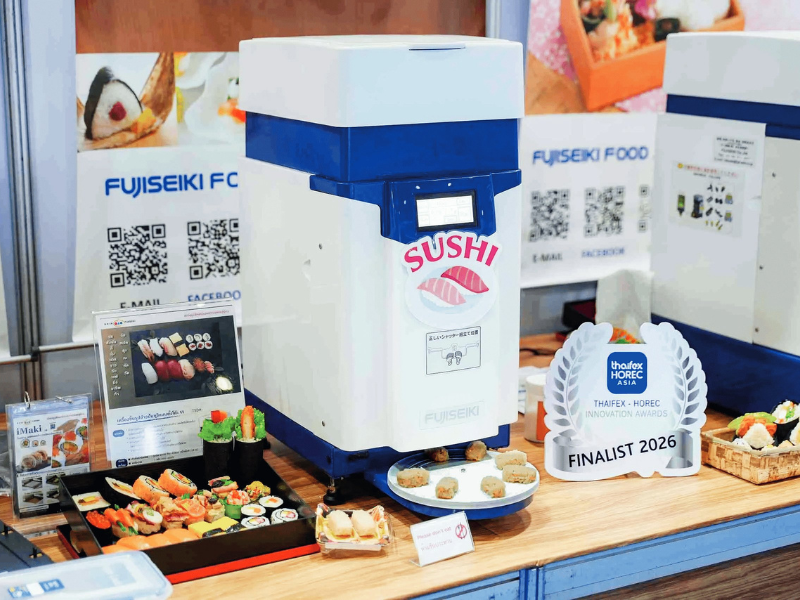
Among the products were Japanese company Fujiseiki’s Nigiri Robot, designed to portion seasoned rice and keep prepared grains warm for sushi chefs as they focus on fish preparation; the trailblazing Egnite One Aero stove from Singapore, which turns electricity into a real flame with greater energy efficiency than a conventional induction; and US-based Ecolab’s Dish IQ, an intelligent dishmachine with built-in sensors that can be monitored via phone. The latter two also clinched wins at the Thaifex-Horec Innovation Awards 2026.
An additional sustainability zone, a notable response to the prevalence of environmental consciousness in industry discourse, presented items like uniforms, disposable protective gear, amenities kits and even decorative weavings derived from recycled materials.
Looking at this year’s most prominent trends, Koelnmesse general manager Wendy Lim pointed out that attendees are not just looking for the never-before-seen. “What we are actually noticing more of is how the products and services of our exhibitors help hospitality players improve their service level. These are the challenges of HoReCa: keeping consistent service during peak business times or a power changeover.” As the market faces manpower insufficiency, automating processes and reducing back-of-house friction have emerged as key priorities.
Kitchen suppliers such as Welbilt, for example, displayed systems like the next-gen Merrychef Connex x16, a compact high-speed oven capable of producing paninis, brownies and other baked goods in the seconds it takes a well-rehearsed salesman to deliver a snappy pitch. Requiring minimal human supervision and no exhaust fan, the device is ideal for café owners looking to introduce hot food items without needing to renovate their F&B provisions.
Special sights
A large trade event patronised by presidents and purchasing managers may not be where one would expect to find a silky, salty scoop of, say, squid ink ice cream, but the Thaifex-Horec floor is nothing if not full of surprises. This year, the organisers introduced Scoop 500, a vibrant festival featuring more than 500 flavours developed by local and international dessert entrepreneurs and suppliers.
Project director Sven Schaefer explained, “We often sit down with our exhibitors before the show to see what we can do to make their presentations more attractive. During that discussion before they signed up, we came up with this concept.”
Somsak Youngjaiyut, managing director of Thai gelato and ice cream equipment supplier i-Cream Solutions, proposed a creative way to kill two birds with one stone — by sponsoring churners and chillers to each business, vendors could use their delicious and out-of-the-box flavours to attract customers and bring attention to both shops and machines. “He didn’t only want to advertise his products, he also wished to help his own customers get more exposure. We were very happy to support that because it’s something unique,” said Schaefer.
“I mean, it’s very smart, right? If they only offered chocolate, you would probably not stop to take a look,” Kuepper remarked. “But when you see something like curry, that makes things interesting. There are a lot of Thai-inspired flavours as well.”
Ever loyal to our journalistic responsibilities, we made a point to seek out the quirkiest confections since many of the more unusual varieties were concocted purely as exhibition novelties and could not be found elsewhere. The nutty fermented soy by 10010 Bar, smoked salmon and dill cream cheese by Frozen Factor and Amaya’s gingery khao man gai proved pleasantly surprising as far as savoury riffs — others, like boat noodle and tuna salad, warranted an eyebrow raise.
1.png
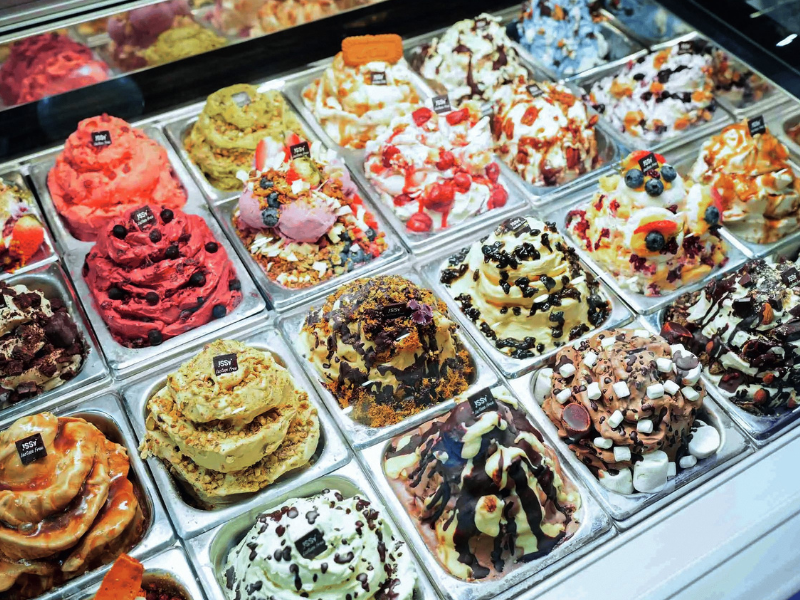
For a more vanilla (pun not intended) experience, we sprung for full cups of the rum raisin from Jude’s Journey Scoop and punchy espresso from Jing Jing for THB120 (around RM15) each — delightfully crafted and decidedly easier on the palate for a sweet break from all the walking.
For Malaysian brand Gelatomio, the inaugural section was a successful means of gaining valuable feedback from a wider audience. “The response has been great. While we do export to Singapore and China, we wanted to know what the preference is like in a neighbouring region, whether our sweetness levels or flavour profiles are acceptable, especially as the Thai gelato market is much bigger than in Kuala Lumpur,” said founder Elaine Gunting.
Also new were the ACF Coffee Appreciation Protocol, a certification-based workshop for enthusiasts to refine their theoretical and practical coffee knowledge, and the Asean Coffee Roasting Championship, divided into professional and home segments, celebrating various expressions of regional beans and preparation styles. “It’s an important framework that we’re bringing on board because it brings structures and standards for coffee consistency to the industry. Even though the segment may be smaller, we continue to invest in these supporting programmes,” said Lim.
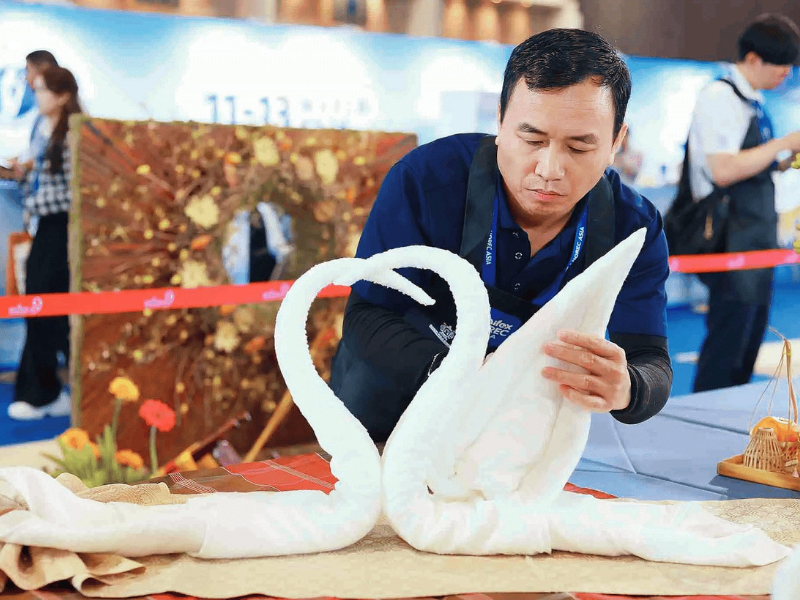
Returning visitors would have recognised the Thailand Ultimate Housekeeping Challenge, a mainstay of the trade fair since its debut. Bringing together some of the nation’s most qualified hotel housekeeping executives, the tense three-day gauntlet comprised four rounds — speed bedmaking, floral arrangement, towel sculpture and speed cleaning — engineered to test each individual’s practical, creative and service expertise. We confess to being unexpectedly invested, returning every few hours to review the performances, but regrettably passed on nabbing a steeply discounted Simmons Beautyrest mattress (used in the contest).
3.png
Above and beyond
Reflecting on how Thaifex-Horec has evolved, Lim said, “In the first two iterations, we were really trying to increase the number of buyers. But for 2026, we have focused on the quality of engagement. We want to invite those who can deliver commercial outcomes and results for our exhibitors. When it comes to curation, we have been more careful to bring in hospitality operators with clear titles and who are involved in procurement. On the floor, that translates to effective discussion and real purchasing.” Regional and international companies in the midst of rapid expansion and looking to buy equipment, for example, were a prime target market for ensuring concrete business decisions were being made.
Part of the event’s efforts to support networking opportunities for visitors is the Hosted Buyer Programme, a streamlined, bespoke medium for high-level executives to meet over 500 top suppliers from across Southeast Asia. The system, which includes flights, transport and accommodation, caters largely to senior executives and company representatives as an efficient way of maximising valuable engagements at the show. Guests are brought on tailored tours on the first two days, with the final day allotted to international participants.
Nevertheless, Kuepper admitted that the timing makes things tight. With so many supporting events, workshops and talks being delivered, often concurrently, you can just about see it all if you treat the floor like a labyrinth sprint. For executives hoping to make deeper engagements though, there will inevitably be diamonds left unearthed.
To address the rushed programme, the organisers will be extending Thaifex-Horec Asia 2027 to a four-day affair, running from March 2 to 5. “If you look at the numbers, we had more than 400 exhibitors. Now, it’s over 600. At some point, you need to give attendees more time to visit everyone,” shared the managing director. Having said that, the organisers affirm they have no intention of restricting what heights the trade fair may be capable of reaching.
“This platform is not just another horizontal exhibition,” says Lim. “We want [buyers] to feel that this is the place where they can come to make very informed procurement decisions. And exhibitors-wise, that they can justify their investment and take home some tangible commercial results. If they come back to us to say, ‘Hey, I want to rebook for next year’, this is how we know we have been successful. We hope to continue to service the industry in a very meaningful way.”
This article first appeared on April 6, 2026 in The Edge Malaysia.